Apple's work on a new Mac mini factory in Houston wasn't a quickly-conceived plan to appease President Donald Trump. The reality is that Apple had a plan ready to do this long before the demands started.
Tuesday's release to the media of images inside Apple's Houston AI server facility, and a confirmation that it will make Mac minis, is certainly a well-timed promotional piece. Arriving the morning of the 2025 U.S. State of the Union address, it will give President Donald Trump some positive talking points about the company.
If you read no further in this piece, take this away.
Building factories is time-consuming and hard. They take years to complete from concept, to permitting, to products rolling out the door. This factory was not built in response to Trump's made in America demands.
While Apple's press releases are framed in a way to make it look like a response to Trump's made in America demands, especially given the timing of the company's PR machine, it's not the whole truth.
There was lots of planning, which predated the second Trump presidency by quite some time.
Early permits
Actually constructing the empty shell of a warehouse is fairly simple and can be very quick. The tough bit is getting the permits in place from the local government, which means dealing with local bureaucracy.
In the wake of Monday's report and Tuesday's announcement, we spoke to sources inside Houston Public Works. Our sources told us that Apple's permits for the AI server plant were filed back in 2023. The existence of the Houston facility's AI server line was only revealed February 2025, as part of Apple's US investment plan announcements.
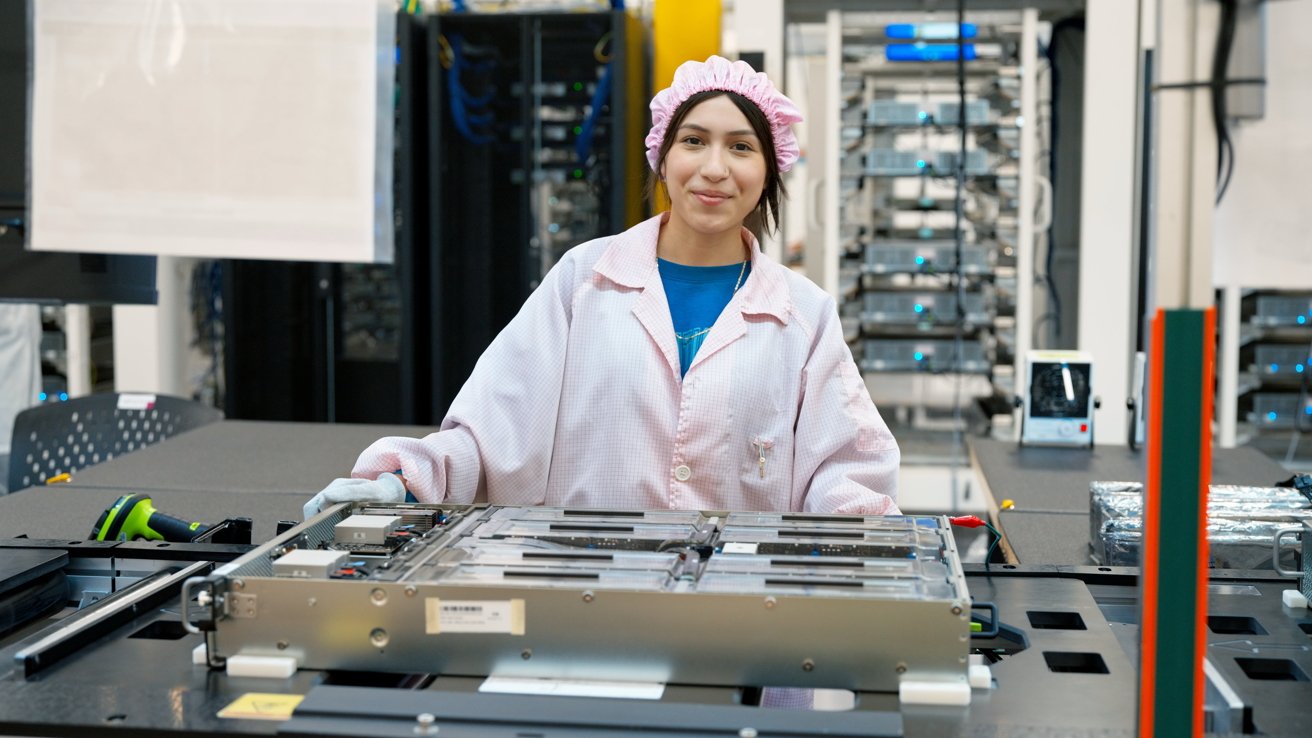
Apple's AI factory in Houston will soon make the Mac mini - Image Credit: Apple
The same sources told us that an expansion permit, presumably for the new Mac mini facility, was filed in very early 2024. This was about nine months before Trump secured his second term, more than six months before he promised tariffs on imported goods, and more than a year before those threats were made good.
The permit filing that long in advance, and Apple's linearly escalating budget for US manufacturing over the last 10 years, prove Apple has been supporting manufacturing in the United States across administrations.
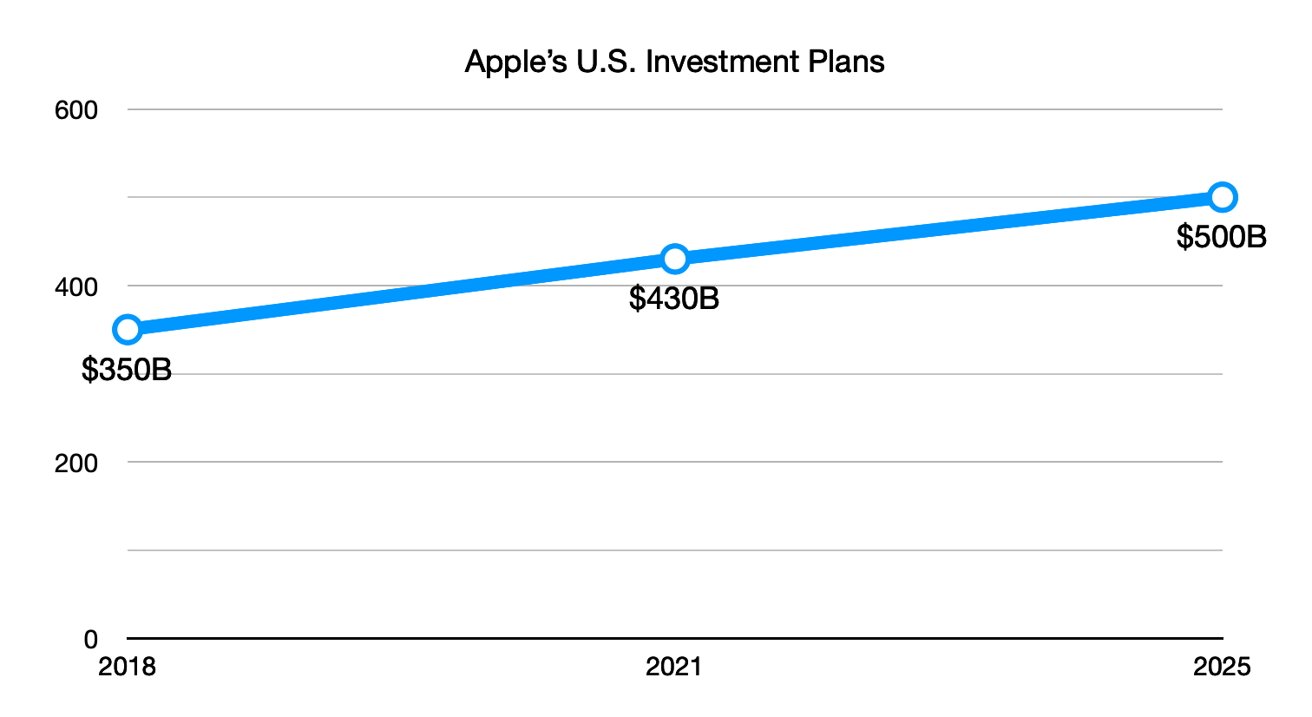
Apple's declarations of plans for U.S. investment have grown over time
It just so happens that Apple timed the public announcement of the Houston expansion to a time that suited its political needs.
Lengthy build times
Apple's permit timeline for the Houston factories practically demonstrates that preparing for production in its supply chain takes years to achieve. But really, building large factories in the United States always takes a long time.
In April 2025, early in the "Liberation Day" tariffs announcement, there was a belief that on-shoring manufacturing was a real possibility. What was hidden by everybody, including the administration, is the timelines needed and the investment required.
Speaking to KSHB at the time, Johnson County Community College construction management lecturer Steve Bennett explained that a very simple manufacturing plant and warehouse could be constructed in less than a year, possibly as little as six months.
However, those are for fairly simple construction tasks. That quick timeline is just for the frame of the building, which we spoke about before.
Making a more complex facility, like one that assembles the Mac mini at scale, takes a lot longer. Years, in fact.
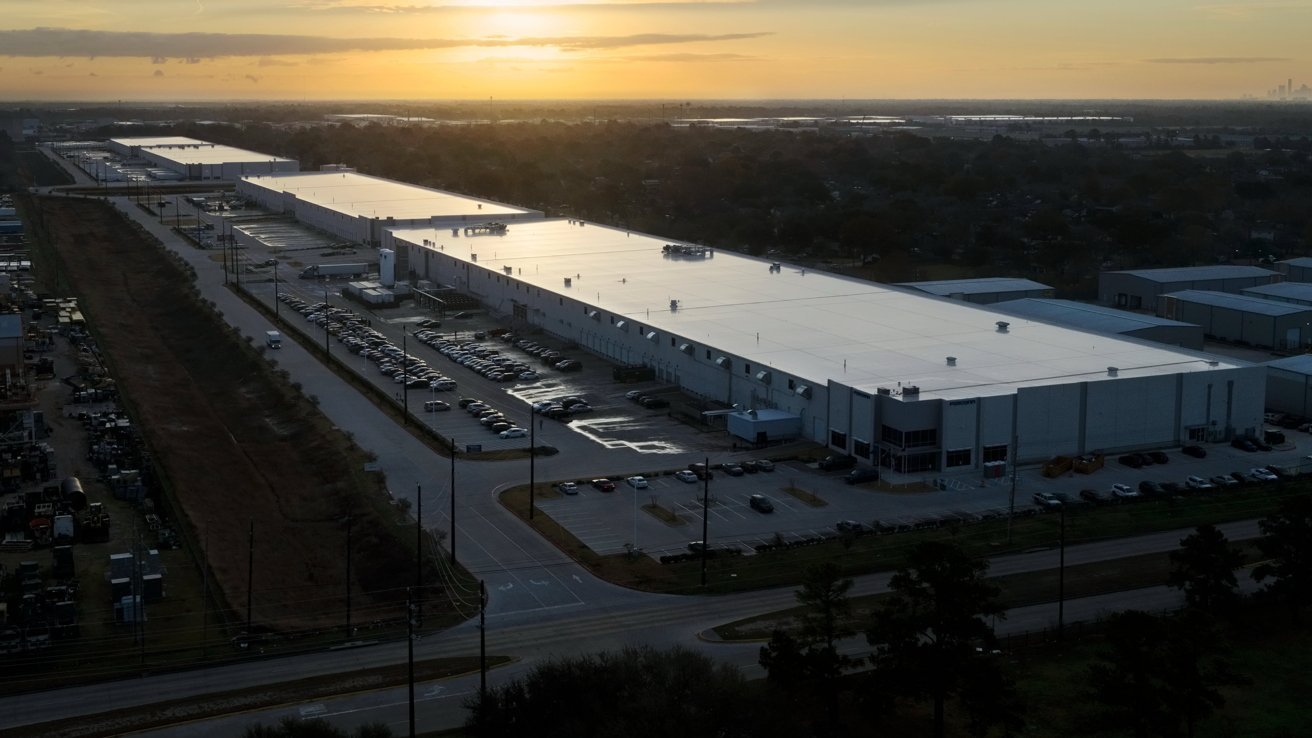
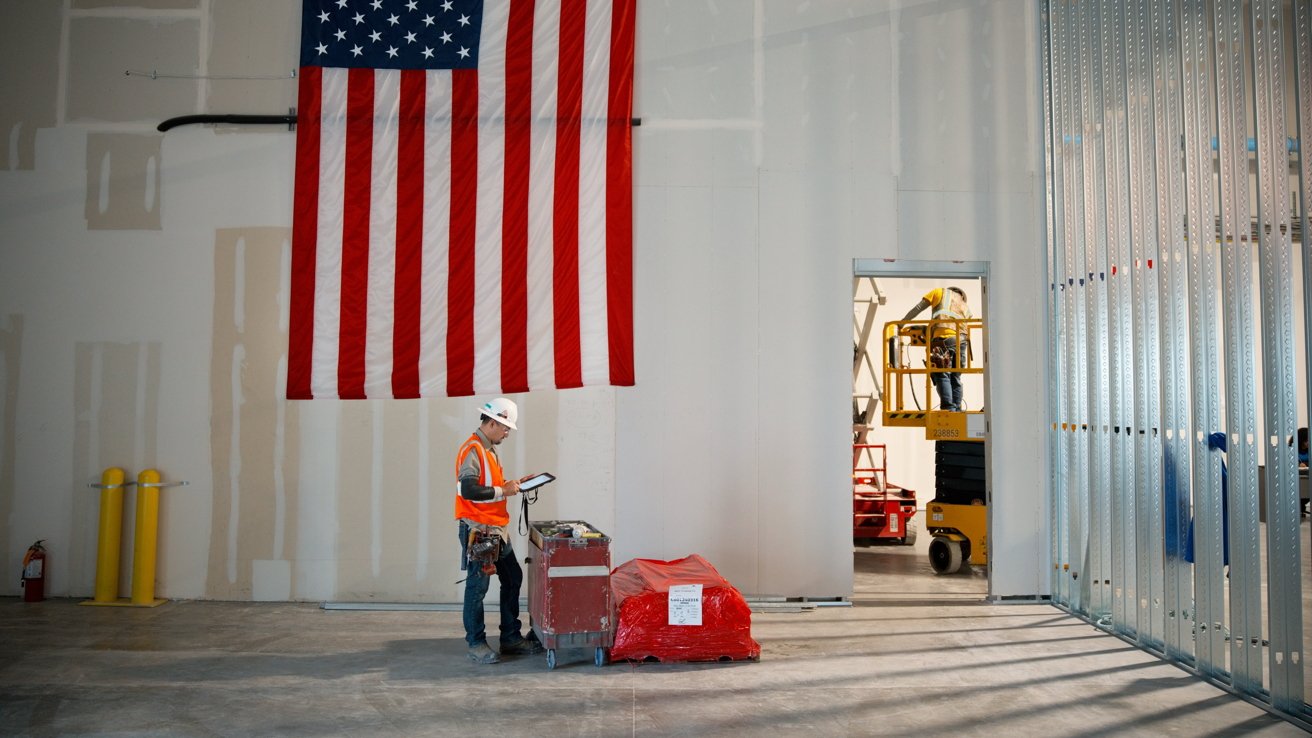
Apple's facilities in Houston - Image credit: Apple
This includes finding the land for the construction and working within municipal rules. Then there's designing the facility with the ultimate goal in mind, in this case, a Mac mini production line.
After all of that preparation work, materials can be bought, and construction itself can begin.
Even that's not the end of the ordeal. Apple's supply chain partner would then have to source the machinery for the line within said factory, install it, and make sure it all works to Apple's satisfaction. Historically, this has taken Apple, a master in the field, as little as a year, and up to three years.
Since Apple's Mac mini line is an expansion of its existing AI manufacturing operation, it saves time in not needing to find even more land. But even so, it has to deal with planning rules and designs, as well as the construction element.
The process Apple had was simpler, but it won't have been a quick enough process to be reactionary to Trump's demands.
TSMC and slowness
A real example of this need for long-term planning of the supply chain comes from TSMC. Specifically, its operations in Arizona.
Back in May 2020, it announced that a semiconductor fabrication plant would be built, with construction planned to start in 2021. It expected to complete the plant and start making chips by 2024.
A worker passing a TSMC sign
This was ambitious but didn't factor in the myriad of obstacles that the construction in Phoenix had to deal with. Problems securing raw materials were a big one, as many elements were imported from Asia instead of being sourced locally.
TSMC didn't finish that first plant until late 2024. The first high-volume chips didn't emerge from the facility until 2025.
After seeing the issues of the first facility's production, TSMC has worked to try and avoid the same thing happening with its other in-progress projects. But even they are being built with a multi-year timeline in mind.
The second TSMC facility in Arizona was announced in 2022, prior to ground-breaking. It probably won't be ready until 2028.
It's not enough just to make chips, they need to be packaged too. Apple has boosted Amkor, a US firm that handles chip packaging.
That factory won't be ready until 2028. Until then, chips for the Mac mini will still need to come from Taiwan, assuming the US plant adopts the most modern manufacturing techniques.
Big projects need more time
While we have touched upon the fact that complex tasks need more time for planning, there's also the matter of scale. Specifically, Apple's scale is super-sized compared to most other companies.
With Apple's sheer number of sales of its various products, whatever manufacturing facilities it creates need to be vast. Big enough to handle not only its current needs, but also its expected future requirements.
There's a reason why Apple had to build up massive supply chains and bases of operation in China and India to build the iPhone. They're complex pieces of hardware that sell in extremely high numbers and that need significant infrastructure.
The Houston expansion for Mac mini won't take on all of Apple's manufacturing needs, not by a long shot. It probably ships about a million Mac minis a year, which still pales in comparison to the 80 million iPhones it sells annually.
Even if Apple ferried a quarter of its Mac mini production through the Houston facility, that still means 250,000 units need to be made each year. That's still a lot of hardware to produce, meaning the factory has to be equally large to cope.
Planning wins
Apple has always been a champion of US manufacturing since the company's inception. They're just being loud about it now, given the political climate.
We're realists, though, and every other company, governmental official of any party, and construction company we've spoken to about Apple's efforts over the last almost-year are too. This will be an enormous effort if Apple chooses to move more to the US.
There are a lot of speed bumps to go slow over, and brick walls to Kool-Aid Man through, fueled by money and politics.
And that all takes time. Years and decades.
Politics and money made Apple shift most of its manufacturing overseas initially, sometimes at the behest of both US political parties. The winds have changed, and they may change again.
That said, ignoring every other factor hampering Apple moving production to the US, factory construction is a time-consuming beast, with timescales for projects that are measured in quarters and years. Even with Apple's resources and scale, it cannot help an assembly partner or supply chain member make buildings that much faster than anyone else.
It's always going to be a painstakingly slow process, and an unavoidable one at that.
Doing so requires Apple and any other manufacturer in the world to carefully think about their production needs. Not just for the immediate year, but for far into the future.
If Apple expects to need a plant in a specific country at some point, it will spend years proving the need, planning, and then building it.
With literally tens of billions of dollars on the line, Apple simply must plan everything well in advance.
Even with all the money in the world, Apple can't go from bare earth to a factory cranking out high-tech hardware in months. It has to wait for it to be done, just live everybody else.
We're not crediting the Biden administration with this Mac mini effort. But it's also not correct to credit Trump's leadership either, but we're sure we'll hear about it during the State of the Union.
Credit where credit is due. Give Apple and Tim Cook the credit where it rightfully belongs.