Iranian citizens are trying to keep themselves safe during the war with the U.S. with a crowdsourced iOS app, but most users are located outside of Iran's borders, out of direct danger.
Warning citizens about airstrikes and troop maneuvers are critical during a war. However, sometimes that information isn't being passed out by authorities to the public, simply because there's no system to do that in the first place.
With no official warning system for incoming airstrikes in Iran, its citizens are fixing the problem for themselves.
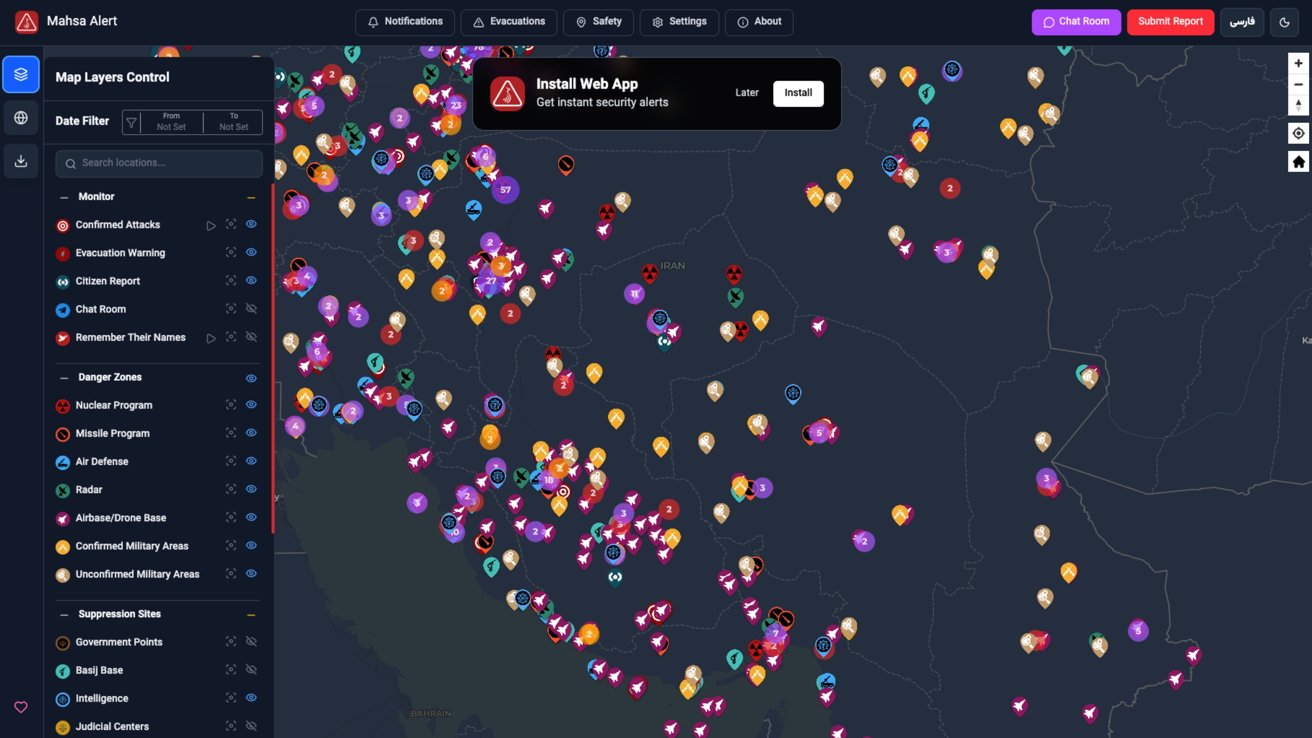
A collection of digital rights activists and volunteers in Iran have created a mapping system called Mahsa Alert, reports Wired. Since Iran lacks any public emergency alert tool, and has also cut off access to the Internet outside of Iran, the tool is intended to provide whatever information it can to people living in the war zone.
While it isn't operating quite like an established and government-sanctioned early warning system, it does provide some assistance. It doesn't have real-time alerts, but it does send push notifications to app users whenever there are any officially-released information for strike locations, attacks, and other events.
Mahsa Alert operates primarily as a website, but it is also accessible as an iOS or Android app.
The apps were made to be lightweight and usable on a wide range of devices. They are also designed for offline use due to the minimal Internet access available to citizens.
Updates are therefore kept tiny, measuring about 100 kilobytes on average.
Maintaining accuracy
The app's information undergoes a lot amount of fact-checking before being included and distributed to its users. An overlay for "confirmed attack" locations uses places that are verified by investigators and the team using video footage or images shared via social media.
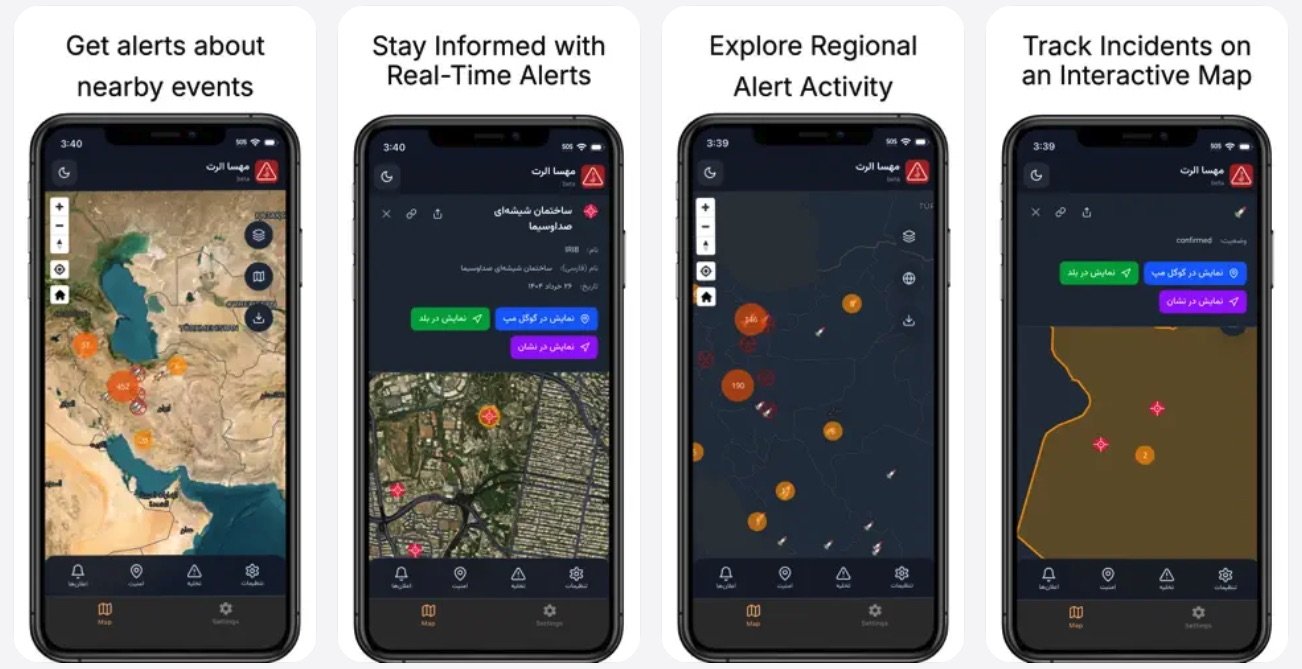
Mahsa Alert in the App Store
Other details include evacuation alerts from Israeli forces, as well as user-submitted tips for events. There are also thousands of locations showing CCTV camera positions, suspected government checkpoints, medical facilities, and religious sites.
Even so, the wealth of information coming in is considerable. The team apparently has a backlog of more than 3,000 reports it is working through to verify.
Being an essential app helping to protect Iran's citizens, it has since become a target in its own right. After its launch, it became the target of distributed denial of service attacks to disrupt the service that have only gotten worse since the war began.
There have also been attempts to poison the domain name, with multiple domains using the app's branding since February.
Popular, outside of Iran
It has become an invaluable tool for its citizens since the start of the war, but it has also gained a following before the fighting started. Back in January, the app started to gain users following an Iranian crackdown on anti-government protestors.
With the current war, the app saw a massive rise in use. It's shifted from near-zero daily users to over 100,000 within days.
So far, the team says that there have been around 335,000 users of the app in 2026 alone. However, the report presents an unusual data point about the effort.
Only about 28% of users are using the app from within Iran itself. More than 70% are users located outside of the country.
While it is not specified why this is the case within the report, there are few reasons why this is happening.
For a start, there's the extremely limited and frequently denied access to the Internet in Iran itself. While the team has worked to make updates as small as possible and enabled offline use, it still requires users to be able to get the app in the first place.
The nature of the app also makes it useful outside of the country. The militaries, the media, and citizens of neighboring countries will be interested in the flow of data as the war progresses.
There's also the families and friends of citizens who live abroad. Concerns over safety may lead some to check the app if someone they know hasn't contacted them in a while.
App intervention
Mahsa Alert is the latest instance of apps being created to distribute information in times of need. When citizens want data that governments won't provide, or would prefer not to get circulated in the first place, services and apps crop up.
In 2019, Apple pulled the HKmap Live app from the App Store, which was used to monitor the movements of law enforcement in Hong Kong.
In the United States, Apple removed apps like ICEblock, which monitored the activities of ICE agents. While the apps were taken down, the U.S. Department of Justice is facing an investigation into whether it violated the First Amendment by coercing Apple and Google to do so.
Sometimes, existing apps and services can be useful for information gathering and distribution, to great effect. And, we're certain that US intelligence is watching the data flow out of this app too.
In 2022, the Ukrainian government created a chatbot in the secure messaging app Telegram, so users could report sightings of invading Russian troops.
Earlier that same year, it was also discovered that Russian forces could be tracked using Find My, because troops couldn't resist stealing AirPods from citizens' homes.