
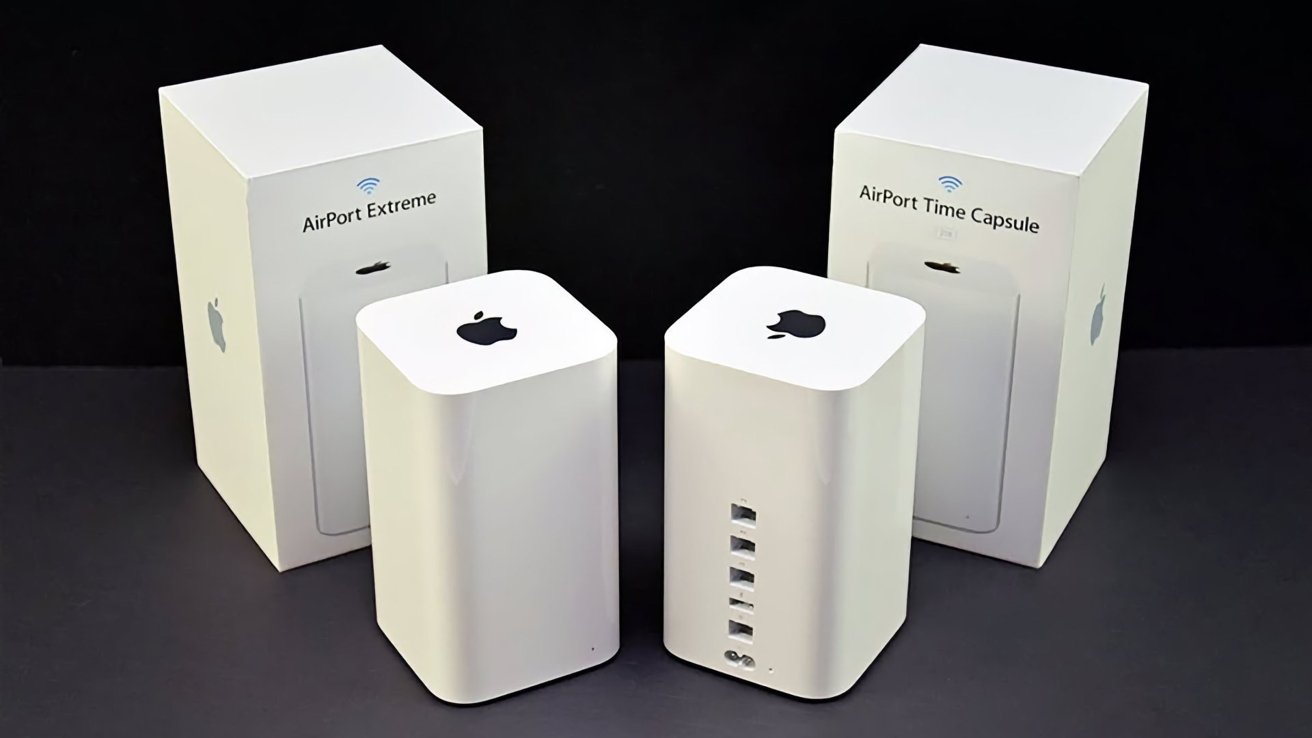
A new GitHub project is trying to retrofit Apple's discontinued Time Capsule with modern SMB support. If this works, Time Machine backups to and restores from the hardware will still work, even after Apple kills it off in macOS 27.
Apple stopped developing its AirPort lineup in April 2018. Devices like Time Capsule have static firmware that doesn't match evolving SMB protocols or modern security requirements.
The company's decision to leave the router market wasn't by chance. Apple decided to concentrate on products and services with more promising long-term growth.
As a result, it left networking hardware to third-party vendors and essentially put Time Capsule on hold. TimeCapsuleSMB tries to solve that problem, and keep the storage and Time Machine features available, by layering a modern Samba server onto the Time Capsule without replacing Apple's system.
The project remains incomplete and highly experimental, with no automation and only manual setup documented so far.
The project's goal is straightforward
TimeCapsuleSMB is all about updating the outdated SMB layer with a newer one, while keeping Apple's firmware untouched. This way, Apple's file sharing stays enabled, so your internal disk, or connected USB ones, keep auto-mounting and working on the forthcoming macOS 27.
A stack of MacBook models
Instead, it installs a modern Samba build to manage file sharing. The hardware power isn't the issue here — Time Capsule still provides decent storage and networking for everyday home use, as that does not take that much processing power.
The real problem lies in the software stack, which hasn't been updated to meet today's SMB standards. To set it up, you'll need to enable root SSH access and copy a cross-compiled Samba build onto the device's storage.
The new service runs on different ports, and packet filtering directs regular SMB traffic to it. Clients connect as usual, even though a different server is handling their requests behind the scenes.
A promising idea that may never fully materialize
As of April 1, 2026, The project is more of a proof of concept than a finished tool. The README outlines a manual process with several steps, like cross-compilation for a NetBSD-derived system and low-level network configuration.
There's no packaged installer or automated workflow available, which is a problem that may or may not get solved. The platform it runs on makes long-term development tough. Time Capsule uses a customized, NetBSD-derived system without official tooling or support.
A lack of guidance forces developers to rely on cross-compilation and unofficial methods, raising the barrier to entry. It also limits how far the project can realistically scale.
Enabling root SSH access and running custom services on unsupported hardware increases the attack surface. Sure, it replaces an outdated SMB implementation, but users are trading one set of risks for another.
The roadmap suggests a future Python-based CLI that could automate discovery, deployment, and configuration. However, this work hasn't been completed yet, and there's no guarantee it will be.
Projects like this often stall after proving the concept, especially when automation and long-term maintenance are needed. Despite the complexity, the approach makes practical sense.
Extending hardware Apple left behind
Time Capsule still has usable hardware, and replacing the SMB layer addresses its biggest limitation. But, the execution is complex enough to limit the audience to advanced users who have likely already moved on to more modern network attached storage solutions.
Time Capsule used to be a staple, but Apple left it behind years ago. The hardware still functions, yet it doesn't seamlessly integrate with today's networks.
Users are stuck choosing between replacing it or finding workarounds.
Projects like TimeCapsuleSMB are part of a bigger trend to extend the life of unsupported Apple devices. These efforts have kept older Macs running the latest operating systems long after Apple stopped supporting them.
However, networking hardware presents its own set of challenges. TimeCapsuleSMB proves that with enough effort, the hardware can still be useful.