Apple hardware has gone into orbit, starting with shuttle-era experiments, through a long exclusion, and now a controlled return on Artemis II. Here's how and when iPhone, Mac Portable, and more have made trips to space over more than four decades.
NASA entered the Shuttle era in 1981 as commercial computing shifted from command-line systems to graphical interfaces. Engineers used off-the-shelf computers to study how crews interacted with software in microgravity, where input methods behaved differently than on Earth.
Early Shuttle experiments unfolded during a brief period when integration barriers remained low. Crews and engineers saw how quickly standard interfaces broke down once gravity was no longer part of the equation.
Shuttle missions grew more complex over time, but certification standards hadn't yet closed the door on commercial hardware in operational environments. Engineers still brought off-the-shelf systems into flight contexts without meeting stricter requirements introduced later.
A narrow overlap allowed commercial computers to operate alongside mission systems. NASA closed this window as Shuttle operations matured and formalized stricter certification requirements for reliability, radiation tolerance, and failure behavior.
Consumer systems no longer fit those constraints and fell out of mission-critical roles. Apple hardware remained present in orbit, but shifted away from integrated use into experimental platforms and crew-side tools.
The early 1990s marked the end of the transition, and one Apple computer crossed that window and operated as part of a Shuttle-era experiment.
Apple hardware appeared in NASA environments before Shuttle-era experiments. Apple II systems supported ground operations and testing as microcomputing entered aerospace workflows.
Those early uses never reached flight systems, but they established how commercial computers could support engineering work. The Macintosh Portable became the first Apple system to move into orbit as part of a Shuttle-era experiment.
Macintosh Portable became NASA's first real Apple experiment in space
The Macintosh Portable marked Apple's first real use inside a crewed spacecraft. NASA flew the computer on Shuttle missions in the early 1990s, with documentation linking it to STS-41 and STS-43 as part of a human-computer interaction experiment.
The system gave engineers a way to study how astronauts interacted with graphical interfaces in microgravity. Researchers focused on cursor control, input behavior, and usability in conditions where normal interaction patterns didn't hold.
Engineers also used the machine as a platform for early crew-side tools. Those experiments helped shape thinking around onboard computing for Space Station Freedom.
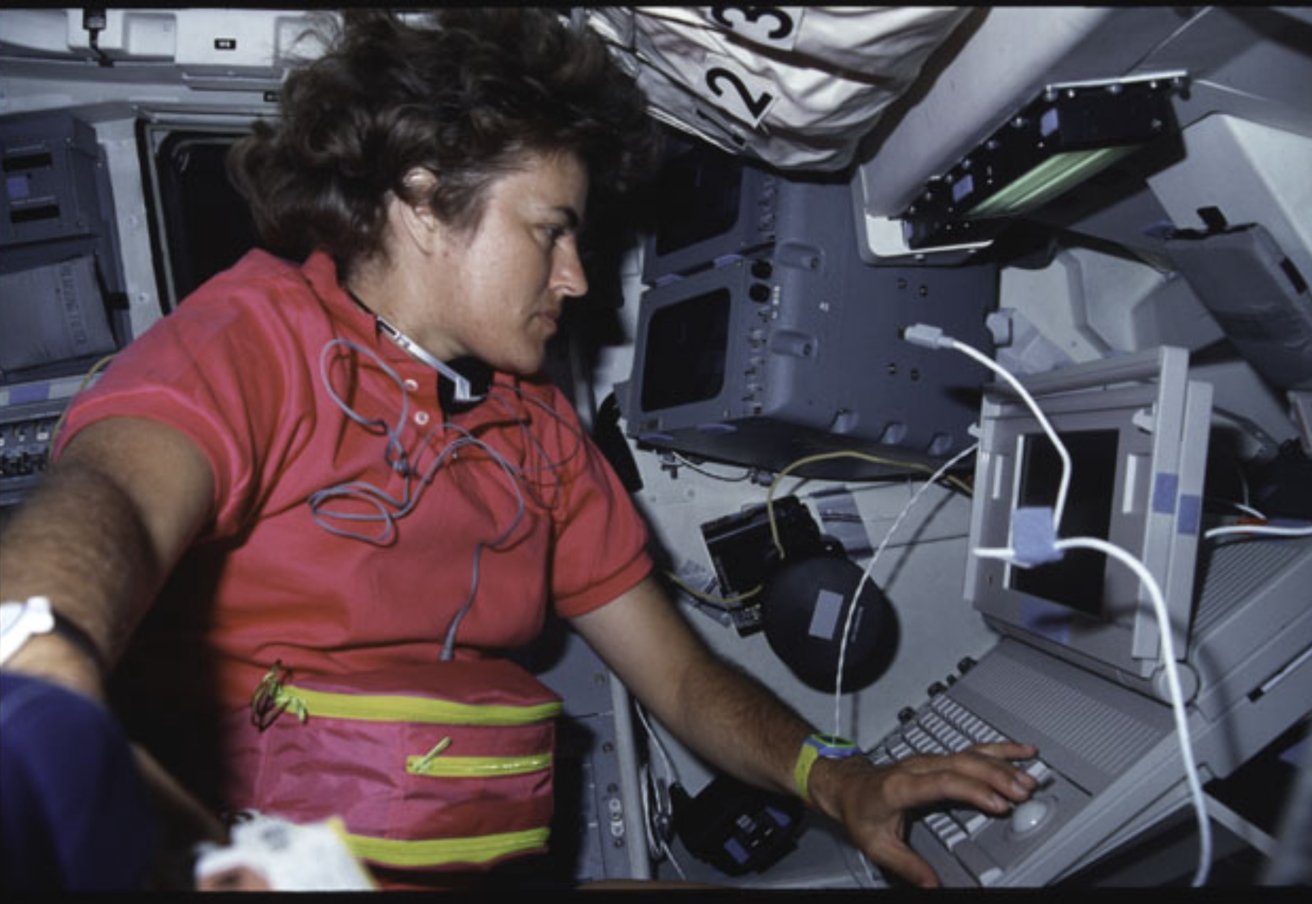
Astronaut Shannon Lucid working on a Macintosh Portable aboard Space Shuttle Atlantis
Microgravity exposed limits in the hardware almost immediately. Reports describe trackball behavior that required modification for reliable use in orbit, where the lack of gravity affected fine control.
Engineers configured a communications setup pairing the Mac with a modem and AppleLink software. Astronauts used the system as a communications endpoint inside Shuttle operations and sent what's widely recognized as the first email from space.
"Hello Earth ! Greetings from the STS-43 Crew. This is the first AppleLink from space. Having a __GREAT__ time, wish you were here,... send cry, and CS! Have a nice day...... Haste la vista, baby,... we'll be back!"
The experiment proved a commercial computer could perform meaningful tasks in orbit when carefully adapted, but only under tightly controlled conditions.
The Macintosh Portable operated within a narrow window before certification standards tightened. Later changes pushed consumer hardware out of mission-critical roles and reshaped how onboard systems were built.
PowerBook 170 pushed Apple deeper into Shuttle-era experimentation
A later Shuttle-era experiment put a Macintosh PowerBook 170 directly into a scientific workflow instead of a usability study. Researchers used the portable Mac during the SLS-2 mission in October 1993 as part of a project called "PI-in-a-Box."
The system acted as an expert tool that helped astronauts run and adapt experiments in real time. It supported research into motion sickness by analyzing conflicts between visual and vestibular signals inside a rotating dome apparatus.
Astronauts used the computer to interact with the experiment while it was running. Apple hardware was now closer to active scientific operations than earlier Shuttle use.
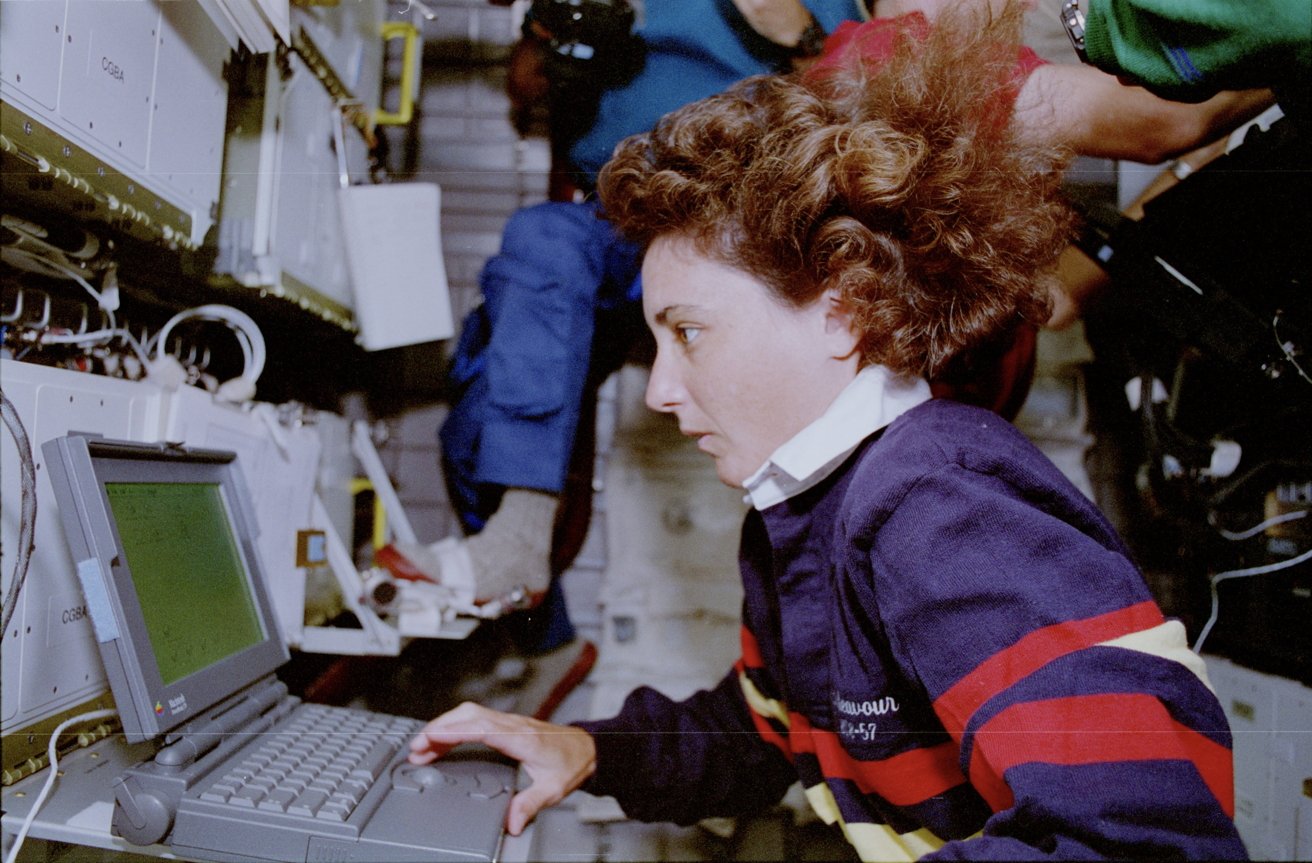
PowerBook 170 on STS-57 in the Spacehab
Naturally, NASA tightly constrained how the PowerBook connected to the spacecraft. The computer linked through a serial connection to a SpaceLab system that acted as a buffer.
The setup isolated the experiment from core Shuttle operations and reduced the risk of interference. NASA still required full space qualification despite Macintosh systems flying before.
Engineers tested the hardware for fire behavior, electrical faults, and material outgassing. Apple supplied the computers used in the project, including the unit that ultimately flew.
The experiment showed how far commercial hardware briefly reached into Shuttle-era operations before certification standards closed that path.
iPod brought Apple back to orbit as a personal device
More than a decade passed before Apple hardware returned to orbit, as tighter certification standards kept consumer systems out of operational roles. By the mid-2000s, astronauts aboard the International Space Station began carrying personal electronics as part of their standard equipment.
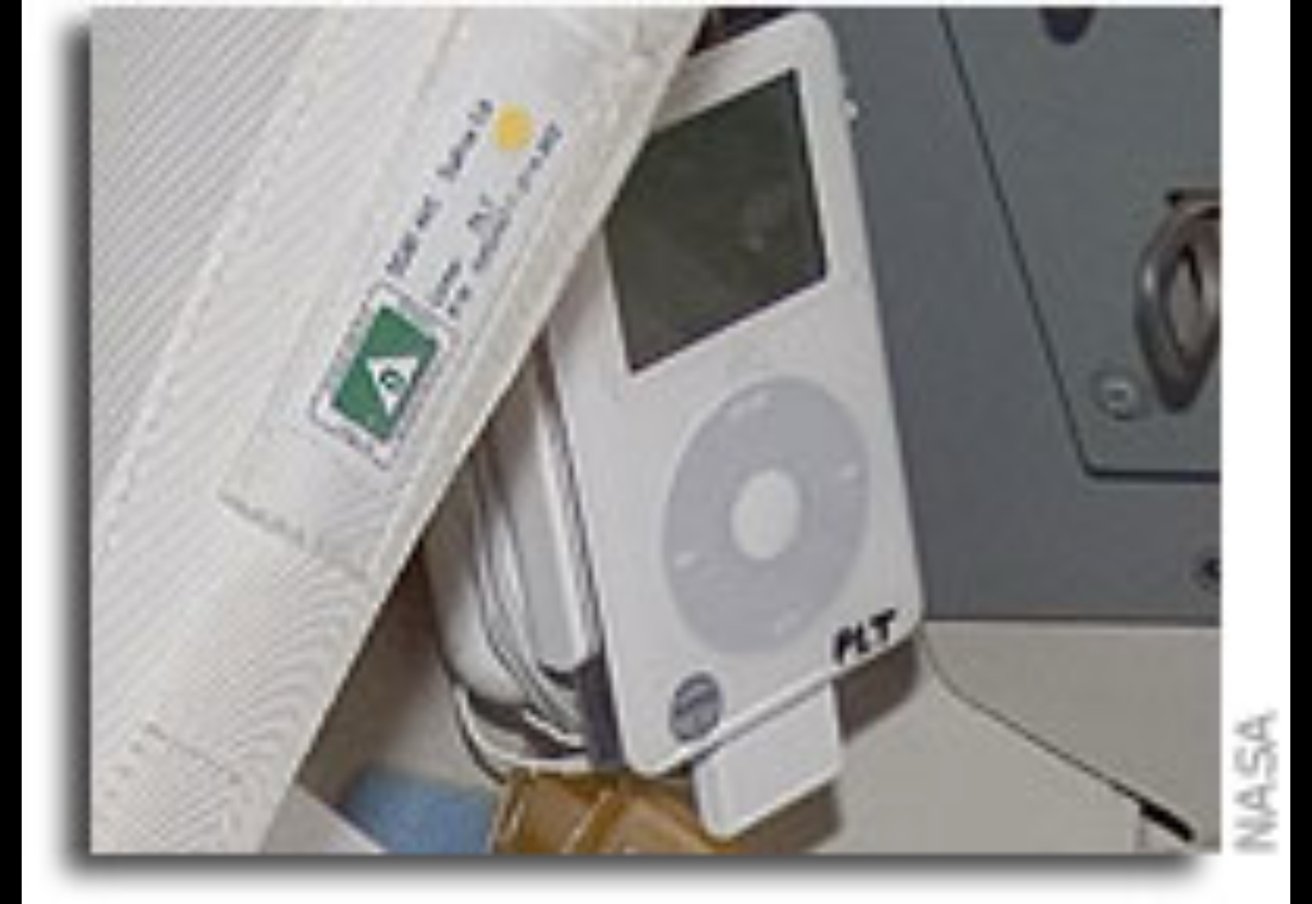
iPod aboard the Space Shuttle Discovery
NASA imagery from 2006 shows an iPod aboard the station. The device is consistent with fifth-generation iPod models common at the time.
Crews used the iPod as a music player and for personal media during long-duration missions. The device floated freely or stayed secured with simple restraints in microgravity.
iPhone 4 tested consumer hardware as a scientific tool on the final Shuttle mission
Apple hardware returned to Shuttle-era testing in 2011 when NASA flew two iPhone 4 units aboard STS-135, the final mission of the Space Shuttle program. The devices served as a test of how consumer hardware could perform in orbit.
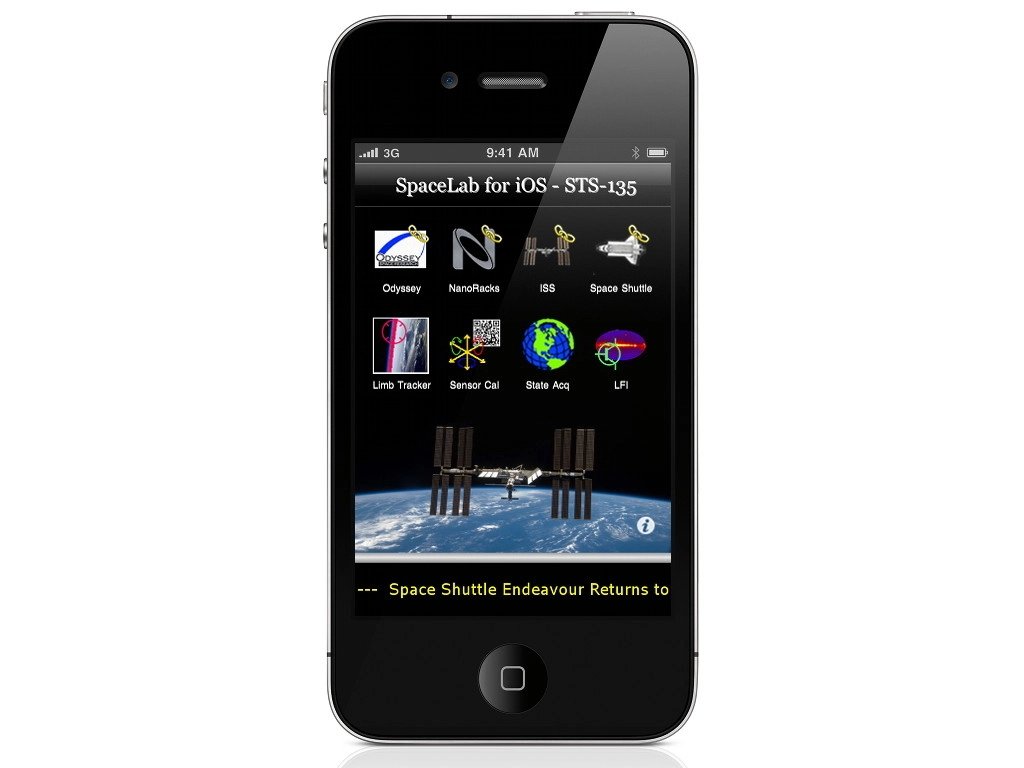
iPhone 4 SpaceLab for iOS app for NASA's last shuttle mission STS-135 aboard Atlantis.
Engineers loaded the phones with a custom app called SpaceLab that used onboard sensors to run experiments. Astronauts captured images of Earth to estimate altitude and orientation, then calibrated sensors and gathered data using the iPhone's camera, gyroscope, and accelerometer.
The tests showed a compact, off-the-shelf device could replicate some functions traditionally handled by specialized equipment. Engineers kept the devices isolated and tightly controlled.
The iPhones remained disconnected from Shuttle systems and weren't used for navigation or flight operations. They stayed separate from mission-critical hardware throughout the mission.
The results confirmed consumer hardware could support meaningful scientific tasks in space when carefully controlled. The iPhone 4 mission demonstrated how commercial devices could take on limited, purposeful roles without changing how spacecraft systems are built.
iPad tested the boundary between personal and operational use
Apple hardware moved closer to operational use in the early 2010s as tablets entered the International Space Station. Crews began using iPad models as portable interfaces for onboard tasks.
A 2012 technical paper examined the iPad as an electronic flight bag for station use. ISS crews relied on printed manuals for emergency procedures. Keeping them current meant launching revised copies or printing updates in orbit, which added cost and slowed routine operations.
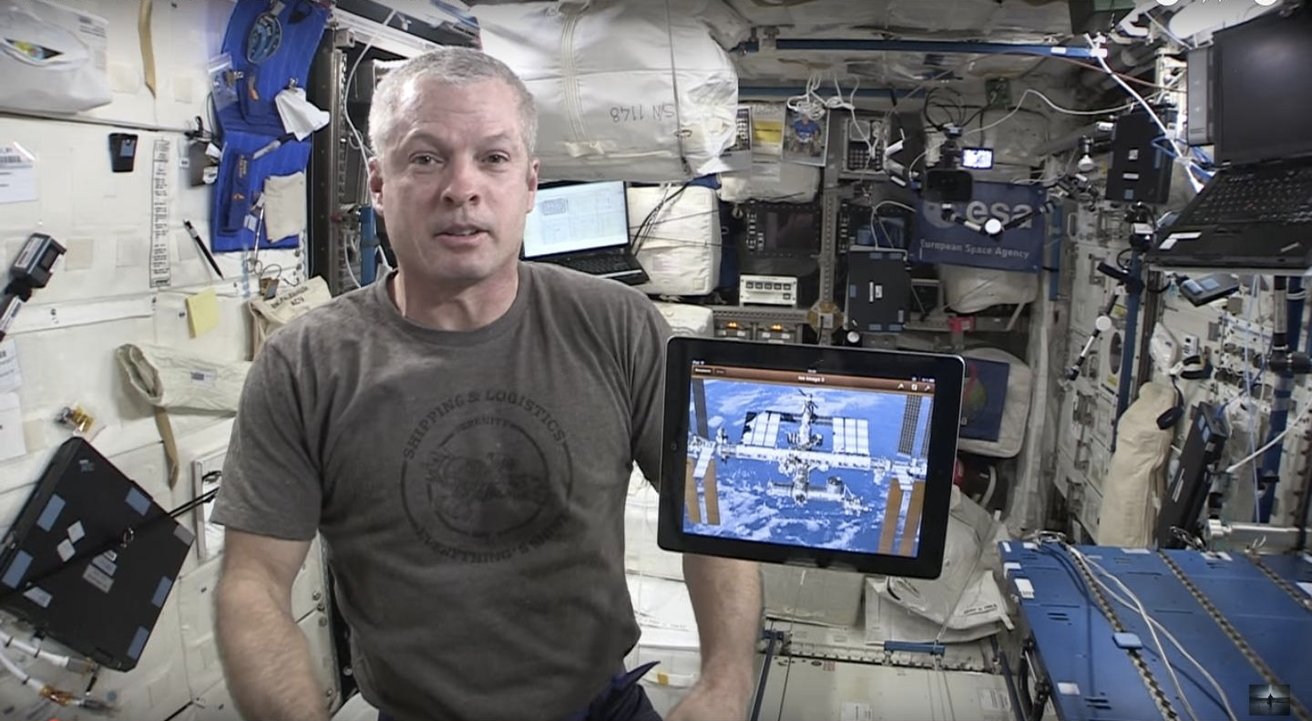
Astronaut Steven Swanson onboard the ISS with an iPad
Tablets changed how crews handled onboard information. Crews accessed updated procedures directly on the device, while ground teams revised documentation digitally.
NASA purchased iPads and deployed them onboard to test how they performed in orbit. Astronauts used the devices to review procedures, reference materials, and operational data. Teams monitored usability in microgravity and during time-sensitive procedures.
Engineers evaluated reliability, accessibility, and how quickly crews could retrieve critical information during emergencies. Paper manuals remained in place as the required backup.
AirPods extended Apple's presence in orbit into everyday crew routines
Apple hardware continued to appear in orbit in quieter ways as long-duration missions settled into routine aboard the International Space Station. These devices weren't part of experiments or formal payloads but were chosen by astronauts for personal use.
In March 2026, NASA astronaut Jessica Meir shared a workout video from the ISS, prominently featuring AirPods as she exercised. ISS crews use treadmills and resistance machines daily to combat muscle and bone loss.
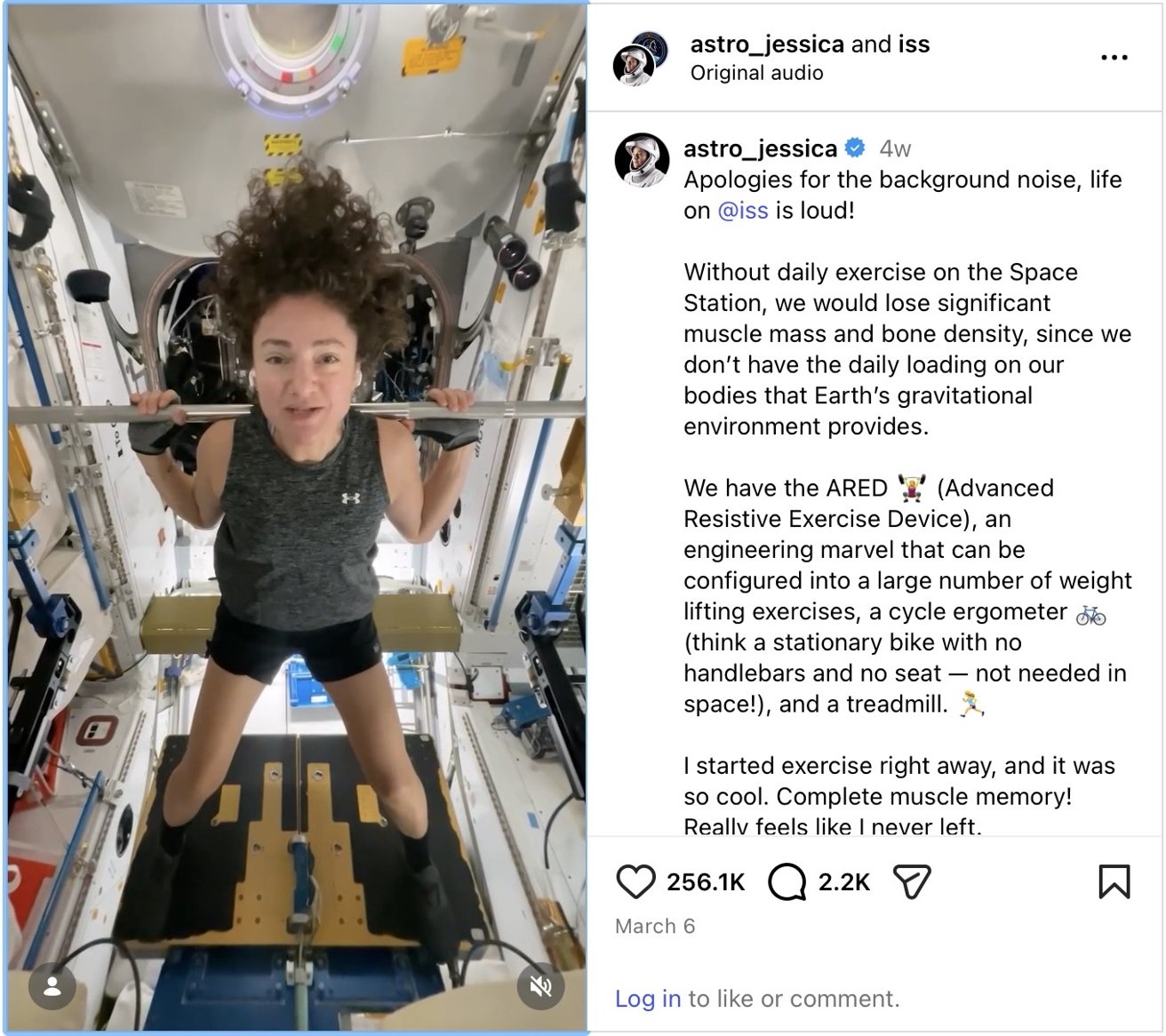
Astronaut Jessica Meir wears AirPods in a workout
The routine is accompanied by constant equipment noise, fans, and ventilation systems. AirPods let astronauts listen to audio or block out ambient sounds while they work through their exercise sessions.
Notably, the earbuds were separate from station systems and communication/operational functions. Like the iPod, they were personal items that enhanced the experience of living in orbit.
iPhone 17 returned Apple hardware to orbit under strict limits on Artemis II
Apple hardware returned to deep space on Artemis II under tighter constraints than before. NASA approved iPhones as personal crew devices, ending decades of restrictions that kept consumer electronics off crewed missions.
NASA imagery and mission coverage point to recent Pro-class hardware consistent with iPhone 17 Pro Max models. Early documentation treated the phones as crew equipment, not as formal payload hardware.
Crews used the phones to document the mission from inside the cabin, capturing photos and video from the crew's perspective.
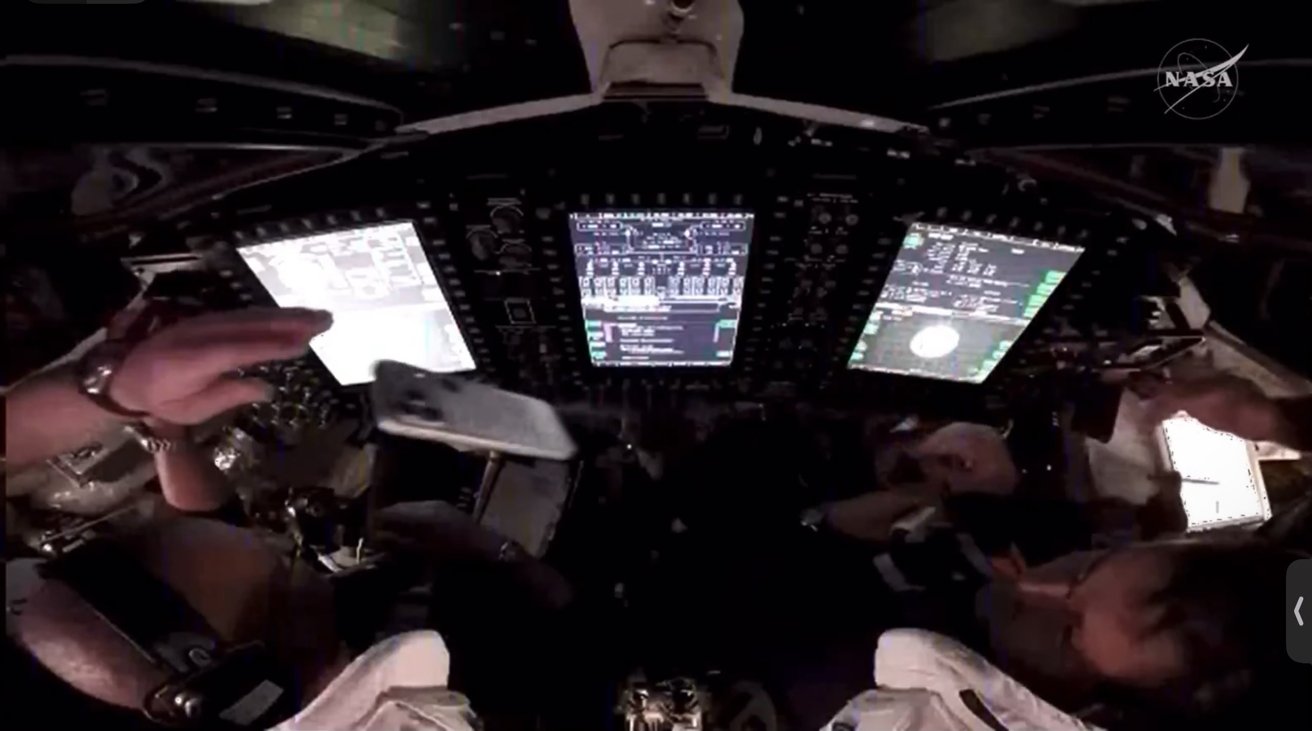
Astronauts on Artemis II pass an iPhone 17 Pro Max around for photos
Engineers integrated the phones under strict limits, including keeping Wi-Fi and Bluetooth disabled. Captured content routes through the spacecraft's communication system instead of the phones themselves.
NASA put the hardware through a multi-phase approval process before flight. Safety teams evaluated risks like glass fragmentation in microgravity and radiation exposure.
Teams built mitigation plans and validated them to ensure the phones wouldn't interfere with crew safety or onboard systems. Astronauts secure the devices with Velcro in zero gravity. Crews store them in suits or cabin spaces during launch and re-entry.
The approach builds on earlier uses of Apple hardware in orbit, including iPhone 4 units flown during Shuttle-era missions in 2011. Artemis II shows consumer devices returning as controlled, crew-facing tools that operate alongside mission systems without becoming part of them.
Apple hardware in space reflects changing mission priorities
NASA tightened the conditions for bringing consumer hardware into orbit, and Apple's history of products in space shows that trajectory. Devices moved from Shuttle-era experimentation into a long period of exclusion before returning under tighter control.
Early systems sat close to mission workflows and helped engineers understand how crews used software in microgravity. Newer devices remain with the crew as tools for documentation and daily use without touching flight systems.
With Artemis II, NASA shows how Apple hardware now operates within modern certification limits instead of the experimental flexibility that once allowed it onboard. Decades later, it came back under completely different conditions, and the role that returned is smaller, more personal, and more human.