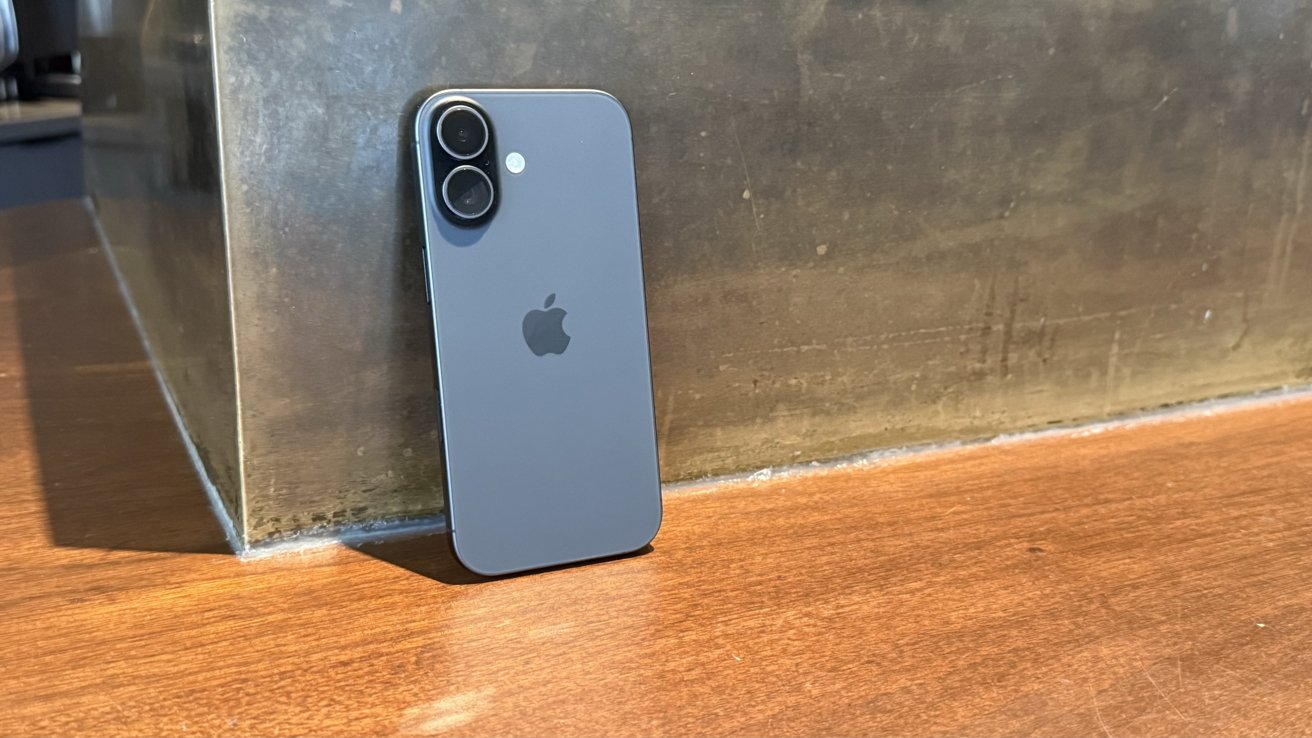
Apple grew iPhone sales in the United States during the first quarter of 2026 even as the broader smartphone market declined, fueled both by strong iPhone 17 demand and Samsung's delayed Galaxy S26 launch.
US iPhone sales volume rose 1.3% year over year during Q1 2026, according to Counterpoint's US Monthly Smartphone Channel Share Tracker. The US smartphone market declined 5.7% during the same period, while Android smartphone sales fell 14.4% year over year.
Apple gained share across AT&T, T-Mobile, and Verizon during the quarter. Verizon showed the largest shift, with Apple reaching a 77% share of smartphone sales in Q1 2026.
Supply constraints during the 2025 holiday quarter continued limiting iPhone availability into early 2026, extending demand for the iPhone lineup through much of the first calendar quarter. Counterpoint said the base iPhone 17 model also saw stronger demand than expected during Q1 2026.
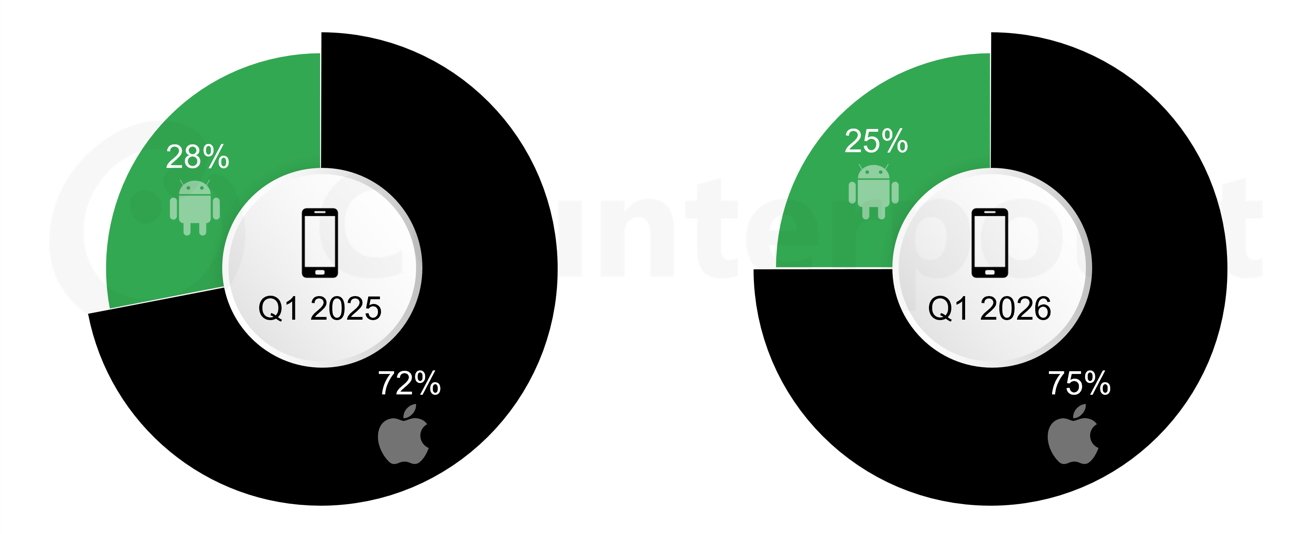 Apple increased its share of smartphone sales across the three largest US wireless carriers during Q1 2026. Image credit: Counterpoint Research
Samsung delayed the Galaxy S26 launch until mid-March, creating a wider opening in the premium smartphone market during Q1 2026. The US premium smartphone segment remains heavily concentrated around Apple, Samsung, Google, and Motorola.
Launch timing matters more in that kind of market because flagship devices drive a large share of upgrade activity.
Apple's pricing and carrier strategy continue strengthening its position
Carrier relationships remain one of Apple's biggest advantages in the US smartphone market. Verizon showed the largest shift during Q1 2026, with Apple reaching a 77% share of smartphone sales.
Apple's advantage extended beyond Samsung's delayed Galaxy S26 launch. The company kept iPhone 17e pricing relatively stable while increasing entry-level storage to 256GB.
Rising memory costs pushed competing smartphone makers toward higher prices during the same period. Carrier incentives, financing offers, and ecosystem retention increasingly shape purchasing decisions alongside hardware specifications.
Apple also strengthened its promotional position across devices priced above $600 in US postpaid channels during the quarter, outperforming Samsung in Counterpoint's Smartphone Promotional Index. Apple's pricing and carrier strategy place greater emphasis on keeping users inside the iOS ecosystem and expanding long-term services revenue.
The report said that strategy may limit hardware margin growth in some segments. Smaller Android vendors may struggle to match the company's pricing consistency, carrier support, and marketing scale as component costs continue rising.
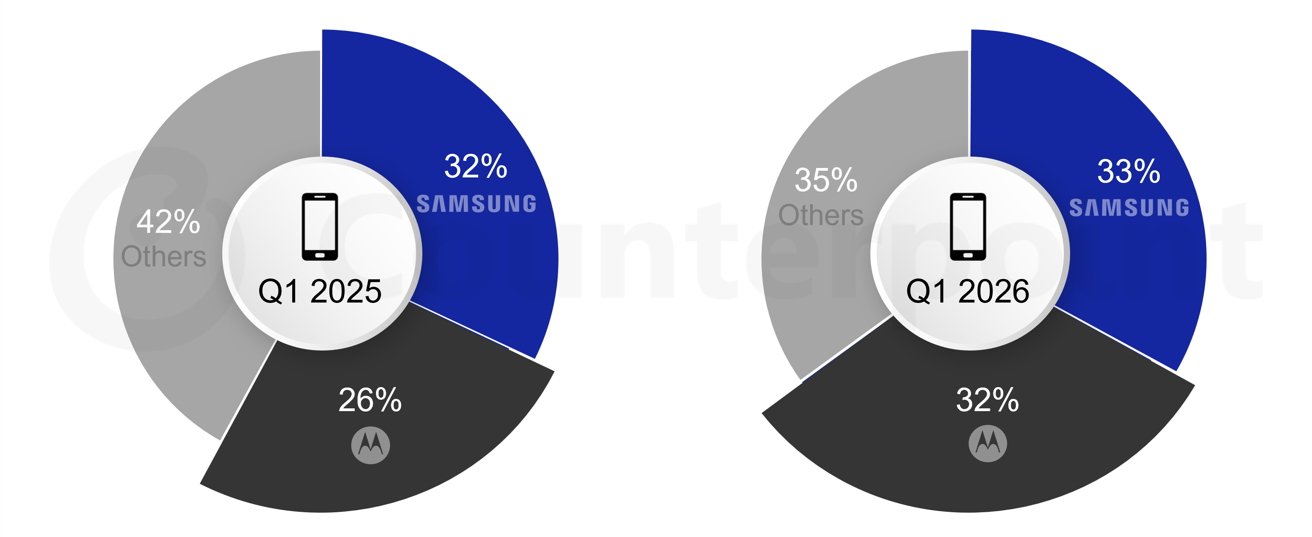 Samsung and Motorola gained share in prepaid and national retail smartphone sales during Q1 2026. Image credit: Counterpoint Research
Prepaid and low-cost smartphone segments continued weakening across the US market during Q1 2026. Higher gas prices and debt payments offset the impact of larger tax refunds, leaving lower-income consumers under continued economic pressure during tax season.
Sales weakness was particularly severe below the $100 smartphone tier, where rising memory costs and shrinking margins are putting pressure on smaller Android brands. Samsung and Motorola gained share across prepaid channels such as Cricket and Metro.
Brands including TCL, HMD, Maxwest, Orbic, and Blu lost share, delayed refresh cycles, or struggled to maintain marketing support during the quarter. Those shifts point toward a more consolidated US smartphone market as smaller brands lose ground.
The US smartphone market is becoming more consolidated, with Apple strengthening its position in premium devices while Samsung and Motorola absorb more of the shrinking low-cost segment.