
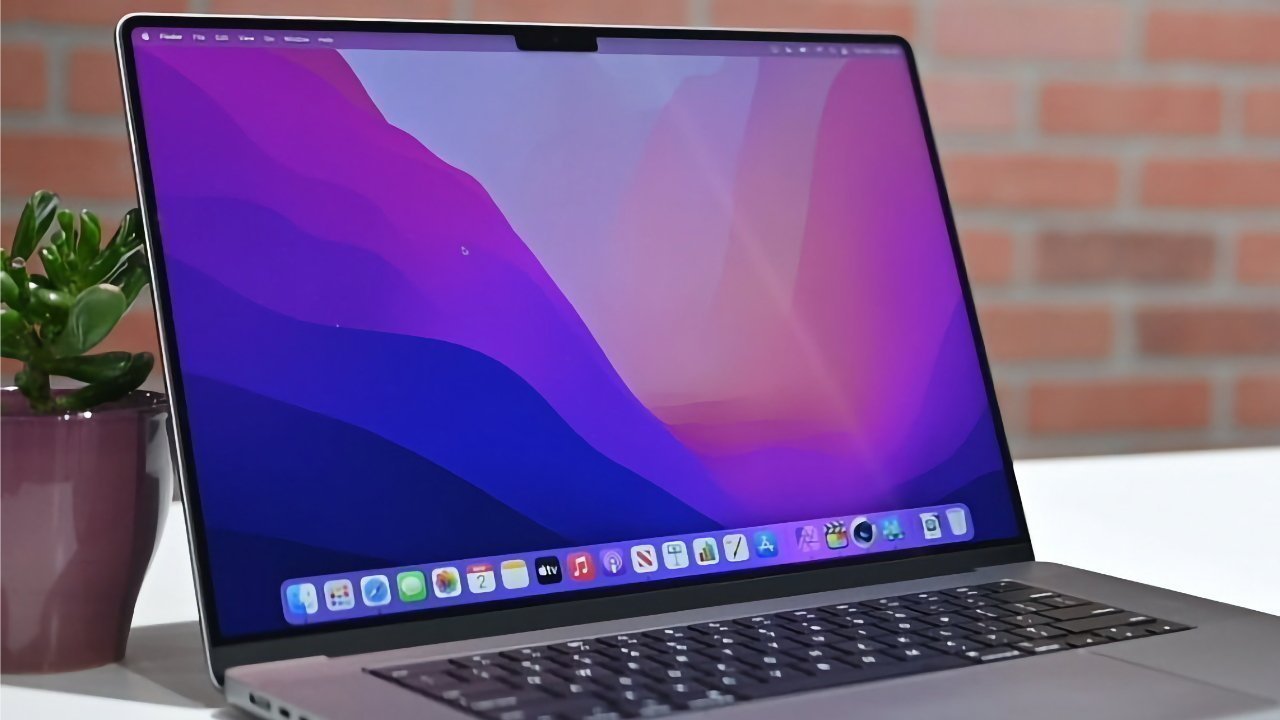
An Apple executive has confirmed the M5 MacBook Pro is imminent, and probably arriving Wednesday, October 15. Here's what and what not to expect from the launch.
The tech industry has been waiting for Apple to roll out its October launches, with an update to the MacBook Pro expected alongside an iPad Pro and Apple Vision Pro refresh.
Unusually for Apple, while it hasn't used the second Tuesday in October to actually launch new hardware, an executive has effectively confirmed something is on the way. Specifically, an M5 MacBook Pro refresh.
Following months of rumors and speculation, the update is on the way. It probably won't be a major overhaul.
Here's what you can expect from the inbound new model.
M5 refresh
The almost certain change for the new MacBook Pro is an upgrade to the M5 Apple Silicon chip. Since the current MacBook Pro lineup is based on the M4, it's only logical that the M5 will be the next iteration.
It also helps that the "Joz" social media post used the term "Mmmmm" as a minimally-subtle nudge in that direction.
Notably, we are not expecting M5 Pro or M5 Max MacBook Pros to arrive until early 2026.
On Sunday, we had claims that a second launch was expected to happen this week. We've also had an FCC model number leak as another clear indication of a launch being on the horizon.
Apple Store supplies of the M4 MacBook Pro — but not the M4 Pro or M4 Max models — are also constrained.
Even macOS Tahoe has indicated a timeline of a base-model M5 launch in 2025.
M5 Performance expectations
While we can expect the M5 to be "better" than the M4 in performance, we do have a bit more of a clue than normal. Number crunching based on the M5 iPad Pro leak gives more of a picture of what's on the way.
Single-core performance from testing of a leaked iPad Pro that seemingly ran on the M5 chip was apparently up 12.3% versus the M4 iPad Pro, while multi-core performance was raised 15%.
AppleInsider ran the numbers and extrapolated that an M5 MacBook Air could be about 12% better than the M4 for single-core performance. A 15% improvement for the multi-core performance is also not outside the bounds of possibility.
In effect, that multi-core increase puts the estimated M5 MacBook Air as better than an M3 Pro MacBook Pro and an M2 Max Mac Studio.
Keep in mind that the MacBook Air has similar thermal limitations to the iPad Pro. Since the MacBook Pro has active cooling on its side, performance from the M5 MacBook Pro will be a bit better for longer processing runs, but about the same for day-to-day use.
No Pro, No Max
While the M4 MacBook Pro launch saw the introduction of the M4 Pro and M4 Max variants at the same time, we probably won't see the M5 equivalents this time around.
The M4 Pro and Max MacBook Pro launches are probably a byproduct of Apple's introduction of the M4 iPad Pro a few months earlier. Usually, Apple brings out multiple devices using the same chip, such as a Mac mini or a MacBook Pro, but it didn't at the time.
The full M4 MacBook Pro lineup was most likely Apple catching up with the M4 model, despite not doing the earlier launch.
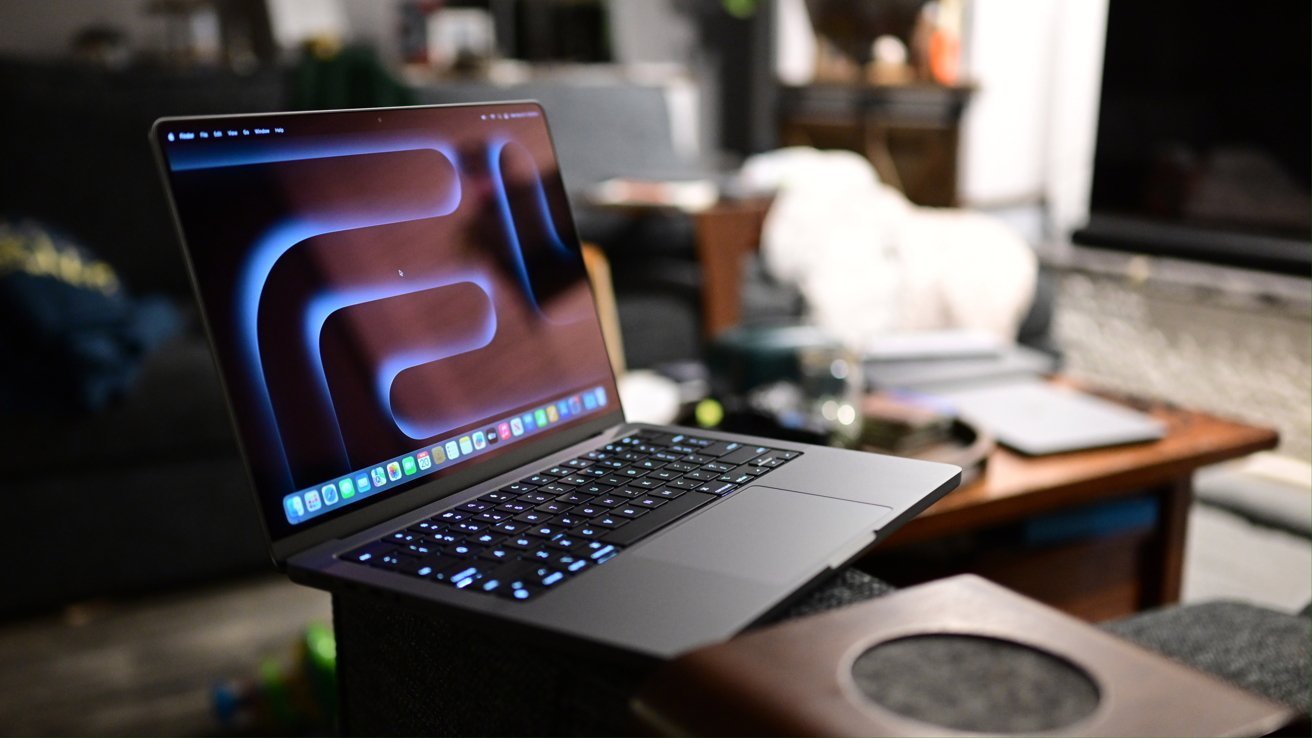
The 14-inch MacBook Pro update will probably get just M5, not M5 Pro nor M5 Max.
Since the M4 Pro and M4 Max still launched months after the M4, this continued Apple's usual chip launch cadence, if not lining up the products with it.
As the M5 is about to launch, we can expect the M5 Pro and M5 Max to turn up in a few months' time, along with their MacBook Pro counterparts.
This isn't just an educated guess, but also surfacing in rumors. It is generally believed in the rumor mill that the more powerful models of MacBook Pro will arrive in early 2026.
It also probably means that Apple will be introducing just an update to the 14-inch MacBook Pro. The smaller size is the only option with a base M4 chip, while the 16-inch MacBook Pro is sold only in M4 Pro and M4 Max varieties.
Apple could bring out a 16-inch MacBook Pro with M5, but it seems doubtful based on past releases.
A spec-bump update again
While the M5 change is the most likely one to happen, it is likely the only real change that will happen in the 2025 MacBook Pro launches.
The rumor mill also agrees with this sentiment, with no major redesign anticipated for the generation at all.
This isn't out of the ordinary, as spec-bump updates happen regularly. Processor swaps are more common than omnibus redesigns.
Future models could get some big changes, such as Apple's own-design modem for cellular connectivity.
With 2026 being the 20th anniversary of the MacBook Pro, it makes an overhaul for that year's generational releases much more likely.
Chief among those changes is a switch over to OLED for the screen. However, that's a change for then, not now.