A new report suggests the long-rumored Apple Home-focused tablet is expected to launch in March 2026 with two configurations, will cost $350, and be made in Vietnam.
Apple is finally ready to launch the "Home Hub" tablet device and smart cameras that have been rumored since 2021.
According to a report from Bloomberg, Apple will build its Home Hub tablets in Vietnam in a continued effort to reduce its reliance on China. The report also mentions the smart indoor security camera, codenamed J450, is expected by the end of 2026.
Apple is targeting a $350 price point for the Home Hub device, which is more expensive than the large second-generation HomePod that's currently for sale. A robotic version of the device with a larger 9-inch display is expected by the end of 2027 closer to the $1,000 mark.
Apple would build these devices with a company called BYD Co. It is expected to handle final assembly in Vietnam, and may begin assembling some iPad models as well.
Apple's Home Hub strategy
The report differs slightly from previous descriptions of Apple's Home Hub efforts. It was once described as a single 6-inch tablet, codenamed J490, that could be carried around the home and mounted to speakers, walls, or articulating arms that would be sold separately.
The latest description says the display is roughly 7 inches and comes in two versions. The J490 model is mounted to a speaker base, and the J491 model is built ready to be mounted to a wall.
While the report doesn't clarify, it seems these are the same product with different accessory configurations. The previous description of the battery-powered tablet device being carried to different mounting locations in the home likely still stands.
However, here it is clear that users will be able to choose from the two configurations, retailing for $350. There is no word on how the Home Hub tablet might be purchased separately or how much accessories and additional mount points might cost.
Apple allegedly envisions a home having multiple tablets and mounting points throughout a home. The company would theoretically sell at least one tablet per family member — however, this isn't an iPad.
Home Hub's purpose
If all of this sounds somewhat redundant, it's because this is meant to be a passive device with multiple users. That's opposed to the iPad being a device with wide-ranging utility meant for a single user.
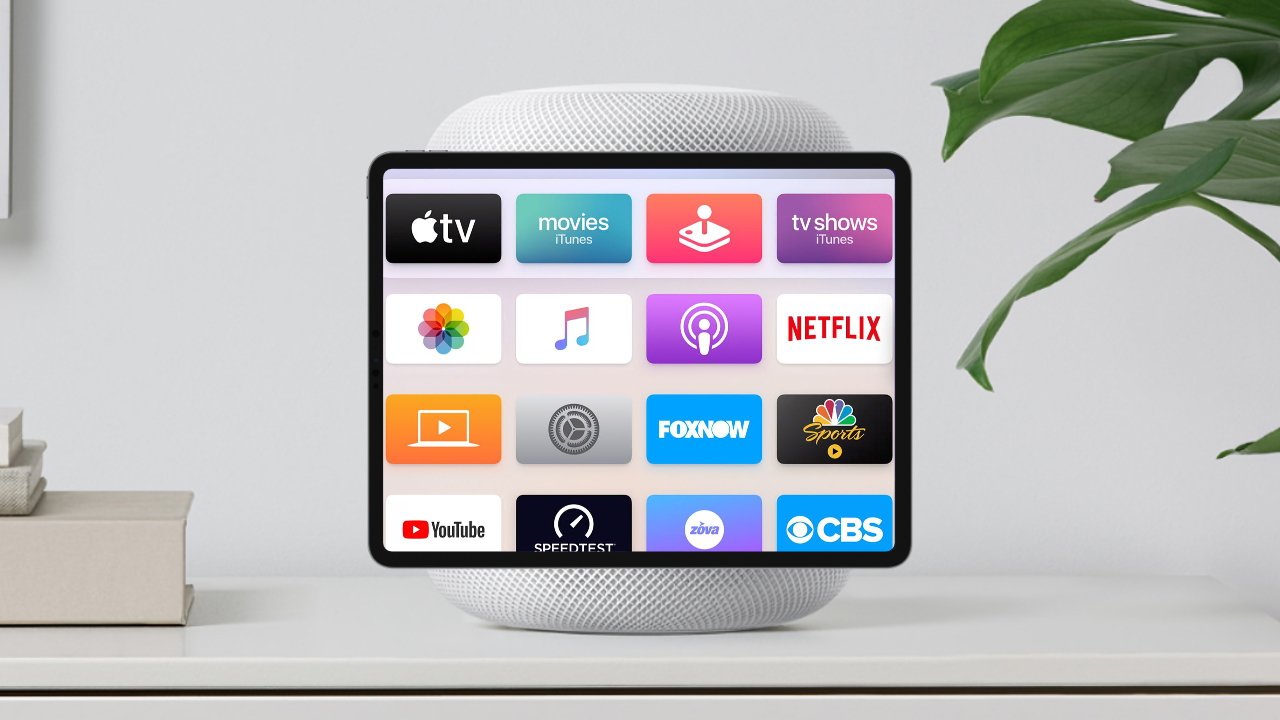
Apple is making portable displays that attach to speakers
Apple executives are happy to admit they'd love if customers buy any number of every one of their products. The Home Hub tablet could easily act as a companion device to the Apple ecosystem without too much overlap.
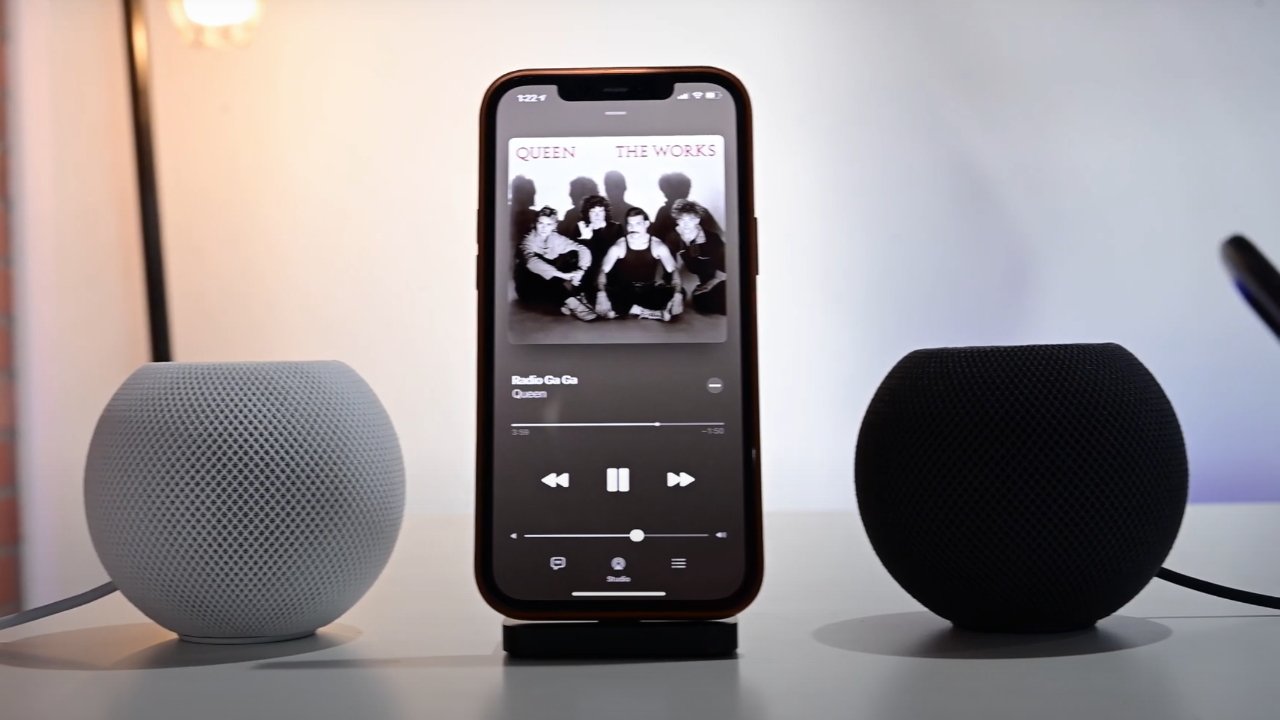
For example, I've got an iPad mini at my desk that mostly serves as a display for what's currently playing on my office HomePods. Using it this way puts wear on the battery, keeps the display firing full blast (there's no always-on mode), and isn't exactly fulfilling the $500 tablet's purpose.
Instead, the iPad mini could return to being used when it is needed, and the Home Hub tablet could act as an always-on home control unit with widgets, notifications, and more, operating separately from my devices. It's certainly a luxury, but one that comes with lots of interesting use cases.
The Home Hub is expected to change what is displayed based on the proximity of a user and facial recognition. One family member could resume their favorite podcast while accessing recipes on an articulating arm in the kitchen, then later, a different family member could play a playlist from Apple Music with it mounted in a speaker dock in the living room.
Sure, everyone could pull out their iPhone or iPad and view the now playing information via an AirPlay 2 connection, but that doesn't apply to guests. The Home Hub becomes the true realization of the home control center.
Apple is expected to reveal the Home Hub and its ecosystem in March 2026, likely as a companion to the new LLM-backed Siri. Later versions of the device are expected to lean into more Apple Intelligence use cases with some personality added to the mechanical arm.