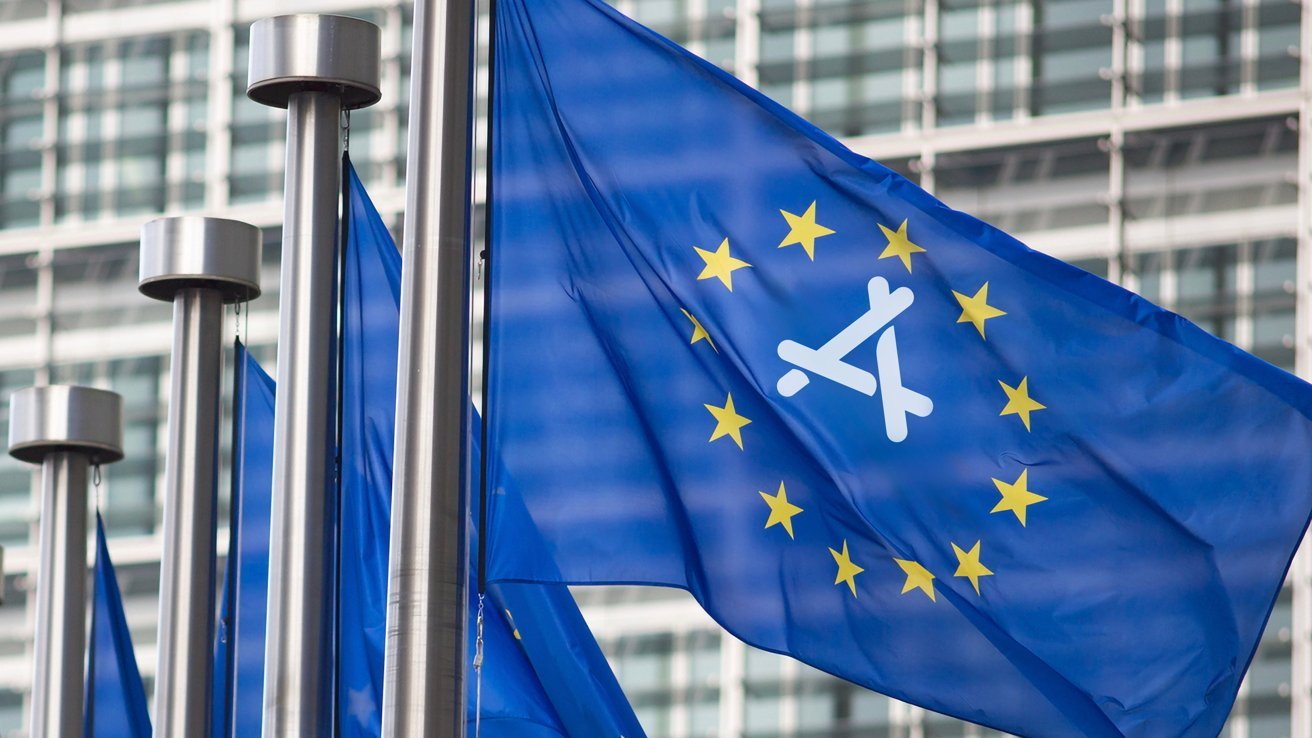
Instead of just arguing the benefits of Apple's ecosystem, the company is going on the offensive and challenging the core legality of the European Union's Digital Markets Act in court in an increasingly entrenched dispute — where it doesn't seem to matter that Apple is right.
In September 2025 as part of the European Union's formal — but possibly token — review of its Digital Markets Act (DMA), Apple filed a comprehensive complaint about the law's enforcement. Now according to Bloomberg, that complaint is being presented in court, with the EU arguing against it.
Apple lawyer Daniel Beard has been speaking at the General Court in Luxembourg. He said that the DMA "imposes hugely onerous and intrusive burdens" on Apple, and this goes against the company's rights within the EU market.
Specifically, the DMA also makes demands "that ignore the protection of property rights and issues of privacy and security, which are vital to EU citizens," he said.
In response, the European Commission lawyer Paul-John Loewenthal said that Apple maintained "absolute control" over the iPhone. Loewenthal says that it is because of this control that Apple is able to earn extraordinary profits and handicap its competitors.
Saying that "Apple has locked in more than a third of European smartphone users," Loewenthal claimed that the company decides who does and does not get to offer services to iPhone users.
Apple's argument
Apple's stance in court comes down to three basic issues:
- Interoperability security
- The App Store's eligibility for the DMA
- The EU's iMessage investigation
That last concerns an apparent attempt by the EU to investigate Apple's iMessages under the DMA rules. Apple argues that iMessage does not generate revenue.
The App Store clearly does, and Apple has been fined over its alleged non-compliance with the DMA. But Apple argues that the App Store does not even qualify under the DMA definition of what it covers.
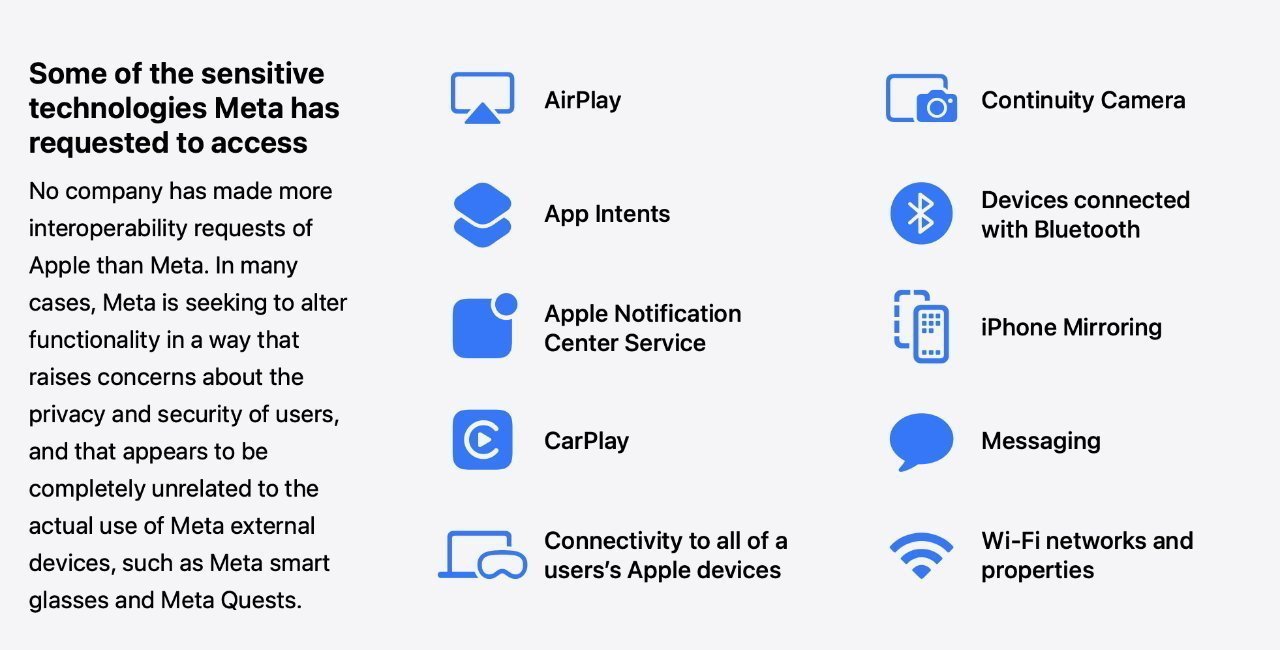
Apple has previously cited examples of how Meta has demanded sensitive information under the DMA — image credit: Apple
However, chief amongst these three is the issue over interoperability and how Apple says that DMA demands are putting privacy at risk. Apple has previously cited the demands under the DMA from Meta, for user details unrelated to Facebook services.
Security matters
Speaking to European press after Apple's written complaints about the DMA, Commission spokesperson Thomas Regnier simply disparaged the company's entire position.
"Nothing in the DMA requires companies to lower their privacy standards, their security standards," he told reporters.
That may actually be true on a technicality, because the DMA regulations put the onus on Apple and other such firms. "In all cases," says the DMA, "the gatekeeper and the requesting provider should ensure that interoperability does not undermine a high level of security and data protection."
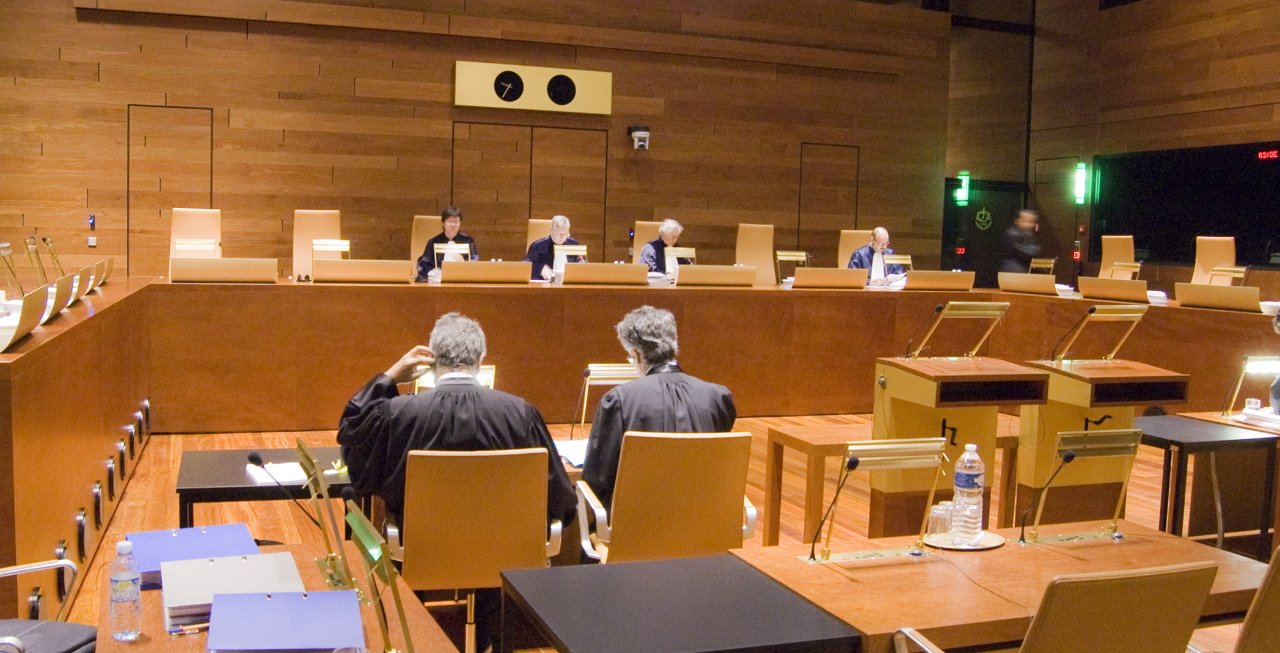
Interior of the General Court — image credit: Court of Justice of the European Union
So the DMA requires security and protection for consumers. But the enforcement of this law has seen the EU demanding Apple make changes that unquestionably do undermine or even remove such security.
Consequently it's conceivable that Apple could do everything the EU demands — and then be fined for the outcome not being secure.
More tellingly, though, Regnier's comments are saying that the EU will not listen — and has not listened — to Apple's arguments. "We of course fully get companies want to defend their profits at all costs, but that's not what the DMA is about," he continued.
It's an intentional stance to paint Apple as being solely against losing money. For its part, Apple while undoubtedly also thinking of its bottom line, is trying to position itself as being genuinely concerned about users' privacy.
All of which makes a nonsense of Regnier's repeated remarks about "positive engagement," and how he also disparages Apple's claims of "wanting to be fully cooperative."
What happens next
This hearing is part of the EU's first reappraisal of the DMA. The Union will repeat its appraisal every three years.
As part of this process, the European Commission must present a final report to the European Parliament, Council, and the European Economic and Social Committee. That final report must be delivered by May 3, 2026.
At time of writing, there are no published details of the current hearing. Consequently it's not clear how long the court process will take, or whether there is any appeal structure.
But then, Apple is arguing against the EU's DMA in an EU court. It is arguing against representatives of the EU who are either shockingly uninformed, or are willfully favoring rival companies over users' privacy.
There is no possibility that the EU will replace the DMA with new laws. It's also very unlikely that it will do anything at all to address Apple's complaints.
Conceivably, the best result Apple can hope for is that there might be an end — or at least a lessening — of what it describes as the EU changing the goalposts.
Even if that is achieved, though, it is likely to take some years. Until then, EU users will continue to be denied Apple features that the company believes it will be fined for implementing.