Earlier in 2025, a startup reached out to us about a its 3D sports streaming startup for Apple Vision Pro. The grim reality of money, licensing, plus tech limitations of streaming 3D live sports makes it almost impossible for a startup to solve.
Since its launch, the Apple Vision Pro has been about giving users an experience. Whether it's looking around a spaceship or an Immersive Video on a submarine, or even a snow-covered village in Iceland, there are lots of things to see and do with the headset.
However, while you can watch streaming video on a massive screen within a large novelty scene, it's not quite the same as being at a stadium. You're not getting the experience of being surrounded by fans and watching sports stars run around some supremely-kept grass.
With the Apple Vision Pro now in its second generation, as well as Apple moving deeper into sports, there is hope that the two can join up and result in an immersive broadcasting experience.
To a point, it is. Albeit in extremely small doses.
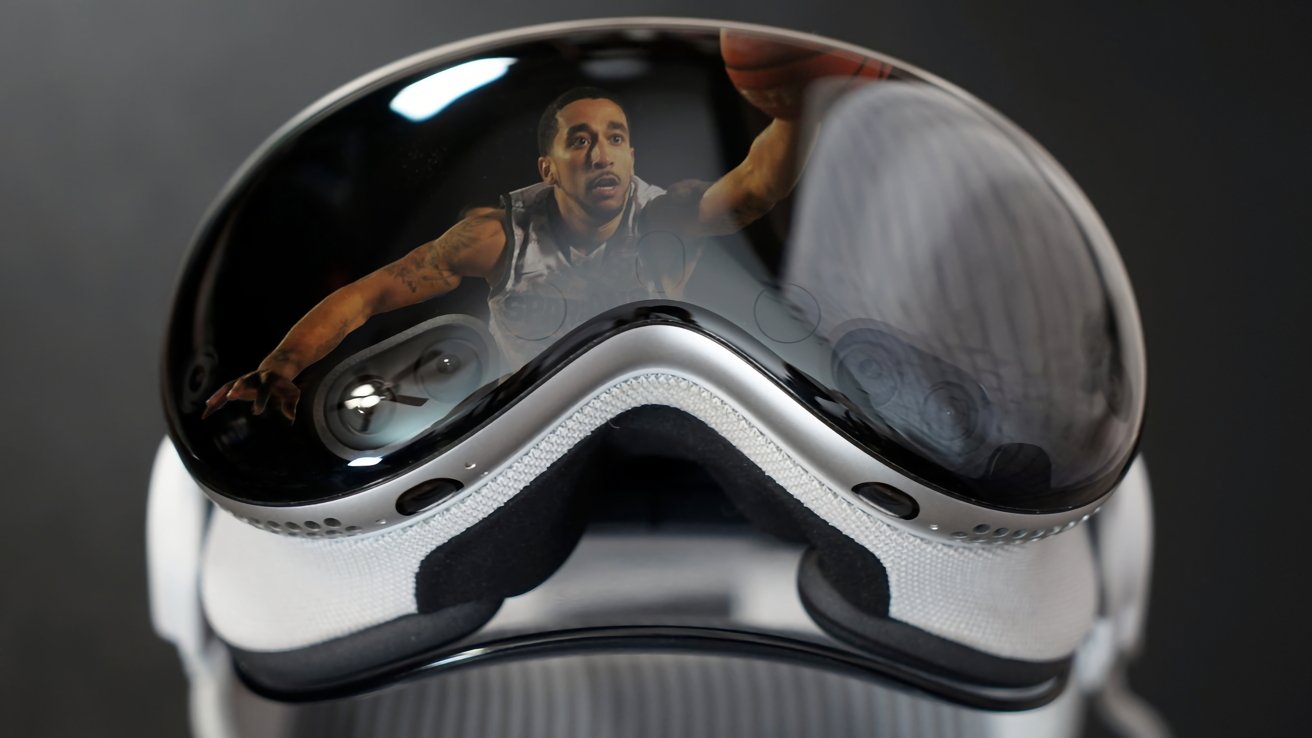
When it comes to its connections with the NBA, Apple has recorded a Slam Dunk contest using its cameras. There will also be a selection of Lakers basketball games streamed in 180-degree Apple Immersive video during the 2025-2026 season.
The real problem is that it's a dream that is far away from happening on a much wider basis, for many reasons. In short, it's an expensive and difficult thing to create, and the audience isn't big enough to be worth it right now.
Startup unfriendly
At first glance, it seems like a field where a small startup could quickly make their mark under the right circumstances. A scrappy upstart with the right know-how and a little bit of luck can make all the difference, at least while wearing rose-tinted glasses.
That's certainly not the case, unless they have a significant amount of support behind them.
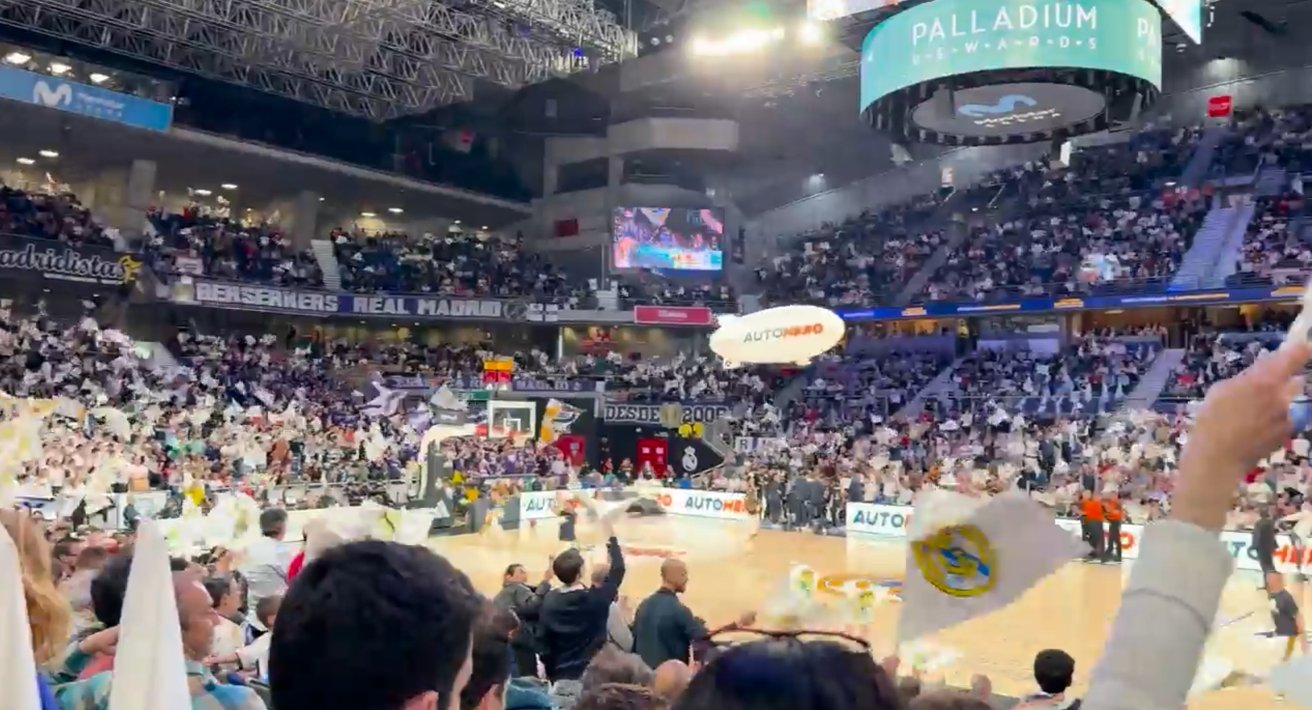
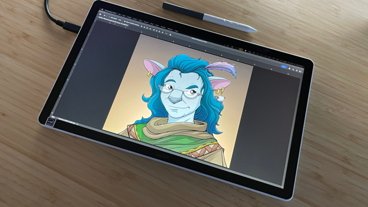
An image from a Be There promotional video - Image Credit: OneEightyDegrees
One of the drivers behind this article was AppleInsider's discovery of a startup called OneEightDegrees back in June. It was a small company that seemed to want to play a part in immersive video, with a glossy website to match.
That website exhibited many traits of a minimum viable product, hawking itself as a way for Apple Vision Pro users to get their own seat at a sporting event. Rather than watching a video from broadcasters, they would instead use immersive video captured by specialist cameras located in or near the stands at the event.
AppleInsider contacted the company about its licensing and supported platforms. We were told that it was an "early-stage company" that was growing quickly and gaining investment.
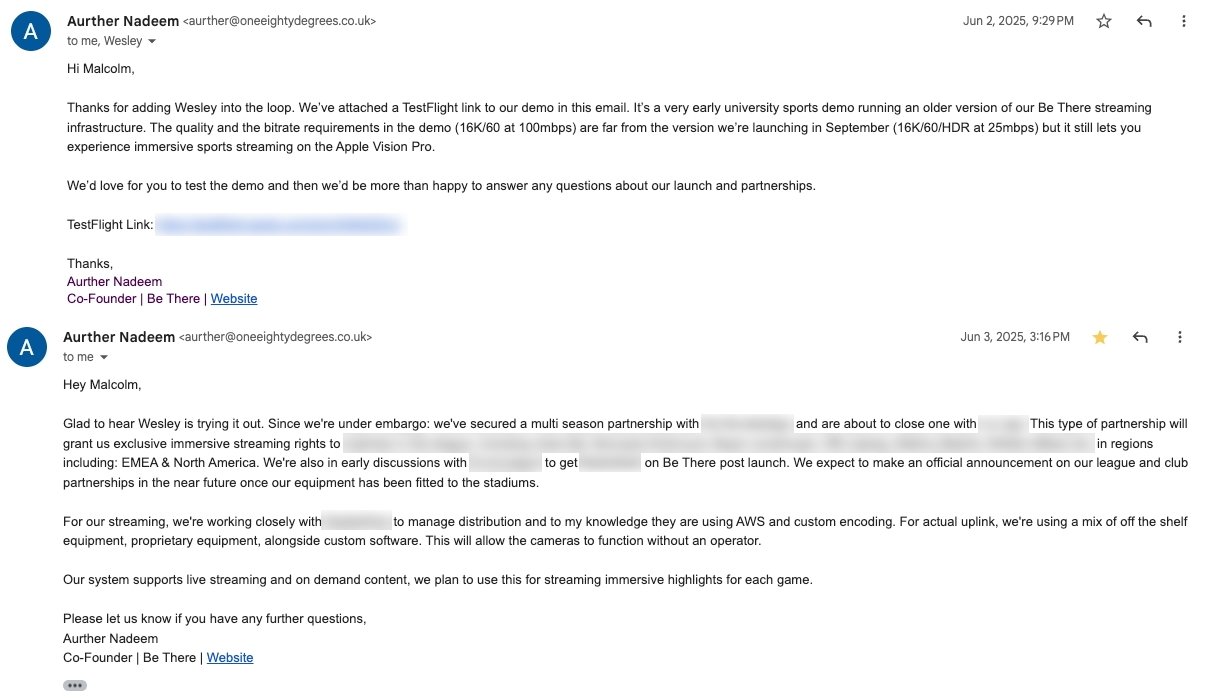
Redacted emails between OneEightyDegrees and AppleInsider
The initial product, Be There, was made for visionOS, though apps for other platforms were also said to be under active development. There were also claims that it had held conversations with football leagues and clubs across Europe, and that more information would be provided under embargo.
AppleInsider is keeping to the spirit of the embargo by not disclosing the identities of any other parties named in emails. However, other information has been posted about the company.
A LinkedIn post by Co-founder Aurther Nadeem over the summer proclaimed there were over 1,100 "waitlist signups" for "Be There" within 24 hours of the initial launch. It also insisted that the company is working to secure exclusive VR streaming rights.
In emails, the startup said a launch of a product was expected in the early fall of 2025, complete with initial live match streaming at "16k/60fps" and a required bandwidth of 25Mbps. User testing was also underway with the Apple Vision Pro.
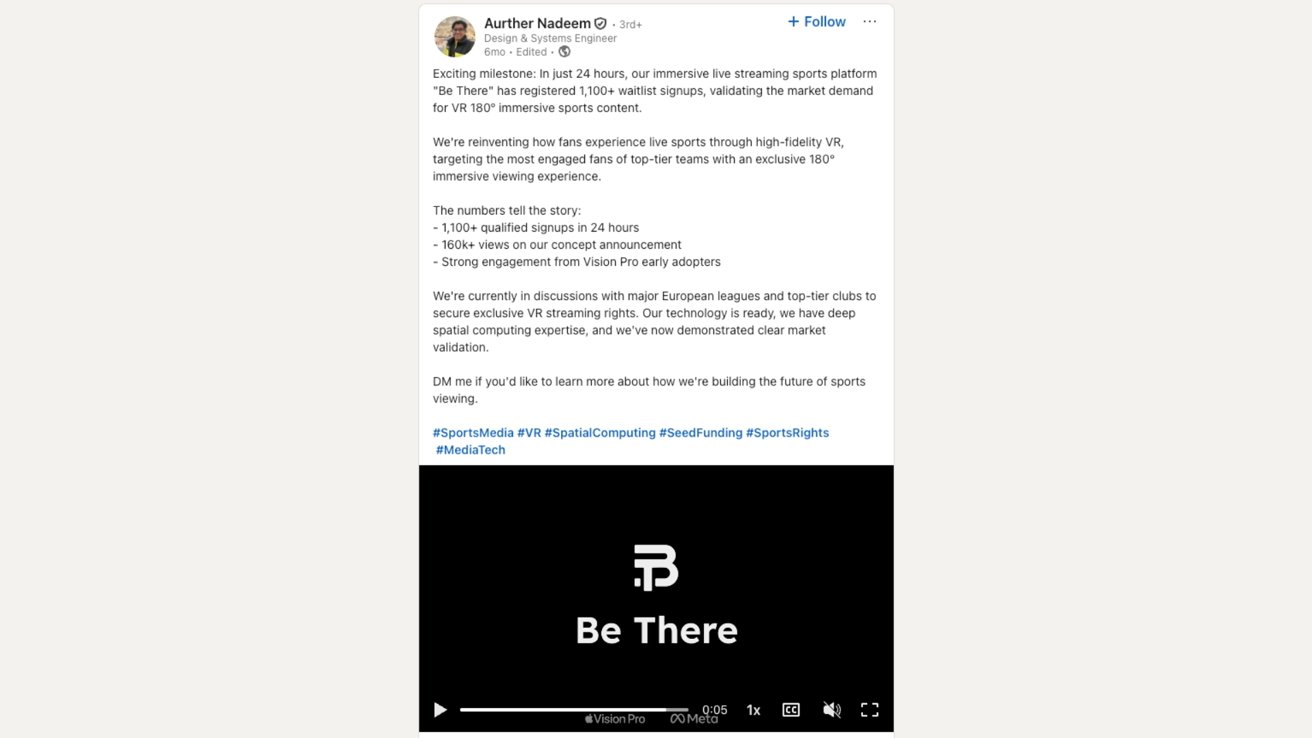
A LinkedIn post promoting OneEightyDegrees' Be Seen platform
The post added that the company was "raising" a round of funding worth 5 million pounds ($6.6 million) to scale its platform. However, that may have been an optimistic target as the post said the startup was "looking to connect with investors," which is never a guarantee of raising funds.
Indeed, the email conversation with AppleInsider included a request for an intro with potential venture capitalists or other investors interested in the space.
An attempt to catch up with the company via email in early November, ahead of this post's publication, was not responded to by the firm.
The startup's communications were massively optimistic overall, but it seems quite questionable whether the company could've actually pulled off what it was trying to plan. There are multiple red flags casting doubt on the project's legitimacy.
This includes the attempted funding round's relatively low target, as well as the astoundingly minimal reporting on the company in general. So far, the only real sources of information have been emails under embargo, a LinkedIn post from the founder, and a website that was initially public.
At the time of publication, that site is password-protected. It still lives on in the Wayback Machine.
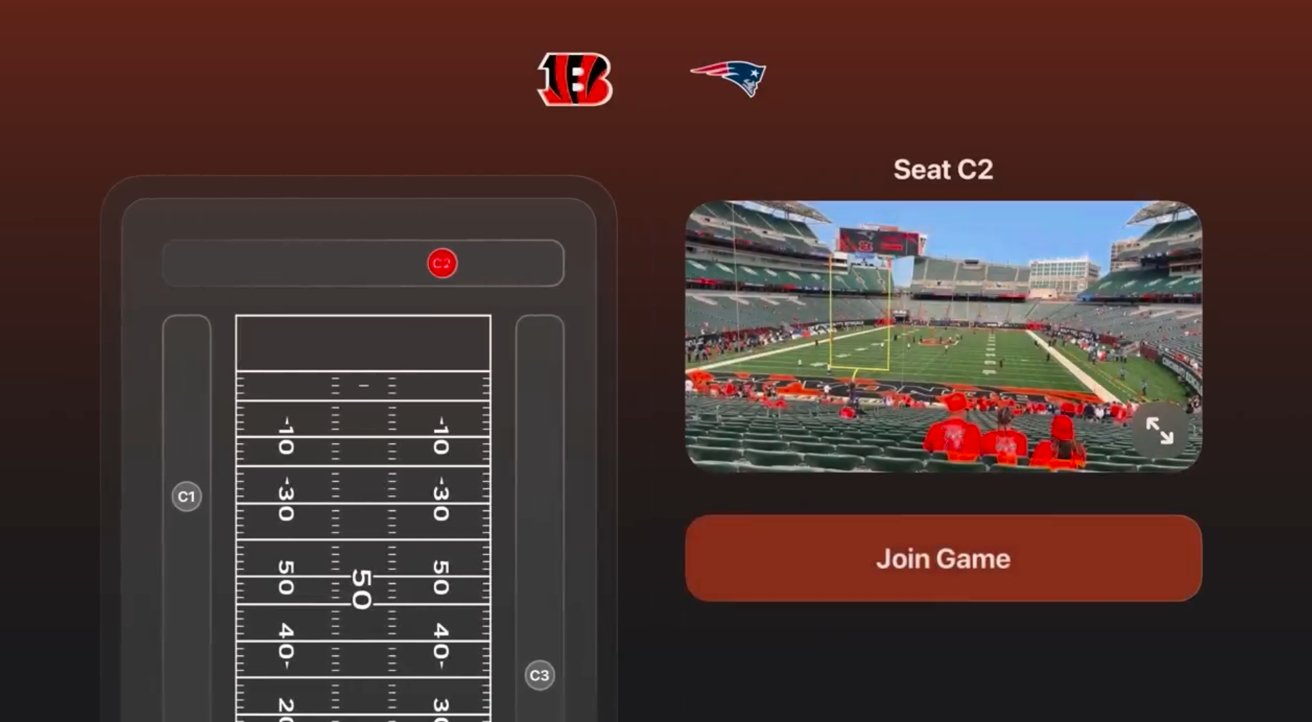
An image from a Be There promotional video - Image Credit: OneEightyDegrees
Deeper searches into OneEightDegrees reveal that it was registered as a company in the United Kingdom in March 2025, a short time before its initial tease and LinkedIn post.
Nadeem's LinkedIn page is also more damning, showing them as being a college graduate as of July 2025, and enrolled in a Master's course from September. Their experience includes being a founder of Eden Software and other engineering roles at firms including Skinja and Thoughtful Partner.
All told, while it is possible that OneEightyDegrees and its Be There platform is a legitimate startup, it doesn't seem likely to be a successful one. It could be a fishing expedition, in an attempt to secure a one-in-a-million chance at funding and to become a real service.
However, even if we were charitable and believed that it had secured its funding and was making an actual product, its chances of success would be extremely slim anyway. We've reached out to them several times in the last few months to be met with silence.
A week ago, we told them we were going live with what we had.
It's clear that there's neither the funding nor the experience at hand for the company to become a big player in immersive broadcasting. Or, even a player at all.
Licensing, and the massive sums needed to pay for it
The initial hurdle behind any effort to make immersive sports streaming bigger is money. Specifically, how much you will have to pay to be given permission to do it in the first place.
Major sports franchises are well-heeled operations, thanks in part to licensing everything the organization can to the hilt. That includes the extremely lucrative rights to broadcast events.
This is an area that Apple has considerable experience in, due to having negotiated rights agreements with a number of big names. It's why there's MLB's Friday Night Baseball on Apple TV, or the season pass for MLS.
More recently, Apple managed to secure the position of official U.S. broadcaster of Formula One. It's a five-year deal, which was forecast before its announcement to cost Apple up to $140 million per year.
Apple's F1 deal costs hundreds of millions of dollars - Image Credit: Apple
Broadcast rights negotiations are notoriously difficult to secure, and also restrictive once you actually secure one. Just because a broadcast rights deal is in place, it doesn't mean Apple can do whatever it wants with it.
If making Apple Immersive Video is part of the deal, it can do it. If it's not in the contract, Apple cannot proceed, unless it negotiates for contractual changes, or seeks a second contract specifically for Apple Vision Pro video.
Regardless of how Apple tries to get permission, the rights holder will expect some form of compensation, which means many millions of dollars making its way to the rights holder's bank account.
It's a very expensive gamble for anyone to take, even Apple. The decision to spend hundreds of millions of dollars on rights alone only happens if there is an actual viable return on that investment.
Apple's dealings with the NBA are, at best, limited test cases for the technology and its reception. It probably isn't costing Apple that much for the permission to create the Immersive Video streams for the moment, but it will help both Apple and the NBA determine how viable the idea is for future expansion.
Technical limitations and logistical bottlenecks
Getting permission to film a sporting event is one thing. Actually doing it in a professional-enough manner that people want to watch it is very much another.
Capturing broadcast video of an event is hard, again due to the expense. To do so requires broadcast-grade cameras and broadcast trucks, massaging many live feeds into one that goes out to viewers.
For in-stadium seating viewpoints, OneEightyDegrees doesn't believe it needs to go down that route. Instead, it claimed in emails that it would use off-the-shelf and proprietary equipment, as well as custom software, and for the cameras to function without an operator at all.
For a premier-tier product like the Apple Vision Pro, Apple will want a higher level of polish to its footage. To be fair to Apple, it already has a few answers to that.
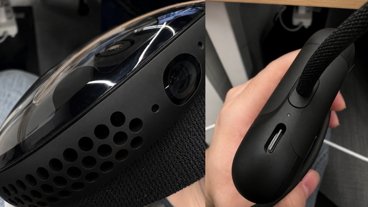
On the extreme broadcast end of things, its camera systems have been spotted at some events, so we know they exist. The actual details about them aren't really known publicly, but they are certainly a known quantity.
Apple's also worked on a pipeline for content creators to create in the Immersive Video format, using a $33,000 Blackmagic Design camera. This is a thoroughly expensive piece of kit, which could be acquired by a mid-level production company, if not your typical consumer.
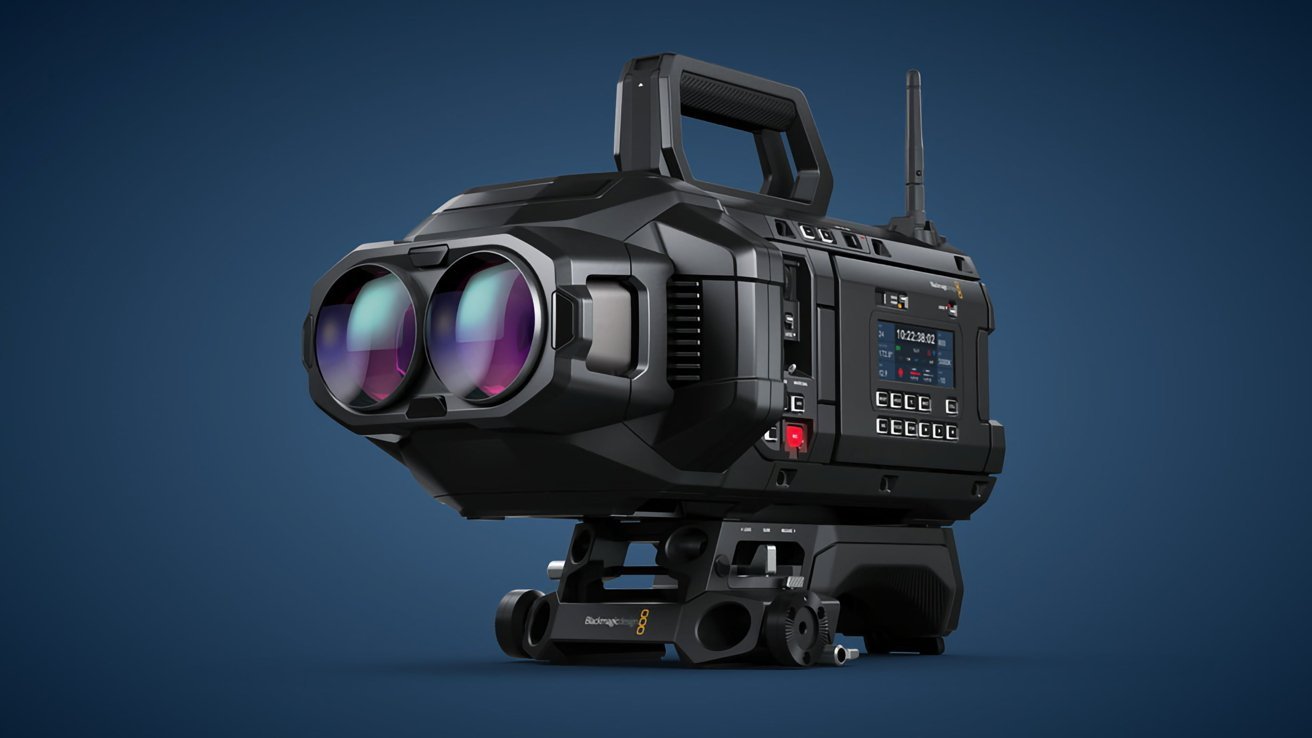
Blackmagic URSA Cine Immersive camera
Let's say that Apple has solved its video capture problem, and that making video isn't an issue. That still needs behind-the-scenes teams to make the final feed for consumers, alongside the usual broadcast-focused people.
Then there's the problem of getting the game into the headsets of sports fans.
In the case of the Lakers games, they will be filmed in Apple Immersive format, providing a 180-degree field of view. While Apple's previous Immersive shows are shot in 8K and in extremely high detail, we don't know yet whether the live sports stream will get even close to that.
So far, we are ware that the broadcast games will use streams that are up to 150Mbps in size. That means there's a lot of bandwidth needed to watch them live, though the nature of the Internet means it could end up being a lot less than that.
This is a lot of bandwidth to manage live, and something the Lakers games will mitigate. They are being limited to Spectrum Internet and Spectrum SportsNet customers located within Lakers' territory, minimizing the impact of the load only to specific geographic locations.
If the stream went to other areas live, that's a lot of data that has to be managed across Internet infrastructure. That would mean a probable and significant cut in quality.
A massive high-quality video feed for a non-live event is simpler to distribute, as it becomes a local bandwidth problem. A recording after-the-fact can be distributed regionally, reducing amount of infrastructure between the consumer and the content.
This is not something that could easily be done live, serving massive high-quality feeds to large numbers of fans.
The OneEightyDegrees aim of a 25Mbps stream is admittedly a much better target for a high-resolution live stream to traverse the Internet. At least, compared to a 150Mbps version.
However, its 16K resolution for that stream is doubtful, while still maintaining quality. Netflix demands at least 15Mbps for a 4K stream, so a 16K stream at four times the resolution would need a lot more to maintain quality.
A replay of a sporting event can be far more easily managed for viewers around the world. It would be compressed and packaged up after the fact, without the added difficulty of streaming it live too.
A live stream requires a lot of deep and funding to invest in considerable online infrastructure for distribution. It's a problem that any size of company can come up with an answer to, but only major entities can afford it, or already have something similar in place.
Apple has already got that, in the form of its Apple TV platform. Its live broadcasts of sporting events means it already knows how to beam a high-resolution broadcast stream from a location into homes around the world.
For Apple, expanding the infrastructure to the Apple Vision Pro is less about infrastructure and more about implementation. Given its existing experience in immersive content, that too isn't a problem.
Ignoring the logistics of capturing immersive video, unless a startup has access to this style of infrastructure, it has no chance of doing it live properly.
If you build it, they may not come
There is one more issue with a project to do immersive video, and that is the potential audience for it.
While we could discuss how an in-stadium seat video feed may not be as good as watching a proper broadcast presentation, the bigger issue would be the act of watching using a headset in the first place.
Doing anything in a VR or AR headset for a long time just isn't tenable. The Apple Vision Pro is well documented as a heavy device that isn't great for long periods of sustained usage.
A sporting event would certainly count as one of those times.
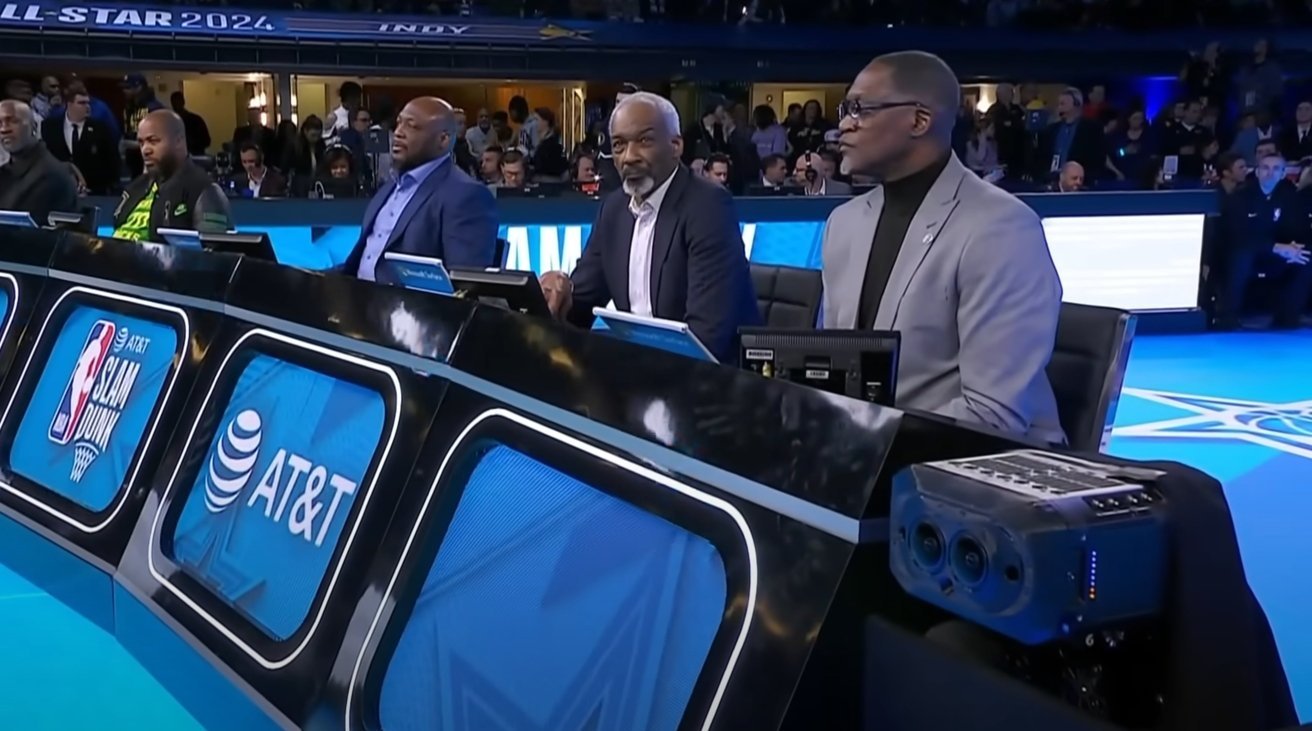
A 3D camera with the 2024 NBA Slam Dunk Contest judges [Youtube/House of Highlights]
Even if you solve the headset-wearing problem, the next one is to try and convince enough of an audience to pay for the headset experience. We don't know exactly how many Apple Vision Pro headsets have been sold to the public, but it's going to be a lot fewer than those by other companies in the market.
An October 2025 report from IDC claimed worldwide shipments of AR and VR headsets, combined with display-less smart glasses, will hit 14.5 million units in the year.
This is not a massive number at all. That works out to be roughly 45 million headsets shipped in three years.
For a service offering live immersive video to thrive, it would have to encourage many millions of users to pay. That requires many, many millions of potential users in the first place.
For the moment, the market is not really in a place where significant numbers of users will actually want the immersive live sports experience. It may do one day, but it would require a lot more market growth for it to become viable.
Not a game for startups
Broadcasting live immersive video from a seat in a stadium to headset users at home sounds like a task with relatively few steps. If you ignore cobbling together a live broadcast presentation, it seems like an accomplishable goal.
But, if you really look into it, there are too many factors at play for anyone to try it without having to take things extremely seriously.
Camera setups at stadiums can cost many thousands if you do it cheaply. That's before you have to deal with getting that live feed out of the stadium, across the Internet, and into people's headsets.
The cost of everything, from filming hardware to Internet infrastructure and platform development, to paying for permission to do it in the first place, is extremely high.
A company like Apple could afford to try a few experiments. But even it has to seriously consider what it needs to implement for a more mainstream immersive sporting experience, and if it could commit to it.
As much as the dream of a small company like OneEightyDegrees is a nice one to hope for, it will remain a dream for quite a while longer.