
Foldable phones are reportedly headed for a breakout year in 2026, and analysts believe the rumored iPhone Fold is the reason.
After years of uneven progress, the foldable market is allegedly preparing for a real surge. Counterpoint Research expects foldable display panel shipments to jump 46% in 2026 as Apple begins ordering parts for its first foldable iPhone.
IDC also sees a sharp rise in device shipments, and both firms say the category's trajectory now depends on Apple's arrival. Foldables launched with big promises and fragile hardware, and the early models earned a reputation for being too pricey for most buyers.
The concept has matured, but it remains a niche that hasn't matched the hype. Now the supply chain is bracing for a shift centered on a device Apple hasn't confirmed.
Apple's entry resets expectations
Apple waited longer than rivals before committing to a foldable, allowing Samsung, Huawei, and others to handle the early failures and design mistakes. Counterpoint argues that timing pays off, because Apple's procurement cycle alone can reorganize the market.
Suppliers are preparing for higher volumes, more advanced panels, and the wave of attention that usually follows a new Apple category.
Book-style foldables appeal to buyers because they open like a small tablet and offer more room to work. Counterpoint expects those designs to dominate 2026 and lift average display prices.
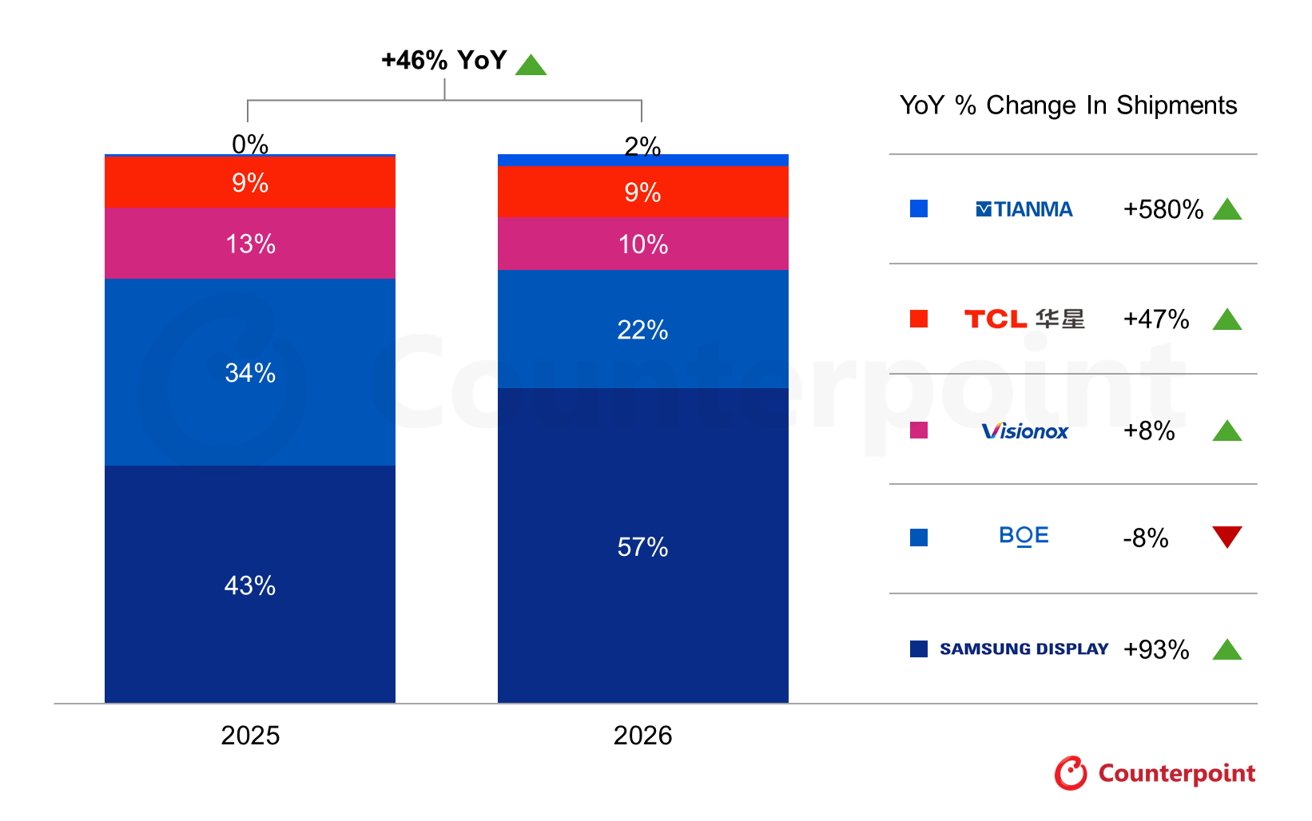
Global Foldable Smartphone Panel Shipment Share Forecast by Supplier. Image credit: Counterpoint
Manufacturers are encouraged to focus on larger, more complex OLED panels. Samsung Display benefits from its long experience in foldable production.
IDC expects a similar lift but takes a more conservative view of the next phase. Its forecast ties growth to Apple, Samsung's next round of foldables, and Huawei's recovery in China.
The firm treats 2026 as a pivot rather than a full reboot, arguing that the segment needs several strong vendors to push beyond its niche.
How IDC's view differs
The biggest split between the two forecasts is the speed of the transition. Counterpoint predicts a fast jump linked directly to Apple's incoming orders.
IDC predicts steady progress over several years. By the end of the decade, foldables might capture 10% of the global smartphone market.
The firms also split on form-factor trends, with Counterpoint expecting book-style models to stay dominant while multi-fold designs remain niche. IDC highlights tri-fold phones as early drivers and views them as experiments that help the segment mature.
IDC goes further by estimating Apple's first foldable could take more than 20% of unit share and roughly a third of the segment's revenue in its debut year. The firm also expects pricing near $2,400, signaling an ultra-premium approach rather than a mass-market push.
A category still looking for its purpose
Even with Apple's momentum, the foldable category still faces familiar problems. Buyers remain wary of fragile hinges, visible creases, and battery compromises.
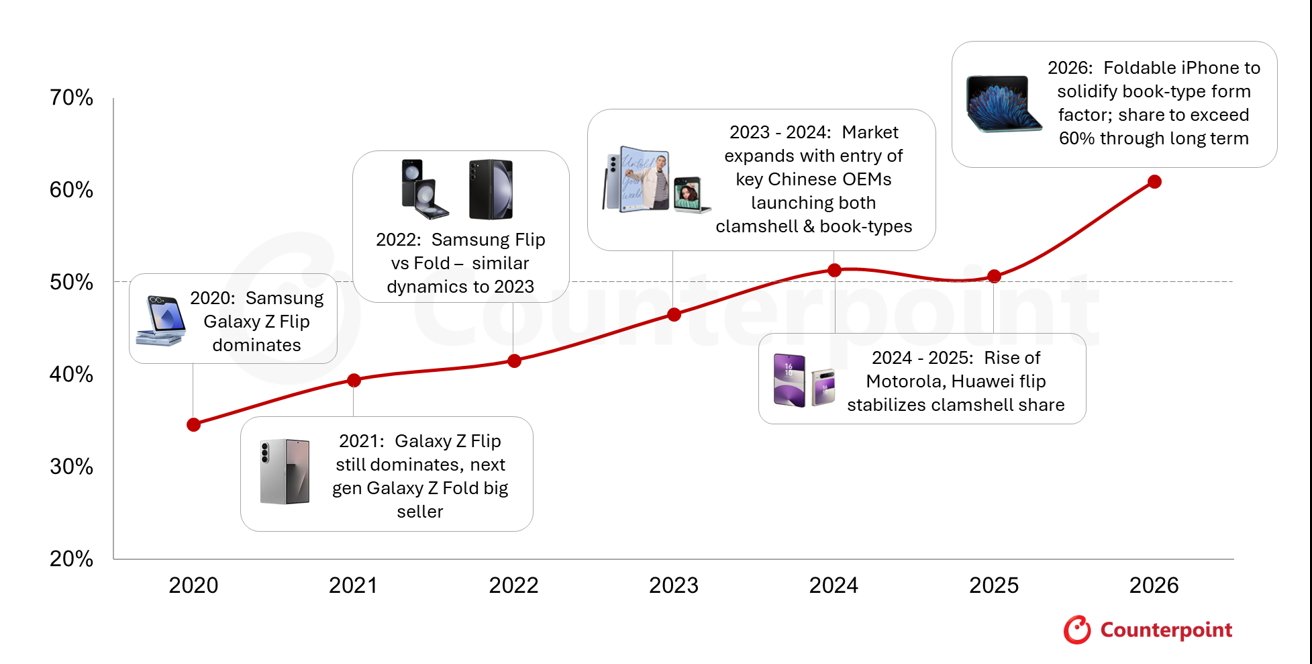
Book-Type Smartphone Shipment Share. Image credit: Counterpoint
Developers are inconsistent about optimizing apps for larger and variable layouts, which dulls the appeal of the expanded screen. Not to mention Android has its own issues with device support and feature fragmentation.
Apple's tight control over hardware and software may ease some of those issues by smoothing the shift from phone to tablet views. Carriers and retailers would also have a clearer story to tell, which could help the segment reach shoppers who've ignored foldables so far.
Apple can't fix everything at once, and foldables remain an expensive experiment that may take years to reach the mainstream. The next generation must prove that larger screens and new shapes justify the premium instead of feeling like a novelty for early adopters.
The year Apple takes control
Analysts believe the foldable segment is finally preparing for real growth. Panel makers are expanding production, vendors are rewriting product plans, and forecasts are getting updated as expectations rise.
A successful foldable iPhone could help 2026 become the year the category moves beyond its niche. A misstep would signal that foldables need more than a clever hinge to earn a larger audience.