
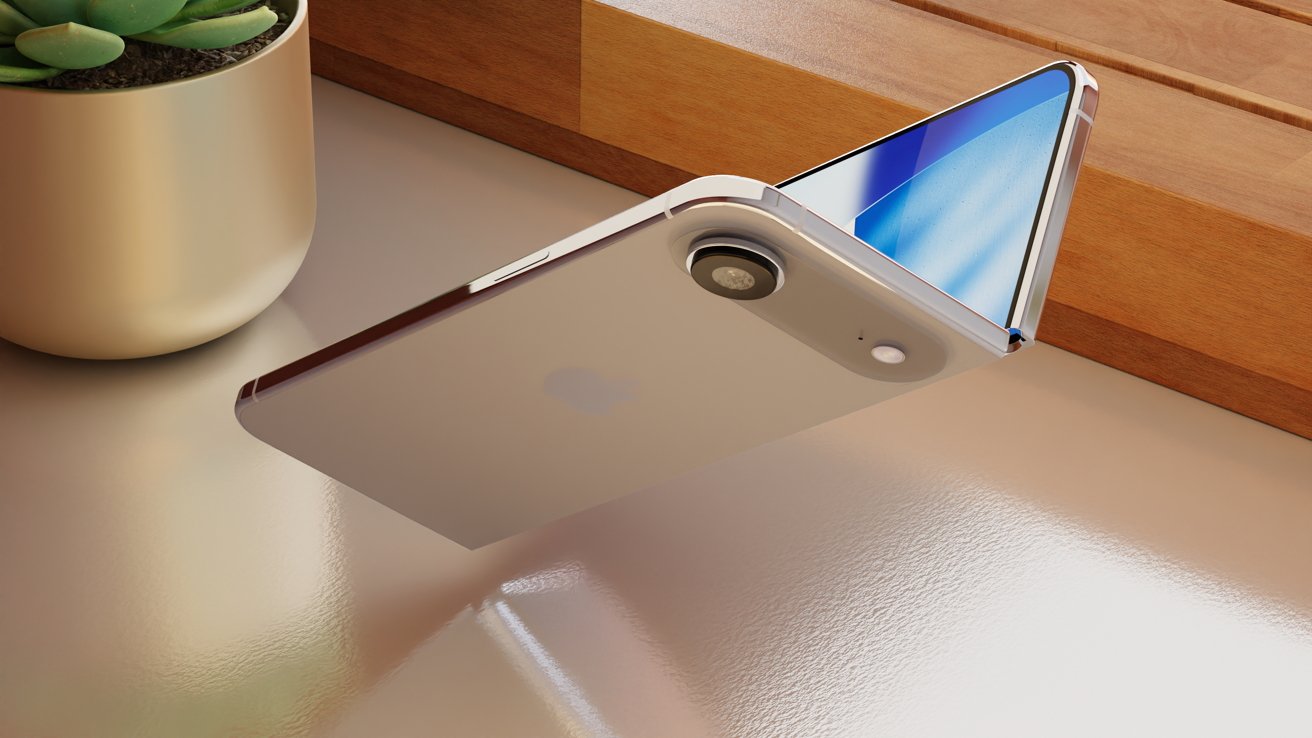
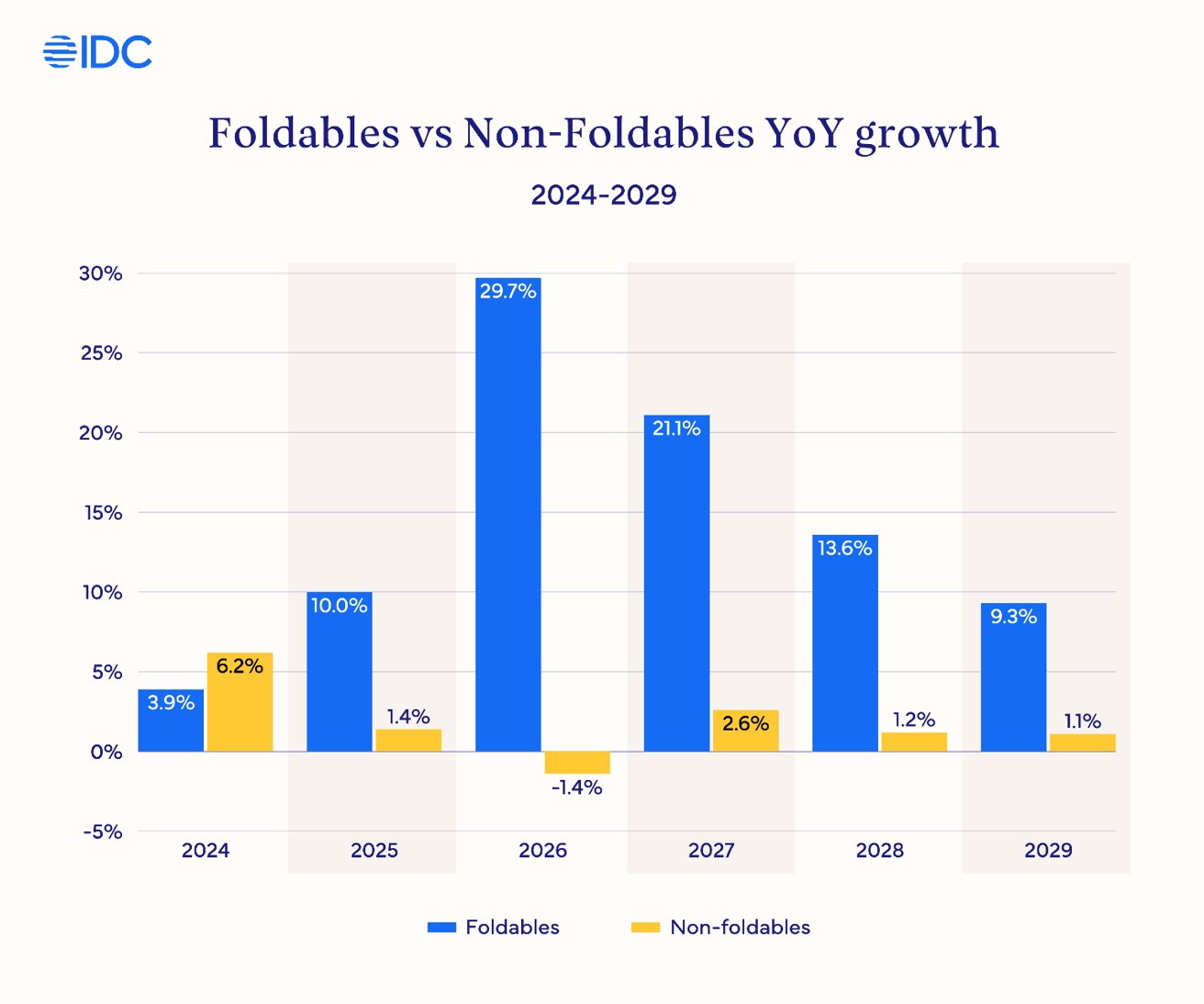
Worldwide foldable smartphone shipments are expected to rise 30% year over year in 2026, driven by Apple's iPhone Fold and the expanding foldable market.
Apple is rumored to be taking a big bet on foldables later in 2026. That push into the niche may help it grow into a more competitive market.
IDC's Worldwide Quarterly Mobile Phone Tracker forecasts rapid expansion for the category, which could account for more than 10% of total smartphone market by 2029. The bendy phones that once looked like prototypes are projected to escape the niche and become a more viable business, but only with Apple's help.
They won't outsell standard smartphones, but analysts expect them to generate an outsized share of revenue and profit. Samsung and Huawei are the main competitors, with Apple supposedly pushing into the foldable tier later in 2026.
Samsung plans to court mainstream shoppers in 2026 with the Galaxy Z Trifold. Huawei, powered by HarmonyOS Next, is expected to nearly double its foldable shipments across China and selected international markets, helping offset limits it faces in other product segments.
Samsung, Huawei, and Apple are the main competitors pushing into the foldable tier. Image credit: IDC
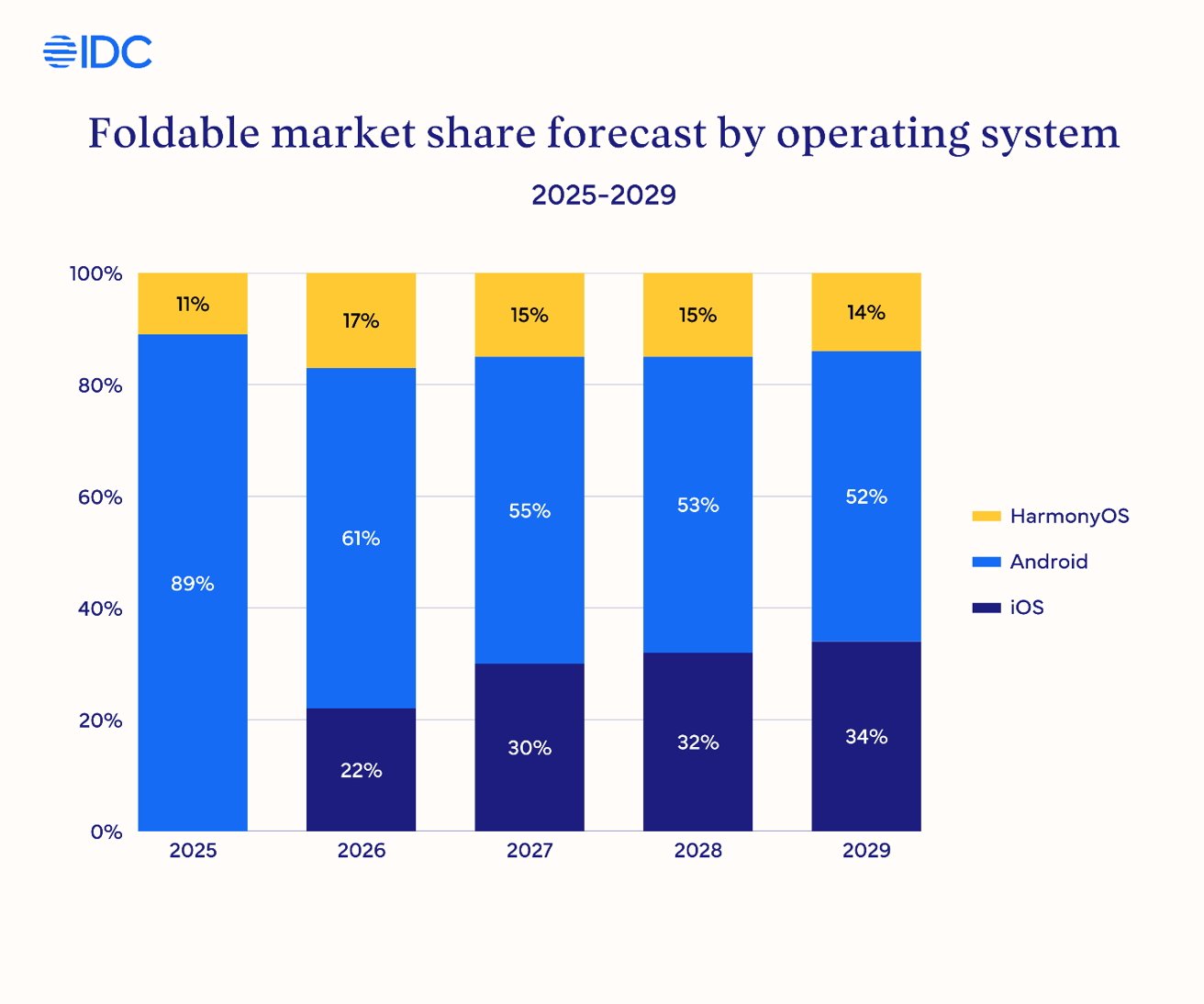
Apple's late entry is anticipated, yet analysts say timing may not matter much. The company's first foldable iPhone, expected in late 2026, is projected to take more than 22% of global unit share and 34% of segment revenue in its debut year.
Analysts estimate an average selling price near $2,400, roughly triple the cost of a typical smartphone. The pricing signals that Apple is targeting buyers who already pay for its upper-tier phones and want a larger screen, flexible design, and a fresh form factor.
The smartphone market is stagnant because people keep phones longer due to device longevity, and there is some consumer perception of more boring incremental updates. Vendors are struggling to keep buyers interested as replacement cycles stretch.
The foldable niche
Foldables offer a compact device that expands into a tablet-size screen suited for a range of tasks. Tri-fold designs like the Galaxy Z Trifold push the concept further by turning a phone into a small three-panel workstation.
The forecast says foldable shipments should reach 20.6 million units in 2025, up 10% from 2024, before accelerating in 2026 as Samsung's tri-fold leads the year and Apple's device closes it. The timing gives carriers and retailers a tidy narrative, with Samsung setting expectations early and Apple providing a holiday anchor.
Doing some napkin math, that places foldables at about 18.7 million units shipped in 2024, which is about 1.5% of the 1.2 billion smartphones shipped in 2024. The IDC expects foldables to blow up to 10% of the market by 2029, propelled by Apple's involvement in the space, but note it took six years to reach the current market share.
North America, China, and Western Europe remain the strongest regions for premium devices. Image credit: IDC
North America, China, and Western Europe remain the strongest regions for premium devices. South Korea and parts of the Middle East continue to wield influence despite smaller populations, since both markets treat $1,000 phones as normal and respond quickly to new hardware trends.
IDC's operating system outlook shows Android holding most of the foldable market in 2025, with HarmonyOS gaining meaningful share and iOS at zero before Apple ships. By 2029, analysts expect iOS to secure a notable foothold, HarmonyOS to hold the mid-teens, and Android to continue leading without its earlier dominance.
Vendors need segments like foldables to justify investment in advanced chipsets, displays, and camera systems as traditional smartphone growth stays flat. Foldables won't replace standard phones, but they can appeal to buyers who upgrade every few years and are willing to pay for premium features.
Apple maintains an advantage because it controls both hardware and software, which helps the interface adapt cleanly as the device opens and closes. Better display handoff and more intuitive split-screen modes could also reduce the sketchy reputation foldables still carry.
The question is how far mainstream buyers will follow. Many shoppers will still prefer cheaper slab phones with better cameras, solid battery life, and good trade-in value.
The iPhone Air has been a bit of a testbed for that mentality, as it is a compromised device in service of form over function. The iPhone Fold will take those compromises further at more expense.
It remains to be seen whether foldables will be able to catch on in the long term. It is no doubt an expensive niche today that's low margin and low volume, which is not a market Apple typically pursues.
Until Apple announces the iPhone Fold, there's no way of knowing if Apple will commit to the form factor long term, if it releases one at all. It is making other bets in spatial computing, wearables, and ever more powerful iPhones, but perhaps there's a slot open for an ultra-premium foldable as well.