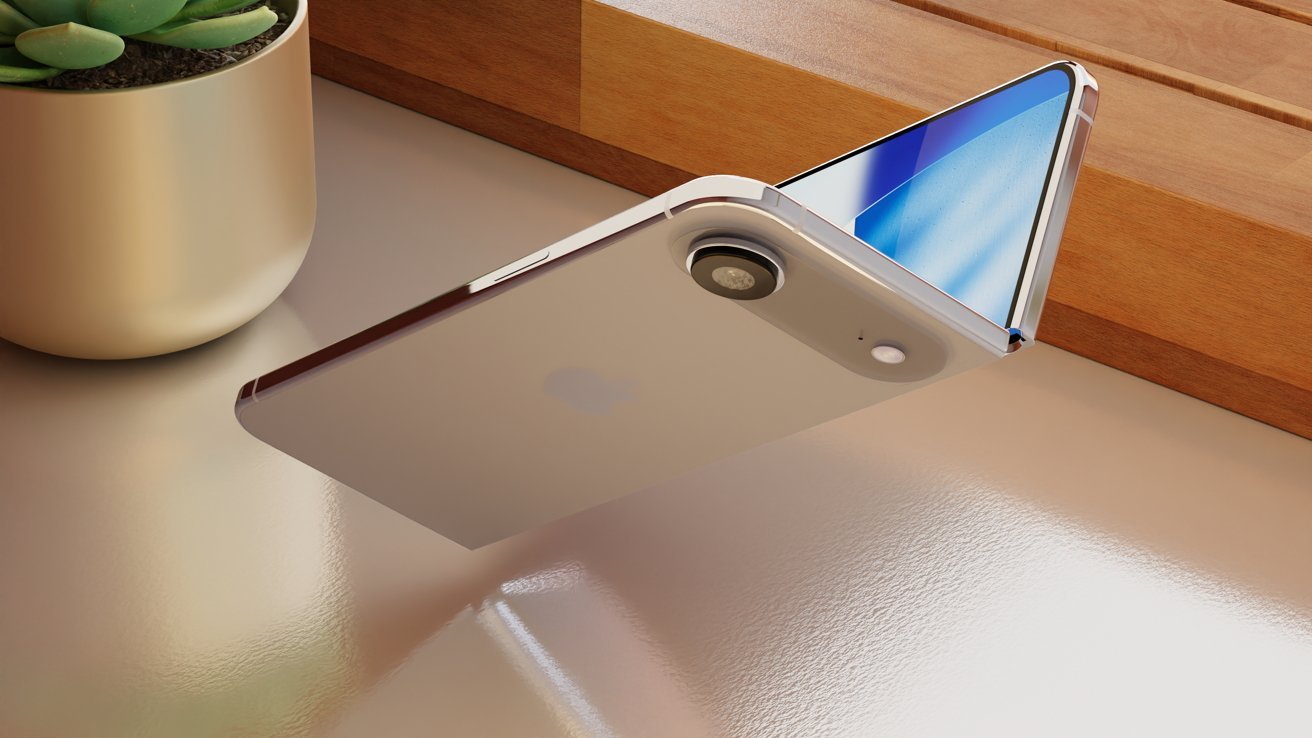
The iPhone Fold is expected to arrive in the fall, but technical challenges may still exist for the display and screen glass that aren't yet solved.
The biggest part of the long-rumored iPhone Fold is the internal display, with Apple doing what it can to avoid it creasing over the long term. However, it now seems that Apple could be cutting it close for a fall release, which could impact the initially available supply of the model.
In a weekend post, Weibo leaker Digital Chat Station discussed the iPhone Fold and Apple's attempt to create a "visually crease-free" screen for it. Apple is thought to be trying out the use of ultra-thin flexible glass (UFG) for the display, which uses materials of varying thickness to allow the display to bend.
However, the leaker says that there are still some "technical challenges" for Apple to overcome, but stops short of saying what they could be.
The problem for Apple is that there are expectations for the iPhone Fold to ship in the fall. However, if the leaker is correct, the display challenges may not allow for the model to come a reality until September, the expected launch period.
If true, this could result in Apple pushing back the release of the iPhone Fold until it can build up more stock for a proper launch. More probable is Apple launching the iPhone Fold with very limited availability at first, maintaining the September launch cadence, but increasing the supply at a later time.
Digital Chat Station has a mixed track record when it comes to Apple leaks. While they have been accurate on some fronts, the Weibo account has less consistency than more established Apple analysts.
More problems?
The report is not bullet-proof. One of the questionable elements of the latest claim is that it goes against reports that the display puzzle had already been solved.
In November, a report insisted that Apple had made a breakthrough on the crease issue. Existing foldable smartphones on the market develop a visible crease and generate cracks on the folding section of the display, eventually leading to a damaged screen.
Solving the display problem will lead to a longer lifespan and fewer repairs for the iPhone Fold.
Apple has taken advantage of the expertise of its suppliers to create the device, including using Samsung to make the inner screen based on Apple's panel structure design.
Along with the display, Apple has also worked to integrate the display panel with a bearing for the supportive hinge mechanism. Rumors have also insisted that Apple has considered the use of liquid metal for the hinge components to minimize deformation.
Digital Chat Station's post seemingly goes against the rest of the rumor mill's opinion that a fall launch for the iPhone Fold is going to happen and that Apple has probably solved its display issues. A constrained launch is very likely, of course, but why is the question.
Due to its size, Apple's product development takes quite a long time, with each iPhone iteration being developed more than a generation in advance. It takes multiple quarters for Apple's supply chain to be ready to manufacture a component, which leaves little room for tweaks and changes to the plan.
If Apple really is still having some issues to work out for the display, that leaves precious little time for it to solve them and for the supply chain to address it. If it becomes too much of a problem to solve in a reasonable timeframe, the effect on production could be too great and force a delay in manufacturing.