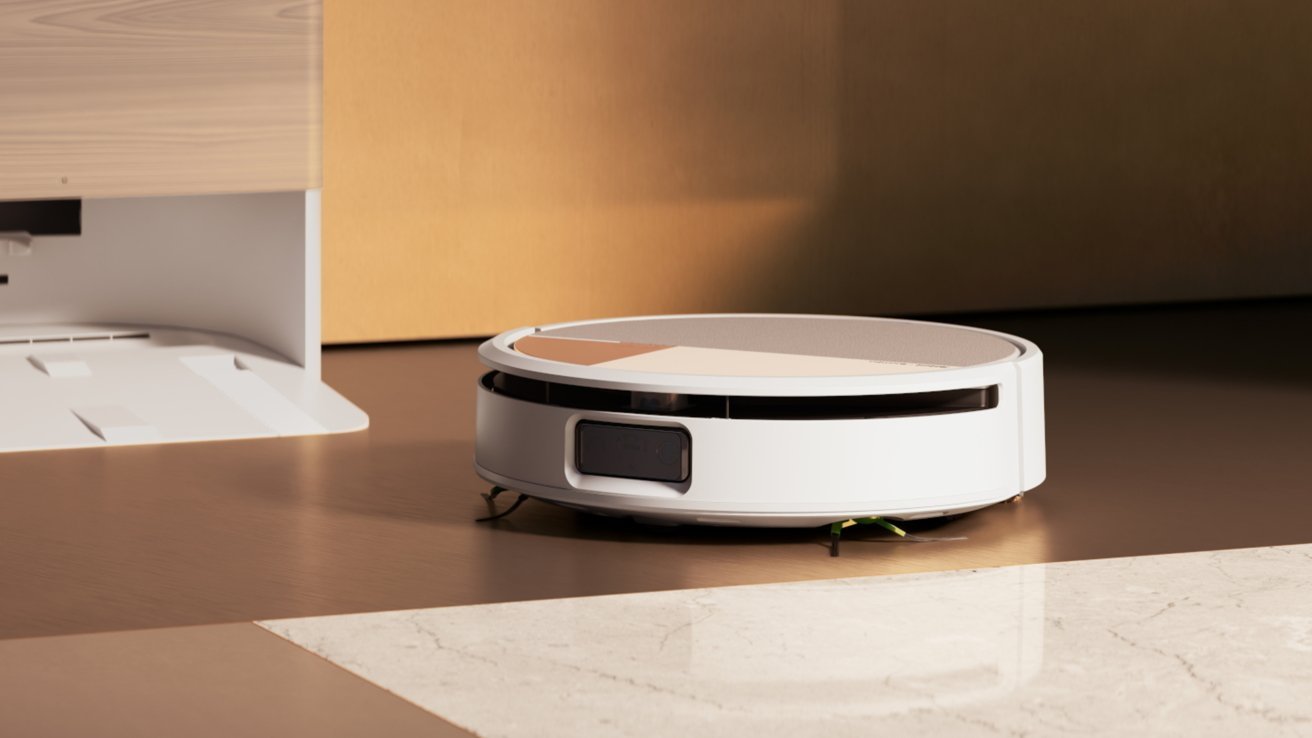
Despite the impending sale of iRobot, some Roomba models are still getting updates, with a few getting last-minute Matter support and HomeKit integration.
Roomba has taken a hit in 2025, with a drop in sales amid intense competition leading to the sale of the parent company, iRobot. Despite the impending acquisition, the robot vacuum line is still receiving updates.
In the case of some models of Roomba, MacRumors reports that Matter support has been added, expanding the range that works with Matter by three units. A firmware update has been released, adding Matter integration to:
- Roomba Plus 500 Combo
- Roomba Max 700 Vac
- Roomba Max 700 Combo
They join the existing Roomba Combo 10 Max line, which already supports Matter.
Apple added Matter support for robot vacuum cleaners to the Home app from iOS 18.4 onwards, meaning it will work as a HomeKit device. Under the Home app, users can trigger cleaning using scenes, receive notifications about the robot's status, and can use Siri to tell the cleaner to get started.
This sort of functionality is normally available through the companion app for the robot vacuum cleaners. However, once added to a Home network, there's little need to use the manufacturer's app unless you have specific needs.
How to add Roomba to Apple Home using Matter
The official iRobot support site explains that HomeKit Matter support is enabled through the official apps. There are two ways to start the process.
From the Roomba Home mobile app:
- Tap My Home at the bottom of the screen, then the User Account icon at the top.
- Tap Connected Services then Apple Home.
- Continue to follow the instructions.
From the iRobot Home (Classic) app:
- Tap the Hamburger Menu (three horizontal lines icon) then Smart Home.
- Tap Connected Services then Apple Home.
- Continue to follow the instructions.
Messy timing
The timing of the updates to the models is curious, considering the current status of iRobot itself.
Following a turbulent year with a high loss in revenue, the company warned in November that it was extremely low on cash and faced bankruptcy. On December 14, the company confirmed that it had commenced a pre-packaged Chapter 11 bankruptcy protection process.
The pre-packaged process is a plan where the company is bought by another, under what is more kindly referred to as a "Restructuring Support Agreement." It's a court-supervised deal, which will see Picea gain 100% of the equity interests and ownership of iRobot.
Picea refers to Shenzhen Picea Robotics Inc. and Santrum Hong Kong Co. Limited, and is the main manufacturer of iRobot's robot vacuum lines. It has more than 7,000 employees around the world, and has sold more than 20 million vacuum cleaners.
Filing for Chapter 11 protection is considered a death knell for companies, along with product support. With the manufacturer out of business, there is a worry that servers used to control smart home devices using the app will be shut down, cutting a lot of the smart functionality with it.
This has been demonstrated to a few extremes already, such as Embodied's Moxie robot facing a quick closure before efforts were made to work around the problem. A more favorable outcome occurred to Neato, as parent company Vorwerk kept servers running until October 2025 following Neato's 2023 collapse.
For iRobot, there have been claims of "continuity" of support by Picea, with iRobot to continue normal operations during the Chapter 11 process, including its app functionality.
These claims only truly apply during the Chapter 11 process, which should conclude by February 2026 without outside interference. After that time, it will be up to Picea as to whether the app functions will keep kept running.
If the app is eventually shut down, at the very least consumers will be able to trigger cleaning sessions with a button press, if not schedule them.