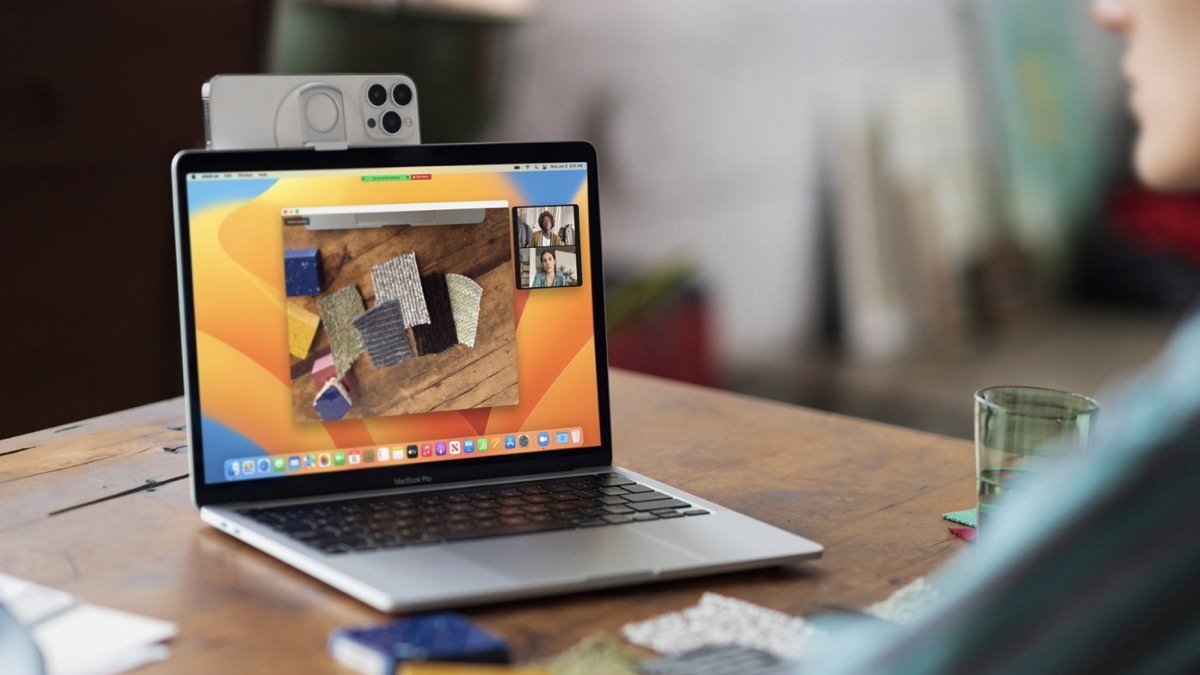
Camo developer Reincubate is suing Apple over Continuity Camera, accusing Apple of patent infringement and deceit surrounding the 2022 "Sherlocking" of its iPhone-as-webcam app.
Apple's introduction of the Continuity Camera in 2022 was a game-changing feature for users who experienced the remote working-focused COVID-19 pandemic. It was a feature that also "Sherlocked" a number of apps that used the iPhone as a camera feed for video conferencing, and one has decided to take a stand.
The lawsuit from Reincubate Ltd filed on Tuesday with the U.S. District Court for the District of New Jersey accuses Apple of foul play in a number of ways. The main one being the violation of patents owned by the company, in relation to the capturing of video from one device and processing it for display on another.
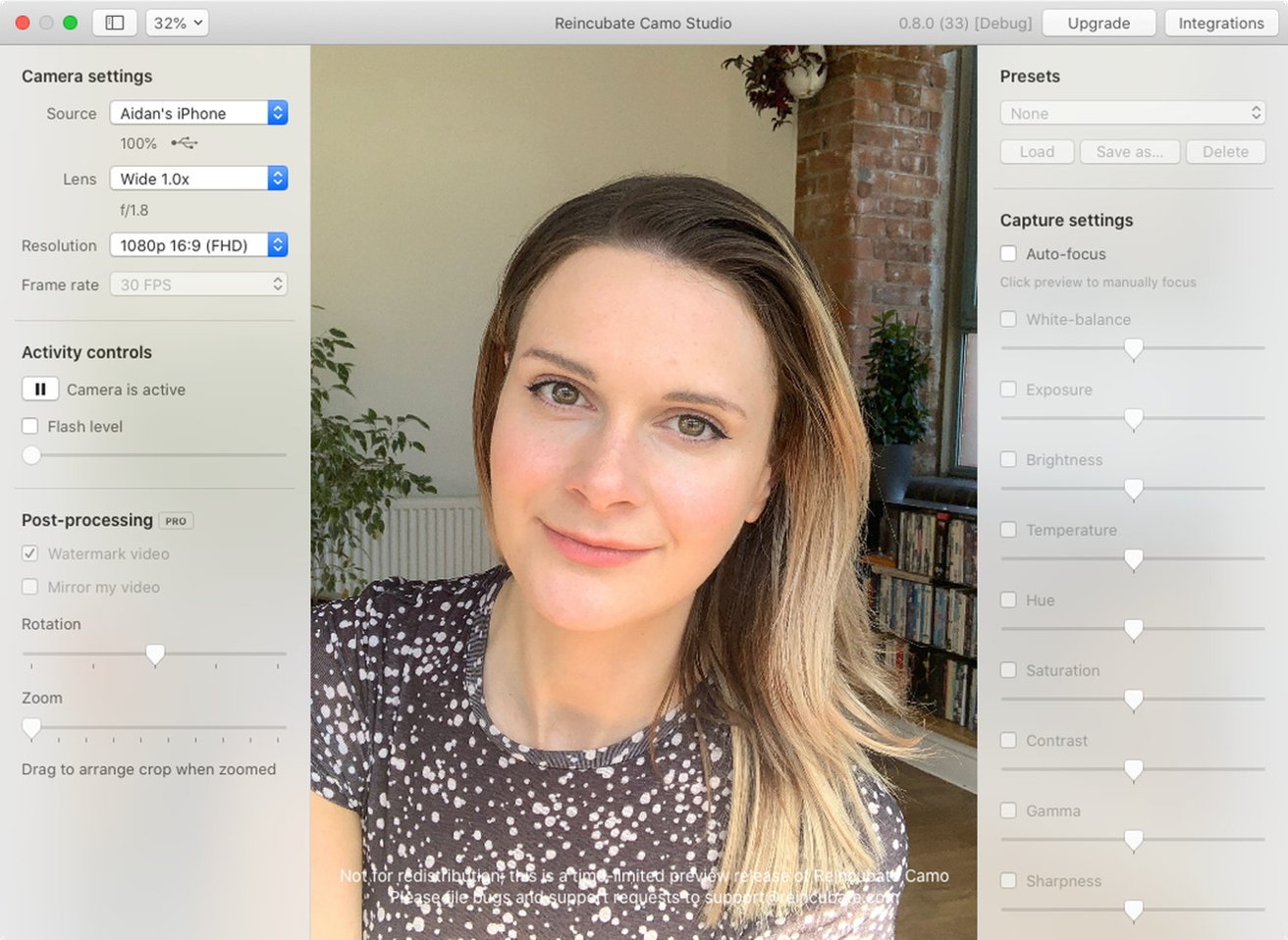
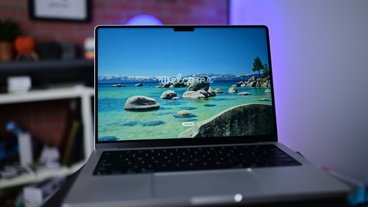
Camo Studio for macOS, when it came out in 2020
This was performed by the company's app, Camo, which provides the same sort of iPhone-as-webcam function as Continuity Camera. However, rather than just patent infringement, the company claims that Apple encouraged the development of the app, while it planned to make its own version that it later introduced.
This came to light during WWDC 2022, when Apple demonstrated Continuity Camera as an upcoming feature of macOS Ventura. That immediately added Camo and many other competing apps that did the same thing to that year's Sherlocking list.
Reincubate's Camo wasn't the first app to use a phone as a webcam. It was the best, though.
It was released in the midst of the first COVID-19 wave in July 2020, and blew us away from the jump. We used it both before and after Apple rolled out Continuity Camera in macOS Ventura and iOS 16.1.
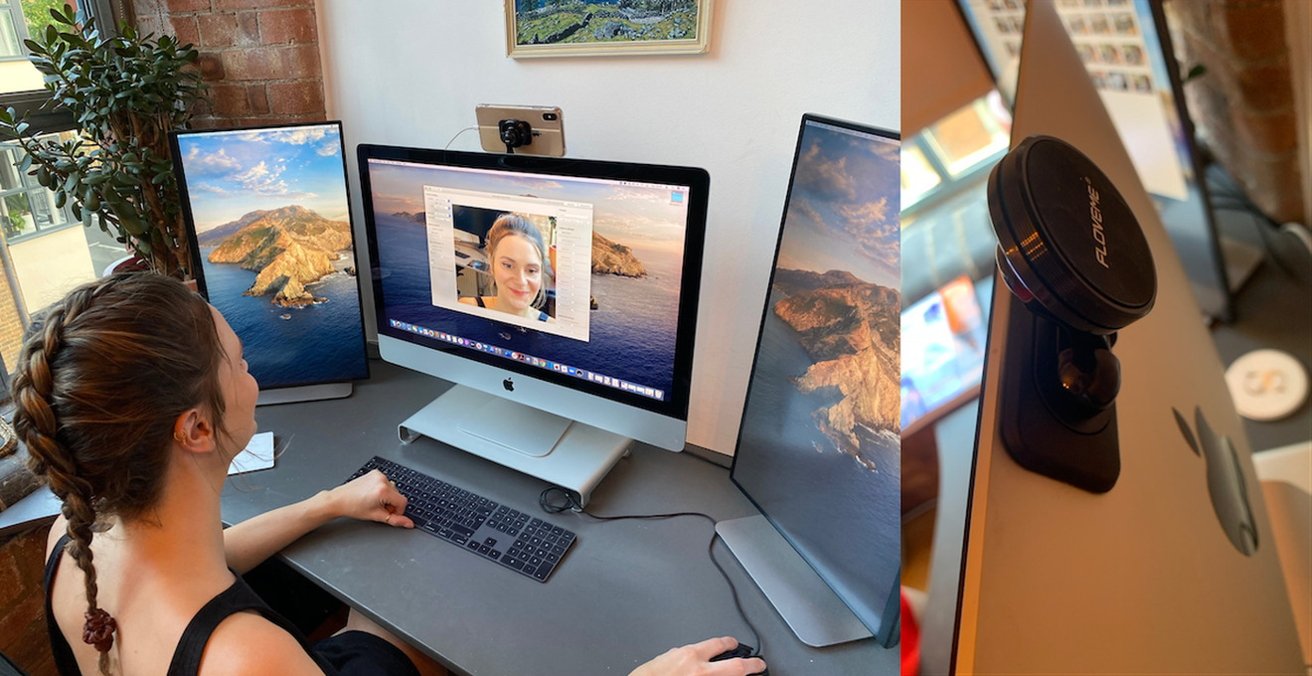
Camo, used with a sticker-mounted iPhone on a Mac.
Camo still has a lot of features that Apple doesn't have, and some of our staff still use Camo to this day. We're fairly certain that Apple will rely on the extra features that Camo has that they don't for its defense.
In the past, Apple has won victories when it has Sherlocked other developers, by saying that the product was developed independently. This is the approach Apple took initially with AliveCor about Apple Watch heart detection, and it is ultimately how it re-released the heart rate feature on the watch as well.
As part of the suit, Reincubate wants an injunction on Apple terminating its developer's license. Apple might do that soon, given that in the terms of the developer's agreement, it says that it can if the developer files suit against the company, for any reason.
Patent infringement
The patents in question consist of two filings, reports IP Fray, which are assigned to Reincubate. Both 12,335,323 and 11,924,258 have the same title, "Devices, systems, and methods for video processing," and closely cover the same sort of claims.
As the abstract of each explains, it consists of a control device, a capture device, and a cooperation application. In order, this would be represented by a Mac as the control device, an iPhone as the capture device, and the Continuity Camera feature itself as the application.
The cooperation application is the go-between for the two devices, configuring the two for pairing to handle video processing. The application also works to determine how the video processing tasks are split between the capture and control devices, with some elements performed on each.
While patents are going to be the main thing the court will rule upon, it's not the only thing Apple is accused of doing.
Anti-competition
According to the filing, Reincubate believes Apple was jealous of Camo's interoperability between iPhones, Windows computers, Android devices, and Macs. Apple allegedly copied the technology, and then, according to the filing, used its control over its operating systems and App Store to put Camo and other rivals at a disadvantage.
Instead, Apple wanted to redirect user demand to its own ecosystem-specific feature, the filing states.
Apple's conduct was a preservation of its dominant position and suppressed innovation that could've led to users using other hardware it continues. This act therefore caused Reincubate to suffer the loss of its core competitive position.
Apple also used its control of the operating systems and the App Store to copy the technology and prevent Camo from having equal technical access.
In a corporate blog post on the topic, Camo CEO Aidan Fitzpatrick adds that Apple discovered Camo while it was still in beta, encouraged the company to go all-in, and had thousands of employees running it internally. There were promises of help, as well as a nomination for an innovation award, too.
However, after demonstrating there was a market for the feature, Fitzpatrick then saw his technology demoed during WWDC 2022 by members of a team who had previously told him they had used Camo every day for work.
In the aftermath, he claims he received acknowledgements from senior staff that they would address the issue. A lot of this was done without committing much to writing at all, the CEO says, insinuating that this may have been a move to prevent there being written evidence.
He goes on to say that Apple continued to plicate him with updates down the road. Two years later, he was informed that Apple wasn't going to buy the company.
"This puzzled me: I 'd never offered to sell it," he muses.
Overnight, Apple responded to our queries, issuing a statement to us, and other venues. The company says that the iPhone-as-webcam features in Continuity Camera were independently engineered and designed.
"We strongly disagree with the allegations and believe the lawsuit is baseless," Apple said. "Apple competes fairly while respecting the intellectual property rights of others, and these camera features were developed internally by Apple engineers."
At this extremely early stage, a filing has been made at court, but no dates for further action have been set.
Update January 28, 2026 7:00 AM ET Updated with Apple's response.