
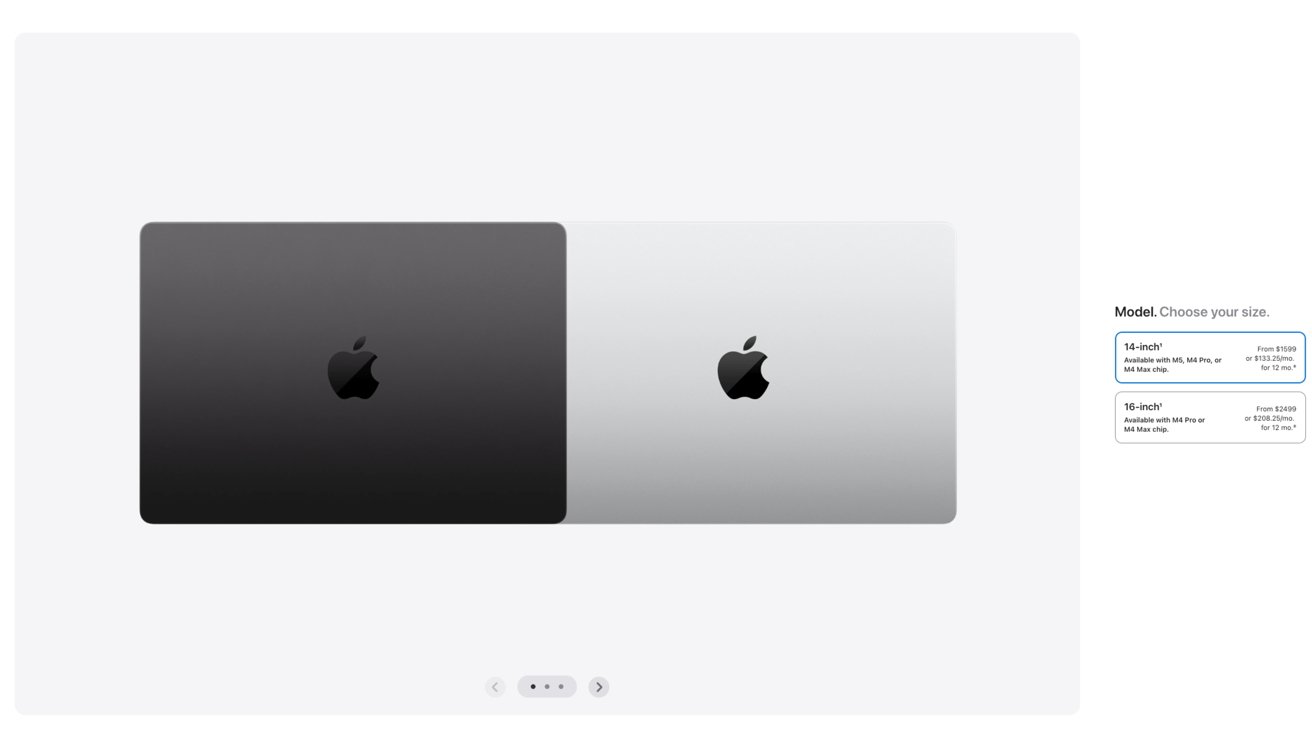
Apple has quietly updated the way that users buy and configure Macs on the online Apple Store, giving customers a process that's closer to buying an iPhone or iPad.
The online Apple Store guides users through configuring their new hardware before purchasing it, with some variation in the methodology depending on the product. In a very quiet change to the website, Apple has updated the way users buy a Mac.
Initially spotted byConsomac, users are no longer provided with a selection of base configuration Macs to choose from before configuring them. Instead, they are taken through a process that's pretty close to what happens when they buy an iPhone or iPad from the website.
Rather than a close-together collection of specifications to quickly change, customers instead must go through a more widely spaced-out page.
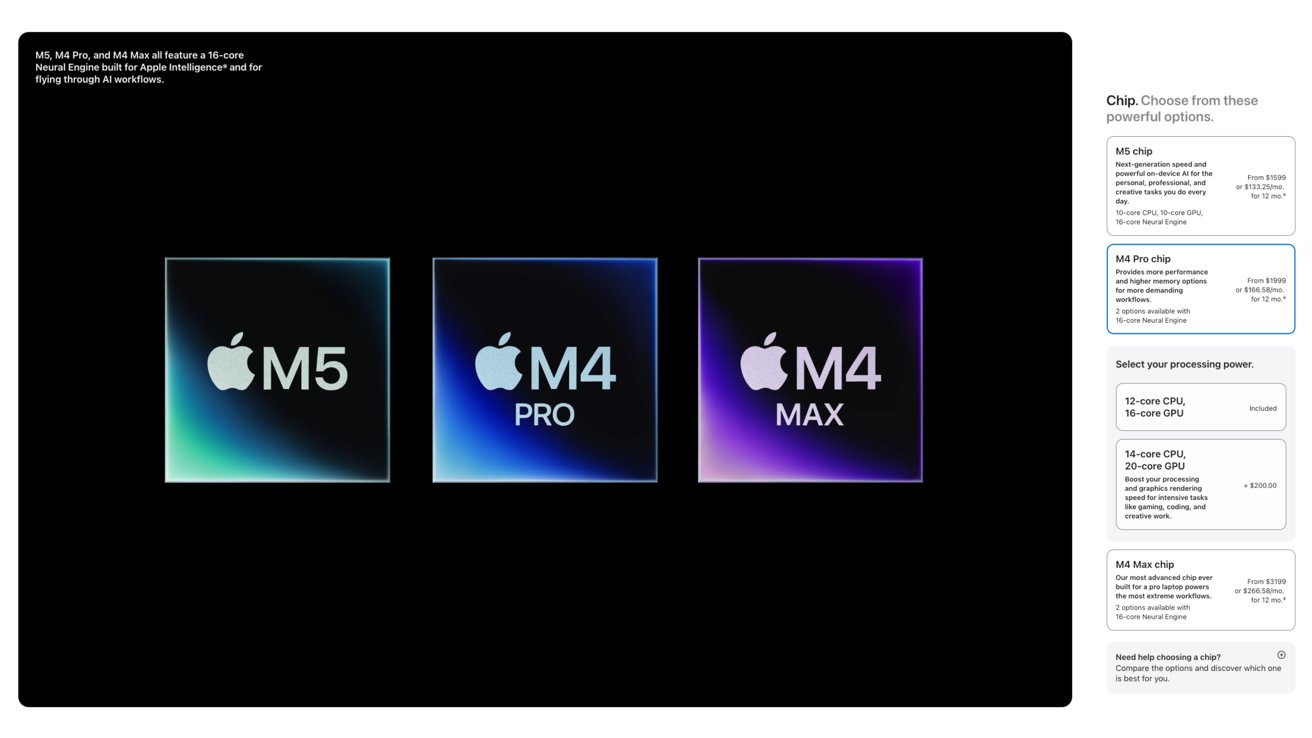
You get dropdown options in some cases, but not necessarily all available choices at once.
For the MacBook Pro, they must initially choose their size, which opens up the next section, Color. Subsequent choices open up the next sections, including Display and Chip.
Under a Customizable Specs section, there are expandable elements for memory, storage, power adapters, and keyboard. For Memory, users can select a different capacity than the particular model will work with, and the configurator will automatically offer to change other settings to make that option a possibility, complete with a pop-up warning.
There's also the option to pre-install Pro apps, with licenses for Final Cut Pro and Logic Pro as standalone versions, not under Apple Creator Studio. Sections for trade-ins, payment options, and AppleCare follow, then a final section to accept the configuration.
The change, which may be in advance of the introduction of a MacBook Pro M5 Pro and Max range refresh, is one that focuses more on giving users more customized versions of products, instead of the standardized base configurations. This could help Apple drive up the number of upgrades on each order, simply by guiding consumers more intentionally through the process.
At the very least, this now helps to standardize the way consumers buy products from the online store, instead of experiencing different site layouts.