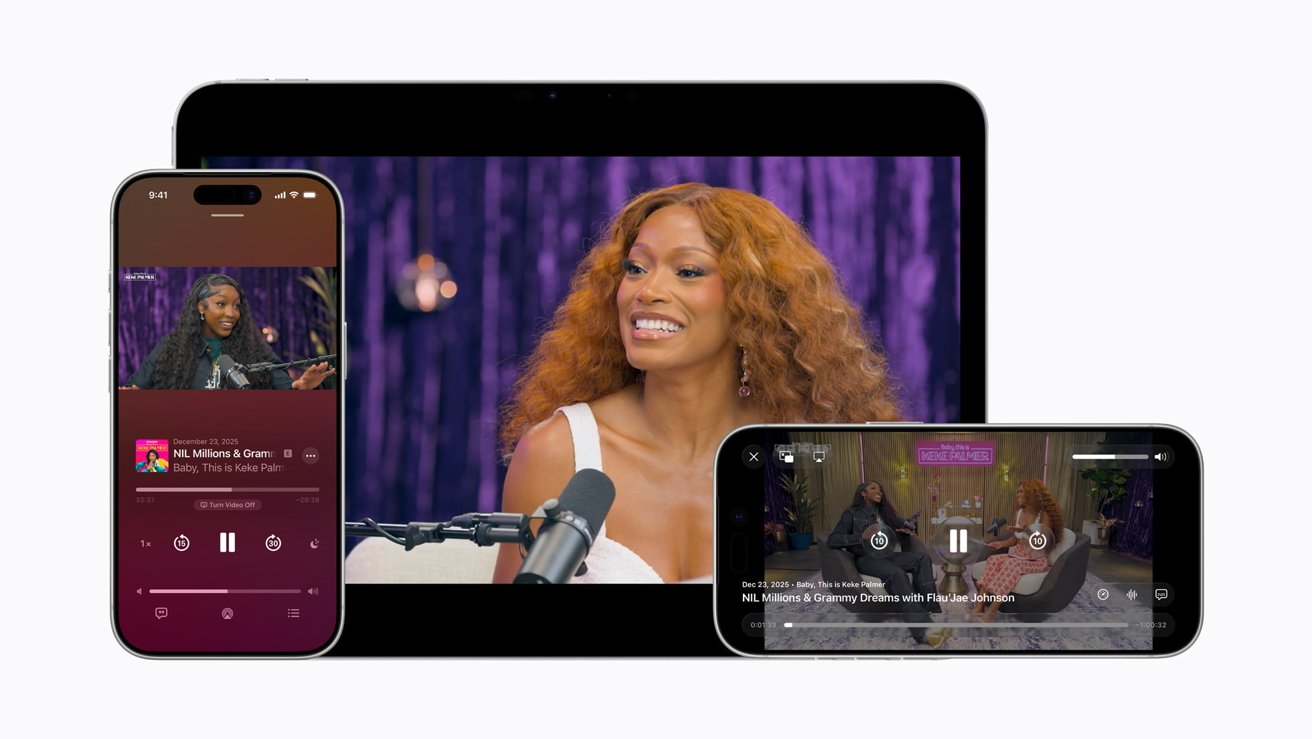
Apple Podcasts is no longer just an audio app, as native adaptive video and dynamic video ads will be available soon for creators to really show their stuff.
While Apple Podcasts already supports some video, Apple is introducing native video playback powered by HTTP Live Streaming, or HLS. The update brings adaptive streaming and dynamic video ad insertion directly into the app.
You can watch video episodes inside Apple Podcasts and switch easily between listening and viewing. The app supports a horizontal full-screen view, and you can download episodes for offline playback.
Video quality adjusts automatically based on network conditions using Apple's HLS technology. HLS video support is available in the beta versions of iOS 26.4, iPadOS 26.4, and visionOS 26.4.
Apple plans to roll out the feature to iPhone, iPad, Apple Vision Pro, and the web in spring 2026.
Video becomes a first-class format in Apple Podcasts
Video podcasts have increasingly been distributed through platforms such as YouTube, where discovery and monetization tools are built around video. Apple's approach keeps video inside its own ecosystem rather than shifting creators to separate feeds.
Video episodes integrate with Apple Podcasts' existing recommendation engine and editorial curation. They appear alongside audio shows instead of being siloed in a separate section.
By using HLS, Apple retains control over playback performance across its devices. Adaptive streaming allows the app to adjust resolution in real time, reducing buffering and maintaining consistent playback across Wi-Fi and cellular connections.
Dynamic video ads introduce a new revenue layer
Creators can now distribute HLS video through hosting providers and ad networks like Acast, ART19, Triton's Omny Studio, and SiriusXM entities. The bigger strategic change is monetization.
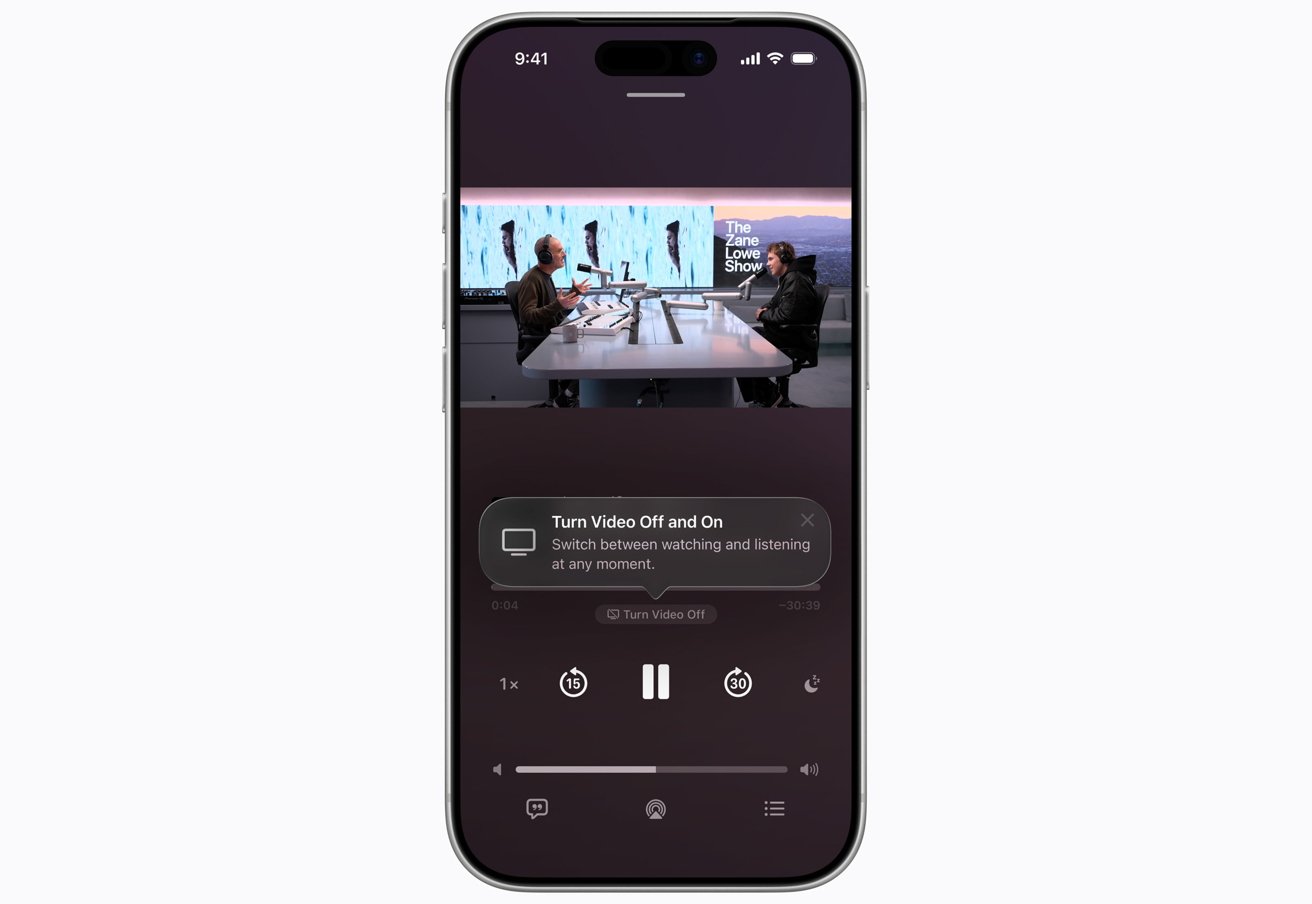
By using HLS, Apple retains control over playback performance across its devices
For the first time, creators can dynamically insert video ads into podcast episodes, including host-read spots. Video ads usually command higher rates than audio-only placements, so the revenue potential increases immediately.
Apple still won't charge creators or hosting providers to distribute shows through RSS, MP3, or HLS video. Instead, the company plans to charge participating ad networks an impression-based fee for delivering dynamic ads inside HLS video streams on Apple Podcasts.
Apple isn't turning into a hosting provider in the process, but rather carving out a role as the distribution and ad delivery layer for video within its existing podcast ecosystem.
Why the move matters
Podcasting started as an audio-first medium, but video has become a big part of how shows connect with audiences. Many major video podcasts rely heavily on YouTube for discovery and monetization.
Apple's update doesn't replace that model, but it gives creators a native option within the Apple ecosystem. Apple maintains tight integration across its hardware, software, and services while preserving the open RSS-based structure that podcasting was built on.
Video expands what listeners can do inside the app while opening higher-value ad opportunities for creators.
Apple is deepening its services footprint without abandoning the open framework that has defined podcasting in the first place.