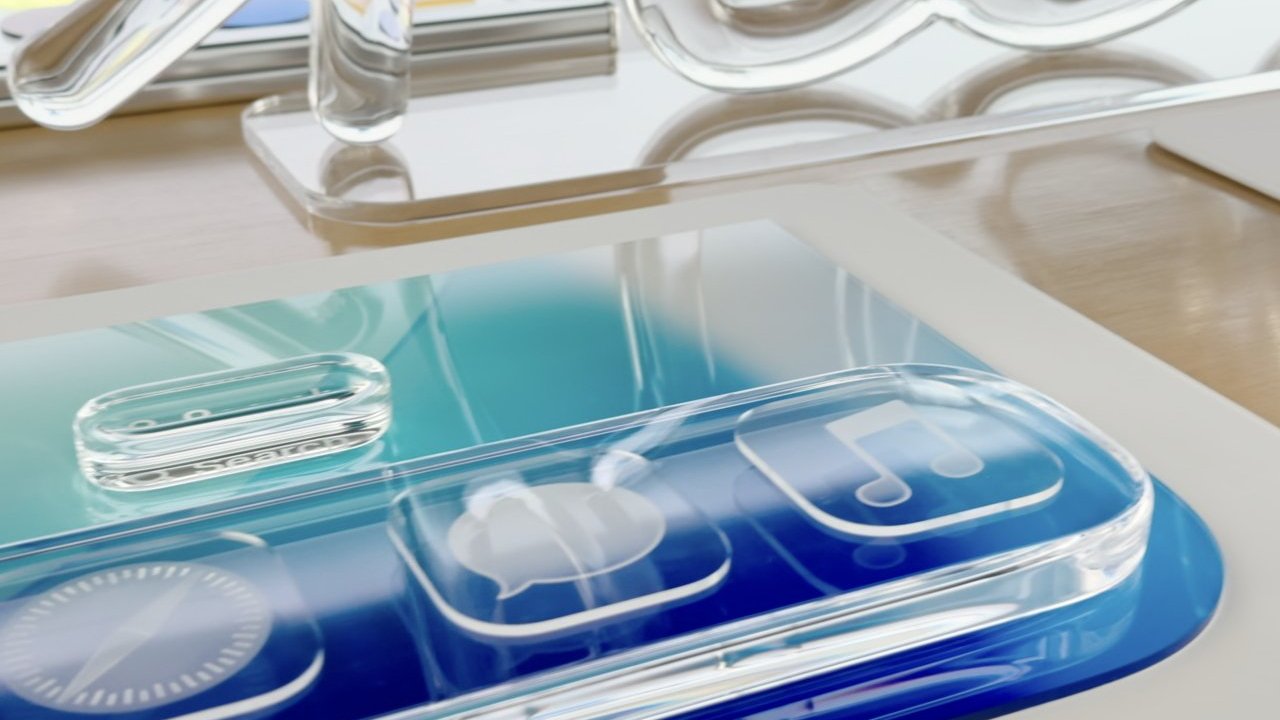
Six months after public release, Liquid Glass remains as controversial as ever. Apple may be considering some mitigations in iOS 27 and so forth, but this is the future — especially if we get touchscreen Macs.
It's not at all true that everyone hates Apple's Liquid Glass redesign. What is true is that right now, it's in flux and being changed.
There was never any question that it would stay. It was always going to evolve, just as Apple's iOS 7 so famously and controversially did over many years.
Then, too, while people who dislike Liquid Glass tend to be very vocally unhappy with it, the worldwide adoption of the latest iOS is about the same as it ever was, at least on iOS and iPadOS. Apple has now made it impossible to downgrade back to iOS 18 so maybe everyone is stuck on it, but far from everyone is complaining.
Inconsistent design
Part of the reason for that apparent acceptance of Liquid Glass, though, could be that there isn't always enough of it to notice. At launch, Apple itself had failed to update very many of its own Mac apps, for instance, and most developers are taking their time to catch up.
That's understandable for third-party developers who are working to their own schedules and concentrating first on their own features. But it's a bad look for Apple, which should be demonstrating its own faith in its own redesign.
It's a similar situation to the Apple Vision Pro and visionOS. Two years after Apple Vision Pro shipped, Apple still has not made native versions of very many of its own stock apps.
In retrospect, maybe that was because Apple knew Liquid Glass was coming and so its teams waited on making native versions. Maybe this coming WWDC 2026 will see a clean sweep of Liquid Glass stock apps appearing in visionOS. Perhaps.
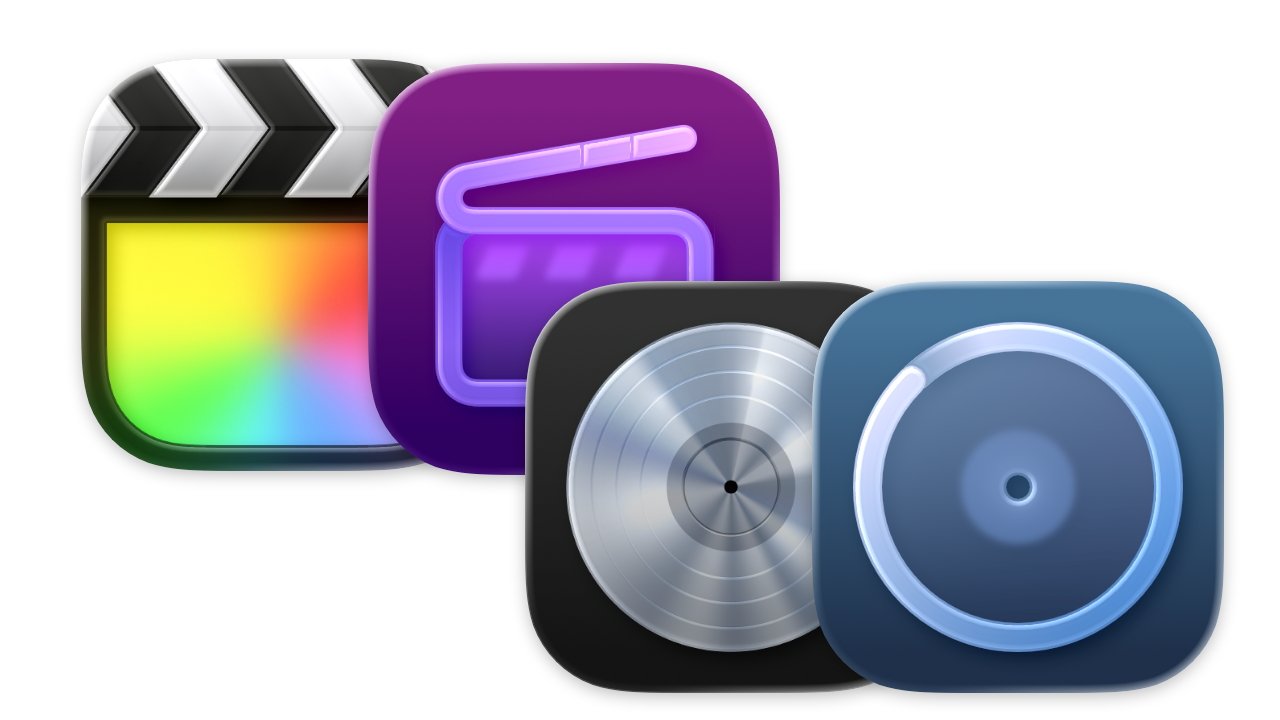
Apple has updated the icons for Final Cut Pro (top left) and Logic Pro (bottom right) to give them a Liquid Glass look
But even if that's true, the message Apple has sent to developers is that it isn't bothering with native Apple Vision Pro apps. And now it's also saying that it isn't bothering with Liquid Glass ones.
Or it's at least bothering only very slowly. For example, this big redesign that Apple has championed, only came to its own Apple Store app with the iOS 26.2 beta in December 2025 — three months or more after Liquid Glass came out.
Defining Liquid Glass
But then what constitutes Liquid Glass is at least a little unclear. It's obvious that Final Cut Pro and Logic Pro have gained Liquid Glass-style icons in the Apple Creator Studio bundle, but if there's anything else yet, that's much harder to see.
Liquid Glass is intended to make software clearer and easier to use, while critics say it is failing because it does exactly the opposite. If you end up staring at Final Cut Pro trying to figure out if this has Liquid Glass yet or not, surely neither Apple nor the critics are right.
Developers who've talked about this with AppleInsider off the record, have said that their job is determining which elements of Liquid Glass to use. They have to look to see where it would help, and where it would not.
Some were ready with Liquid Glass on day one, but even those have since continued to iterate. They've updated and changed their apps based on users' feedback and also their own experiences.
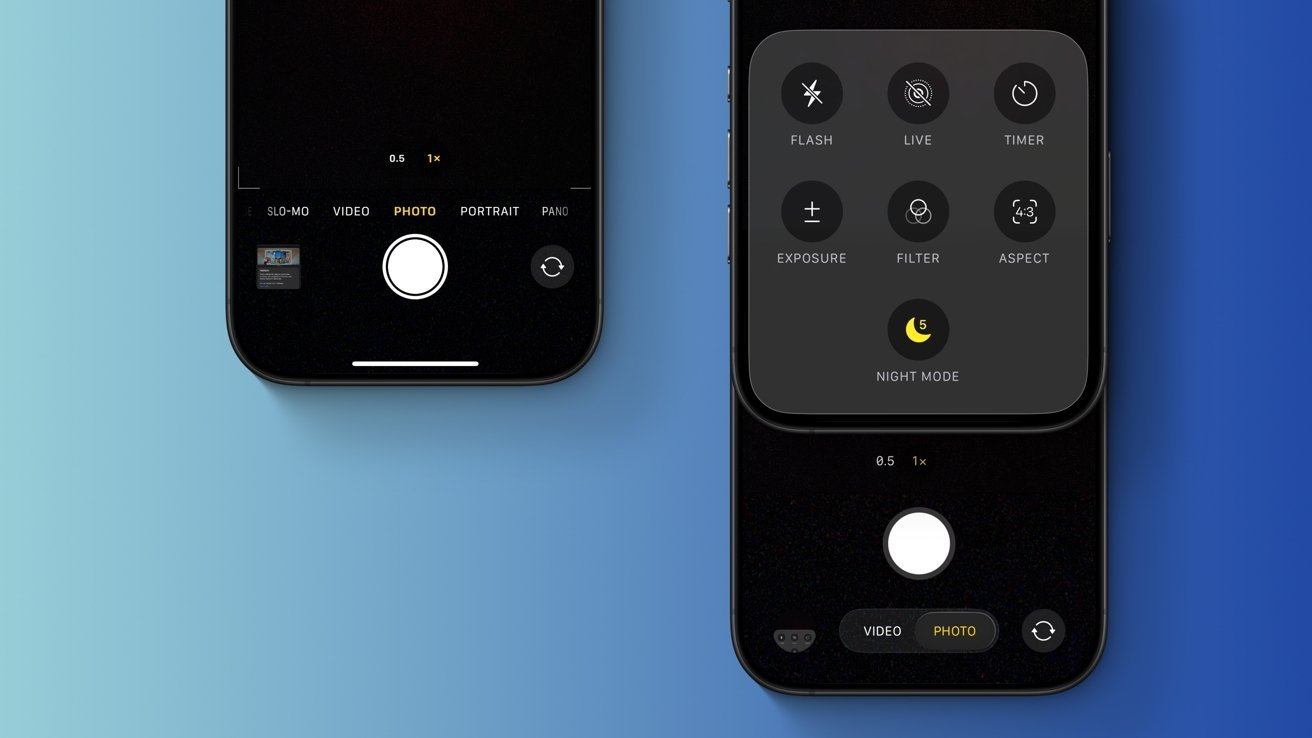
For all the criticism of Liquid Glass, it has made certain controls simpler, such as in the Camera app
Presumably Apple is doing that too, and this is why the design went through iterations during the beta tests in mid-2025.
What change may come
Ultimately, it's arguable that Apple is actually doing this with mind more to the future than this present. There's an argument that Liquid Glass is actually training users so that it will all seem natural when Apple launches touchscreen Macs.
If that's the case, we can expect Apple to commit increasingly more to Liquid Glass over the next few releases of iOS, macOS and so on. But then if it is trying to lead us along a path, it's got to get us there in stages.
Which may be why the most recent rumors say that Apple is looking to give users more control over Liquid Glass with iOS 27. Specifically, there is said to be a system-wide slider coming, which would let users set the level of the design's glass effect.
If that's true, it's really a concession to people who are complaining. It isn't a true climb down or about face from Apple, because for the enormous majority of users, it will not make the slightest difference.
That's because most users will not bother to change that setting — if they are even made aware that the option exists.
And because the ability to tone Liquid Glass up or down will not make developers any more likely to update their apps. Developers will update when they're ready and when it seems worthwhile, but a slider isn't going to send anyone rushing to Xcode.
Unless Apple makes it mandatory. They probably won't.
Why Apple might be doing this
Apple is actually remarkably good at introducing enormous changes without losing users. It's successfully taken users through multiple architecture changes.
Not even including the Apple II migration to Mac, there's Motorola to PowerPC to Intel to Apple Silicon — for instance.
There were also about a hundred development environments for Mac. That is, until Xcode came along.
And in software, it forced all developers to make their apps 64-bit.
Compare that to Microsoft which occasionally hopes to update Windows, but is consistently beaten back by its users. And, there's still legacy x86 support remaining, which Intel and AMD have said is actually holding back processor design.
So in the short term, what's pretty much inevitable is that everyone will get used Liquid Glass and eventually even forget that it has a name. It will just be how the iPhone, the iPad, the Mac and so on work now.
That will take time, and it will take development work and development refinement from Apple and third-parties. But it will come, and reasonably soon.