Pundits are saying John Ternus will be a Steve Jobs clone when he takes over Apple, while others are adamant that he'll really be another Tim Cook. The truth is that of course he will be neither, and both, while being John Ternus.
Even John Ternus will have to wait to see what happens when he's Apple CEO, but it might be years before that becomes clear and clickbait deadlines won't wait that long. That's not only on technology sites, as even The Hollywood Reporter has spun 900 words out of having no idea what Ternus will do with Apple TV.
At least they say nobody knows. Others with unnamed sources and unjustified speculation have instead already revealed with total certainty exactly what the man is going to be like.
It's just that some sources know for sure that Ternus is Steve Jobs reborn, while others know for a fact that he's going to be like Tim Cook never went away.
He'll be John Ternus.
There's one aspect in all of the nonsense being written about him that does have a basis in precedent. It's a fact that it is common for businessmen and women to hire people who are like them.
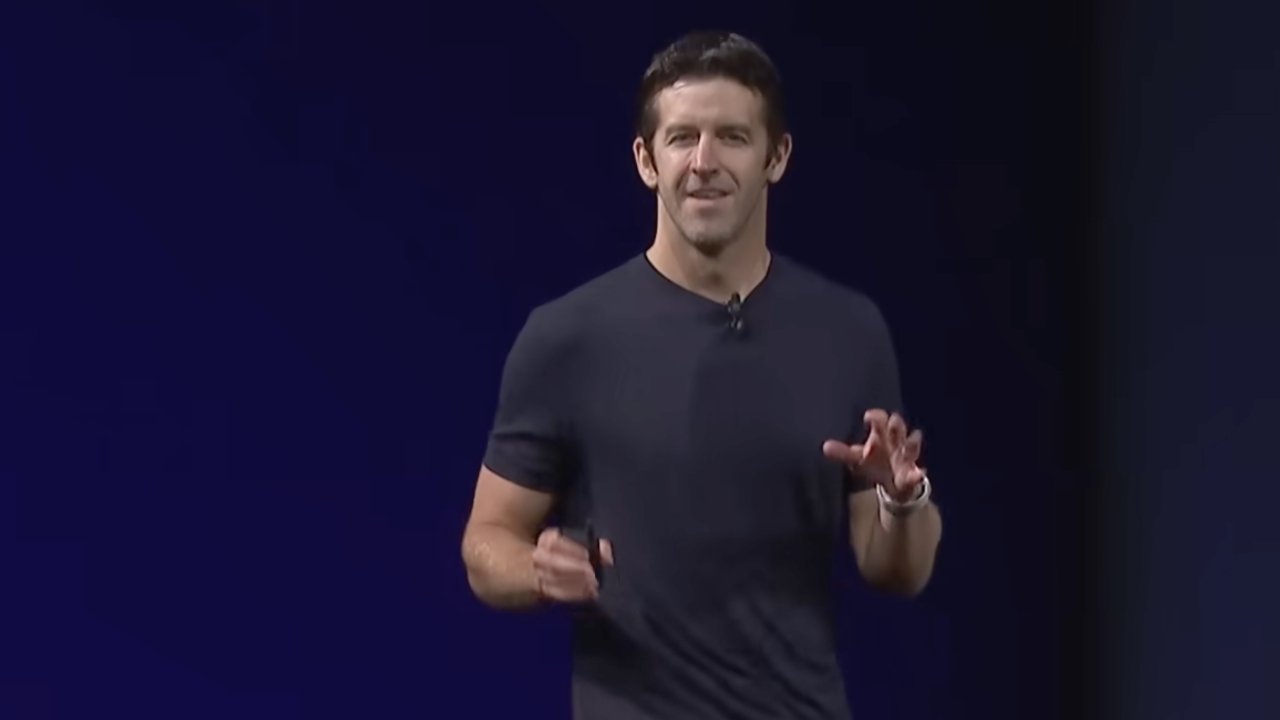
John Ternus on stage at WWDC 2017.- image credit: Apple
It happens all the time, and it means these blinkered firms miss out on brilliant alternatives. And in Apple's case, its seven CEOs to date have all been white men. Even their ages were similar, with three of them being aged 50 or 51 when they started.
Yet there's no question that Tim Cook was different to Steve Jobs, to the extent that Jobs reportedly doubted the man. That's according to Steve Jobs's biographer Walter Isaacson, who quoted Jobs as saying "Tim is not a product person."
What's actually known about Ternus
You can surmise the reasons he was chosen as CEO, you can speculate about what issues he will face in the role. But you can only know anyone through what they do and what they say.
In Ternus's case, he's certainly done plenty as his name is on 137 patents, dating right back to the very first work he did for Apple on the Apple Cinema Display. He's publicly said a lot less, though, than any of the other top contenders for the CEO role.
Ternus joined Apple in 2001, later admitting that it was "exhilarating and intimidating" getting to work there. As is typical for most Apple employees, if he were asked for interviews, he didn't give them, not even when he became vice president of hardware engineering in 2013.
However, by 2017, he was brought more to the fore and for one thing, presented at WWDC that year. This was when the keynotes were still done live on stage, and while Ternus didn't show the flair of Craig Federighi, he was good.
Ternus also hit the interview circuit that year, joining Phil Schiller and Craig Federighi to promote the Mac and in particular, what Apple was planning for its pro users. In transcripts of the main interview, Ternus is silent for a long time, but comes in when the discussion gets more technical about the 2013 Mac Pro.
"The way the system is architected, it just doesn't lend itself to significant reconfiguration for somebody who might want a different combination of GPUs," he answered. "That's when we realized we had to take a step back and completely re-architect what we're doing and build something that enables us to do these quick, regular updates and keep it current and keep it state of the art, and also allow a little more in terms of adaptability to the different needs of the different pro customers."
If that was one lesson he learned from working on that Mac Pro, there was another which will surely still inform how he works. "I think mostly it's [about] just getting the time to do the design right," he said. "Make sure we land with an architecture and a design that has legs. That we're really sure is the right thing."
He also said something in this rare interview that should please anyone who fears the Mac will be left behind as Apple continues to focus on the more successful iPhone. "I mean, quite frankly, a lot of this company, if not most of this company, runs on Macs," he said. "This is a company full of pro Mac users."
Failures and management style
That 2013 Mac Pro was a failure, overall, and it's not clear how involved Ternus was with it. But reportedly he wasn't just involved with the Touch Bar and the butterfly keyboard, he may even have been a chief instigator of them.
In the many unattributed comments reported by Bloomberg, one of the usual "someone familiar" says that he particularly pushed for the Touch Bar. "He shoehorned it in, arguing it was something different, a good marketing idea," said the source.
But then the same source reports that it was Ternus who killed off the Touch Bar.
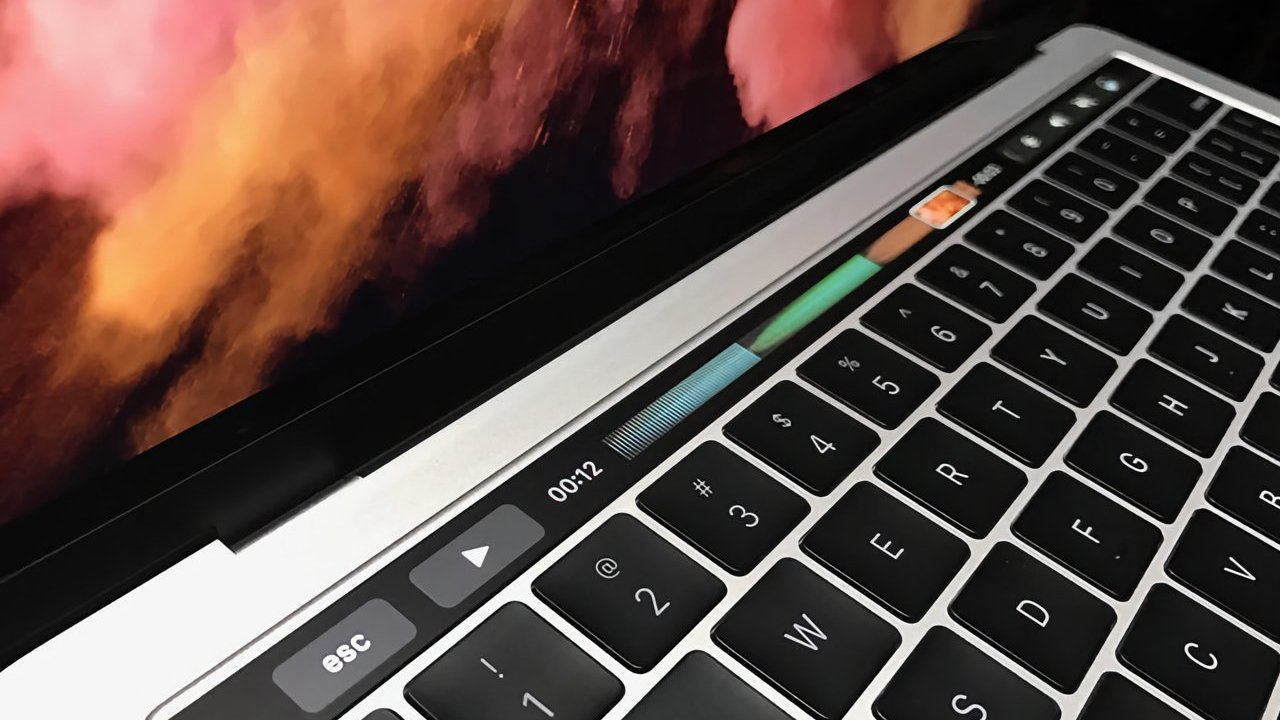
The Touch Bar on a MacBook Pro
That same report also says that it wasn't Ternus alone who thought of the Touch Bar, it was Apple's industrial design team. And that despite every report of Ternus being a nice guy, that there was great friction between him and that team because of his "Cookian" cost-cutting.
The greatest example of that appears to be around a problem with the audio on the Apple Vision Pro. Shortly before release, it was discovered that it couldn't stream ultra-low latency audio to AirPods, because somehow those AirPods couldn't receive it.
It was fixed with a revised version of the AirPods, but the claim is that Ternus initially looked for someone to blame. Yet in the same breath, Ternus is said to normally look "at mistakes as systemic problems that could be solved with better leadership instead of by putting the onus on engineers," according to another familiar source.
Cook was arguably a leader in that he reportedly sought consensus rather than making decisions. Jobs, though, consistently went straight to blaming individuals, even using Gil Amelio's name as a unit of stupidity.
People can be stupid, and restructuring management won't change that. But if Ternus truly looks at problems like an engineer, seeing them as something to be solved with the staff and resources he has, that's better than Jobs.
Detail-oriented
Ternus is an engineer, which neither Jobs nor Cook were. When he gave his 2024 commencement speech at the University of Pennsylvania's engineering school, he described that job.
"Fundamentally, this career is about changing the world around you," he said. "It's about giving people tools and solutions they never had and making an impact that can resonate for generations. That is both a profound opportunity and a great responsibility."

This was also the speech in which he revealed that as a student there, he had almost wrecked the university's one and only CNC milling machine. But after working at Apple for only a little time, he also absorbed the need for care in every way, and to perhaps excessive extent.
Perhaps of all the quite few remarks Ternus has made publicly, this segment of that speech says why he is now CEO.
So at some point in my first year, I found myself at a supplier facility. I was far away from home, was well past midnight. I was using a magnifying glass to count the number of grooves on the head of this screw, which, remember, lives on the back of the display. And I was arguing with the supplier, because these parts had 35 grooves. They were supposed to have 25. And I distinctly remember stepping back for a minute and thinking to myself, What the hell am I doing? Is this just normal?And I thought about it, and I realized it might not be normal, but it's right. It's right because I'd already spent months working on that product. And if you're gonna spend that much time on something, you should put in your very best effort.
Maybe a customer notices maybe they don't, but either way, whenever I saw one of those displays on someone's desk, it mattered to me to know that my teammates and I had considered everything about it and done the very best job we could.
But make no mistake, it's hard to put that much of yourself into something. It's stressful. It requires sacrifice. But it's worth it, because our time is finite.
Engineering is not just a qualification and it's not even just a career. It is a certain way of looking at things, it is a certain positive way of working to find solutions.
It's not possible to predict how Apple will be under John Ternus. It is easy to say that Apple has always been about finding solutions. True, it's also then been about selling them too, but to Apple, design is making devices usable, the way it wants to make them usable.
Ultimately, it's about making devices that most of the people that it is aiming at with any particular product will use. And if there's one recent example of that, it's the MacBook Neo, which Ternus was reportedly behind.