
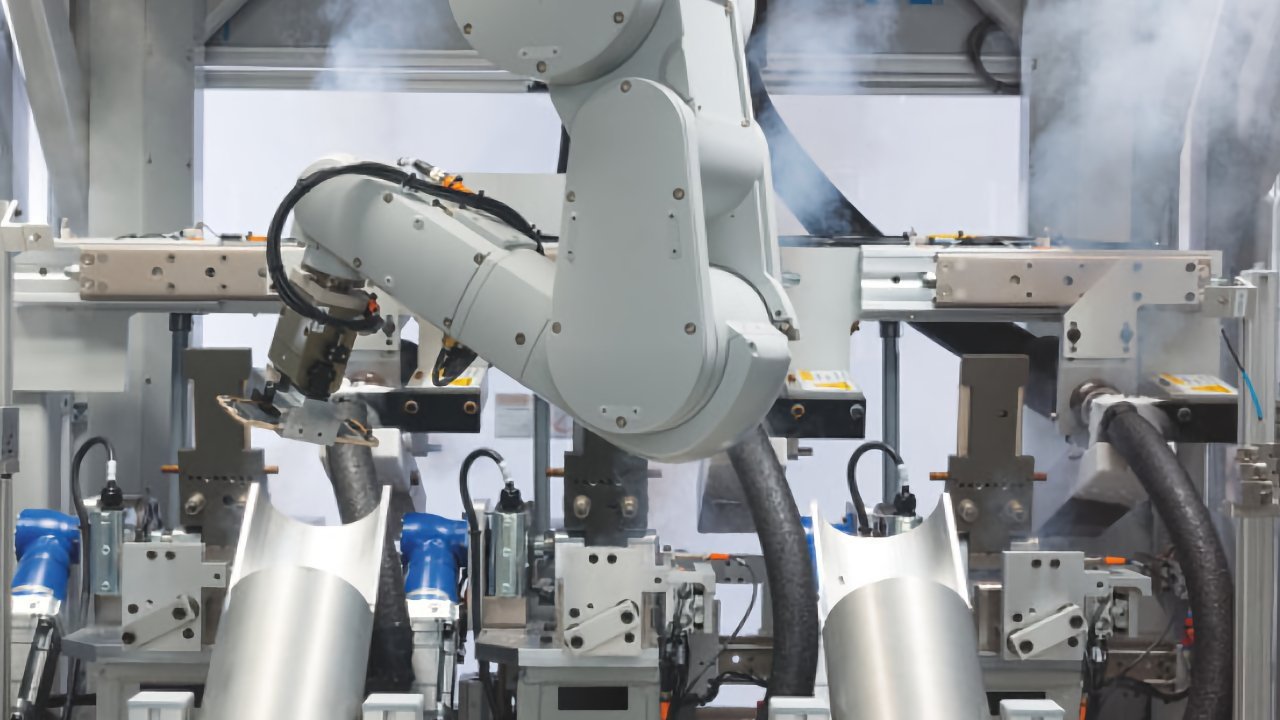
Apple is reportedly pushing suppliers to invest in automation to cut production costs. And, if they don't, they risk losing iPhone production contracts.
Aside from components used in production, one of the major costs of building an iPhone is the army of workers needed at assembly partners such as Foxconn. If a report is correct, that army may start to shrink in numbers.
According to sources of DigiTimes on Monday, Apple is pushing to introduce more automation in its supply chain. It has previously expressed a need for the use of robotics and automated systems in production, but now it's upping the ante.
Manufacturers in the supply chain are being told to actively invest in automation for production lines. It's apparently now a requirement if suppliers want to secure contracts and orders from Apple in the future.
The actual cost of the investment is something that the supplier must also work out for themselves. While Apple has previously helped fund investments to improve production, this seems to be something that it is expecting the suppliers to handle directly.
Standardization, protection, and cost
For Apple, a bigger shift to automate its manufacturing ecosystem provides multiple benefits. For a start, it reduces the labor force required to make the iPhone and other products, saving money.
It also means that manufacturing won't be as affected by major events like a pandemic. COVID-19 demonstrated this problem, with restrictions limiting how employees could work in factories.
Automation can also help standardize production between sites. If the same machinery is in use in two different countries, they should create the same results regardless of location.
DigiTimes has a pretty good record when it comes to supply chain moves, rather than for product news. Add in the previous discussion on automation, and it seems to be a very plausible report.
Another trade war change
The report says that Apple's interest in automation is in response to pressure from the United States, especially surrounding its work in China. In part, it's seemingly a response to the earlier Trump trade war with China, rather than the current tariff battle.
Since that time, Apple has worked to diversify its supply chain. This includes establishing enough of a production line in India to handle iPhone 17 assembly for U.S. customers.
Automation would provide some assistance to Apple in creating more bases of operation in the future. It would reduce the need to construct in more populated regions with a capable and low-cost workforce.
Eventually, this could mean the often-repeated call by President Donald Trump to bring iPhone production to the United States could actually become a reality.
Apple has previously talked to the Trump Administration about needing the "robotic arms" to actually make iPhones in the United States. A push to automate more could be baby steps in that direction, albeit one that would still have a lot more obstacles in the way.