
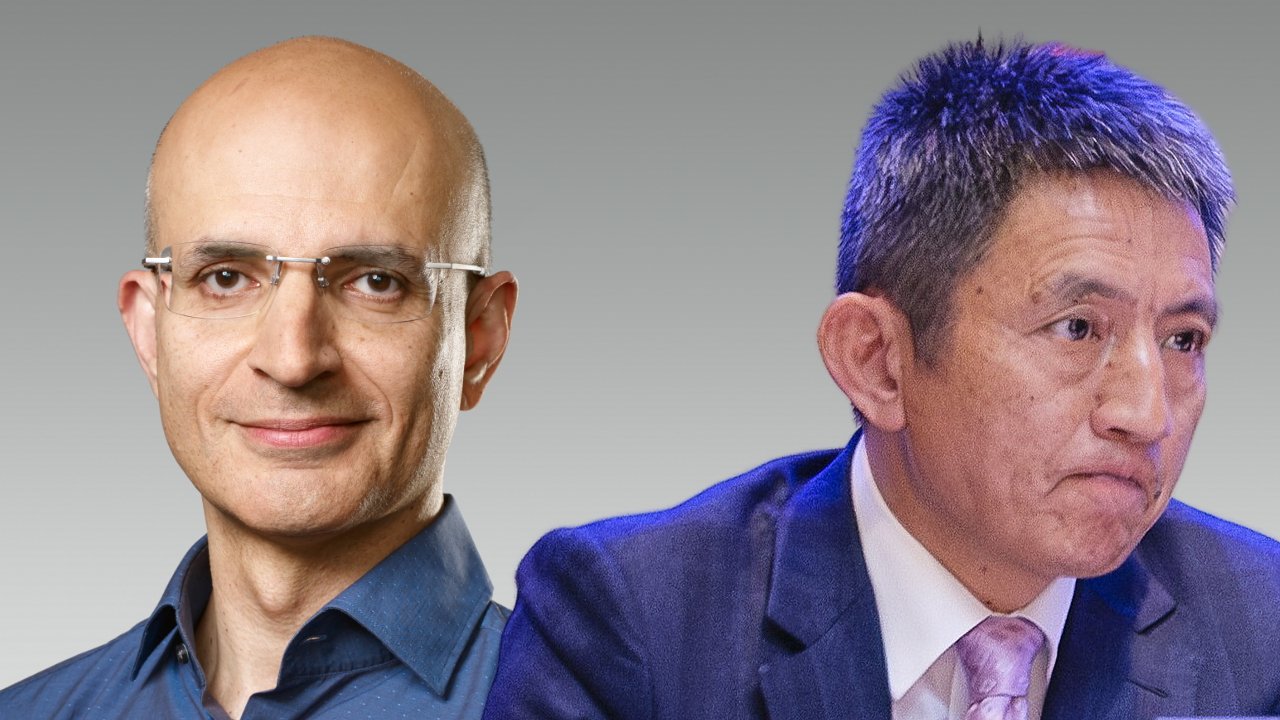
New Apple COO Sabih Khan has met with China's international trade negotiator, with both sides reportedly making general promises about continuing to work together.
Sabih Khan's predecessor as Apple Chief Operating Officer, Jeff Williams, made several such visits to China before his retirement, sometimes alongside CEO Tim Cook. Now China's Ministry of Commerce has announced that Khan has continued that relationship, this time meeting with Li Chenggang, International Trade Negotiator and Vice Minister of the ministry.
There are very few details of the meeting, even in the Ministry of Commerce's own official announcement. It's not even said where the two met, although it's likely to have been at the Ministry's offices in Beijing.
China's statement contains no quotes from either side, but does credit Khan with saying Apple highly appreciates China's supply chain. He is said to have told the minister that Apple is committed to long-term development in the country, include increasing investment in research and social welfare, as well as production.
Vice Minister Li Chenggang is reported to have discussed China's 15th Five-Year Plan with Khan. Key to this next plan for the country's development is reportedly the further expansion of partnerships with foreign companies, including Apple.
Neither Apple nor China's Ministry of Commerce have announced any specific plans or details.
Significant meeting
The meeting is significant, even without publicly-disclosed commitments, because of Apple's long-standing reliance on China. It's also significant because Apple has been under pressure from the Trump administration to move manufacturing back to the US from countries such as China.
Even before that US pressure, Apple has spent years making very considerable changes to its manufacturing, specifically moving much of it away from China. It's chiefly because Apple was so reliant on one source for much of its production, and that source has proved problematic.
Issues around how China handled COVID and lockdowns led to delays with the iPhone 14 range, for instance. In that case, Apple issued a rare apology to customers for the delays.
There have also been constraints on electricity, and power blackouts at Chinese factories. Then Foxconn, Apple's biggest iPhone assembler, has faced strikes and rioting workers over pay disputes and poor conditions.
Consequently, Apple has been drastically stepping up iPhone production in India and in Vietnam — which has also had electricity supply constraints. Nonetheless, because of China's skilled labor force and its rare earth minerals, Apple is unlikely to ever be able to abandon China entirely.