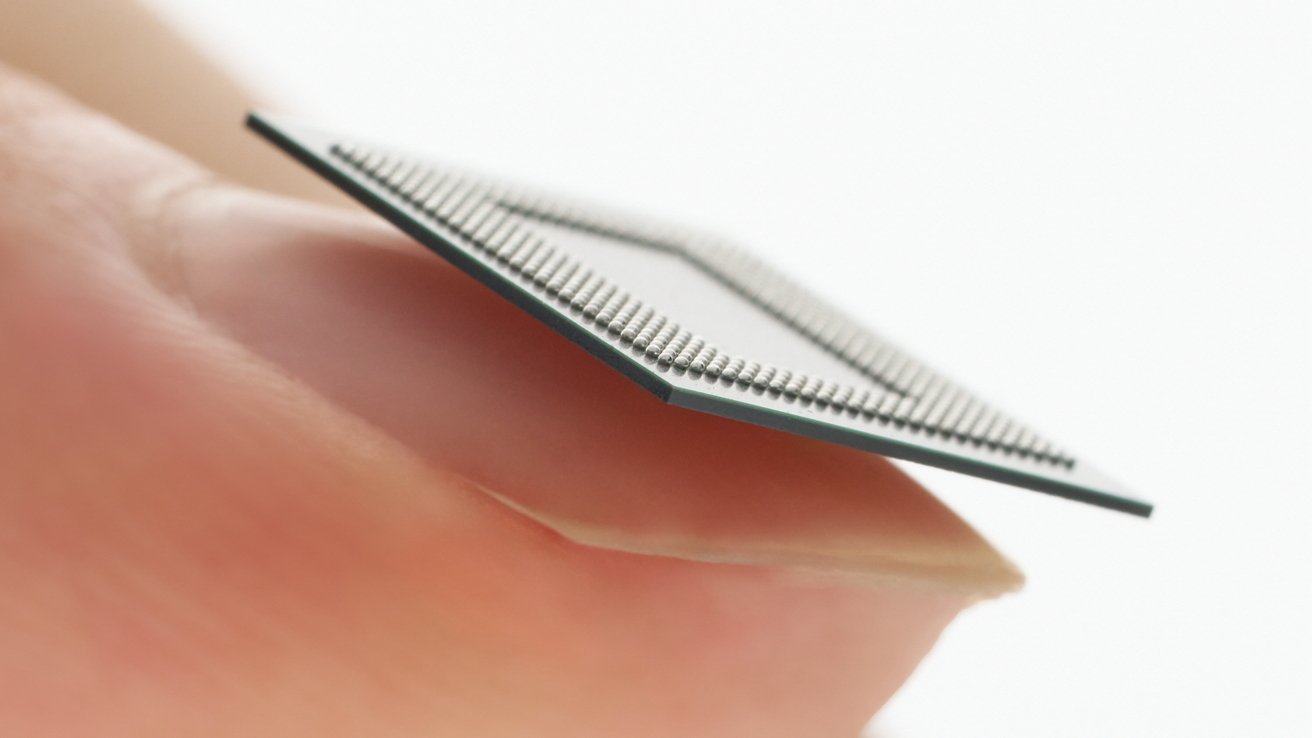
Tim Cook says that the rising cost of RAM and Flash that the industry is facing has not yet affected Apple, but he expects it to be an increasing issue in this quarter, and worse yet in the third fiscal quarter of 2026.
During Apple's latest earnings call, CEO Tim Cook addressed the issue of rising component costs, specifically memory, that have been expected to impact Apple's costs.
"Memory had a minimal impact on the Q1, so [on] the December quarter gross margin," said Cook. "We do expect it to be a bit more of an impact to the Q2 gross margin, and that was comprehended in the outlook of 48% to 49% that Kevan [Parekh] gave earlier."
Cook would not reveal anything specific on details of what cost increases the company predicts. However, he did at least allude to how Apple will be attempting to negotiate favorable deals.
"Beyond Q2, we don't obviously provide outlooks beyond the current quarter, but we do continue to see market pricing for memory increasing significantly," he continued. "As always, we'll look at a range of options to deal with that."
"I mean, there are different levers that we can push," he added, "Who knows how successful they'll be, but there's just a range of options."
As of publication time, Cook was asked about RAM and flash pricing three more times. No further details were provided.
RAM price rises in 2026
Apple has previously benefited from both the buying power it has because of its size, and because it has been able to negotiate at least reasonably long-term deals. Those deals, however, have been expiring and at present Apple is having to negotiate every quarter.
The situation is exacerbated for Apple because two of its previous suppliers have begun turning away from producing the LPDDR type of memory needed for the iPhone. With SK Hynix and Micron now reportedly focusing on high-bandwidth (HBM) memory, Apple has had to increase its orders from Samsung.
Just as much as the cost, though, there is also the issue of consistency. It's claimed that Apple's A19 and A19 Pro processors are not built to handle the momentary voltage spikes that could come with memory that isn't made to the company's requirements.
Then as well as Apple being constrained in the number of suppliers it can have, demand for memory is growing across the sector, especially including AI. Every smartphone manufacturer is now finding it harder to secure memory in the quantities they require.
Naturally, as demand outstrips supply, costs also increase. Memory manufacturers can be facing rising material costs themselves.
That doesn't seem to be a universal truth, however. For SanDisk, manufacturer of flash media, has reported profits of 67%.
But whatever the mix of production costs and scarcity price rises, one example is that Apple is now having to pay much more. In early 2025, it was paying approximately $30 per 12GB module, but by December 2025, the same module was costing Apple $70.