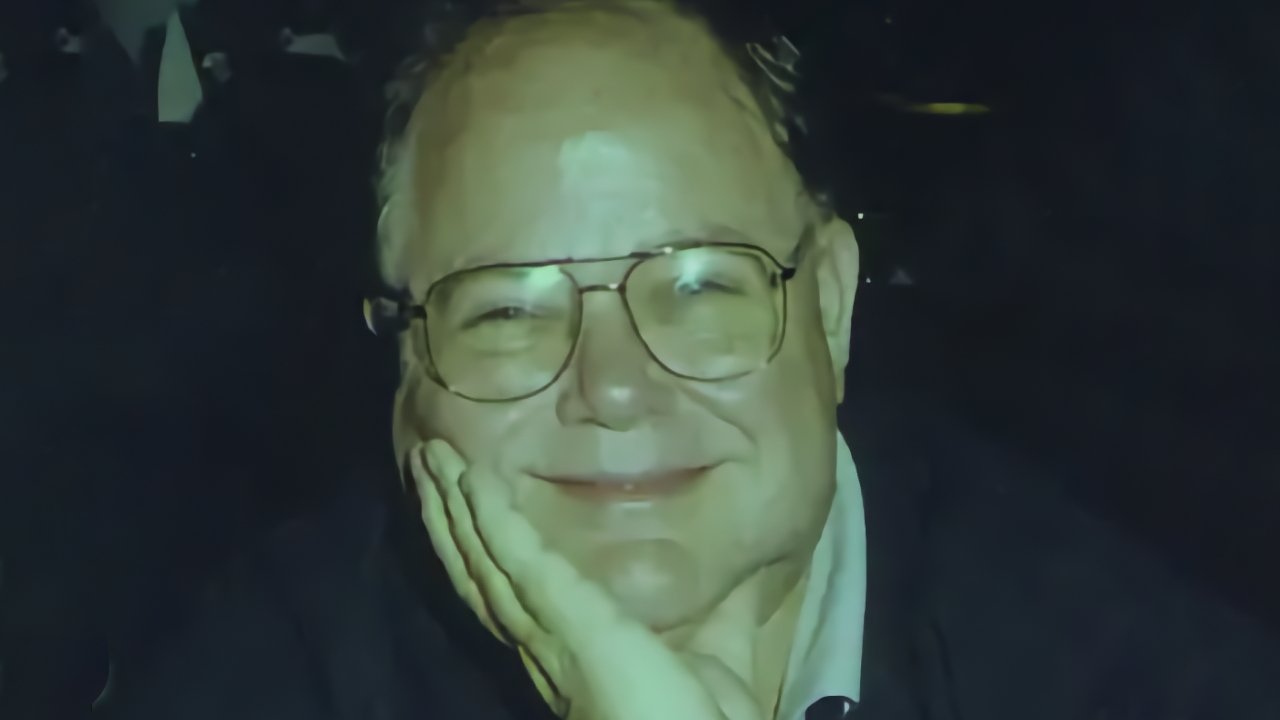
As Apple hits 50 years old, AppleInsider recounts the pivotal role of each of its CEOs, starting with the very first one, Michael Scott. He made bold choices, but he made them badly.
Steve Jobs was not Apple's first Chief Executive Officer. While he founded the company on April 1, 1976, with Steve Wozniak and Ronald Wayne, Jobs had no experience running what was aiming to become a large company.
So a CEO was needed, but actually Apple's first two chief executives are tightly interlinked. Mike Markkula would become the second one, but he hired the first — and then later persuaded that first to leave.
Michael Scott was that first CEO, leading Apple from February 1977 to March 1981. He had previously worked with Markkula at Fairchild Semiconductor, and presumably that shared experience brought Scott to mind.
But then it was presumably also a shared friendship that got Scott to agree to take on the role for a third of what he was then earning at National Semiconductor. Scott signed on to Apple for $26,000 (about $140,000 in 2026), and immediately began organizing what must have seemed like a messy company.
Organization and control
Scott pretty much immediately started making Apple more corporate. He issued numbered ID badges, and like every corporate boss since time began, expected everyone to like this idea.
Probably Steve Wozniak was fine with it, if he even thought about the idea at all. Scott gave him badge number 1.
Scott gave himself badge number 7, apparently as a nod to James Bond.
As it would be so often again, though, it was Steve Jobs who objected. Jobs wanted to be number 1 and Scott felt he'd "be unbearable" if he were.
Again, as he might often do later, Jobs argued his way — eventually getting Scott to agree to his having ID badge number zero. It was a pointless victory, though, as for places such as the Bank of America, zero was not recognized and Jobs had to be listed as employee number 2.
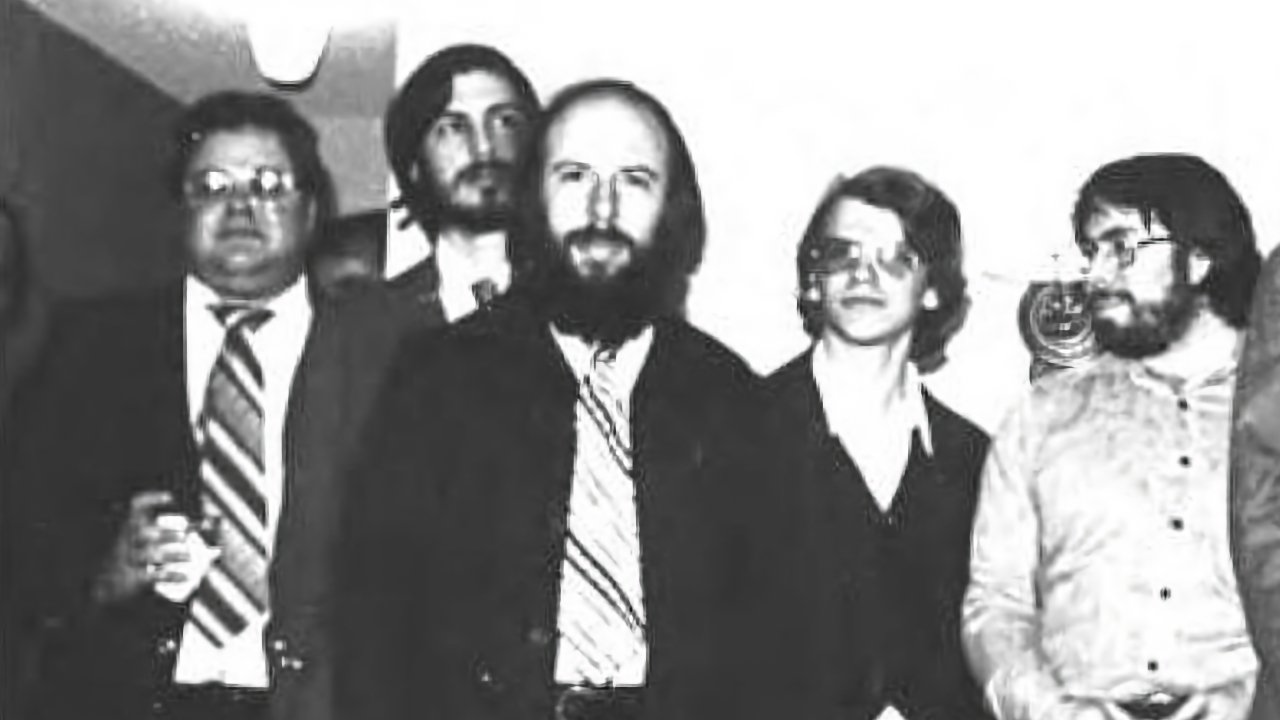
L-R: Michael Scott, Steve Jobs, Jef Raskin, Chris Espinosa and Woz in 1978 — image credit: AllAboutSteveJobs.com
Having an adult running Apple didn't hurt, but neither did the immediate success of the Apple II that was launched in April 1977, while Scott was still settling in. The Apple II sold for $1,298, or $6,966.62 in 2026's money, around the same as a M3 Ultra Mac Studio with 256GB RAM and 1TB storage today.
That revenue stream plus Scott being more business-minded than Jobs or absolutely more than Woz, meant that within six months, Apple was out of the red. Apple even had enough in the bank to spend $21,000 ($112,000 in 2026) to license BASIC from Microsoft.
Today it's hard to imagine any programming language being a selling point for a computer, but back then, this was.
So was its documentation — in a time when it was as rare to find a manual as it is, well, today. Now apps and devices are expected to be so easy that there's no need for a manual, but back then it was because no one bothered to write them.
Scott didn't bother to write one either, but he did put together photocopied sheets to form a rough manual of about 30 pages. But if he was right on the money about the need for a manual, he was also far too tight about the money to do it properly.
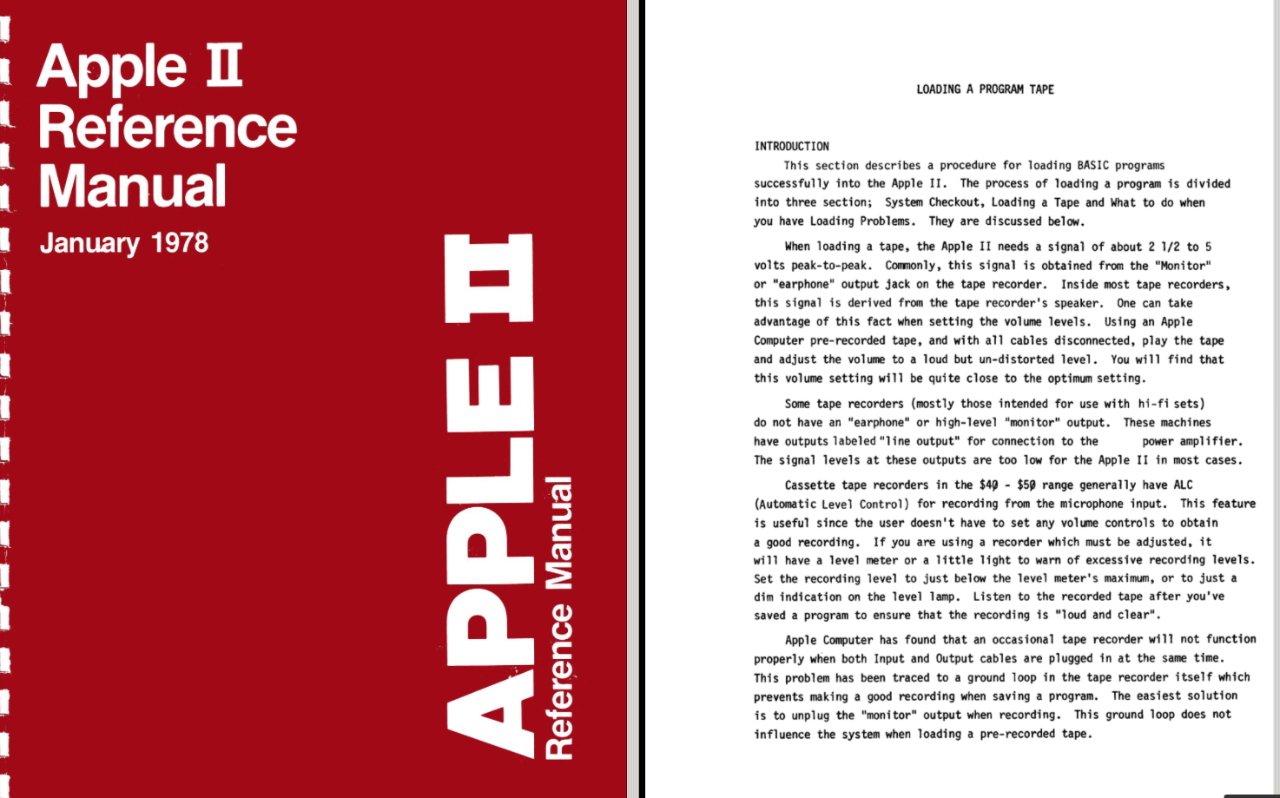
Cover and sample page from the "Red Book" Apple II manual, initially made from anything Michael Scott could sneak out from programmers' desks — image credit: Internet Archive
Instead of hiring a writer, apple2history says that Scott hunted for scraps of written notes by raiding people's desks overnight. If you think it's right, Scott, you don't do it at night.
In January 1978, those pages were smartened up, given a red cover, and mailed out to customers as the Apple II Reference Manual. Then later in 1978, after Steve Jobs called for professional documentation, Chris Espinosa wrote a manual based on this earlier Red Book.
Eating the dog food
In what now also seems impossibly quaint, Scott also imposed one other absolute rule on Apple. In a memo written on February 1, 1980, Scott announced that Apple would no longer buy, rent, or preferably even use typewriters.
"If word processing is so neat, then let's all use it!" he wrote to the Executive Staff and All Typewriter Users. "We believe the typewriter is obsolete. Let's prove it inside before we try and convince our customers."
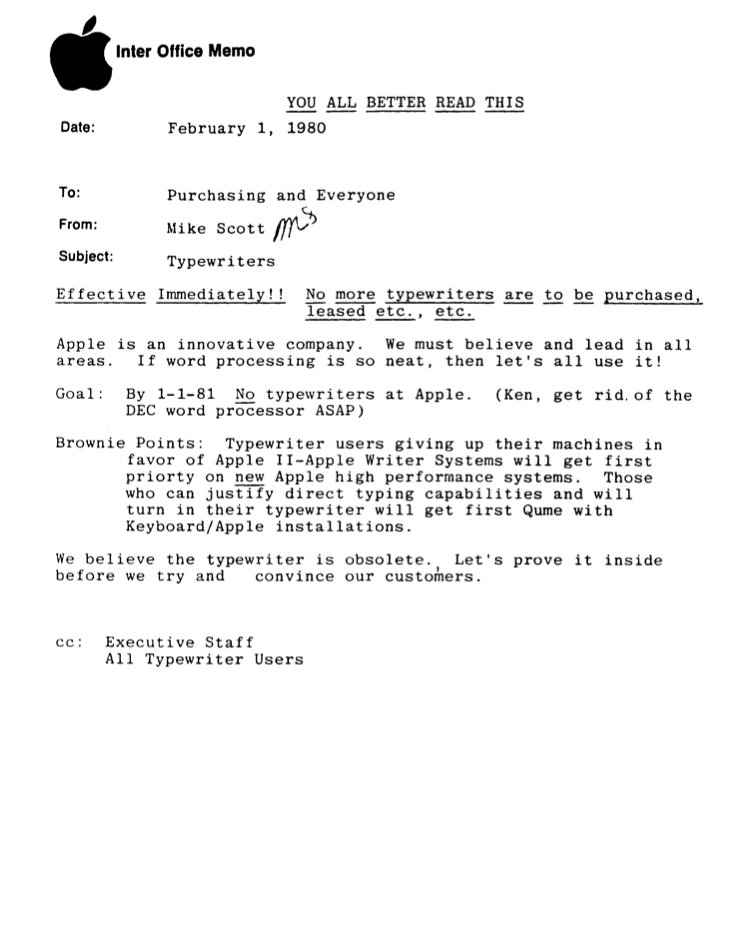
Michael Scott's memo banning typewriters at Apple
Scott saw the future — and then he got to see more of it. While it was Steve Jobs who negotiated the famous deal with Xerox to be shown around its PARC facility, he brought Scott with him on his second visit.
The Palo Alto Research Center had computers with graphical displays. It really had the Lisa and the Mac before anyone else — and did not know what to do with it.
Steve Jobs did, and the Apple Lisa was born. Scott saw the future too, but also knew Jobs was a problem.
In late 1980, Scott reorganized Apple, setting it up under different teams for different projects. The Apple Lisa was one, and Scott may have considered it the most important.
Certainly Jobs did, and he wanted to run the Lisa project, but Scott refused. Scott did not believe that Jobs was capable of running the project.
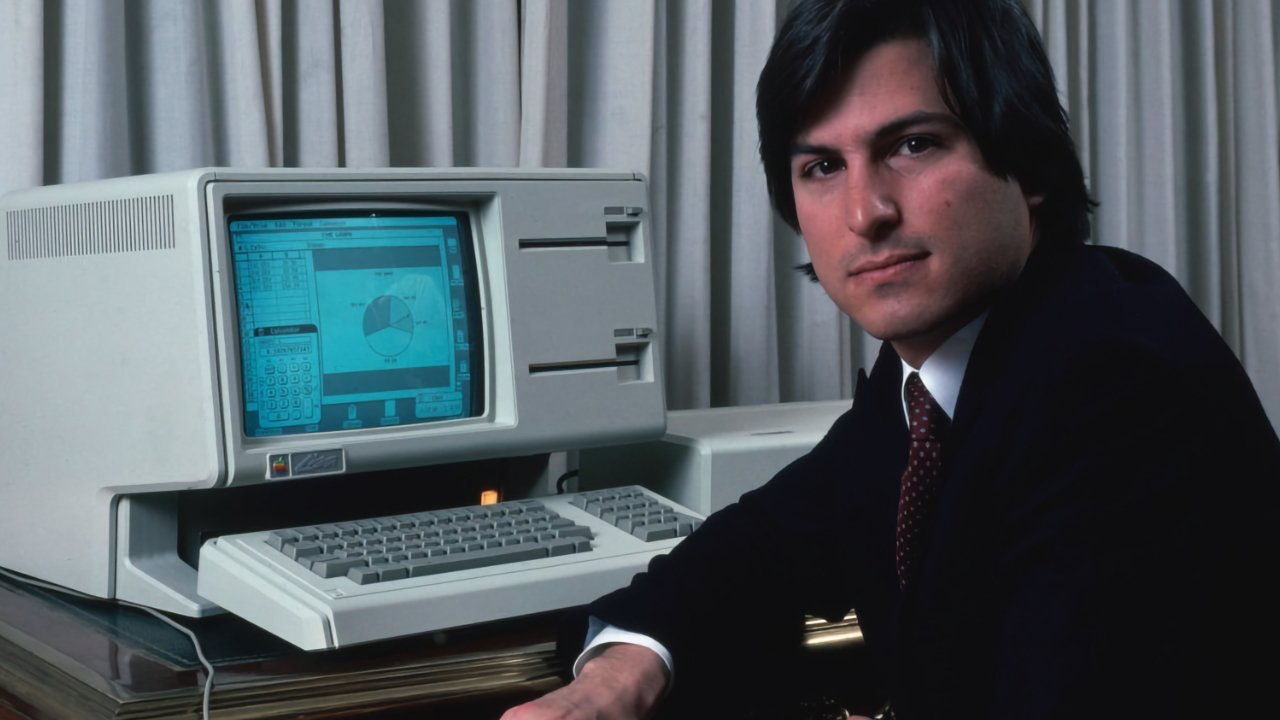
Scott (not pictured) allowed Steve Jobs to be a spokesperson for the Apple Lisa, but not be involved in making it.
"After setting up the framework for the concepts and finding the key people and sort of setting the technical directions, Scotty decided I didn't have the experience to run the thing," Jobs said later. "It hurt a lot. There's no getting around it."
Keeping Jobs away from the Lisa project was probably wise. But it's also part of the sequence of events that saw Jobs muscle in on the Macintosh.
But for now, was getting Apple to use its own computers, he was imposing a certain discipline, and financially the company was doing better. Plus, surely more than anyone knew at the time, they were setting up the future of Apple and the then still-unknown Macintosh.
You can be too kind
Unfortunately, by this time, Apple was doing well, but Scott was not paying sufficient attention to co-founder Steve Wozniak. Later Scott would tend to regard Woz as a lazy programmer, but what he missed in December 1980 was that Woz was also far too generous.
For Woz had enough shares in Apple that he need never go short of money again. He had enough stocks that he felt he could and should give it away to friends and family.
He also gave stocks to people at Apple that he thought were under appreciated. You can't fault his intentions, but at the time you could question the sheer quantity of shares he was handing out.
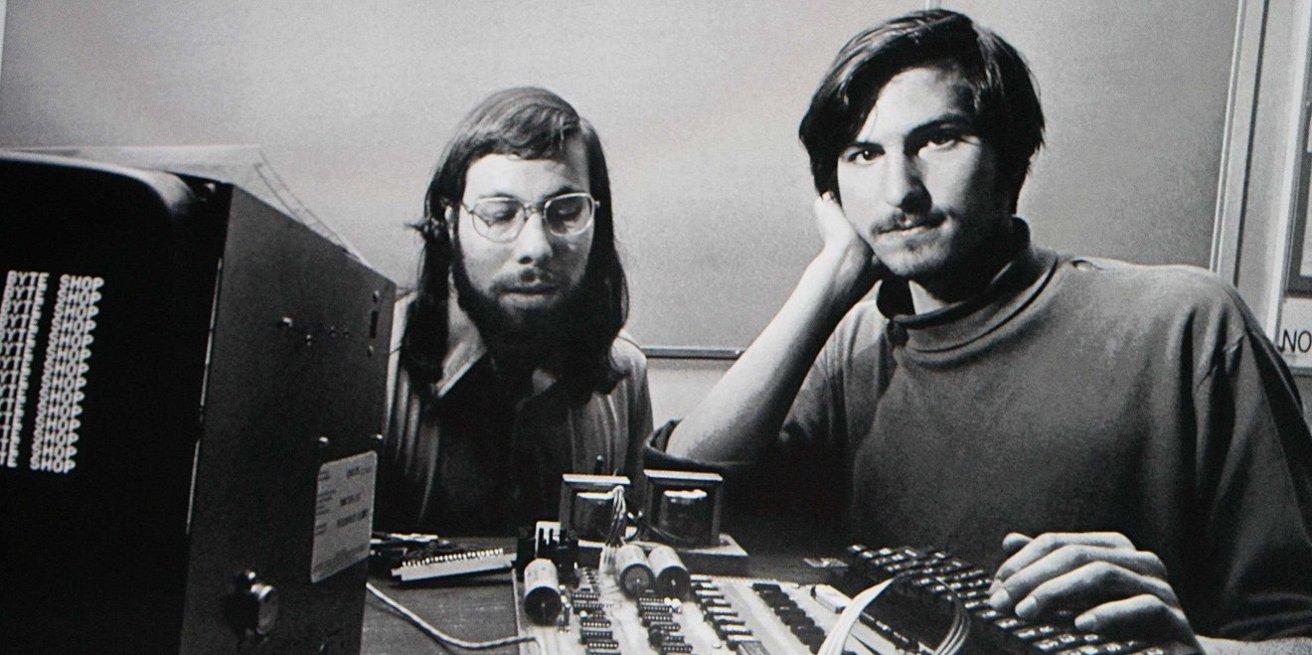
Steve Wozniak (left) and Steve Jobs. Neither were businessmen — but Jobs wanted to be.
"There are some magic numbers in a company's history, and one of them is 500 shareholders," Scott said later the Apple Confidential 2.0 book. "Once you have that many shareholders, you must file all sorts of paperwork with the SEC."
Apple was a pixel away from becoming a public company before it was ready, just from the volume of shares that Woz was spreading around. It was Scott who decided to make the most of this and formally issue an Initial Public Offering (IP) on December 12, 1980.
Bad times test leaders
Things did not continue to go well for Apple. Scott would soon say that he had hired some poor staff, and then that they had hired poorer ones under them.
Plus the Apple III project was now running a little out of control and costing a lot in engineering time. Part of that was down to Steve Jobs, who would reportedly demand a new feature one day, only to change his mind the next.
Changes by Jobs and others led to shipping delays. Ultimately to get it out of the door and not affect the success of Apple's IPO, the Apple III began shipping in November 1980.
But it was shipped despite engineers warning of problems, most particularly concerning the computer's built-in clock. Later, Apple would simply take that National Semiconductor processor out of the Apple III rather than fix the problem.
Apple's engineers had been right about this, but also wrong. The clock was the least of the Apple III's problems.
Reportedly, a fifth of all Apple IIIs shipped in the first few months simply didn't work because chips had come loose during transportation. This led to the infamous Apple support advice that users should pick up their Apple III and then drop it onto a desk.
To Michael Scott's and Apple's credit, the company did replace faulty Apple III computers, no questions asked. But then the replacements were also failing.
It's hard to sell computers that don't work. So while the old Apple II continued to sell well, the Apple III did not — and that led to some changes at Apple.
Black Wednesday
On Wednesday, February 25, 1981, Michael Scott called 40 of Apple's employees into his office one by one and made them redundant.
"I could tell there was something wrong from the moment I stepped into the building, on the morning of Wednesday, February 25th, 1981," wrote Apple's Andy Hertzfeld on his Folklore.org blog much later.
"Instead of the normal office buzz, there was a muted sadness hanging in the air," he continued. "People were standing around, huddled in small groups."
He was soon told that Scott had fired three quarter of Apple's managers, which Hertzfeld wasn't particularly unhappy about. But Scott had also fired engineers that Hertzfeld worked with and considered important to the future of the company.
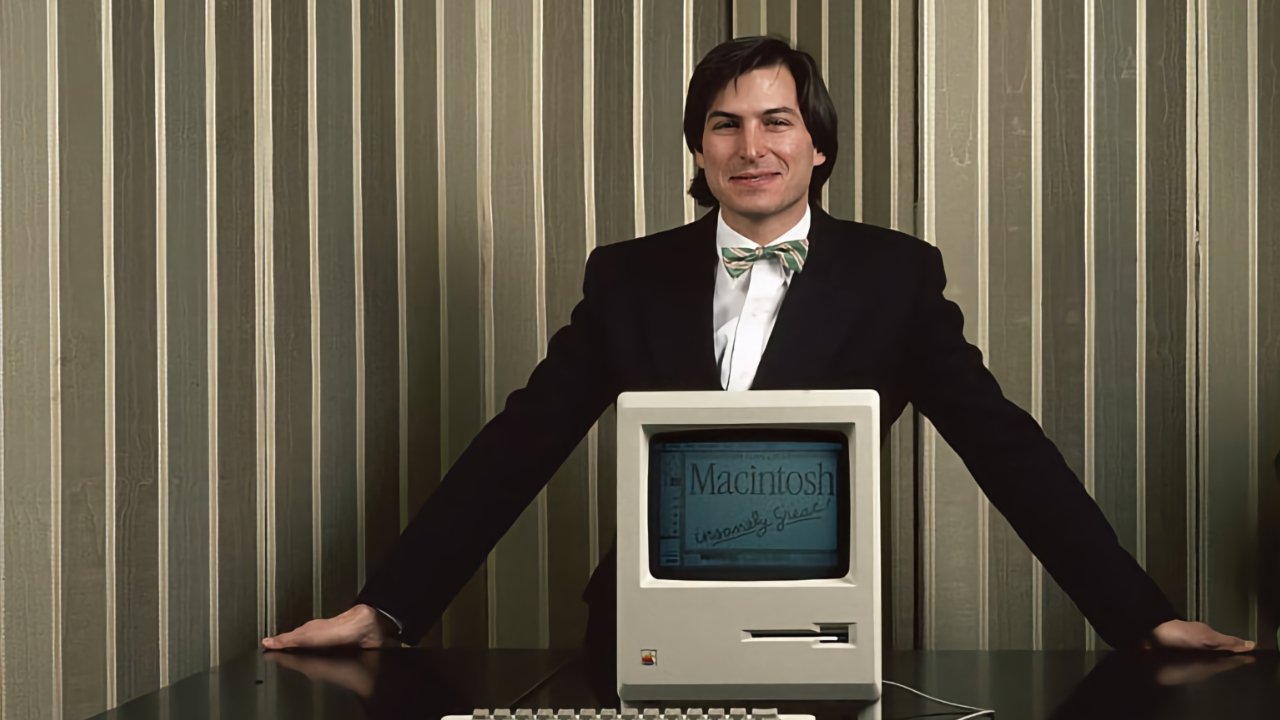
Steve Jobs with the original Macintosh. He was a famous CEO of Apple, but he was far from the first.
Scott's rationale, as he explained to the remaining staff later, was to bring Apple back to its previous startup mentality. But reportedly, he told them that while standing around a keg of beer he'd bought them.
CEOs just wanna have fun
Scott had a point about the poor hires, and he also scrapped hardware projects that were diluting the company's efforts. But if there are no good ways to fire people, there are bad ways — and he nailed that.
He reportedly described this aim of going back to a startup mentality by saying "I'll fire people until it's fun again."
It's not clear now whether Mike Markkula was present for that statement, but he heard about it. The next month, Markkula himself replaced Scott and took over as CEO.
Scott stuck around Apple in order to take part in another stock offering, but after a few months, he quit. True to this idea of fun, he said in another company-wide memo that he had joined Apple "to learn and to have fun."
Yet he then said that "I believe that a company is a business, not a social institution." The long memo continued with him announcing that he was "no longer proud or having fun."
Michael Scott left Apple on July 17, 1981. He offered to "consult on a limited basis...if you wish," but it's not known whether anyone did wish it.
Scott went on to lead a satellite firm called Starstruck, and ultimately to become an author and expert on gemstones. He died on April 12, 2025, aged 80.
Coming next
If Michael Scott was overshadowed by many later CEOs such as Steve Jobs and Tim Cook, it's really his immediate successor whose name should be vastly better known.
Mike Markkula was Apple's second CEO, but without him there wouldn't have been a first one — and without him, it's unlikely that Apple would still be here.
And surely impossible that in 2026, Apple is still working to the ethos Markkula laid out in a document fifty years ago.
Apple at 50: How each of its CEOs shaped the company
- Apple at 50: Michael Scott, the company's first CEO, made bold and bad choices
- Apple at 50: Mike Markkula, Apple's second CEO was as important as Steve Jobs
- Apple at 50: John Sculley, Apple's most maligned CEO
- Apple at 50: Michael Spindler, the CEO who brought in the clones
- Apple at 50: Gil Amelio, the CEO who brought back Steve Jobs