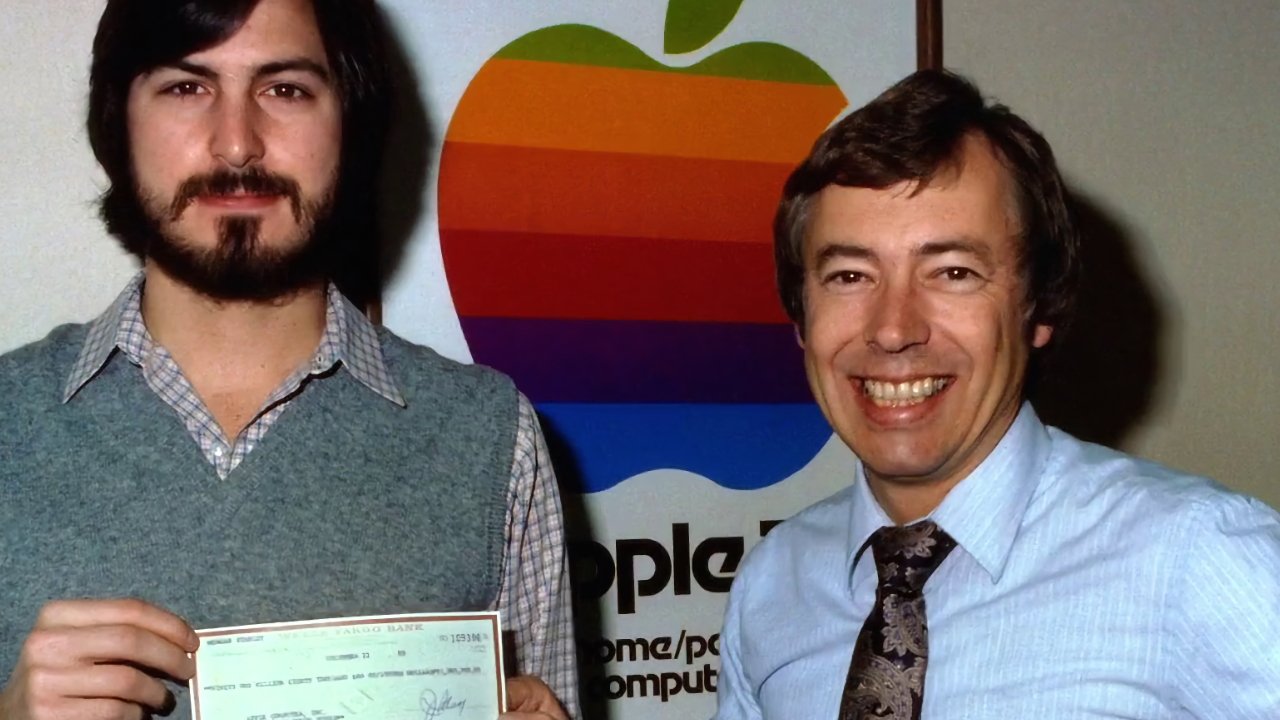
Neither of Apple's first two CEOs are particularly remembered next to the likes of Steve Jobs, John Sculley, or Tim Cook, yet Mike Markkula, Apple's second CEO, certainly should be.
Michael Scott was the first CEO of Apple, but he was hired by Mike Markkula. And then if not exactly fired, he was at least pointed toward the door by Markkula.
Without Markkula, there would quite possibly never have been an Apple. And there certainly wouldn't be one that stood the test of time.
And he is the one who set out Apple's ambitions and beliefs in a single-page marketing note that still describes the company today.
What and when and where
Mike Markkula was born in 1942 in Los Angeles, and retired — the first time — around 1975. He was able to retire at age 33 because of stock options he had earned at both Intel and Fairchild Semiconductor, as a marketing manager.
That's nice for him, and it would prove to be a blessing for Apple, but only because Markkula turned out to find retirement a little dull. He began working again, if strictly limiting himself to Mondays, and to advising startup firms.
Around November 1976, Jobs was trying everyone he could find, such as Atari founder Nolan Bushnell, but no one was interested. Except one of them, venture capitalist Don Valentine, who wouldn't back Apple himself, but suggested to Markkula take he a look at what Jobs and Steve Wozniak were doing.
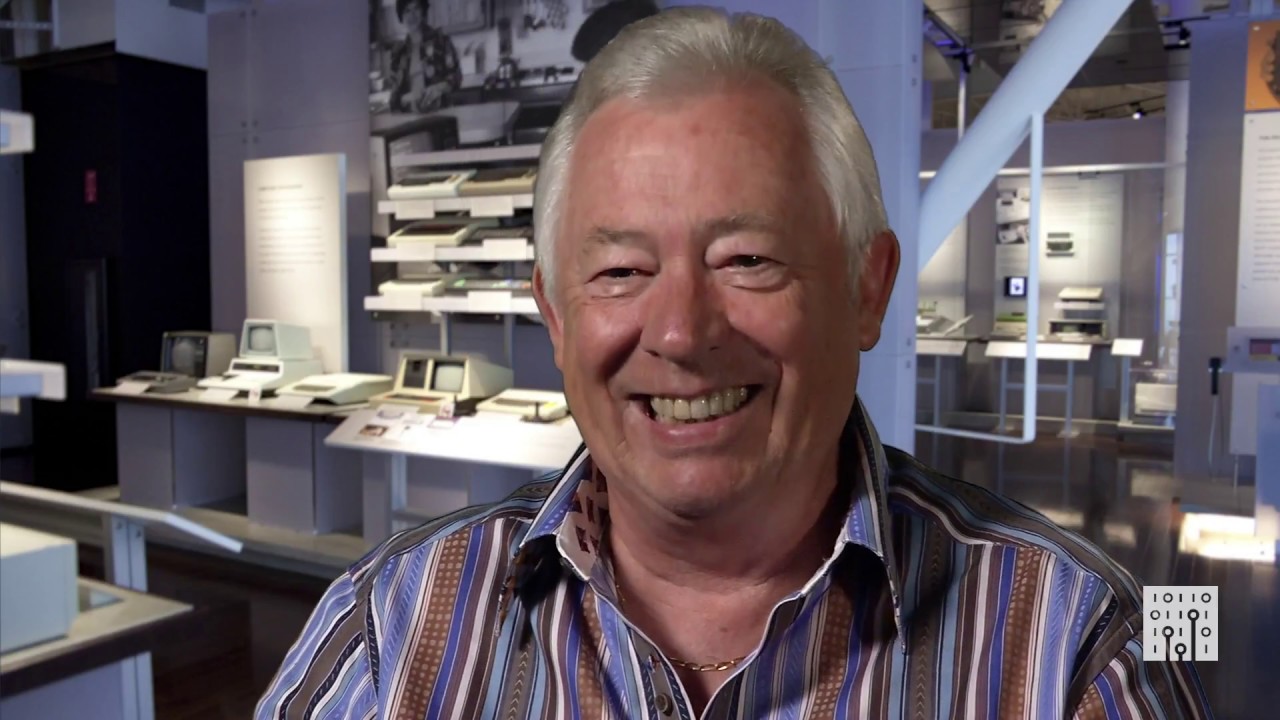
"I went over and met them in the garage," Markkula told the Computer History Museum in a series of interviews in 2018. "When I saw what Woz had done sitting there in that garage, using an ordinary home TV, and they had colour graphics, even, oh man."
The story goes that venture capitalists such as Valentine didn't want to get involved because of how unconventional the two Steves were. Plus Jobs was said to have long hair, to have not bathed, and to be rude.
Markkula, though, was unconcerned about any of this because he had no intention of joining Apple. "I was gonna help them, write a business plan, and see what we could do with that, and that would be that," he said. "I wasn't gonna be running off to spend the next 20 years of my life building the company."
For their part, Jobs felt he could trust Markkula, and Woz was delighted with him. "I thought he was the nicest person ever," Woz later told Jobs' biographer, Walter Isaacson. "Better still, he actually liked what we had!"
Businessman meets innovators
In retrospect, it's easy to categorize Markkula as the level-headed adult in the room when Apple was in its earliest days. He certainly had a business background and far more so than either Jobs or Wozniak.
But one reason he says he got involved was that "I loved [the] Apple II." Markkula was more of a technologist and even engineer than he's usually given credit for.
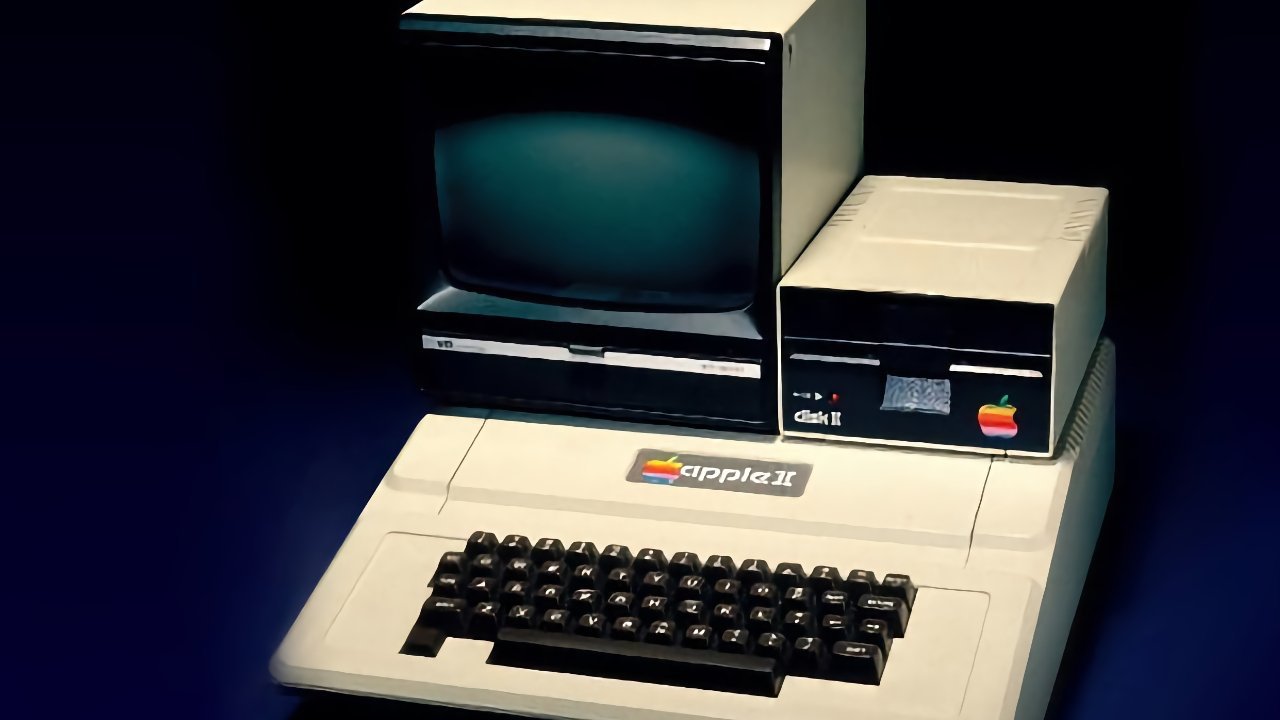
Markkula joined in part because of how much he rated this machine, the Apple II
Nonetheless, it was his business acumen that was needed. He gave Woz a few days to quit his current job at Hewlett Packard and commit to Apple, and he also told the two Steves how to write a business plan.
Or he tried to.
"I would give Steve the list of things that he needed to do, and then come back with it done," said Markkula, "and he never would do [it]."
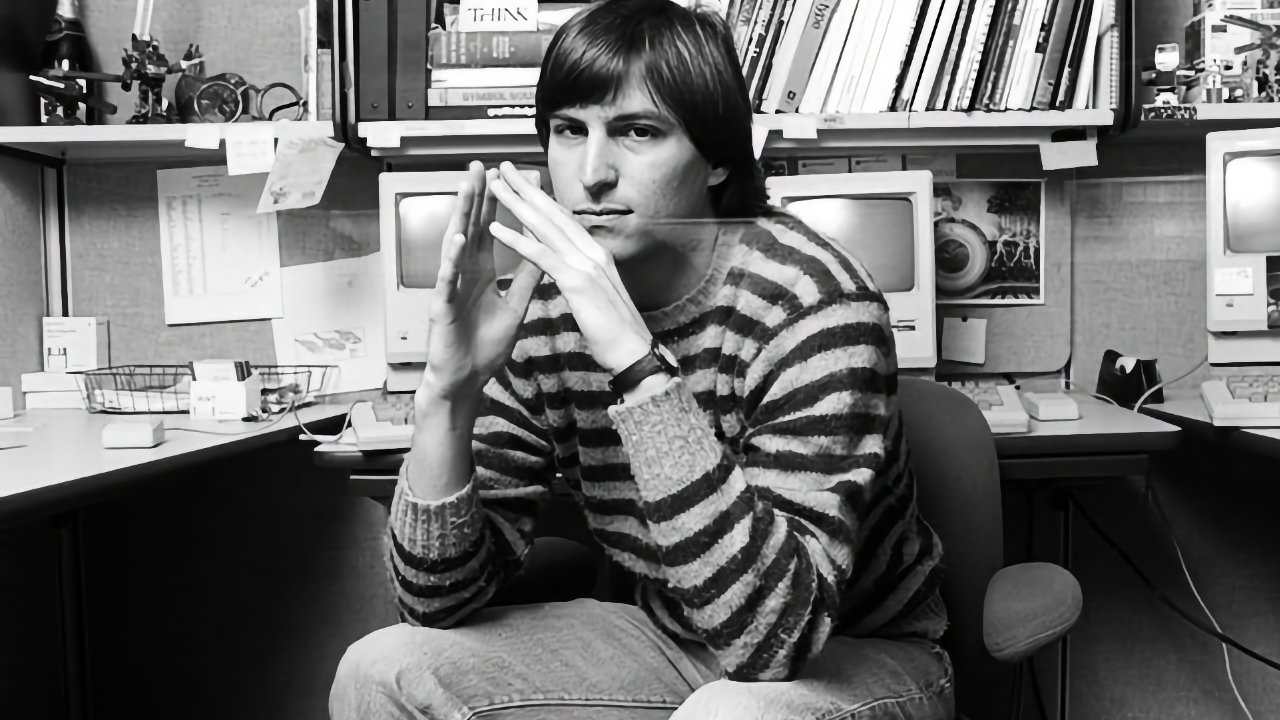
Steve Jobs was no businessman, at first — image credit: "Steve Jobs: The Man in the Machine"
"It was pretty obvious that neither one of them had any interest in writing a business plan, they just didn't want to do it," he continued. "So I finally said, 'well, okay, I'll write a business plan,' [because] I really wanted to see this thing go."
Business plans, amongst other things, are intended to convince people of what your company can do. They are one part of convincing people to invest.
By that standard, Markkula's plan was a success because he convinced himself. "I came to the conclusion that we could build a Fortune 500 company in less than five years [and] that would be really fun," he said.
So according to Owen W. Linzmayer's "Apple Confidential 2.0" book, Markkula invested $92,000 of his own money. He also secured a $250,000 line of credit at the Bank of America.
"I thought it was unlikely that Mike would ever see that $250,000 again," Jobs told Isaacson later, "and I was impressed that he was willing to risk it."
With that done, Markkula, Jobs, and Wozniak filed to incorporate Apple Computer on January 3, 1977. The new Apple Computer, Inc, officially purchased the old Apple Computer partnership in March 1977.
Changing trios
Apple had briefly been centered on Steve Jobs, Steve Wozniak, and Ronald Wayne. Wayne left within days, and as of the company's incorporation, the central trio became Jobs, Wozniak, and Markkula.
Markkula didn't want this, as much as he wanted Apple to succeed. So he immediately searched for a proper Chief Executive Officer, Apple's official first one, and would soon find it in his friend Michael Scott.
But Markkula would not get away from Apple that easily. He was finding a CEO to get the company in good, solid shape, but he was also writing Apple's manifesto. What he wrote was a marketing brief that Tim Cook could have issued today.
On January 3, 1977, the day Apple was incorporated, Markkula wrote a one-page, three-paragraph, 96-word memo called "The Apple Marketing Philosophy."
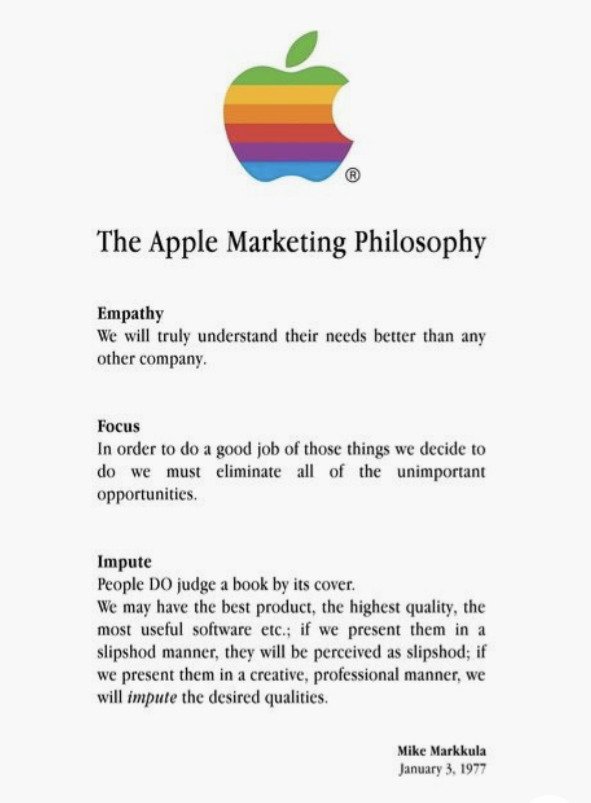
Fifty years later, Apple still abides by what Mike Markkula wrote in this memo — image credit: Apple
It included text that sounds like Steve Jobs — and he may have been involved — over focus. To understand users needs, it reads, and "do a good job of those things we decide to do, we must eliminate all of the unimportant opportunities."
The third paragraph speaks to how Apple has become famous for its packaging. Apple puts as much design thought into its boxes as, it seems, some firms do into their devices.
"People do judge a book by its cover," writes Markkula. "We may have the best product, the highest quality, the most useful software etc.; if we present them in a slipshod manner, they will be perceived as slipshod."
"[If] we present them in a creative, professional manner, we will impute the desired qualities," he concludes.
He was talking about packaging in more than one sense, too. For ahead of the launch of the Apple II in April 1977, Markkula made Jobs and Woz go to a San Francisco tailor to get three-piece suits.
Launching the Apple II
We may never know if Markkula also got Jobs and Woz to have haircuts. But by the time Jobs got to the West Coast Computer Faire to unveil the Apple II, he had fully absorbed the need to care about appearance.

So reportedly he had empty Apple II enclosures arranged around the only working models they had, and raged at how the cases had minute blemishes. Apple had paid for a prestige, high-cost location and he had Apple employees polishing and sanding the empty enclosures.
Presumably Markkula approved of that, but it's less clear what he thought of how Woz published a brochure for a fake computer as a prank.
Markkula greenlights the Macintosh
Once Michael Scott was in post as CEO, Markkula became chairman, but that didn't mean stepping back. During spring 1979, it was Markkula who asked Apple employee Jef Raskin to work on a game machine code-named Annie.
"I told him it was a fine project, but I wasn't terribly interested in a game machine," Raskin later told Owen W Linzmayer. "However, there was this thing that I'd been dreaming of for some time which I called Macintosh."

Markkula had Raskin write up his dream and if you're not reading this on an iPhone or an iPad, there's a solid chance that you're reading it on a Mac.
Except, you very nearly weren't, because of Steve Jobs.
"Jobs hated the idea, [he] was one of the Macintosh's hardest critics and he was always putting it down at board meetings," said Raskin. "When he became convinced that it would work, and that it would be an exciting new product, he started to take over [and] told everybody that he had invented it."
It's not actually clear that Jobs took over because he came around to the idea of the Mac. It's more likely that he took over because he had nothing else to do that interested him.
That's because CEO Michael Scott had refused to let Jobs run the Apple Lisa project — and Mike Markkula would not intervene.
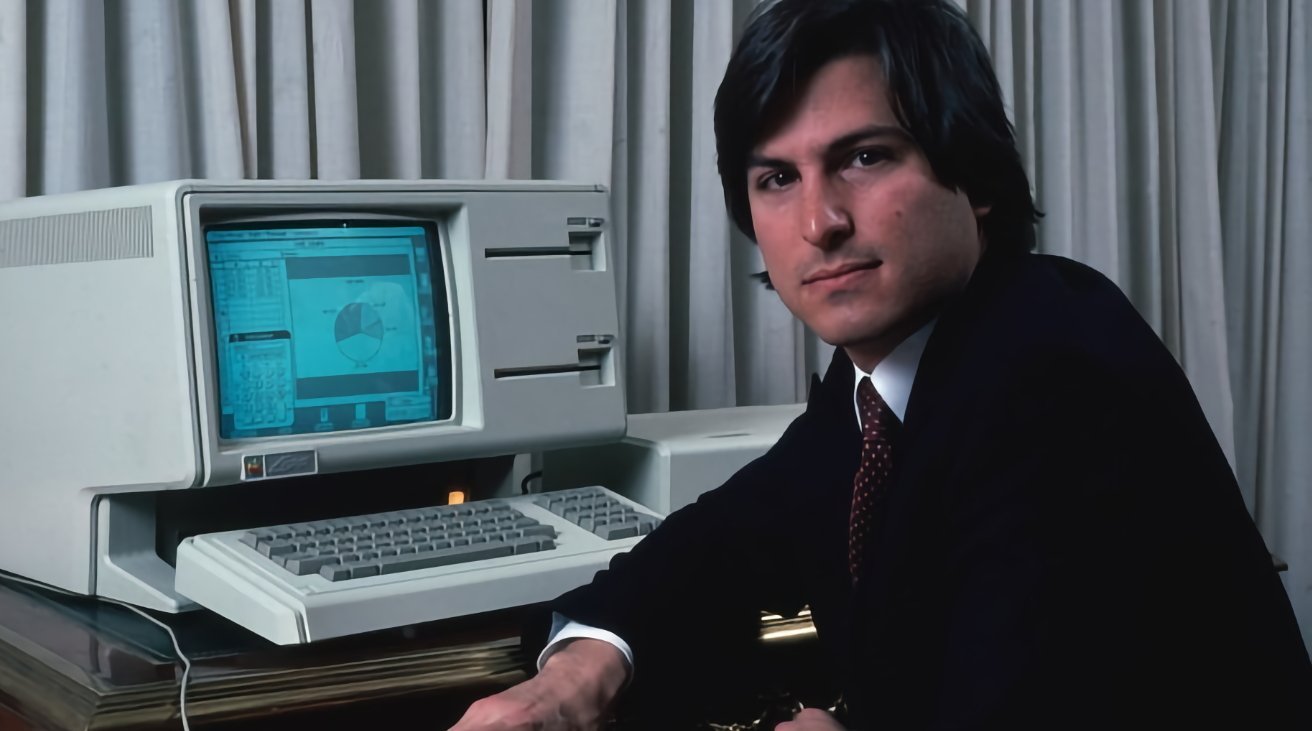
If Jobs looks moody, it's because he was sidelined away from the Apple Lisa project and only allowed to do this, promote it — image credit: Apple
"I was upset and felt abandoned by Markkula," Jobs said later. "He and Scotty felt I wasn't up to running the Lisa division. I brooded about it a lot."
Markkula may have been a bit busy, too, because Apple was then having problems with the Apple III.
Apple III failure
The short version is that the Apple III took too long to create, that it had too many people trying to get it to do too much, and that ultimately it was rushed. It was rushed to the extent that its processors were not sufficiently well soldered to the machine's motherboards.
Buyers would take delivery and find their Apple III did not work. That is, unless they picked it up and dropped it onto the desk in just precisely the right way to get the chips to slot back in properly.
Markkula, more the spokesman for the company than Scott ever was, did acknowledge the issue in April 1981. "It would be dishonest for me to sit here and say it's perfect," he told the Wall Street Journal.
But by January 1982, things were different. He told Australian magazine Your Computer, that the Apple III had proved to be more reliable and had better quality control.
"This is truly significant," he said, "because the Apple III is a much more complex machine than [the] Apple II."
The Apple III would never be a success, and its problems led to Apple struggling financially. This is why CEO Michael Scott ultimately fired a lot of staff in February 1981, which may well have been a necessary cost saving.
But it was done badly and by the next month, Scott was moved from the CEO role to that of vice chairman. Mike Markkula became Apple's second CEO.
The first interim CEO
While Markkula never used the term 'interim CEO,' or 'iCEO' that Steve Jobs would later coin, he always saw the job as a temporary one. In the end, he stayed as CEO until 1983.
According to Isaacson, he had promised his wife Linda Markkula that he would not stay long. Before the end of 1982, though, she told him enough was enough, and Markkula began another search for a new CEO.
It was him and Jobs together who led the search, and the two really wanted Don Estridge. He had been behind the IBM PC, and if Jobs were willing to consort with Apple's then traditional enemy, Estridge was not willing to go the other way.
He turned down a $1 million salary and a $1 million bonus.
With their first and seemingly only choice out of the picture, Markkula and Jobs hired a corporate headhunter. It was him, Gerry Roche, that put them together with John Sculley.
Markkula's role in the Sculley years
"John Sculley did a great job the first five years," Markkula told the New York Times in September 1997. "Then, for some reason, he took his eye off the ball. I'm still not sure why."
The wooing of John Sculley by Steve Jobs is well known, as is their falling out that led to Jobs leaving Apple. Less known is the role Markkula played, which was broadly that he backed Sculley over Jobs.
"I felt betrayed by Mike," said Steve Jobs in an unspecified interview quoted by the New York Times."But I still have a very warm spot in my heart for him."
For his part, Markkula told the newspaper that "I thought the way Steve left was at best ungentlemanly."
"I didn't want him to leave Apple, but he had chosen to leave the company," he continued. "Why stand in his way?"
Leaving Apple
That 1997 newspaper feature was prompted by Markkula's finally leaving Apple, some twenty years after he had agreed to help out the Steves for a few weeks. But it argues that he left under a cloud, given the state that Apple was in by this time.
From his perspective, he maintained that he had wanted to leave earlier but couldn't abandon Apple when it was in a poor state.
Just a year before, it had been strongly rumored that Apple was going to be bought out by Sun Microsystems, and Markkula was involved in the discussions. According to the Wall Street Journal in January 1996, Markkula had said "Apple is not for sale."
But speaking to shareholders, he had said that he and the board "want you to know that we understand the seriousness of the issues facing our company... and we're closely working with management to develop plans to address the needs comprehensively.
That was January 1996 and Markkula left in September 1997. In between, the Sun deal had evaporated, but Apple had bought NeXT.
Buying NeXT saved Apple, not least because it brought that firm's CEO Steve Jobs back into Apple. He came in as an unpaid adviser at first, then soon became this "iCEO", but there was no question he was always back to take over properly.
And Jobs was not going to answer to a board that had overseen Apple's decline.
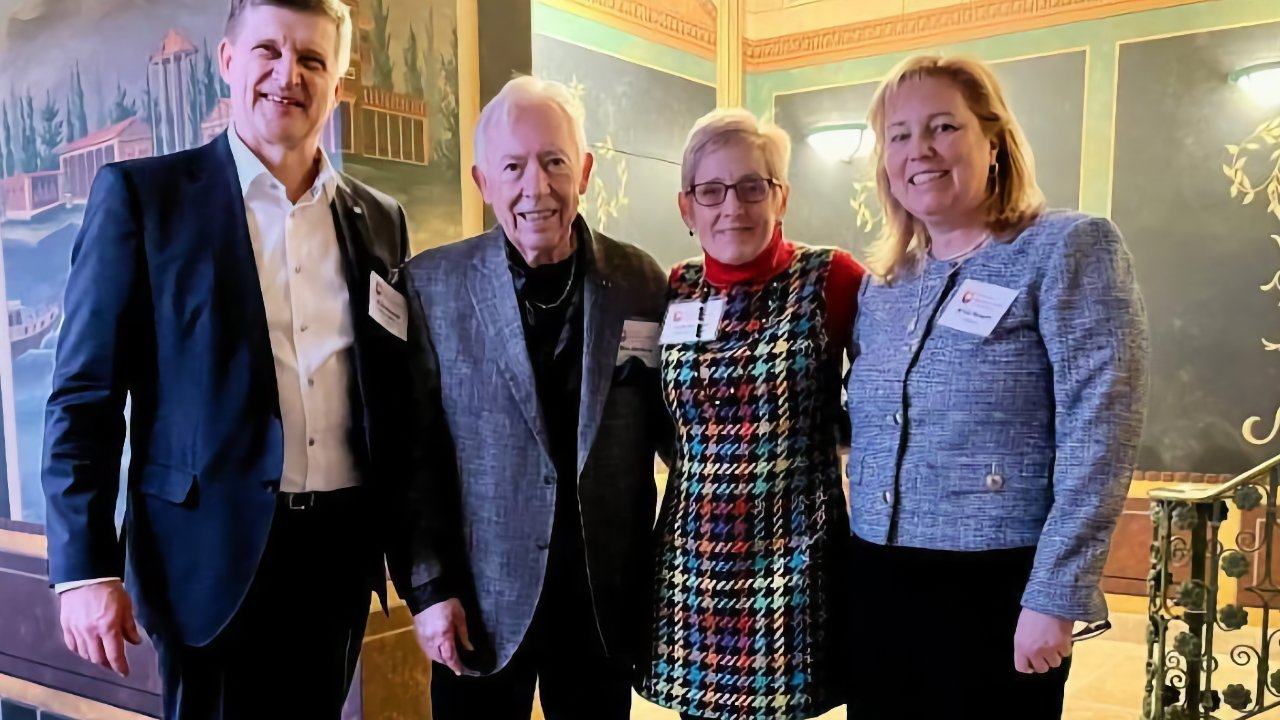
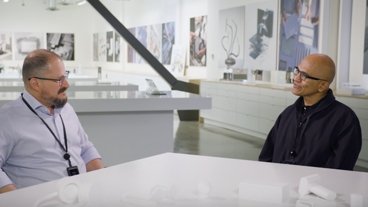
Mike Markkula (second from left) in 2025 at an AI event hosted by the Markkula Family, the Markkula Center for Applied Ethics — image credit: Aalto University
"This company is in shambles, and I don't have time to wet-nurse the board," Jobs reportedly said. "So I need all of you to resign. Or else I'm going to resign and not come back on Monday."
Jobs drove out to visit Markkula at his home and to personally ask him for his resignation.
"He told me he wanted a new board because he wanted to start fresh," Markkula told Isaacson. "He was worried that I might take it poorly, and he was relieved when I didn't."
The end of Mike Markkula at Apple
So Markkula came in after Apple had been founded as a partnership, but got it incorporated. He got Michael Scott to be the first CEO, he himself took over when he had to, and then he helped recruit John Sculley.
With the exceptions of Tim Cook and certainly Steve Jobs, John Sculley is the most famous of Apple's CEOs. And his tumultuous reign is the subject of the next AppleInsider CEO profile.
Apple at 50: How each of its CEOs shaped the company
- Apple at 50: Michael Scott, the company's first CEO, made bold and bad choices
- Apple at 50: Mike Markkula, Apple's second CEO was as important as Steve Jobs
- Apple at 50: John Sculley, Apple's most maligned CEO
- Apple at 50: Michael Spindler, the CEO who brought in the clones
- Apple at 50: Gil Amelio, the CEO who brought back Steve Jobs