People are losing their minds over Apple's decision to put an iPhone chip in the MacBook Neo. All it shows is that they really don't understand the engineering of Apple Silicon.
After years of rumors, the budget MacBook was revived on March 4, 2026. The MacBook Neo is its name, and people are already losing their minds over one key cost-cutting decision.
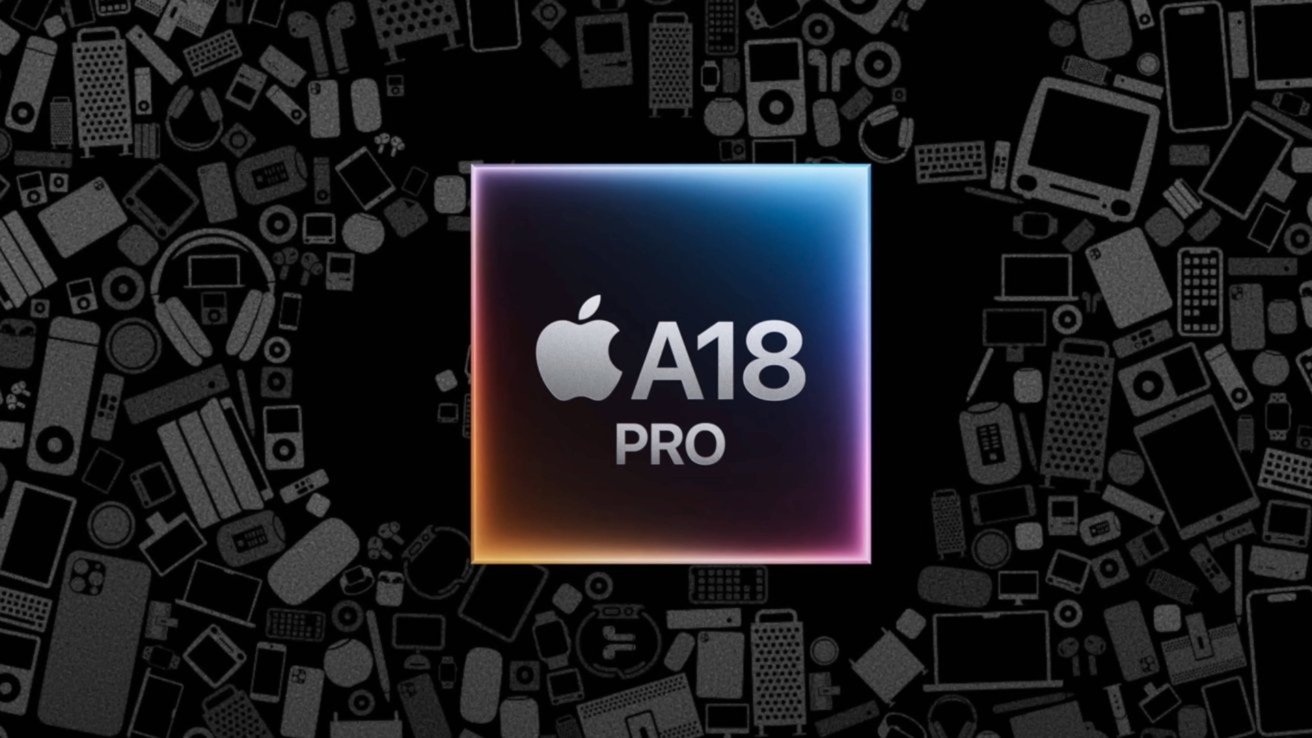
The MacBook Neo has the A18 Pro at its heart, the same chip that powered the iPhone 16 Pro. It's something that had been rumored, yet still seems to have blindsided some of those looking to create a fuss on social media.
The discourse all seems to center around a concern that the use of a phone chip, the A18 Pro, artificially limits the MacBook Neo in some way, and makes it not a Mac. In reality, the lines between Apple's iPhone and Mac chips are so blurred that they needn't worry.
And when you really think about it, those lines don't exist at all. Apple didn't put an iPhone chip in the MacBook Neo, it gave it Apple Silicon. And that's all that matters.
There are no iPhone chips
"ABSOLUTELY NOT," exclaimed one potential MacBook Neo buyer after discovering that "it runs an iPhone chip." Wait until they find out that the $3,999 Mac Studio has the same core engineering.
In fact, I just specced out a computer with a 24-core CPU and a 76-core GPU that costs a whopping $12,448. That computer's a Mac Pro, and it, too, runs a chip with the same engineering.
Or, to put it another way, the iPhone 16 Pro ran what you could accurately call a Mac chip, just with fewer cores. The iPhone 17 Pro, well, that uses the same cores as a Mac, too. I don't think I'm being controversial when I say the iPhone Fold that everyone's so excited about will run something along the same lines.
In the immortal words of one Steven P. Jobs, "Are you getting it?"
To put it yet another way, because why not, the MacBook Neo's A18 Pro and my MacBook Pro's M4 Pro are both Apple Silicon. That is, they're both chips, made from silicon, based on the roadmap for Apple Silicon.
Actually, in the name of accuracy, they're both based on the 64-bit ARMv9.2-A architecture. They just have that Apple magic sprinkled into the design. And a different core count.
That, right there, is the key that a lot of people are missing. And yes, I know I've now said Apple's chips are magical twice within a few paragraphs. But there's a good reason.
It's all just Apple Silicon
When Apple started to transition Mac away from Intel chips, it did more than reduce its reliance on an ailing chipmaker. It also gave Apple the chance to bring the Mac in line with its most important product: the iPhone. For the first time, Apple had control over all of the processors that it used.
Apple used that opportunity to do something no other company could. It based its new Mac chips on the same architecture as those powering its iPhones. And its iPads, for that matter.
All of that brings us back to the architecture I mentioned earlier. The 64-bit ARMv9.2-A acts as the base for the A18 Pro, but also the entire M4 series of chips, too.
The A18 Pro is a 64-bit ARMv9.2-A chip with six CPU cores, two of which are all about performance. The other four are so-called efficiency cores, saving power when speed isn't of the essence.
The chip also comes with a six-core GPU. The MacBook Neo uses a binned version with five cores instead, however.
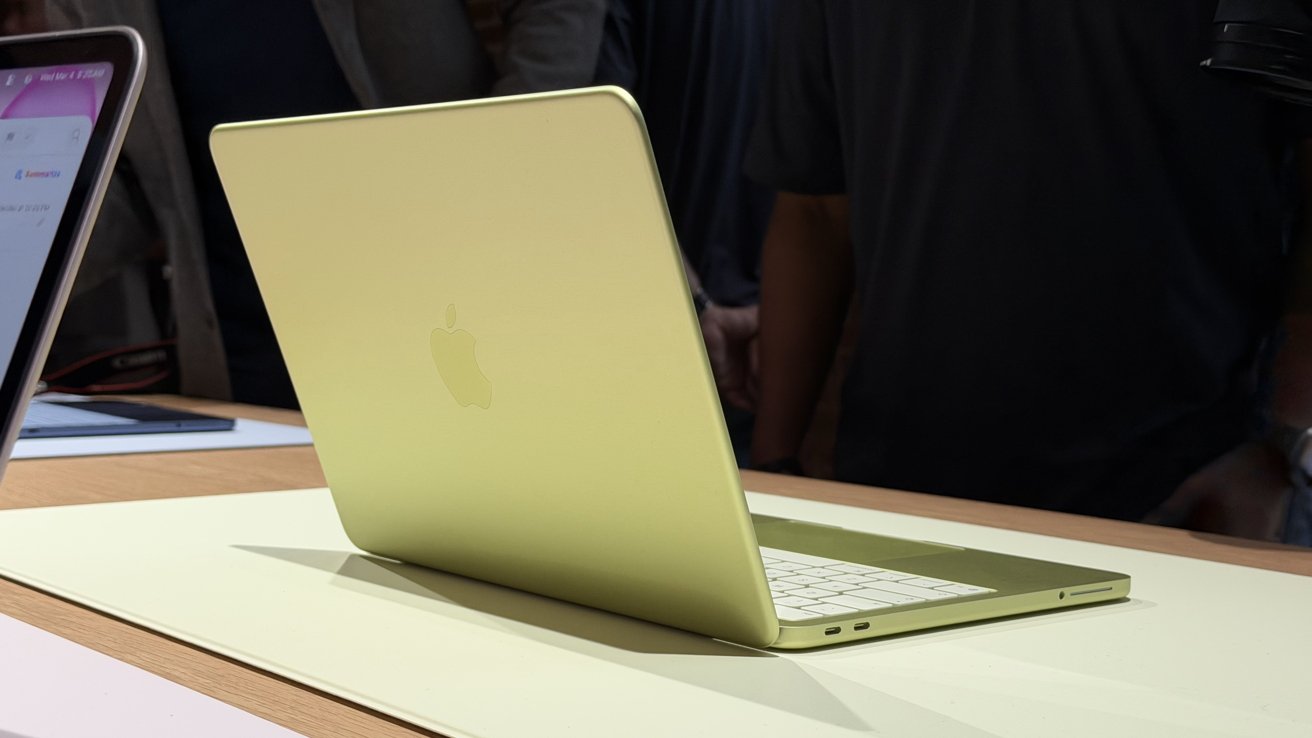
The MacBook Neo is a new budget-friendly laptop with a baby M4 inside
Ignoring the M4 Pro, let's look at the M4, which, until recently, powered the MacBook Air. It's a great chip, and nobody would have batted an eyelid had it been used in the MacBook Neo.
Apple's M4 chip is also based on ARMv9.2-A and comes in a couple of configurations, starting with eight CPU cores. The GPU, too, comes with eight cores in its base configuration.
With all of that said, the A18 Pro is actually a baby M4. An M4 mini, if you will. The same chip, but with two fewer CPU cores and three fewer GPU cores.
Realistically, if Apple had rebranded the A18 Pro as an M4 mini, everyone would be happy. Or if they had called it a M1 Plus, that would be fine too and cut down on the drama.
Instead, they'd say it made sense, given the thermal limitations of the machine and the need to cut costs. They'd laud the flexibility of Apple Silicon, and rightly so.
That flexibility of Apple Silicon mix-and-match in a system-on-a-chip is what makes it magical, and flexible enough to call A18 Pro a Mac chip. It can use a chip that it already has lying around, actively being fabricated for another Apple product, and use it to power a budget laptop for the masses.
What's more, because it's running Apple Silicon, the MacBook Neo can do all the things a MacBook Pro can. Albeit more slowly — nobody should be editing too many 8K videos on this thing without a great deal of patience.
For those still worried, the stats are here to offer a soothing hand. Apple's A18 Pro is faster than an M1 chip when comparing single-core performance. But I don't even think that's the most interesting comparison.
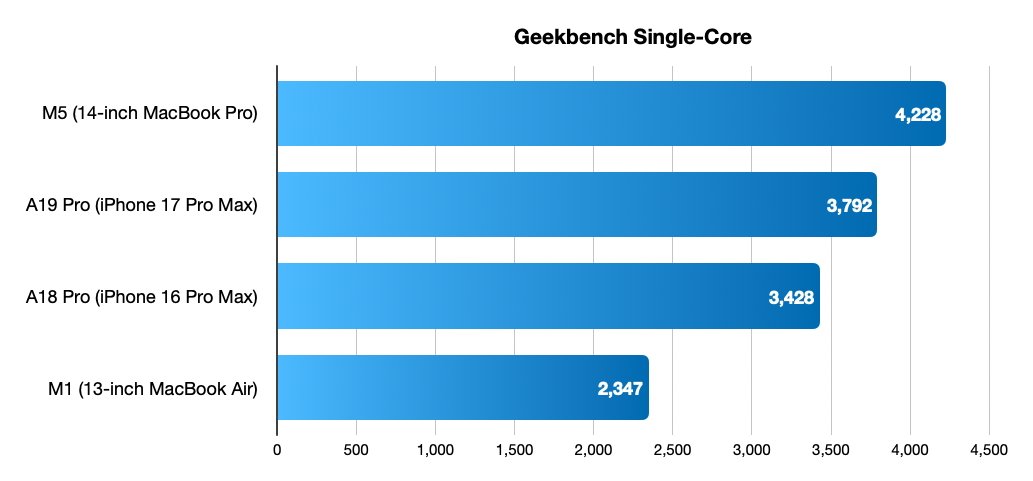
Single-core Geekbench scores: MacBook Neo should be better than M1.
The M5 manages a score of around 4.200 in single-core Geekbench tests. The A18 Pro comes in at over 3,400.
The A18 Pro beats the M1, the chip that started the Apple Silicon revolution, which only managed a single-core score of 2,300. That's an increase of almost 48%. It also beats the M2, and M3, in a world where people are saying "just buy a used M2 MacBook Air" on social media.
Businesses and schools won't buy used. That's a conversation for another day, though.
Anyway, the M5 pulls away from the A18 Pro in multi-core tests too. As well it should — the M5 has 50% more cores.
At its $599 price point, the MacBook Neo has no business performing as well as it does. Yet here it is, offering real Mac performance. Because it is a real Mac.
And yes, that extends to Rosetta 2, Apple's emulation layer that allows x86 apps run on non-Intel Macs, until Apple kills it after macOS 27. Of course it can, because it's all just Apple Silicon.
Rosetta was vital to the way Apple smoothly moved an entire userbase and app ecosystem from one chip architecture to another. It's an important part of macOS, and allows the MacBook Neo to run legacy Mac apps.
The MacBook Neo is cheaper than any other Mac laptop, making it a great entry point for new Mac buyers. That those new buyers also get to experience the M4-flavored Mac experience is something we should all celebrate.
Sure, the A18 Pro has fewer cores than an M4. But they're the same cores on both systems-on-a-chip. And that's pretty magical.