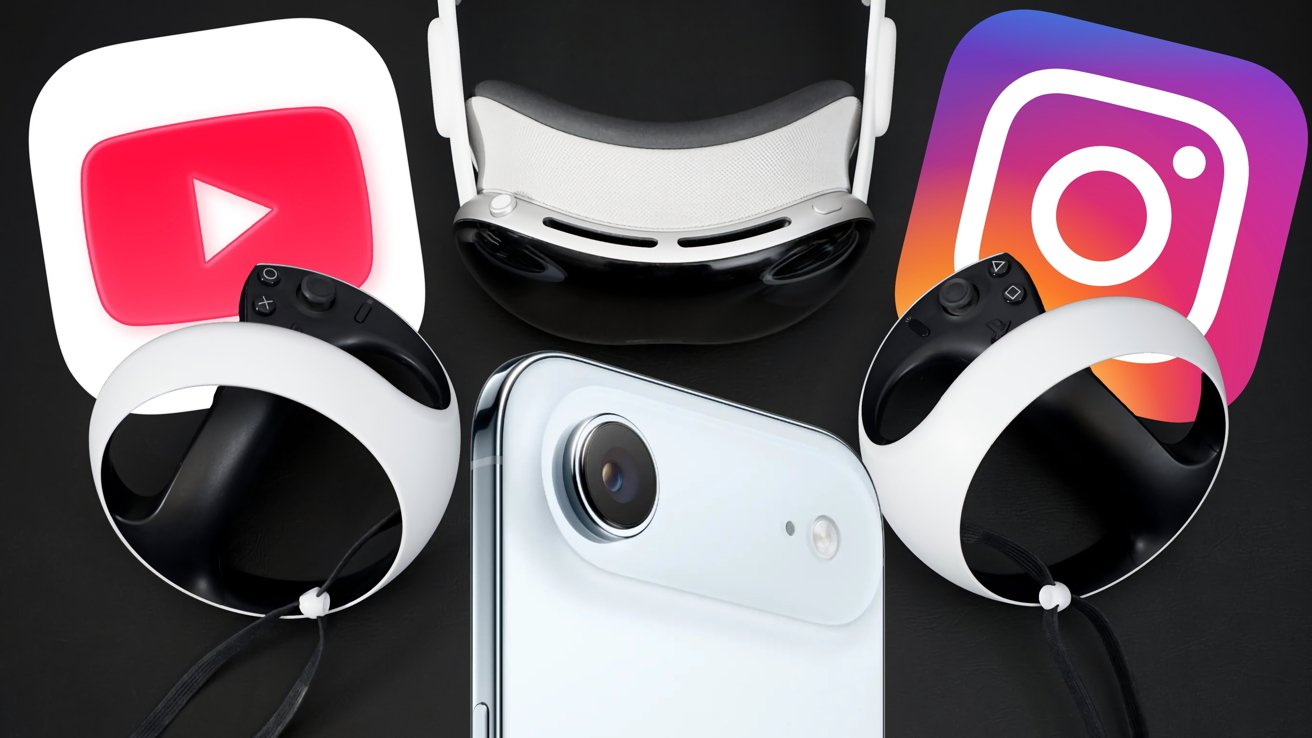
In this week's "Sunday Reboot," social addiction is a slippery slope for Apple's App Store, Nvidia CloudXR is a great thing for Apple Vision Pro gaming, and the iPhone Air isn't as bad as you'd think.
Sunday Reboot is a weekly column covering some of the lighter stories within the Apple reality distortion field from the past seven days. All to get the next week underway with a good first step.
This week, Apple finally killed off the long-suffering Mac Pro, a severe "DarkSword" exploit"DarkSword" exploit was leaked that affects older iOS versions, and China pressed for more App Store openness. Apple's celebration in London also took place, with performances from Nia Archives and Mumford & Sons.
Social liability, and how it could be Apple's problem eventually
On Wednesday, Meta and Google were landed hefty fines in a lawsuit about social media addiction. It was a high-profile lawsuit, alleging that Instagram and YouTube were made way too addictive for a child to properly use.
This was found to be a "substantial factor" in affecting one woman's mental health, a jury in Los Angeles Superior Court decided. That resulted in a $3 million fine in compensatory damages shared between Google and Meta, with sizable punitive damages to come in the future.
Snap and TikTok managed to escape the judgment, because they settled very early.
This is far from the first time that big tech has been fined for being too good for a user to pull themselves from. It also won't be the last time.
Checking ages in the UK
In the future, it's something that could eventually become Apple's problemto deal with.
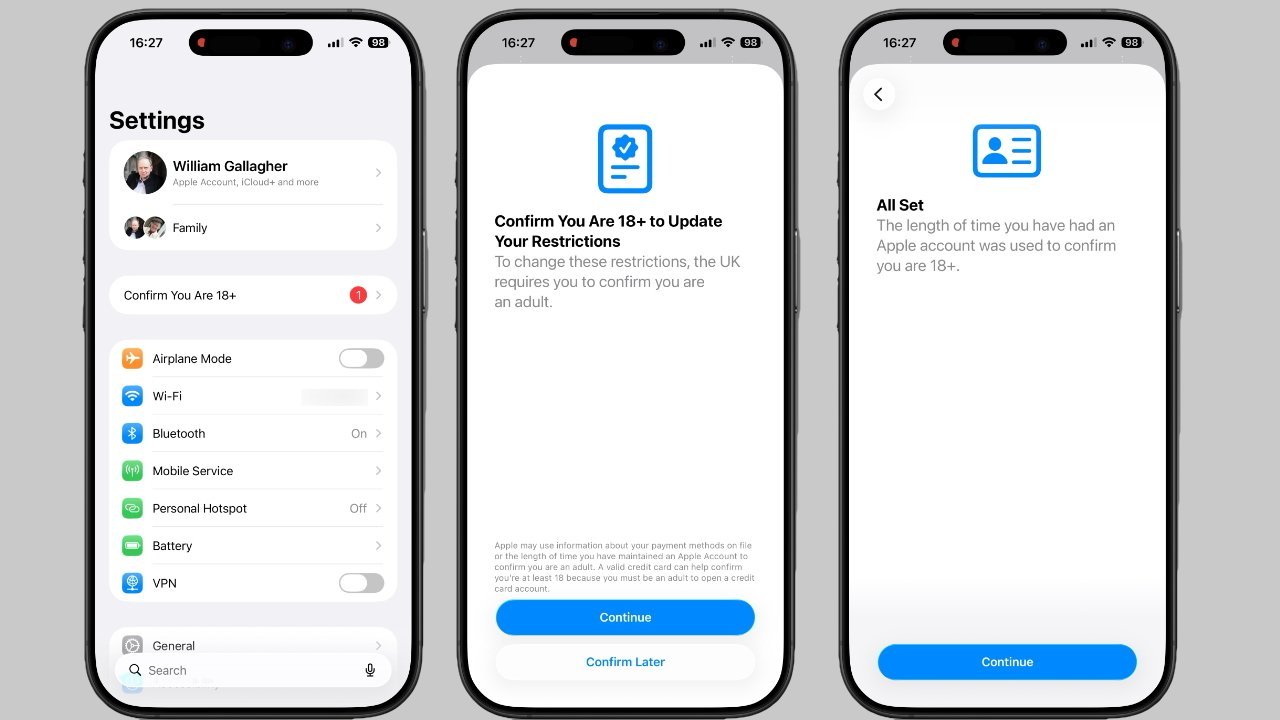
Apple's introduction of age verification in iOS 26.4 affects just the UK for the moment, but could spread to other regions. It's a system that is intended to prevent younger users from accessing apps intended for maturer audiences, which sounds like a fairly reasonable idea to the average user.
For Apple, it's a potential problem, because it could eventually give social media apps a free pass when it comes to age-appropriate content. If the onus is on Apple to monitor the age of users, there's nothing stopping app developers from saying they aren't responsible, and that it's Apple's fault.
For apps relying on user-generated content, such as social networks, this lack of accountability could lead to sloppier handling of user data, allowing edgier content to slip through moderation.
"It's not our fault a kid saw something they shouldn't," they'd cry. "Apple shouldn't have let the child into the app in the first place."
We know Apple is against these age checks in online child safety laws, and for a good reason. It puts responsibility on Apple and leaves the real offenders to go scot-free.
If it becomes a problem for Apple, it will act to try and avoid penalties from the laws. At the most extreme end of the range of possibilities, that may ultimately mean Apple blocks apps that become too much of a legal liability.
It's a slippery slope, and Apple sees it for the problem it truly is.
Walking on Air
When it comes to product launches, the iPhone is a bit of an odd situation. It's almost always the case that one model in the roster gets all of the pessimism, while the rest are considered great in terms of sales.
This usually consists of a pile-on by commentators on the model that isn't the standard iPhone nor the Pro models. We saw this with the eventual loss of the mini, and the continual criticism of the Plus-sized models.
Of course, this is all industry whining and not Apple itself making these claims. Instead, it responded by switching out the poor performer with something different.
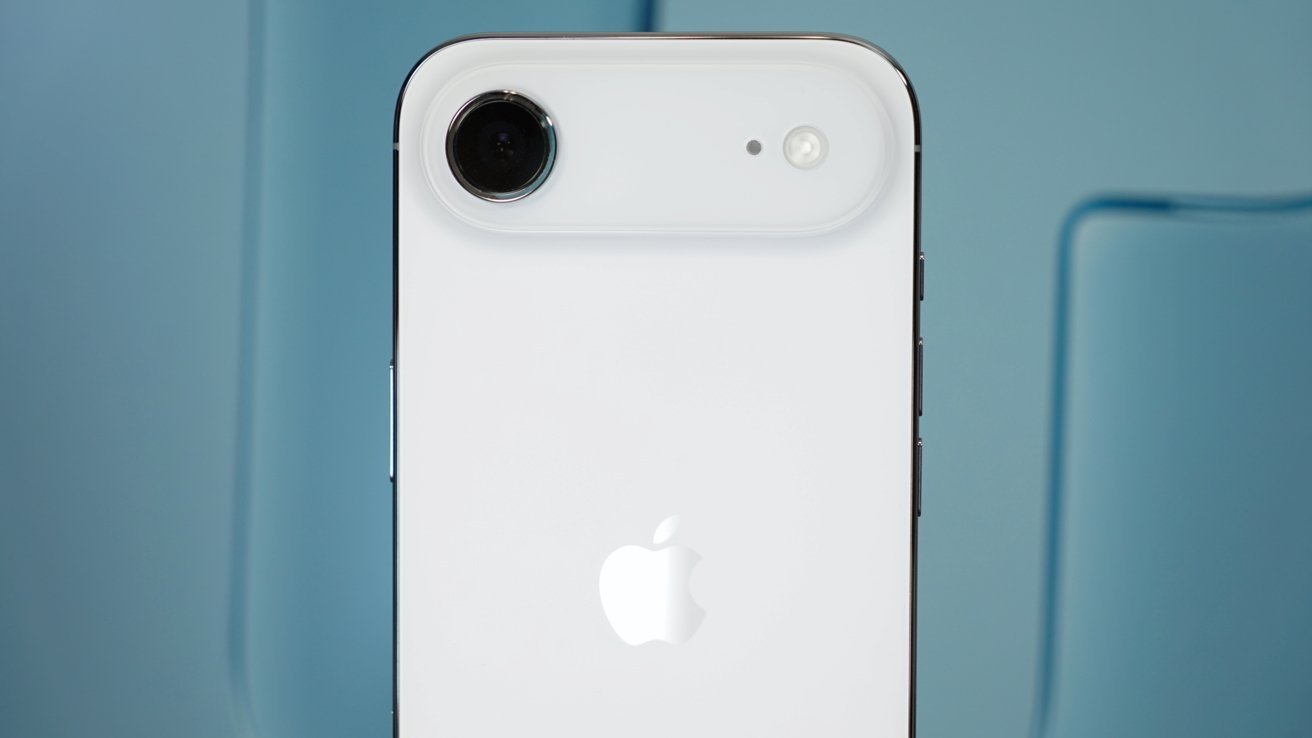
We saw this exact same pattern happen with Apple's new idea, the iPhone Air. An ultra-slim model that was a bridge between the standard and Pro models.
iPhone Air
It caught some initial positive attention, but then repeated analyst claims came in, insisting that it was a failure. The claims were also quite identical, with Apple's changing of supply chain orders for the model cited as proof it was floundering.
Of course, this all ignored things like how the Pro models tend to be high sellers in the annual cycle, and the lower-spec models shine later in the year.
However, on March 23, we had a data point that was considerably positive for the iPhone Air. Analysis of Speedtest data for Q4 2025 revealed that the iPhone Air made up 6.8% of queries within the iPhone 17 lineup.
This doesn't sound like much of a win, because 6.8% is small. But, it's more than twice the 2.9% share of the iPhone 16 generation that the iPhone 16 Plus had for the same period.
The underlying message here is that the iPhone Air is seemingly doing twice as well as the iPhone 16 Plus, so it's better.
This certainly won't stop people from decrying the model as a failure because it's the lowest-performing model sales-wise. On a five-device roster including the iPhone 17e, it's not even a tenth of a share.
But at least its supporters can now point to a figure and say that there's still an improvement over the last odd-one-out smartphone to exit Cupertino.
To Apple, the squabbling doesn't matter. It's more a case of whether it sells enough to be worthwhile for a second try.
Nvidia CloudXR is a great addition to Apple Vision Pro
One problem with the Apple Vision Pro is VR gaming. It's a device that is certainly capable of doing it, but the catalog is not really available for it at the moment.
On hearing that there would be Nvidia CloudXR support in visionOS 26.4, I was hopeful that things might change a tiny bit.
The core of the problem is that serious gamers already have sizable libraries of games that they want to play. They already have sizable back catalogs that they want to access, with a lot of VR content included in that too.
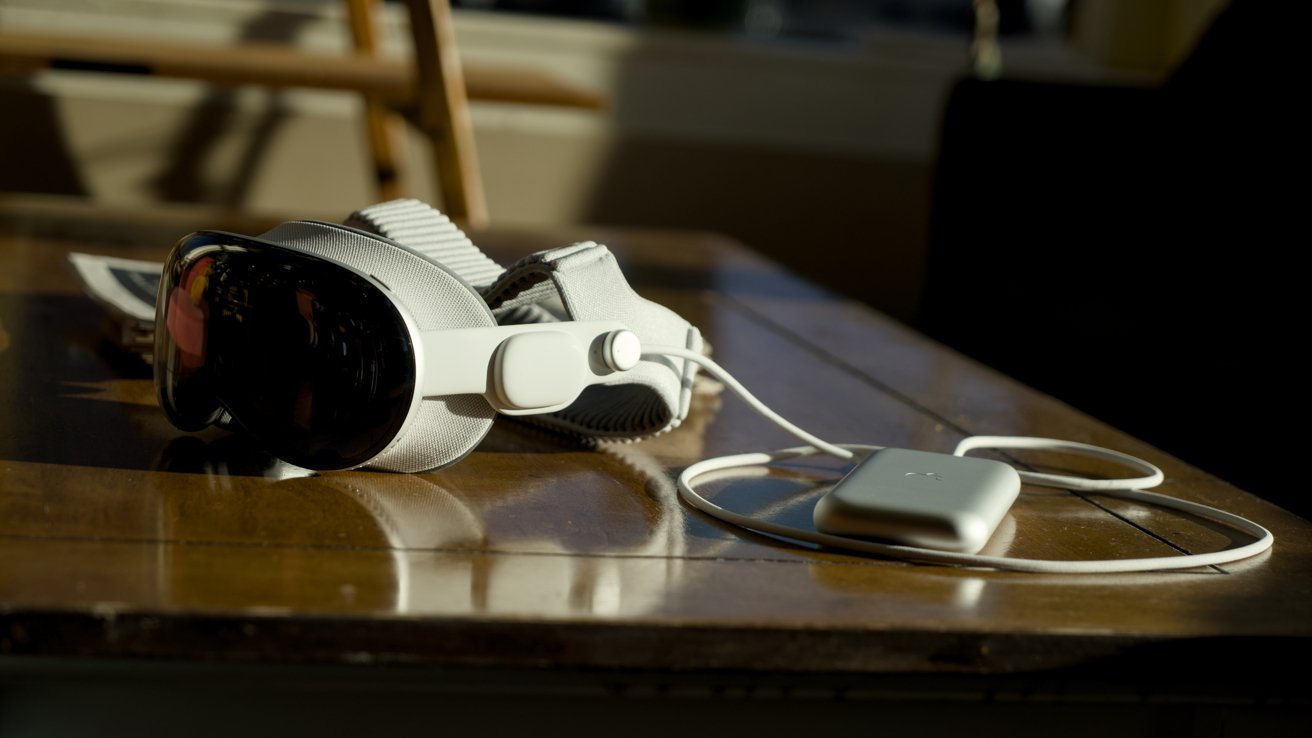
Apple Vision Pro
Accessing the content is the issue, as it's frequently tied up in a PC gamer's Steam account. These games are playable on headsets of various kinds, including Valve's own, but it's handled using Steam VR and a tether to the computer.
That's not really a great option for gamers who happen to have an Apple Vision Pro. There's no official Steam VR app that allows you to play that content on Apple's headset, streamed from the gaming PC.
There are third-party apps that help, such as ALVR and iVRY, but this adds an extra layer of abstraction since it goes from Steam to Steam VR to the app, to visionOS.
The addition of Nvidia CloudXR support means that the game developer can allow their game to work more directly with the Apple Vision Pro, using CloudXR. This sounds like another layer of abstraction, but really, it is a more direct route between PC and Vision Pro headset.
Furthermore, it would allow developers to work with things like Foveated Streaming, rendering only parts of the scene the player is actually looking at. There are augmented reality possibilities too, but the core is the connectivity.
If Valve ever does bring Steam VR to Apple Vision Pro, that will open up even more games to the Apple ecosystem. But for the moment, the power is being granted directly to the developers.
Last week's Sunday Reboot covered Apple's acquisition of MotionVFX, the questionableness of the AirPods Max 2 spec-bump update, and the continuing 50th-anniversary tour.