
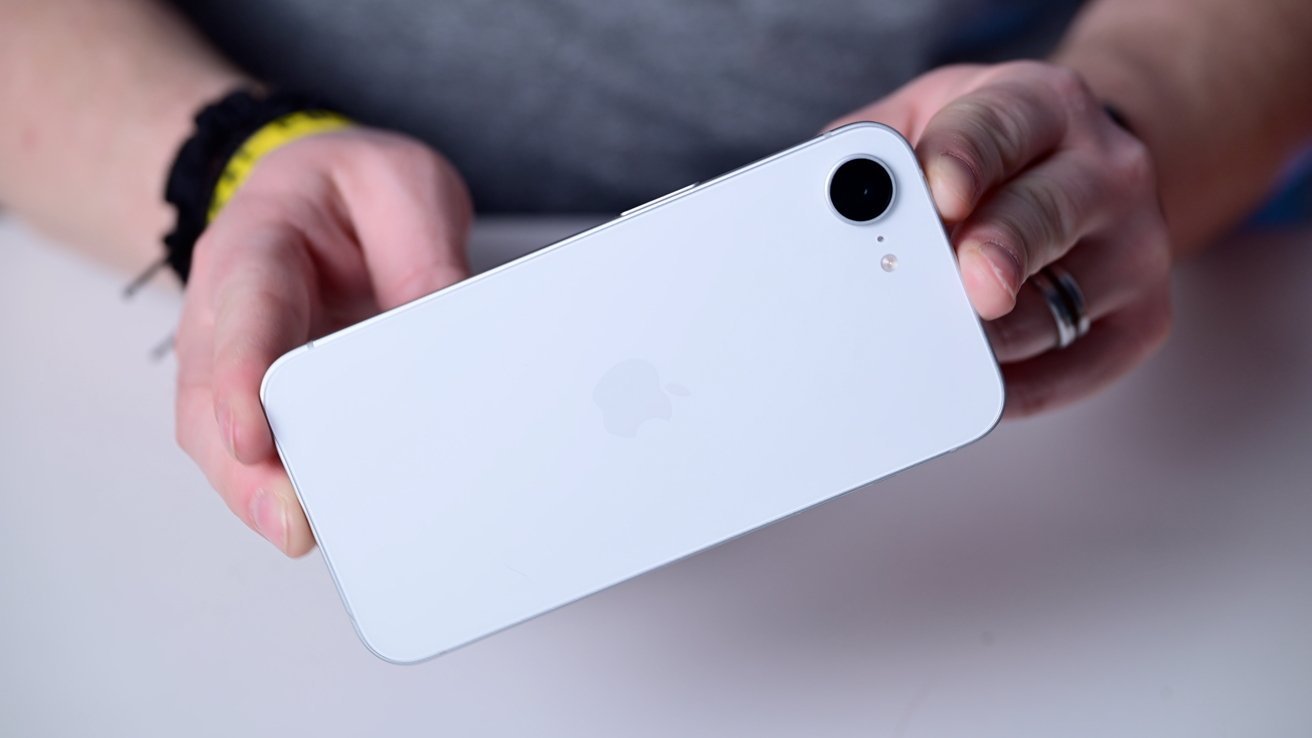
Apple's budget-friendly iPhone line is rumored to get an upgrade in early 2026, with rumors suggesting an iPhone 17e is in the works. Here's what to expect, and when.
In February 2025, Apple retired the iPhone SE line in favor of an entirely new model, the iPhone 16e. At the time, the iPhone 16e was marketed as "the most affordable member of the iPhone 16 family."
The new branding suggests that Apple's budget-oriented smartphone will receive yearly hardware upgrades, similar to the standard and Pro iPhones. Rumors of a successor product corroborate this idea.
Leakers and analysts have provided only a handful of claims about the upcoming iPhone 17e, and some of the rumors outright contradict each other. Here's what the rumor mill has to say.
Release date rumors
Multiple sources have suggested the iPhone 17e will debut in the first half of 2026. Even so, leakers aren't in agreement about the specific month the release will take place.
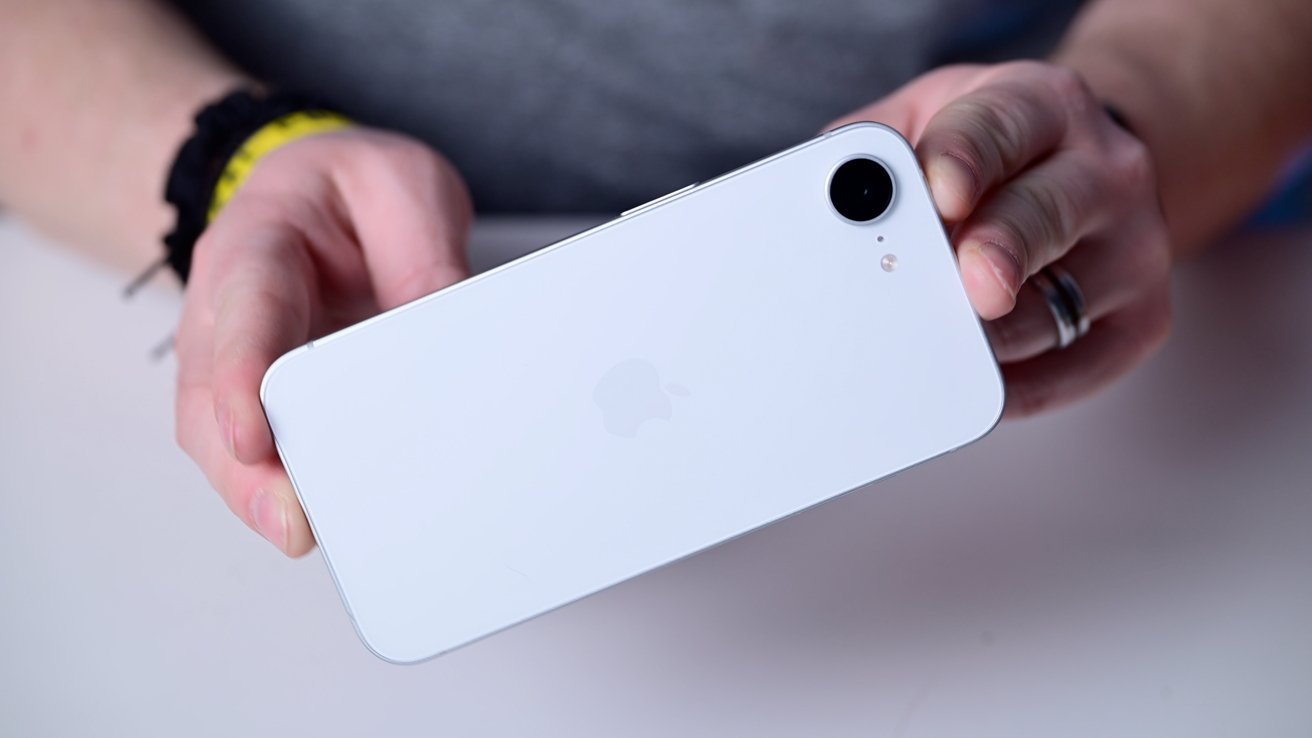
The iPhone 17e could debut between February 2026 and May 2026.
Shortly after the debut of the iPhone 16e in February 2025, two separate sources claimed that the iPhone 17e would arrive in February 2026.
One of the sources behind the purported release date was a publication with a lackluster track record. The publication also has a poor reputation for citing its sources, generally making statistical claims without sufficient detail to measure or verify them.
The second person who suggested a February 2026 release for the iPhone 17e, meanwhile, has a better history of accurate leaks. However, the same leaker changed their mind, saying in April 2025 that the iPhone 17e was tentatively scheduled for May 2026.
Months later, in July 2025, another publication chimed in, alleging that the iPhone 17e would be unveiled in Spring 2026. No time frame beyond that was provided, though it's still more precise than claims made by other sources.
Analyst Ming-Chi Kuo said, in May 2025, that the iPhone 17e would debut in the first half of 2026. Meanwhile, a different leaker, with an established track record, claimed the device would be released in early 2026.
All in all, release date predictions are all over the place, from February 2026 all the way to May 2026. Still, every source seems to agree that the iPhone 17e will be unveiled in the first half of 2026.
Taking the now-discontinued iPhone SE line into account, Apple's budget-oriented smartphones have so far typically debuted between February and April.
Realistically, the iPhone 17e will most likely continue this trend, with a February 2026 release date being the logical choice for Apple's entry-level phone.
Display — 6.1 inches, possibly with Dynamic Island
Multiple sources have suggested the iPhone 17e will boast a 6.1-inch display, making it somewhat smaller than the iPhone 17 and its 6.3-inch display. It'll most likely feature a 60Hz refresh rate as well.
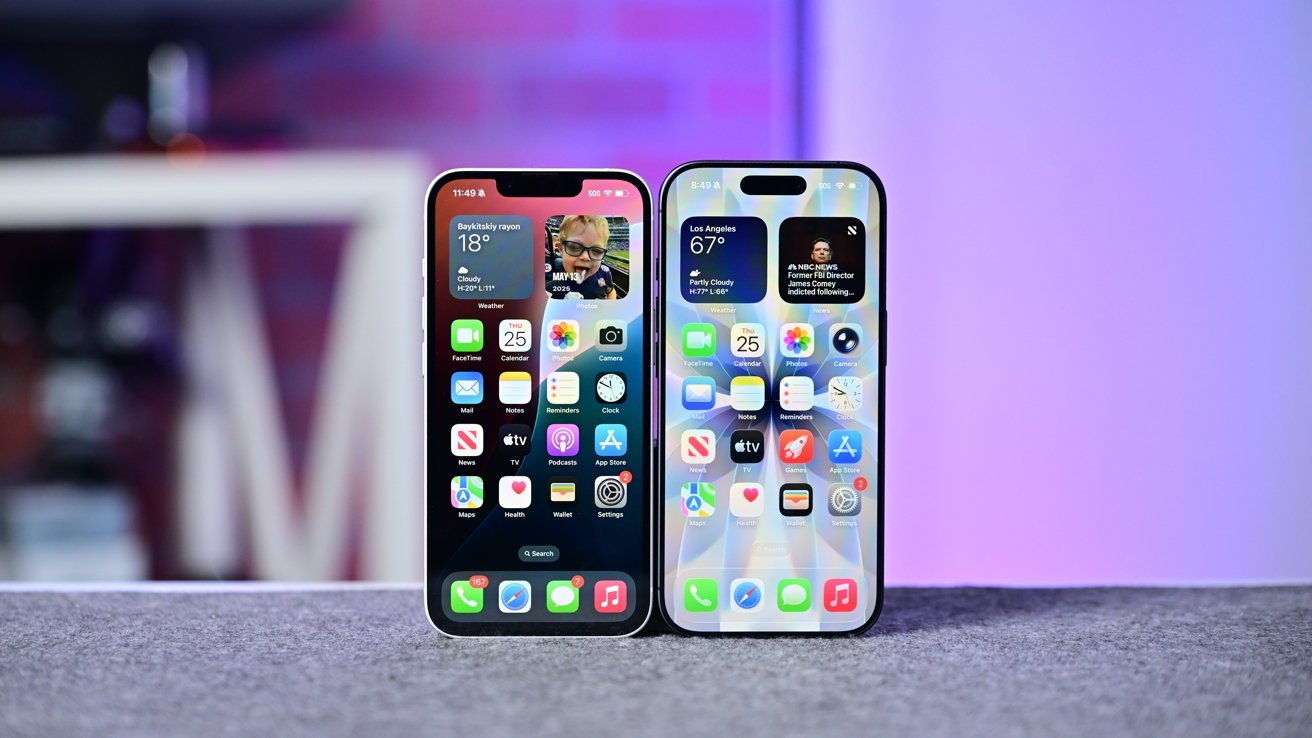
The iPhone 17e is expected to retain the 6.1-inch form factor of the iPhone 16e (left). This would make it smaller than the 6.1-inch iPhone 17 (right).
However, there are conflicting rumors about what the display itself will look like. In July 2025, it was claimed that the iPhone 17e would reuse the display of the existing iPhone 16e.
The report's only other detail is that it claims screens will be made by Samsung Display, LG Display, and BOE. But it also says that the screen manufacturer BOE will make the majority of the iPhone 17e displays.
If true, this means the iPhone 17e would have a display identical to that of the iPhone 14. At the top would be a notch that houses the Face ID sensor and front-facing camera, but not everyone agrees with this display claim.
In August 2025, a Weibo leaker alleged that the iPhone 17e would feature a 6.1-inch display like that of the iPhone 16.
The source behind this claim has been vaguely accurate in the past. Still, that could be a byproduct of the sheer amount of leaks shared by this type of social media account.
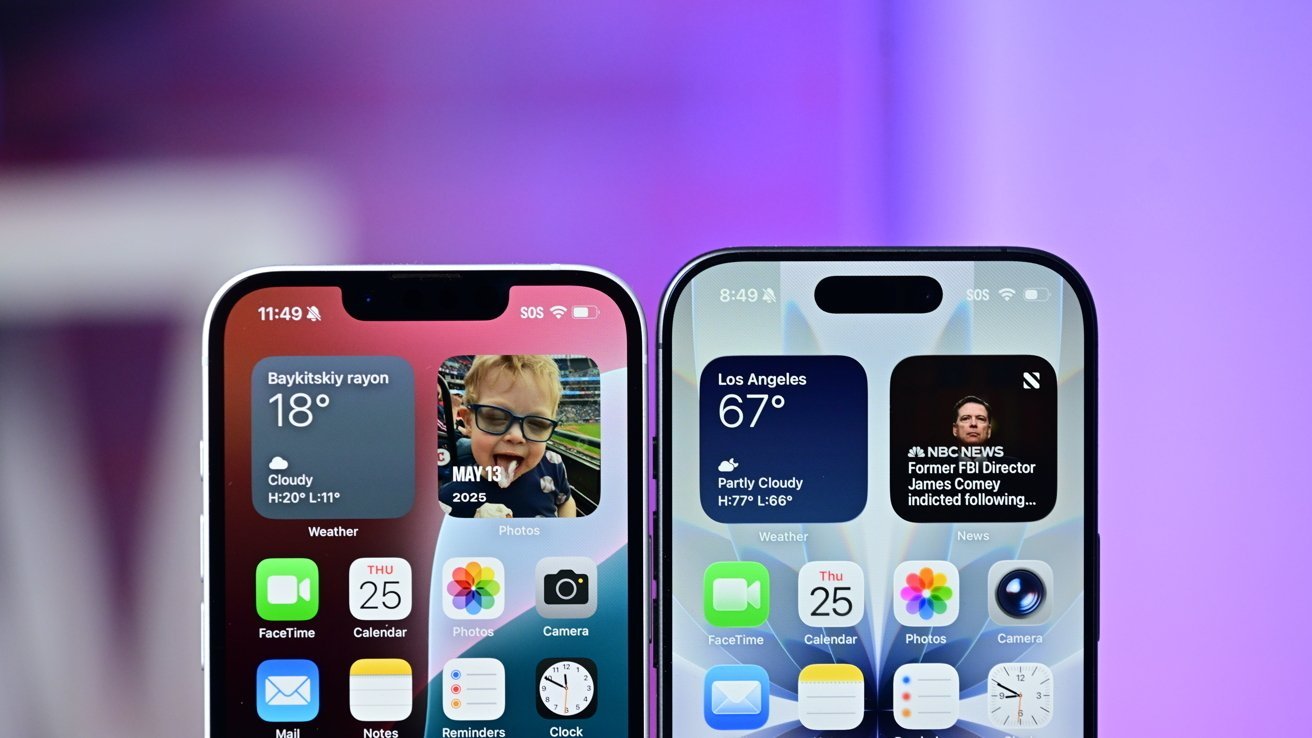
Unlike the iPhone 16e (left), the iPhone 17e display might feature Apple's Dynamic Island. This would make it somewhat similar to the iPhone 17 (right).
If the iPhone 17e ships with an iPhone 16 display, it would gain the Dynamic Island. This would make it the last iPhone model to transition away from the notch. Face ID, meanwhile, will most likely stay as the means of biometric authentication in any case.
Instead of a typical notch, Dynamic Island is used to display important information, such as countdown times, media playback, and more. This is done by utilizing the pixels around the camera cutout, effectively using UI elements to help camouflage the opening.
Visually, the iPhone 17e should resemble either the current iPhone 16e, with flat sides and a notch, or the base model iPhone 16.
Before the iPhone 16e was released, one rumor suggested the device would use the iPhone 16 chassis, with round edges. If Apple opts to use the iPhone 16 display for the iPhone 17e, there's always a chance it could reuse the iPhone 16 chassis.
Still, there have been no recent claims about such a design change.
Processing hardware and the improvements of the A19 chip
In terms of processing hardware, the iPhone 17e will likely sport Apple's A19 chip. This is according to a generally reliable source, but it's an easy assumption even without specific rumors.
If the iPhone 17 is any indication, the A19 chip GPU in the iPhone 17e could deliver a noticeable jump in performance, relative to the iPhone 16e.
The iPhone 16e, for instance, used the standard A18 chip, with six CPU cores and four GPU cores. That's one GPU core less than the A18 chip found in the base model iPhone 16 and iPhone 16 Plus.
Apple will most likely opt for a similar approach with the iPhone 17e, with the A19 system-on-chip. It remains to be seen whether or not the iPhone 17e will feature five or four GPU cores, but Apple's decision will impact performance to an extent.
In Geekbench 6 Metal testing, the iPhone 17 scored 37,014 points. Noticeably higher than the 22,478-point score of the iPhone 16e. An extra GPU core won't make much of a difference in day-to-day use, but it would provide for a better experience in graphically intense games.
Relative to the A18 chip in the iPhone 16, the A19 features Neural accelerators for improved on-device AI processing, along with increased memory bandwidth. Both the A18 and A19 chips feature 8GB of RAM, though, unlike the 12GB in the A19 Pro system-on-chip.
-xl.jpg)
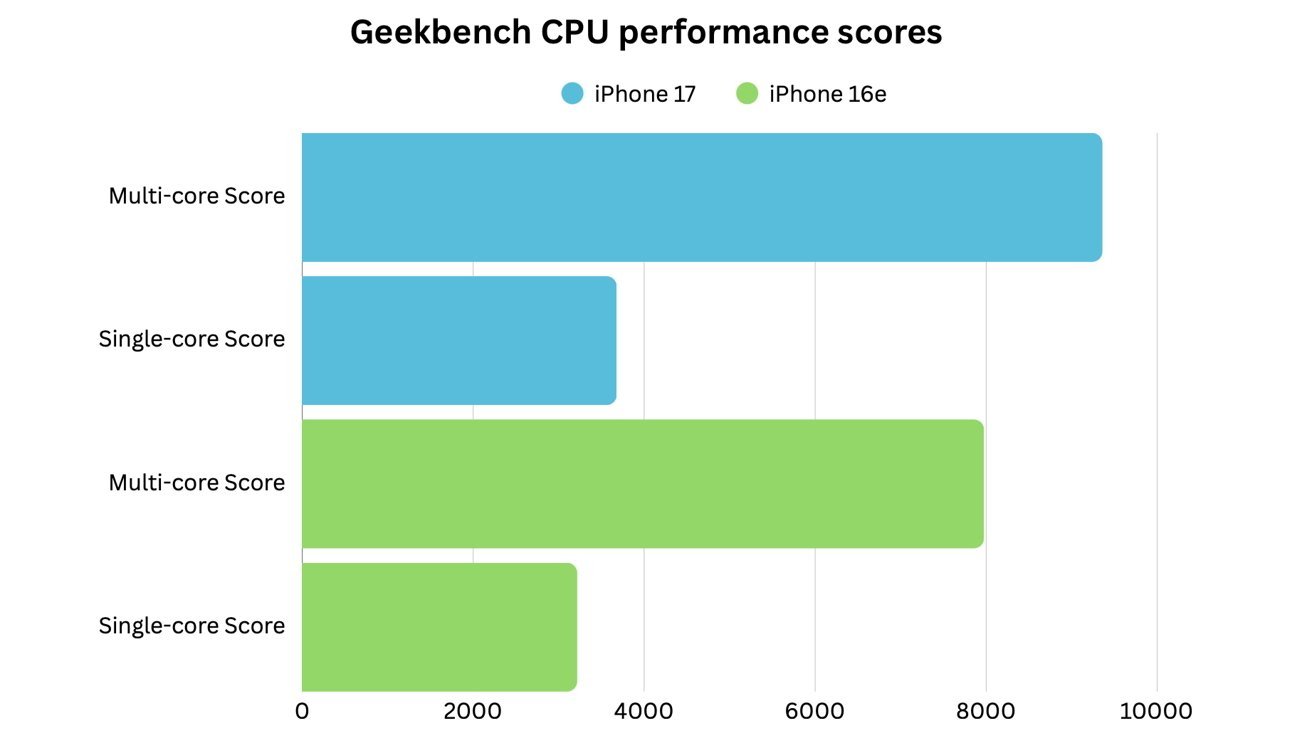
The A19 chip in the iPhone 17e could deliver CPU performance similar to that of the iPhone 17.
In the iPhone 17, the A19 CPU consists of two performance cores and four efficiency cores. Apple says it's 1.5 times faster than the CPU of the A15 Bionic in the iPhone 13.
The A18 chip in the iPhone 16e, meanwhile, consists of six CPU cores and four GPU cores. Apple claims the A18 CPU is 0.5 times faster than the one in the A15 Bionic.
With the iPhone 17e, we could see similar CPU performance results as we did with the standard iPhone 17.
For reference, the iPhone 17 received a CPU multi-core performance score of 9,360 points and a single-core performance score of 3680 points in Geekbench 6. The iPhone 16e CPU, meanwhile, scored 7,976 points in multi-core CPU tests and 3,217 points in single-core CPU performance.
Beyond the release date, display, and processing hardware, there have been no additional rumors about the iPhone 17e. It seems to be too early to tell exactly what the device will look like, as sources disagree on key aspects like the presence or absence of Dynamic Island.