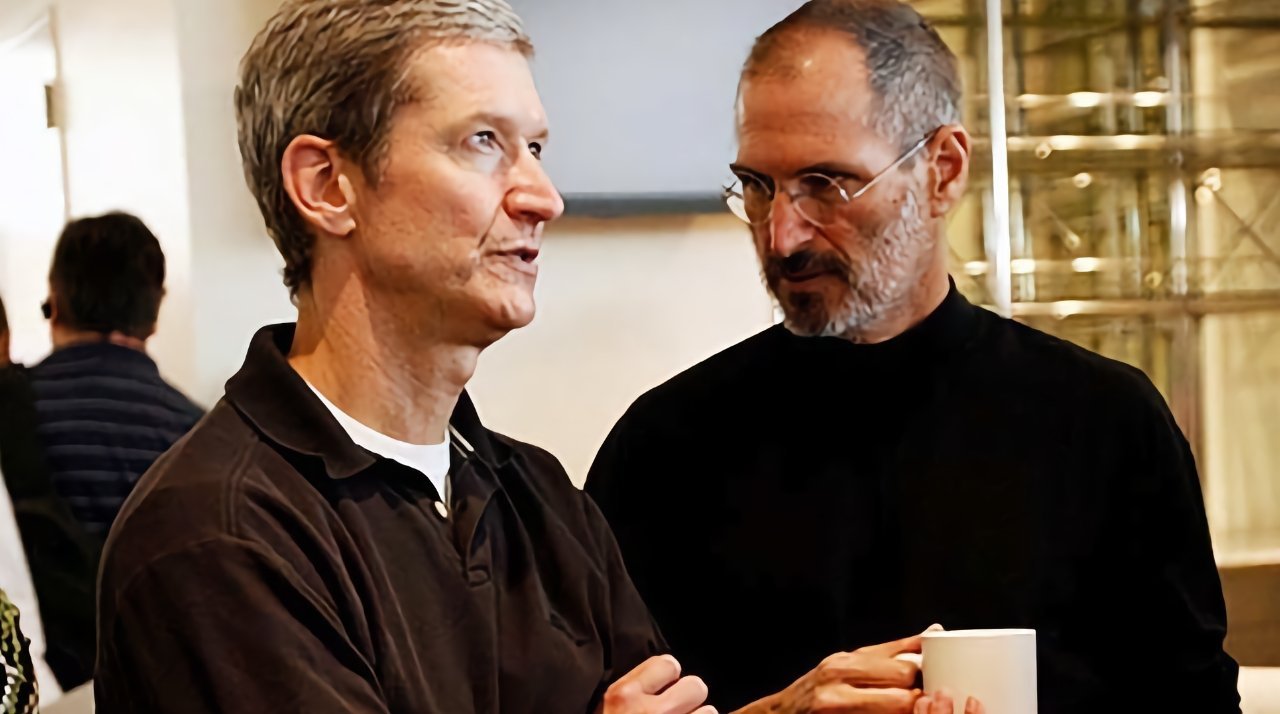
Two decades ago, Tim Cook was formally named as Apple's Chief Operating Officer, setting him on the road to be the chief of what is likely the most impactful company of the 21st century.
Chief Operating Officers don't get as much attention as Chief Executive Officers, but at least in the case of Apple, the COO has proven key to the company's success. So much so that it's not a surprise Tim Cook was promoted from COO to CEO, but also so much so that it's surprising what Apple did before him.
Tim Cook was named Apple's COO on October 14, 2005 and officially, his predecessor was... no one. Not quite.
In practice, Jon Rubinstein had retired from operations at the same time Cook was promoted, and would have been in overall charge. Yet there was no formal COO role until Cook got it. And even as his appointment was announced, Steve Jobs revealed that it wasn't exactly a new post.
"Tim has been doing this job for over two years now, and it's high time we officially recognized it with this promotion," said Steve Jobs at the time. "Tim and I have worked together for over seven years now, and I am looking forward to working even more closely with him to help Apple reach some exciting goals during the coming years."
Apple specifically stated that Cook would continue be responsible for all of the firm's sales and operations worldwide.
How Cook got here
Tim Cook earned an MBA from Duke University, where he was a Fuqua Scholar. He also got a Bachelor of Science degree in Industrial Engineering from Auburn University.
He was the first person in his family to attend college, and he was able to do so specifically because he had earned the money from having a paper route.
"Everybody was expected to work in my family," he once told the Wall Street Journal. "I'd get up at about 3 in the morning, pick up the stack of papers and start throwing. And I'd usually come back and take a nap before school."
"Throwing papers helped start my college education," he said. He also worked part time at a pharmacy, which helped fund his going on to Auburn University.
"I knew that being able to [attend college] was a privilege that I needed not to waste," Cook continued. "Everybody saw college in those days, and hopefully today, as opening many doors."
From there, he spent a dozen years working for IBM, where he became the director of North American Fulfillment. That role boils down to getting products from components to customers, and Cook was reportedly very effective on what IBM called pipeline management.
Leaving IBM
In 1994, he was lured away from IBM on a quarter of a million dollar salary, plus bonuses. It was for a Denver-based firm called Intelligent Electronics, and that was the first company to name him Chief Operating Officer.
Cook had a serious health scare while he was there, however. For brief time it was misdiagnosed as multiple sclerosis. Fortunately for everybody, it turned out to be severe exhaustion.
Hopefully he took things easier after that, although perhaps this is where he learned to love health and fitness, and perhaps it's why he joined a gym.
One thing he definitely did, though, was recommend that Intelligent Electronics sell itself to General Electric. The company did that in 1997.
Shortly afterwards, Cook moved to Compaq, where he continued to develop logistics skills that can be seen in Apple today — but only for around six months.
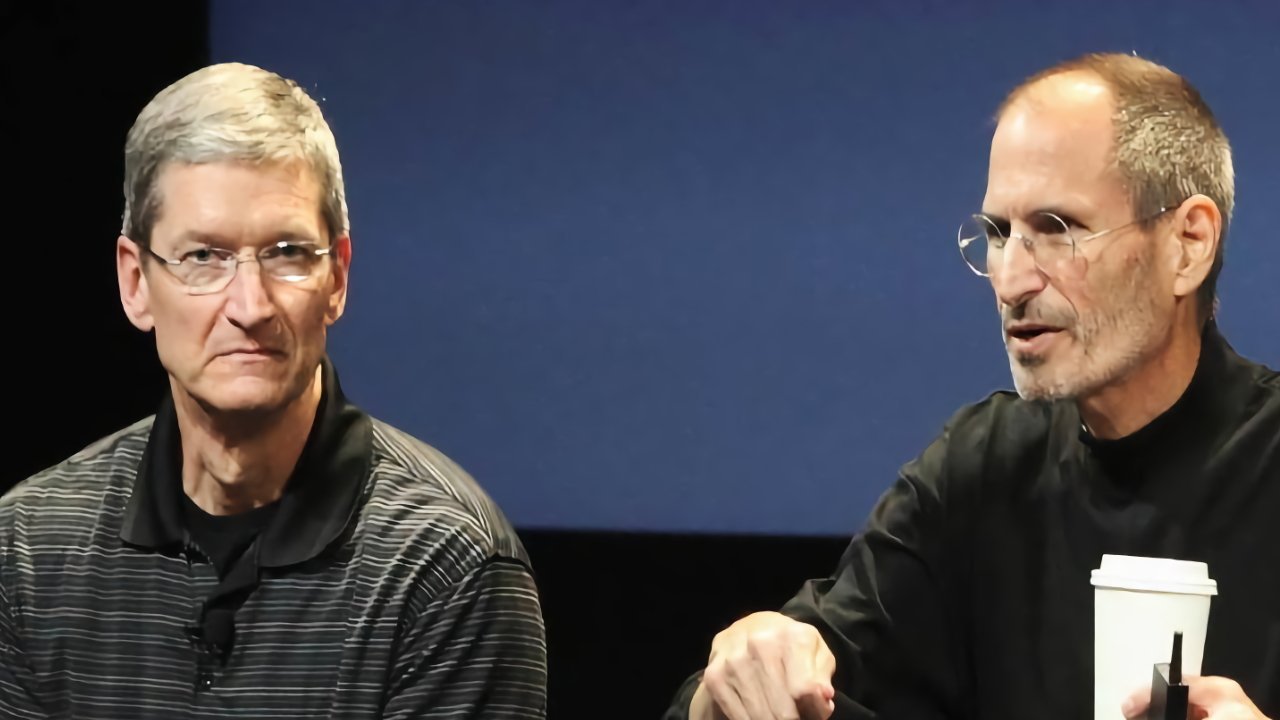
Cook (left) joined Apple specifically to get to work with Steve Jobs (right) — image credit: Apple
Throughout his career to this point, he had worked to perfect various Just In Time methods, where as little stock was held as possible. At Compaq, he added Build to Order.
This is just how Apple's online store operates now, where buyers can specify what configurations of devices they want, within certain limits.
It was a new idea at Compaq, and it entirely depended on how well the company's Just In Time manufacturing processes worked. It all worked extremely well, and Cook had a very bright future at Compaq — except in 1998, he met Steve Jobs.
Apple's job offer
Cook says that he didn't want to work at Apple, and that he didn't want to leave Compaq. The only reason he took the meeting was because Steve Jobs had been such a huge figure in the technology industry.
The logistics-minded, practical Tim Cook must have weighed up offer Jobs was making. Jobs was offering a half a million dollar signing bonus on top of a $400,000 per annum salary.
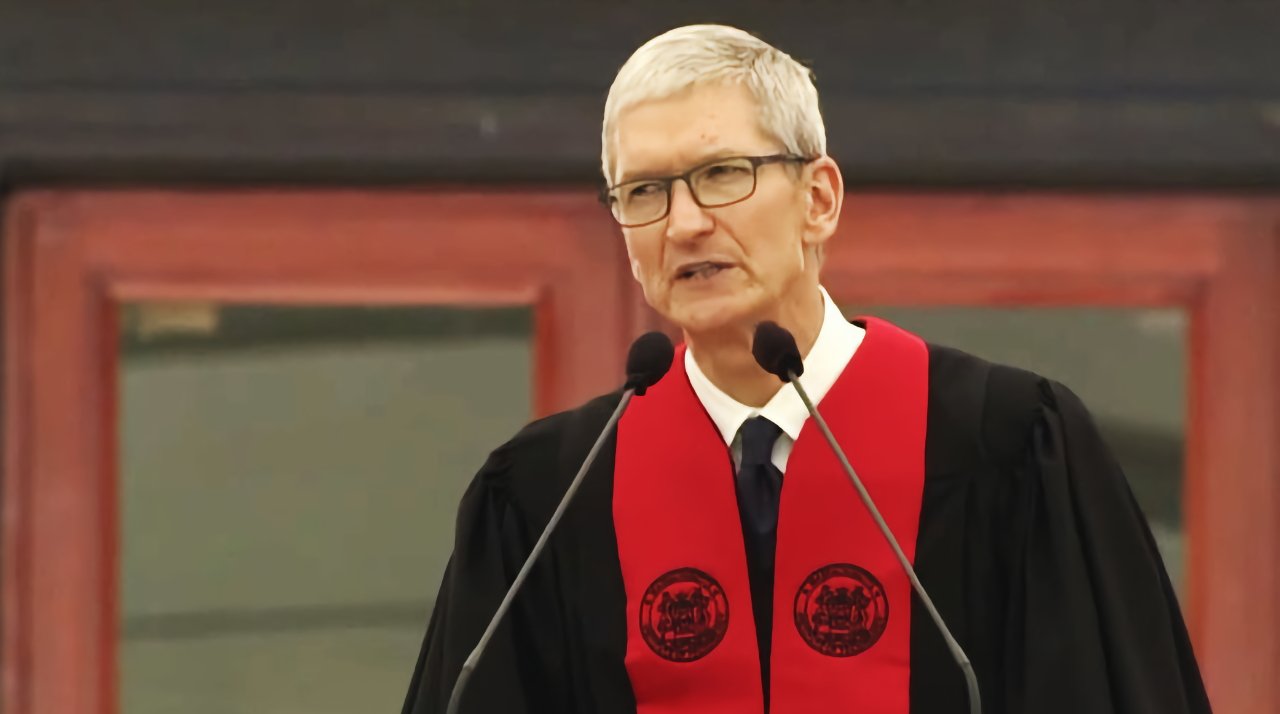
Tim Cook speaking at MIT in 2017 — image credit: MIT
But Cook says the decision to accept the offer was anything but practical, that it didn't have anything to do with the money.
"Any purely rational consideration of cost and benefits lined up in Compaq's favor, and the people who knew me best advised me to stay at Compaq," Cook said later. "One CEO I consulted felt so strongly about it he told me I would be a fool to leave Compaq for Apple."
At that moment, that unnamed CEO had a point. Compaq was riding high, Cook had a secure and very successful role, and Apple was then close to going bankrupt.
"My intuition told me that joining Apple would be a once-in-a-lifetime opportunity to work for a creative genius," said Cook. "Engineers are taught to make a decision analytically, but there are times when relying on gut or intuition is most indispensable."
Tim Cook joined Apple on March 11, 1998. Almost twenty years later, he gave a commencement speech at MIT and looked back on why he had taken what then seemed such a risky career move.
"I was never going to find my purpose working some place without a clear sense of purpose of its own," he said in 2017. "I tried meditation. I sought guidance and religion. I read great philosophers and authors. In a moment of youthful indiscretion, I might even have experimented with a Windows PC. And obviously, that didn't work."
Fitting in at Apple
Reportedly, Steve Jobs would later be concerned that Tim Cook was "not a product person." He meant that Cook didn't have the same focus on products that he or Jony Ive did.
But if Cook didn't obsess over the finer details of iMac design, he did focus on the logistics of making global distribution. And if shipping seems like the least important thing in the story of how the iMac saved Apple, it really isn't.
For in his first year at Apple, when the company was still in financial peril, it was Tim Cook who spent $100 million on shipping. Specifically, he bought up that much air transportation in order to get the iMac to customers.
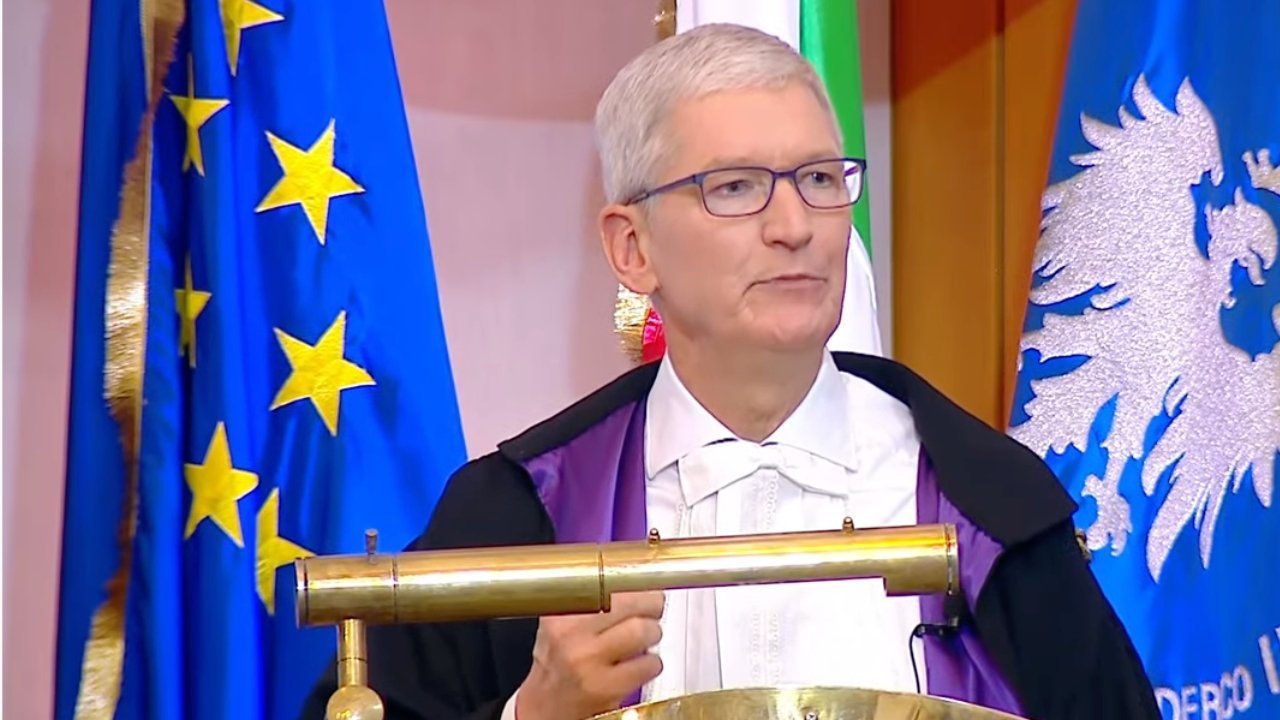
Tim Cook receiving an honorary award for innovation in 2022 — image credit: Federico II University of Naples
It's obviously a lot of money, but as well as Cook doing this when Apple perhaps could little afford it, he had to spend it months before the iMac was announced. So he was gambling on the iMac being a hit and if it hadn't been, that $100 million would have been lost.
Obviously the iMac turned out to be a great success, but there is one more aspect to Cook's gamble. In buying up all of this air freight space to get the iMac out for the holiday season, he also blocked Apple's rivals.
Becoming CEO
Global strategy mastery in the short- and long-term is still apparent in how Apple operates, although presumably it's now done by Cook's very many thousands of staff working in this area. It's not always possible to plan for the long haul, either, as 2025 saw the need for massive restructuring.
Cook saw the future, at least in part, and started to rearrange its worldwide supplier and distribution chain in 2015. That foresight allowed Apple to minimize the impact of Trump's "reciprocal" tariffs and how those kept changing on a whim.
The toll still wasn't cheap — Apple itself estimated that by the time of the iPhone 17 launch, it would have spent $2 billion just on tariff related expenditure.
But then the Apple of today can afford to spend billions where it needs to. It's just that it got to this stage because of how Cook has run the company since taking over from Steve Jobs in 2011.
Since then, Cook took Apple to a $1 trillion valuation, making it the first company to reach that milestone. Then he did it again, making Apple the first firm ever to reach a $3 trillion valuation.
Just as he says he felt when he accepted the offer to work for Apple when all practicality said he should stay at Compaq, Cook insists that money is not what is most important.
"Financial returns are simply the result of Apple's innovation, putting our products and customers first, and always staying true to our values," he said to staff when Apple reached the $1 trillion valuation. "Just as Steve [Jobs] always did in moments like this, we should all look forward to Apple's bright future and the great work we'll do together."
Cook has been compared unfavorably to Steve Jobs from the moment he took over. That's only increased as dealing with Trump has meant he's had to become far more of a politician than Jobs ever did.
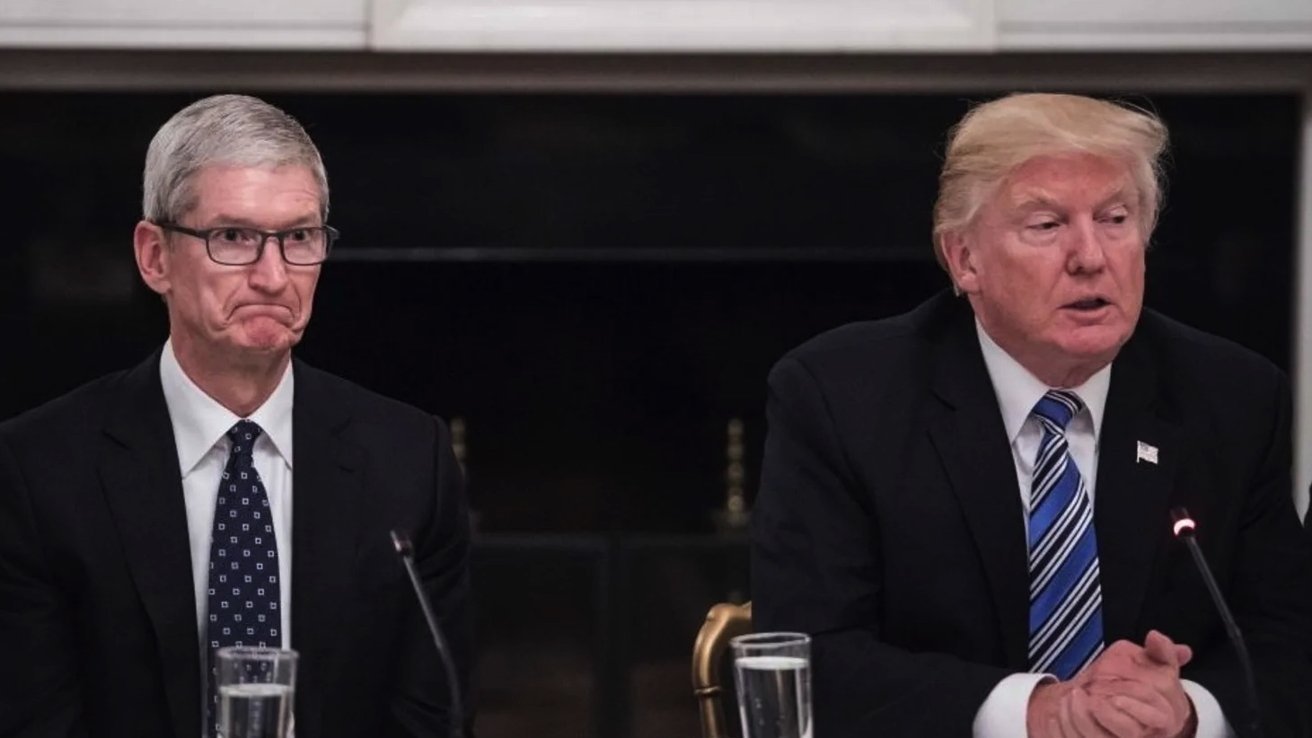
Tim Cook (left) has had to become more of a politician — image credit: White House
However, as he seems to have always looked both at the Just In Time detail and the longer term game, Cook does seem to be making necessary moves to protect Apple. Even if that has meant that the right business moves have sometimes been the wrong moral ones.
Still and as it has always been, complaining that Steve Jobs is rolling over in his grave because of something Cook did is a ludicrous claim. It's generally a logical fallacy by the sayer, who generally doesn't like personally like something Cook has done, despite not knowing what Jobs would have done in his stead.
There is no single man on this planet who can say that with any accuracy — other than Tim Cook. Regardless of criticism — fair or unfair — Cook's business skills and the way he has grown Apple means that he will never be fired.
However, he is approaching his 65th birthday so there is now much speculation about when he may choose to leave Apple. He's now run Apple for longer than Steve Jobs did, and his senior team is likely to retire around the same time as him, too.
There's no possibility that someone who built his career on planning won't have already worked out who his successor will be. But whoever it is, they will take over an Apple that he has nurtured into a vast corporation.