
The M5 doesn't remake Apple Vision Pro into a hit consumer product, nor does it solve Apple's ongoing issues with a lack of developer interest in the platform, but it is better, and that may be enough.
If you've been an Apple fan long enough, you've heard the complaints about overpowered hardware and an underserved software ecosystem. However, that wasn't in regard to the Apple Vision Pro, but the iPad Pro.
The first iteration of Apple Vision Pro with M2 that launched in 2024 was an odd product. The chipset couldn't drive all the pixels on the display, but software wasn't exactly taxing the chipset anywhere except some games.
It's not as if Apple Vision Pro users were begging for more power. No, what we all wanted was a supported platform with millions of apps and a flow of interesting content to consume.
More content arrived, slowly, but all of Apple's Immersive Video can be watched in an evening. Sure, that evening is getting longer, but it's not exactly an extended edition of the Lord of the Rings levels of dedication just yet.
Apple Vision Pro review: hardware of the future still lacks developer support
We'll get into the numbers later, but let's just say app development and game releases have more or less stalled. Outside of some interesting Apple Arcade titles and a few ancient VR game ports, there's little to see here.
It's not that the hardware is bad, if anything, it's better than ever. But if it's ever going to go anywhere from here, Apple needs to convince developers to join the platform.
Apple Vision Pro review: A little recap
I've discussed Apple Vision Pro ad nauseam in the 20 months since its launch. If you've got a few minutes, it is worth your time to see how the platform has evolved, and my opinion of it, with each check-in.
- February 2024 review: a peek into the future
- August 2024 review: Six-month stasis
- January 2025 review: Time to exit the preview
- September 2025 visionOS 26 review: Necessary evolution in need of new hardware
I love this platform, and among the AppleInsider staff, I'm certainly the most bullish about it. So, even as I write critically about it and Apple's shortcomings, don't see it as hate — see it as my hope to see it improve.
Mike is joining me on this one to put in his experience with the hardware, what he's heard from enterprise users, and his thoughts on how things are going. I agree with Mike on most everything, even if we're approaching this review from very different attitudes.
First, let's discuss what's actually new. Here's the list of things Apple said were changed with the M5 iteration of Apple Vision Pro.
- Leap forward in performance with M5
- Improved display rendering with 10% more pixels and 120Hz refresh rate
- Smoother experience when using Mac Virtual Display
- Faster AI-powered workflows with 2x performance in third-party apps
- Extended battery life of up to 3 hours of video playback
For my review, I wanted to examine what each of these statements actually means for users. Every one of these touted upgrades is a result of moving from M2 to M5 as there is literally no other change to the hardware.
Well, except for the included Dual Knit band, which is a great solution to the Apple Vision Pro weight problem. Owners of the original model can pick one up for $100, so no need to buy the upgrade just for that.
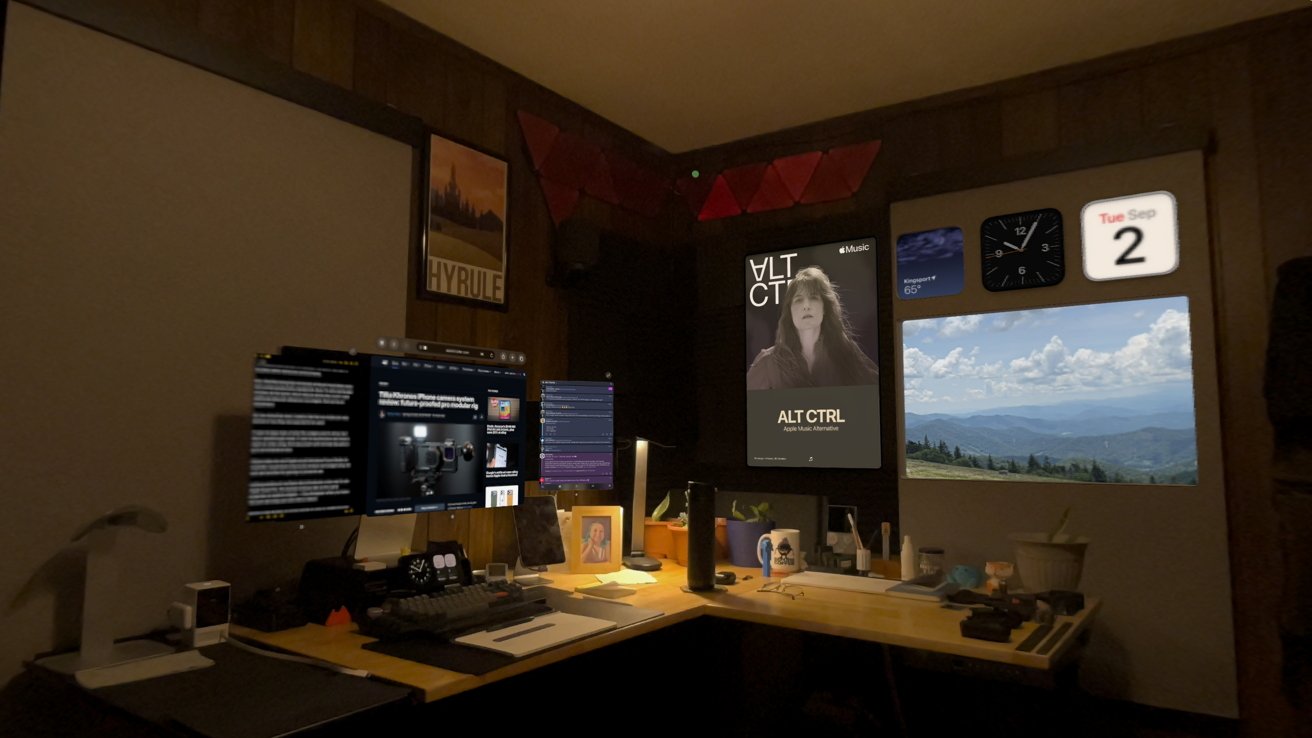
Apple Vision Pro review: visionOS 26 challenged the M2
Long story short, M2 model owners will want to hold onto their devices, unless they've got money to spare or a buyer lined up to supplement the costs. Apple won't buy your old Apple Vision Pro from you, but someone might.
My most recent review covered visionOS 26 from the lens that the M5 model was more needed than ever. Writing this today while wearing the updated Apple Vision Pro, I can say that was a correct analysis.
Let's get into why.
Apple Vision Pro review: No longer a preview
According to Apple CEO Tim Cook, the first iteration of Apple Vision Pro was an early adopter product. I believe that's true, especially since the M2 was barely enough to drive the displays at less than native resolution.
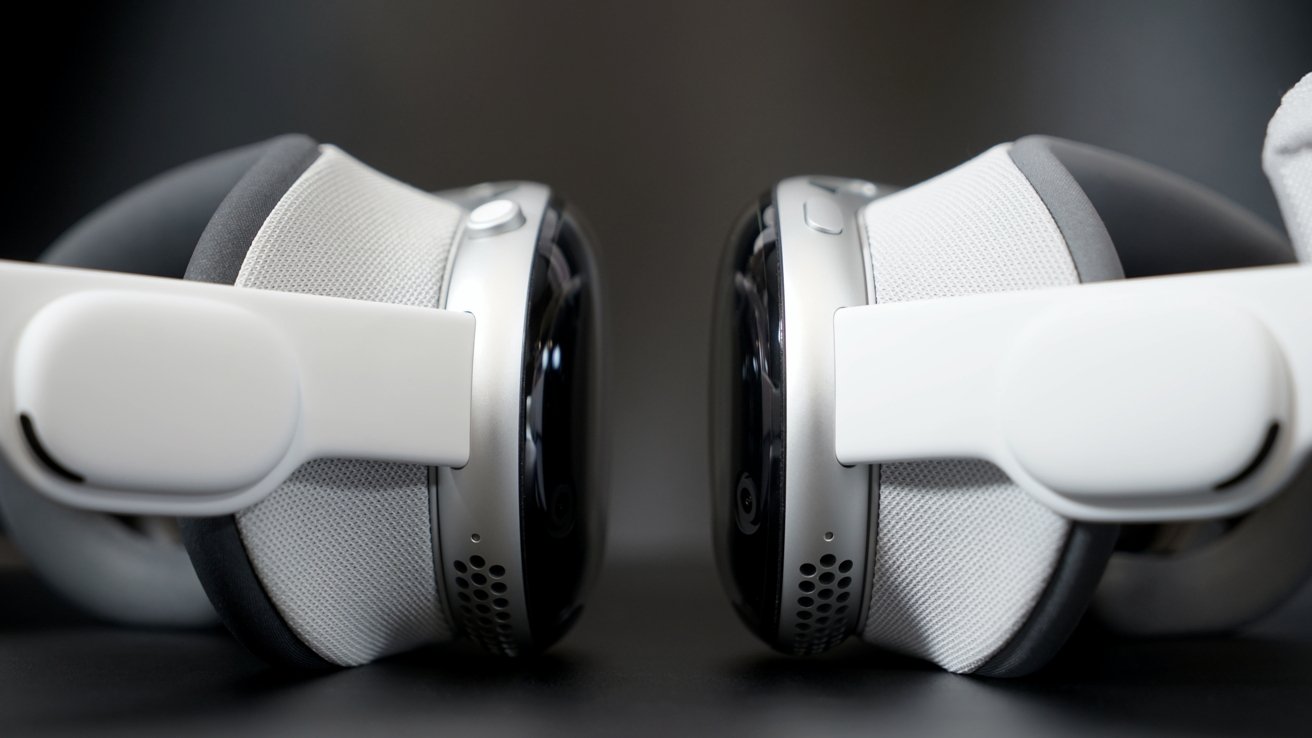
Apple Vision Pro review: 10% more pixels rendered with M5
Nothing hardware-wise may have changed with the M5 iteration, but Apple has come a long way from that first iteration. The M5 processor is more than enough to drive the display at 120Hz, the Dual Knit band is the perfect balance of comfort, and visionOS 26 is the most polished the platform has been yet.
Early adopters with the M2 can hang onto their expensive hardware and maybe pick up a new band, but for everyone else, the M5 model is the way to go. Everything about this updated model shows Apple has learned what it needs to do for its spatial computing platform to take off.
I can say that this is no longer "preview" or "early adopter" hardware. But just like with the iPad Pro these past years, it isn't the hardware that's the problem.
Apple Vision Pro review: Identical design
Other than the Dual Knit strap, you'd be forgiven if you didn't notice that this was the upgraded M5 Apple Vision Pro. It is identical in every way externally.
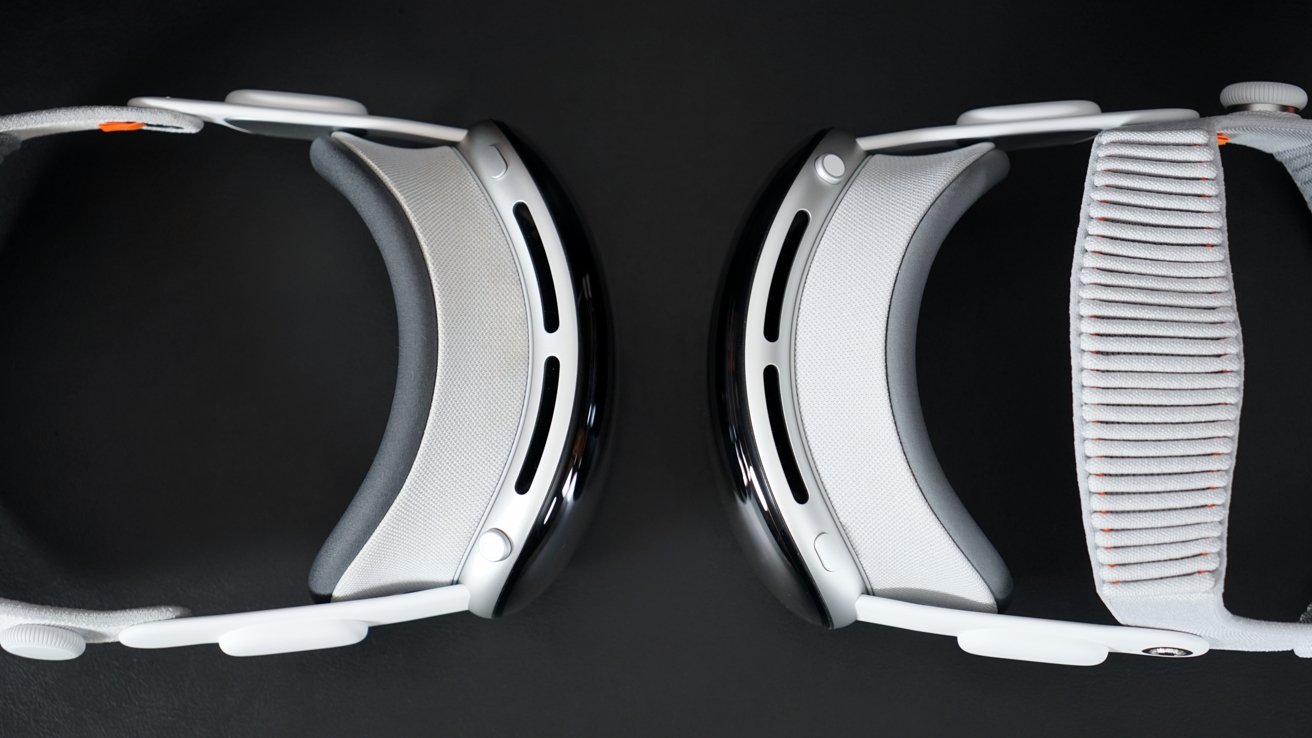
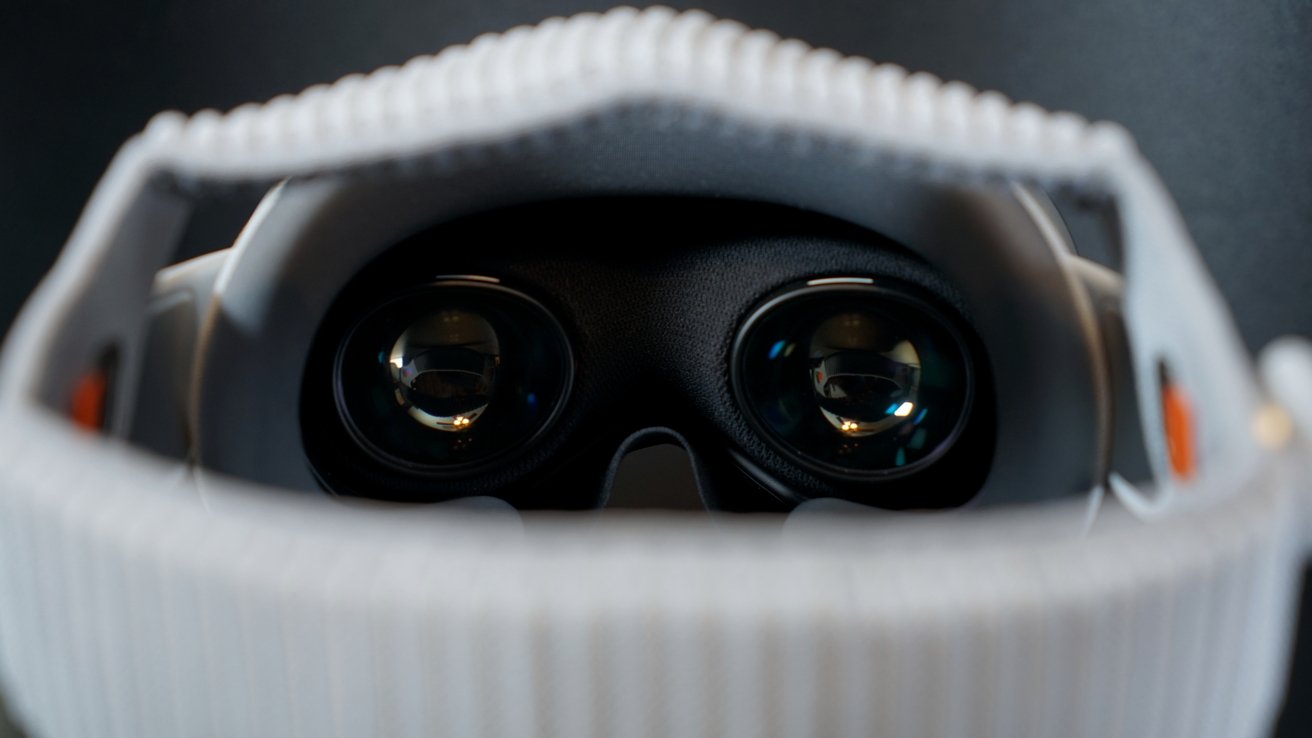
Apple Vision Pro review: a new Dual Knit band helps with comfort
Don't let the website specs fool you, even the weight is the same. The only thing that did change is the Dual Knit band is included in the box and has tungsten weights to counterweight the headset.
So yes, the overall weight of the device on your head is higher, but it isn't a problem because the top strap acts as a kind of fulcrum and balances the load across your head and neck. It's much less fatiguing than before since you're not constantly fighting the forward-pressing weight of the headset, at least not as much.
Several companies tried to do this with alternative straps, and I tested them all. None of them worked for me because the pressure on the top of my head was very uncomfortable.
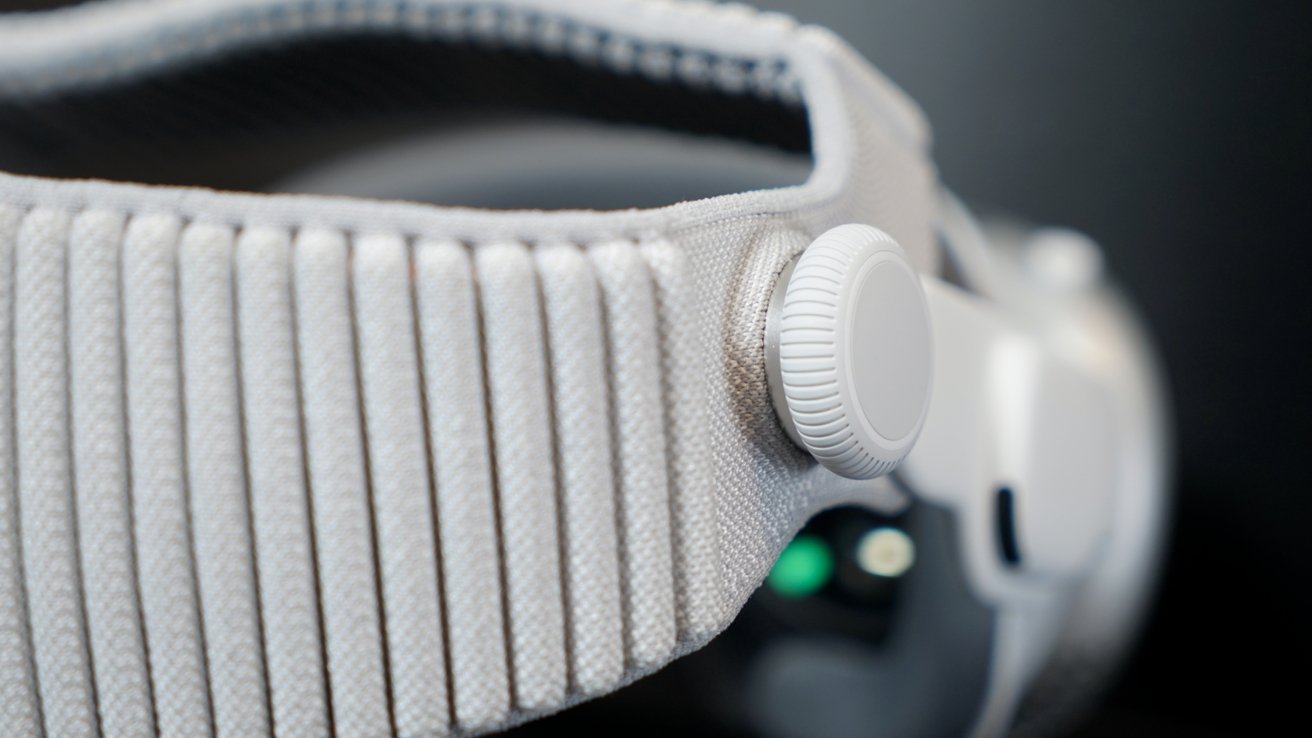
Apple Vision Pro review: Dual Knit adjusts both bands with one knob
Something about Apple's implementation works. The combination of two easily adjustable straps with wide surface areas is likely what made it work for me.
Apple is so confident in the Dual Knit band that it's the only one that ships with Apple Vision Pro now. It may not work for everyone, but I do think it's a good solution for most.
Using one dial to control both straps is perfect. It really lets you find the perfect fit, and you don't need to size it each time you put it on.
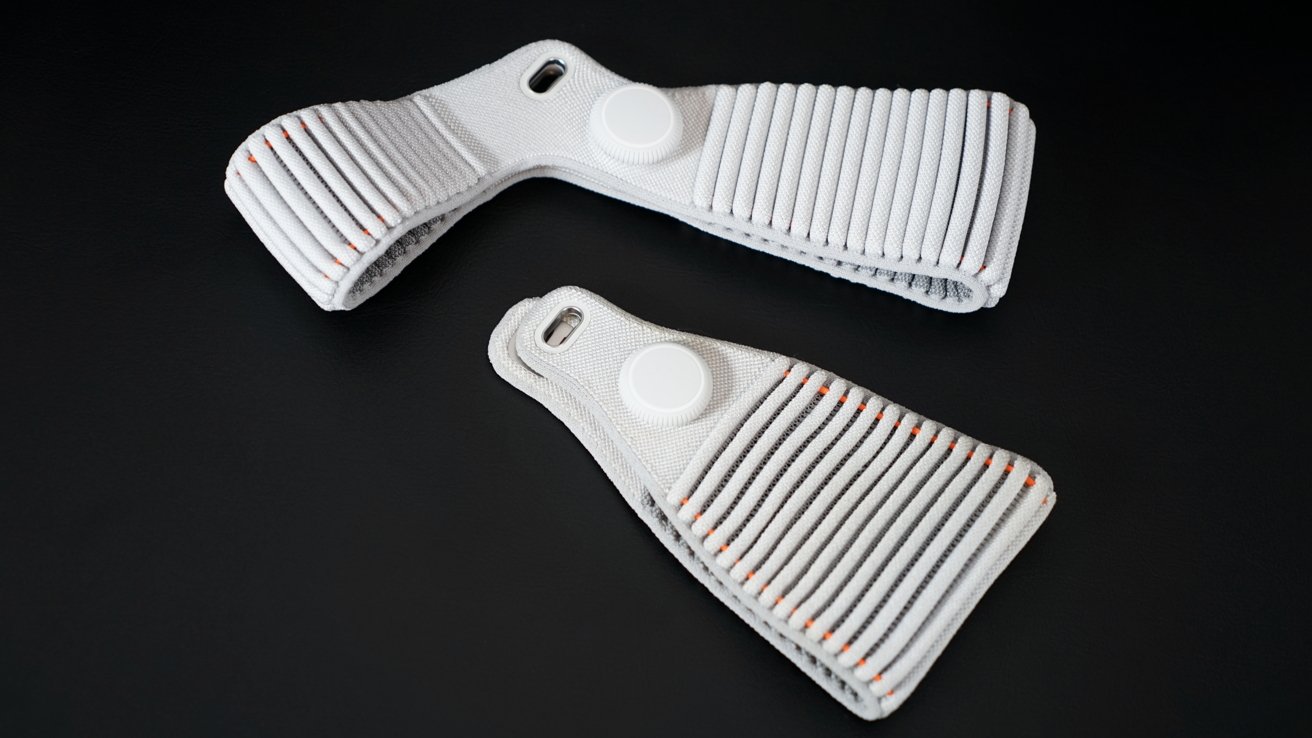
Apple Vision Pro review: a rethought band helps with comfort and weight distribution
I've spent thousands of words on the Apple Vision Pro design before. You've seen it, you've probably even worn it, so I won't drag this on more than it needs.
The big ski-goggle-like design isn't going anywhere anytime soon. I expect that if Apple does anything with the future iteration, it'll simply be thinner and lighter with the same external display.
The Audio Pods are the same and still offer great audio, though I recommend putting in AirPods Pro for the best experience. There are still no ports, the battery connector is the same, and the developer strap doesn't have any new advantages with the hardware.
To reiterate, the entire upgrade is the M5 and what that chipset provides to the system.
Apple Vision Pro review: What M5 brings to the table
The M5 is a powerful chipset, if an iterative upgrade from M4. The focus of this upgrade cycle seems to be on GPU performance and AI.
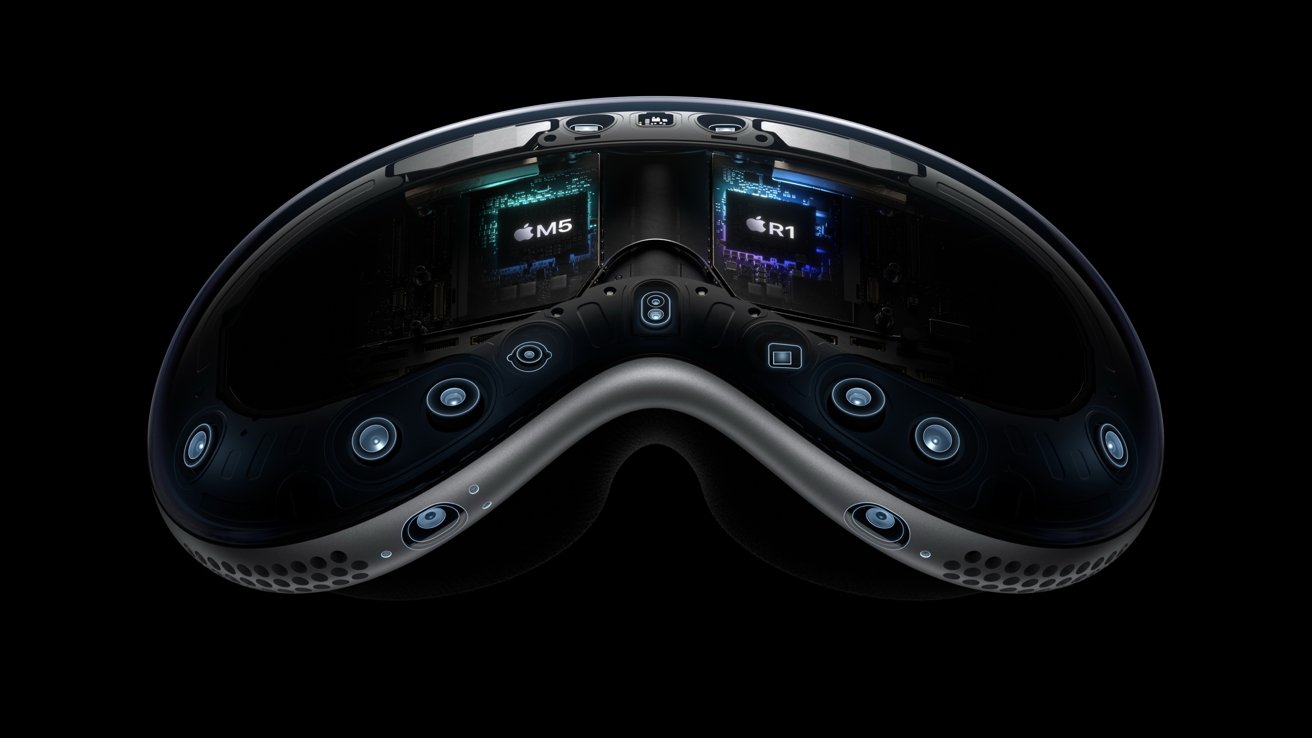
Apple Vision Pro review: moving from M2 to M5
However, the Apple Vision Pro isn't simply moving up a chip generation — it's moving three. Going from M2 to M5 brings a lot of benefits, and many are very important to VR applications.
First, the hardware-accelerated ray tracing and mesh mapping introduced with M3 is here. That alone should mean much more powerful games and experiences for the platform.
M4 saw a significant boost in single-core performance, which is important for driving the headset itself, the displays, and the apps. It also helps with efficiency and battery life.
So, bring all that plus the AI and GPU increases to Apple Vision Pro, and you've got quite the step up in performance and capability. If you've used an M2 Apple Vision Pro, the most notable changes will be seen in general use.
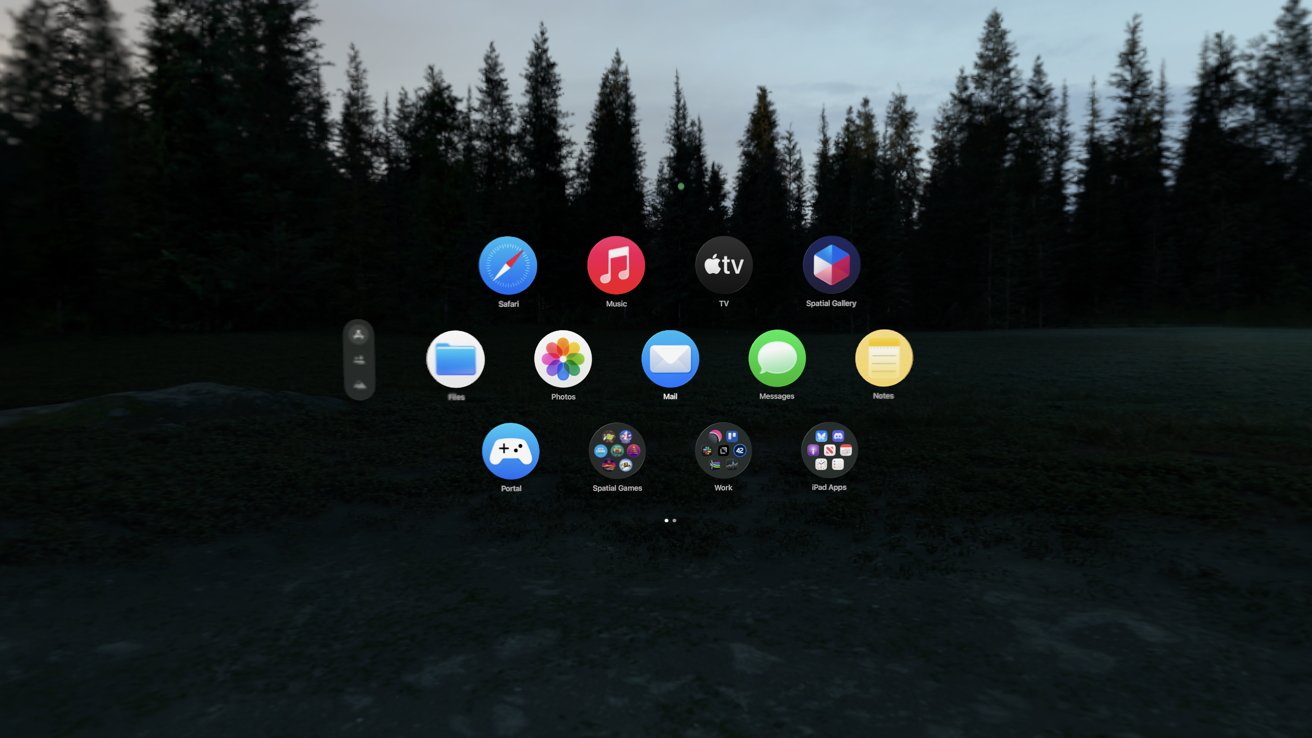
Apple Vision Pro review: lack of developer support leaves M5 upgrades unnoticeable
Apple promises a 10% increase in pixels rendered, plus a peak 120Hz refresh rate. From what I can tell, these are most noticeable when viewing the world in passthrough.
Low-light camera performance is the same, so dim rooms will still be noisy, but overall, the picture is sharper. It is also more fluid, so animation choppiness or blurs should be reduced or non-existent.
These increases also benefit apps and games. Text in Safari is sharper, scrolling is smoother, and everything feels more natural.
If you had issues with motion sickness before, that may not be an issue now.
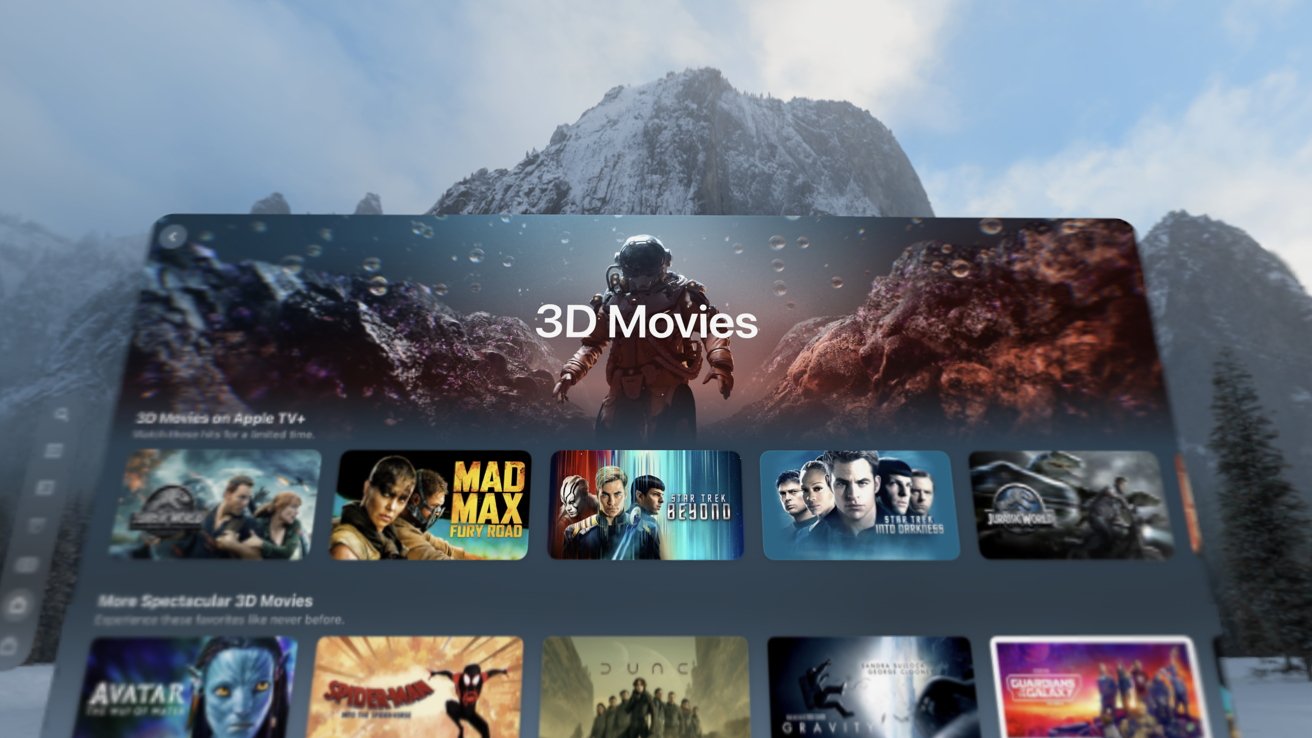
Apple Vision Pro review: M5 doesn't affect media playback
Media like 3D movies and immersive video will be identical across generations. Apple was already displaying the video feeds at native resolution and frame rate.
Sadly, I can't test much beyond simply using visionOS and looking around. Apps and games have to be updated to take advantage of the M5, and that could take some time.
I like to check when the last time apps and games were updated, and it's not great on Apple Vision Pro. Many of the native VR games, including those offered with Apple Arcade, haven't seen updates in six months or more.
I'd love to try a more fluid gaming experience with PSVR controllers in Synth Riders, but that app hasn't been updated. It brings me back to the core issue with Apple Vision Pro — developer support.
Apple Vision Pro review: Software stagnation
There's been a subplot surrounding Apple Vision Pro suggesting that developers won't build for the platform because they're mad about yet another locked-down ecosystem. I believe it is much simpler than that — there's no money to be made, at least not yet.
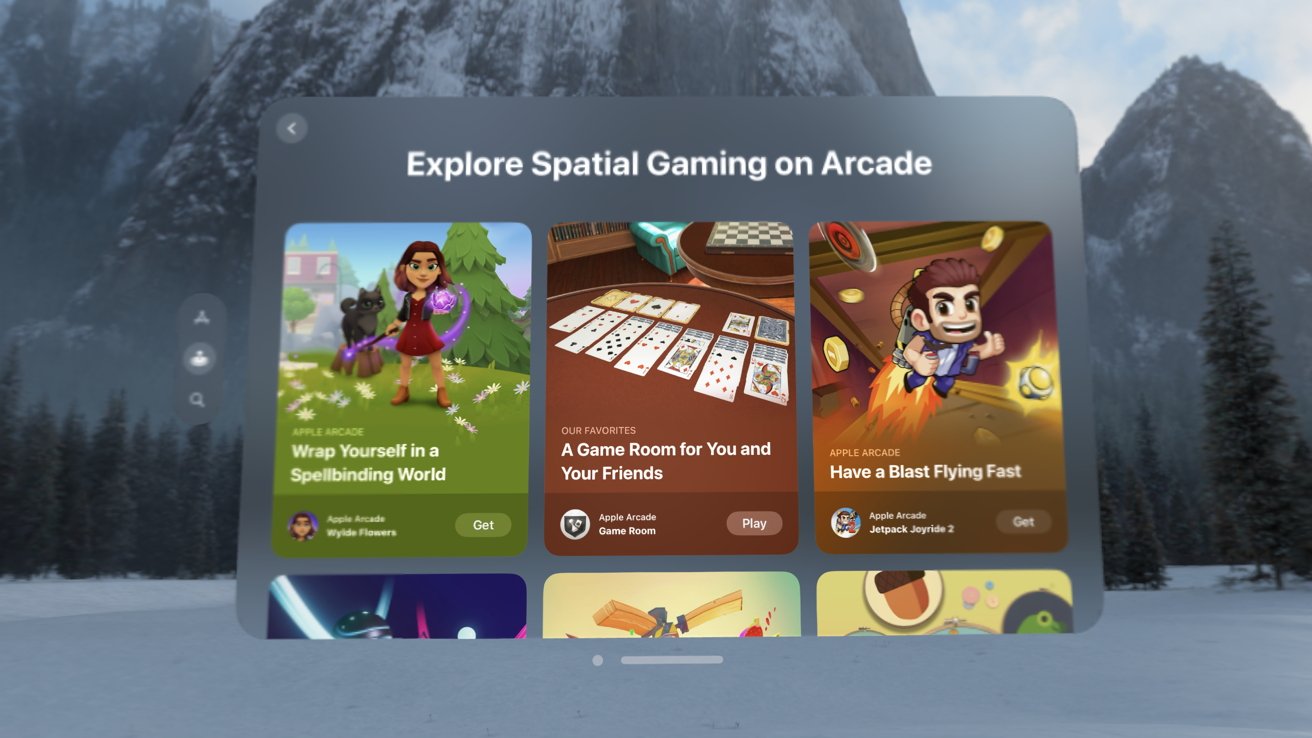
Apple Vision Pro review: the list of games hasn't grown much, and the games that are there haven't been getting updates
I will give Apple credit here, the company has been holding more influencer, creator, and developer-focused events over the past year to drum up interest. While these inherently leave everyone involved wowed and excited, it still doesn't solve the core issue.
There are around 1 million Apple Vision Pro users in the wild, many of whom are likely enterprise. Of those users, the number looking for a specific app is a fraction of a fraction.
Many developers of even big-name apps have found that the time involved in making a good native app isn't worth the squeeze. It's a lot of effort and very little return.
Apple says there are over 1 million apps and thousands of games on the visionOS App Store. However, only 3,000 apps have been built to be visionOS native — a critical problem for the nearly two-year-old platform.
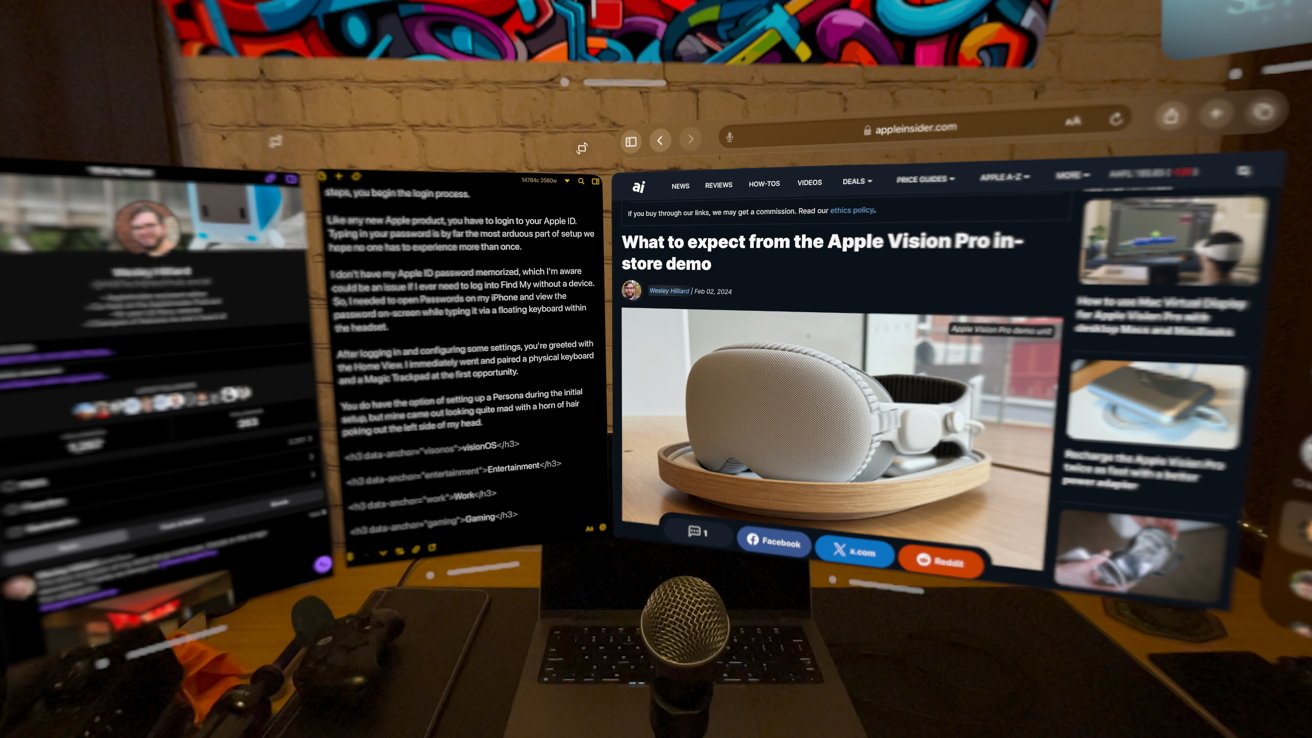
Apple Vision Pro review: working from visionOS is possible, but the continued lack of support from apps is problematic
Apps I use routinely on iPad Pro are nowhere to be found on Apple Vision Pro. There's no sign of Minecraft, Express VPN isn't there in any form, nor is there an abundance of options in most categories.
What saves Apple Vision Pro from being a complete novelty is the small selection of native apps from Apple and the wide selection of iPad apps ported with little effort to the platform. In most cases, it seems the iPad or iPhone app is only available on the platform because developers had to toggle the platform off in an opt-out and didn't.
I'm able to work from Apple Vision Pro in much the same way I can from iPad thanks to Drafts, Slack, Trello, and other apps working as a 2D window. I've discussed the conundrum of choosing between iPad Pro and Apple Vision Pro for tasks, as each has advantages I enjoy.
I'm not trying to be down on Apple Vision Pro. Really, I'm quite infatuated with the platform, and it seems to be growing in usefulness over time.
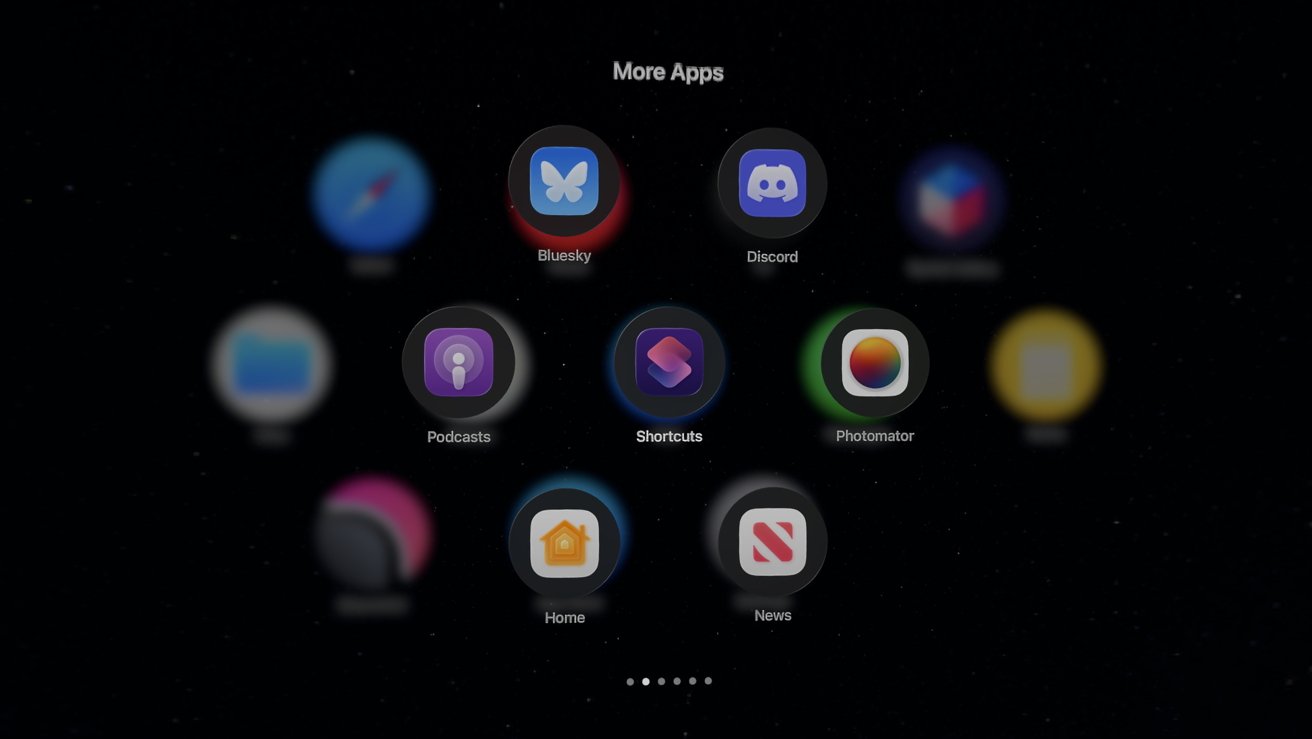
Apple Vision Pro review: Apple's list of compatible apps hasn't changed
But it's incredible we're having this same discussion nearly two years in. Apple hasn't introduced a single new native app in that time, and developers have all but ignored the platform.
I've heard it said and I agree — much of what Apple Vision Pro offers today feels like a preview of what's to come. Though after 20 months of previews, I'm ready for the real thing.
The selection of games that are native are fun and interesting, but they're not much more in-depth than the PlayStation One demo disc you'd get with your order from Pizza Hut. It's all surface-level fun, and that's fine, but even the failed PSVR2 platform has plenty of narrative and outright fun titles to choose from.
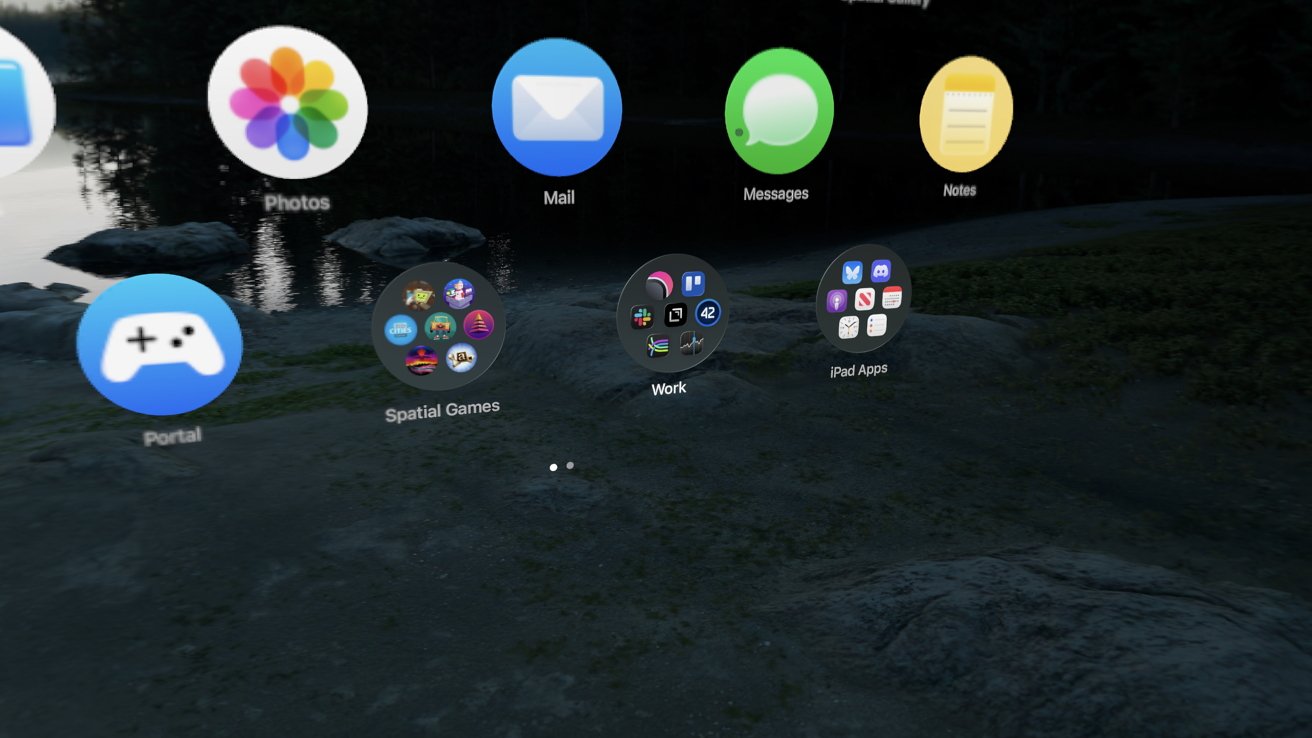
Apple Vision Pro review: visionOS native games are more party tricks than in-depth games
Apple has the means to fix this. Offer to back a truckload of cash up to the developers that embrace the platform or find some way to help them further monetize their apps.
Doing nothing isn't an option. Apple Vision Pro with M5 is more than capable, so let's get some software that pushes the hardware.
Apple Vision Pro review: Still the best seat in the house
The Apple TV app and other streaming apps offer a selection of 3D movies, and some even have their own immersive views. Apple's 8K Immersive Video is also quite compelling, even if it can all be watched in an evening.
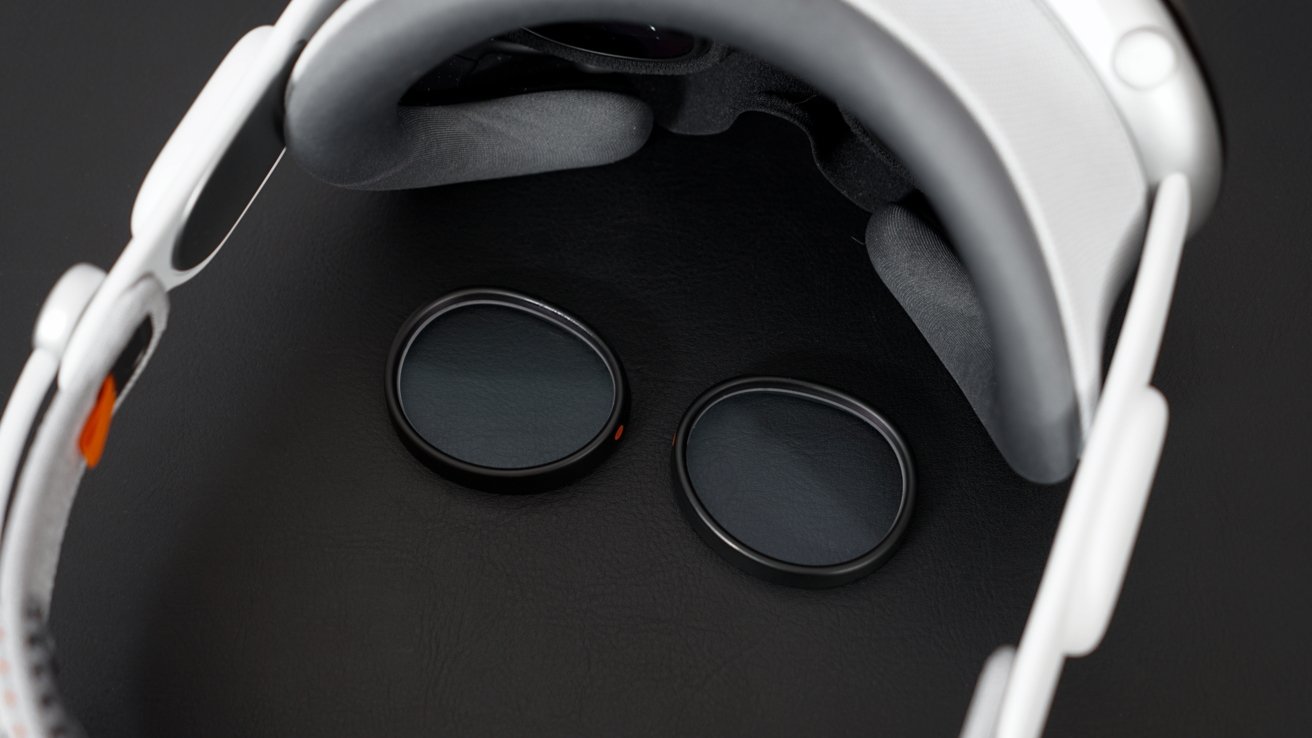
Apple Vision Pro review: no better place to watch media
There is more content coming all the time, and there are signs a flood of Immersive Video could occur in the next year. The Blackmagic cameras are becoming more widely available, and creators are eager to play in the format.
The biggest sign of movement here yet is Apple's own partnership with the NBA to show select Lakers games in the Immersive format. It'll be interesting to see how that works out, and hopefully, it is a sign of more expansion into sports.
Viewing media, especially 3D movies, is best on Apple Vision Pro. There's really nothing else like it on the market, even in competing headsets, simply because of the display quality.
While the lack of media was more of an issue early on, it's becoming less so over time. So, I'll give Apple a B for effort, since there is actually growth here versus native app development.
Apple Vision Pro review: Using the upgraded model
I'd like to write that the M5 is a game changer that flips Apple Vision Pro from a niche platform to a mainstream product. The price and weight are still too prohibitive for that, but the M5 does make a difference.
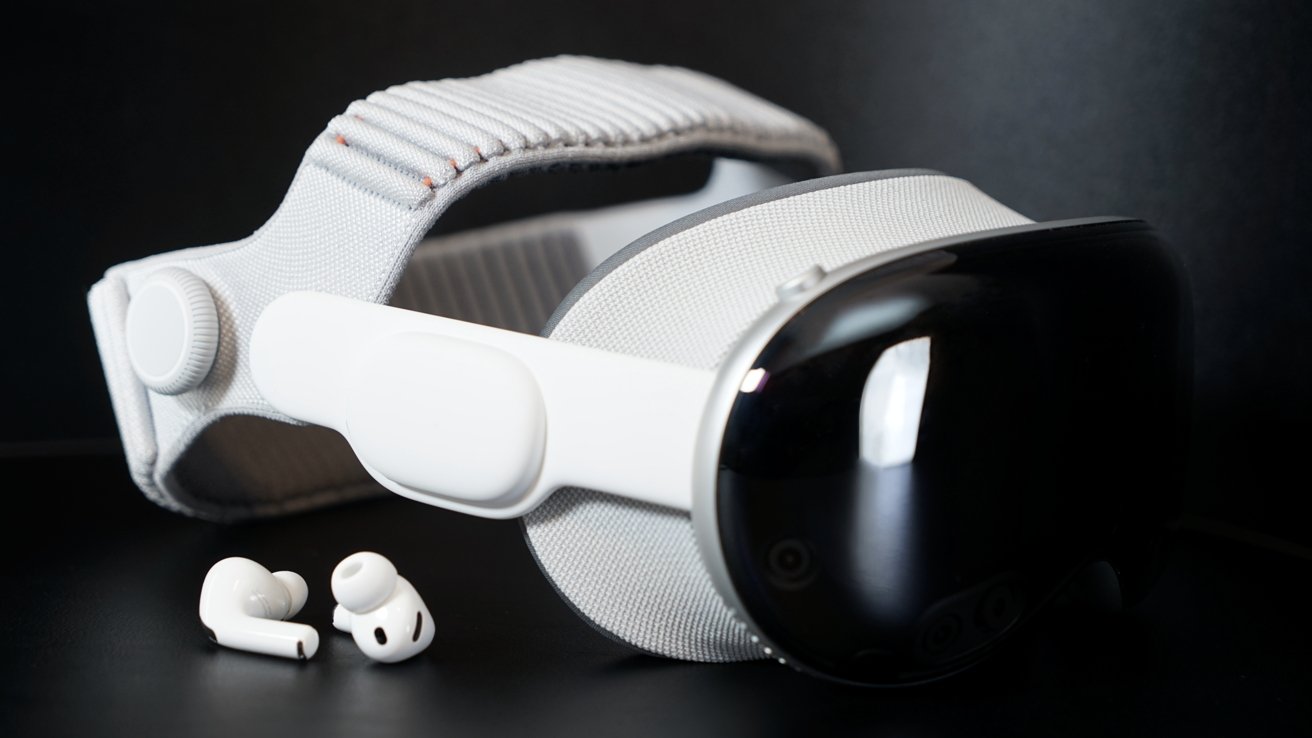
Apple Vision Pro review: an ecosystem advantage
Like I said before, more in-depth analysis of the hardware's performance will have to wait on apps and games. There's an interesting VR game coming in mid-November called Glassbreakers that might do the trick.
Of course, I'll always be holding out for Beat Saber on the platform. Though, there's no word on that yet.
I've grown to like the Dual Knit band since getting the new Apple Vision Pro. Swapping to the old model with the Solo Knit band has been odd, as it provides a different, but still comfortable fit.
Of the two, I think the Dual Knit is the winner if only because it's even easier to don and doff. The weight stays primarily in the top band, the rear band provides light pressure, and it's all fairly comfortable without feeling like a motorcycle helmet.
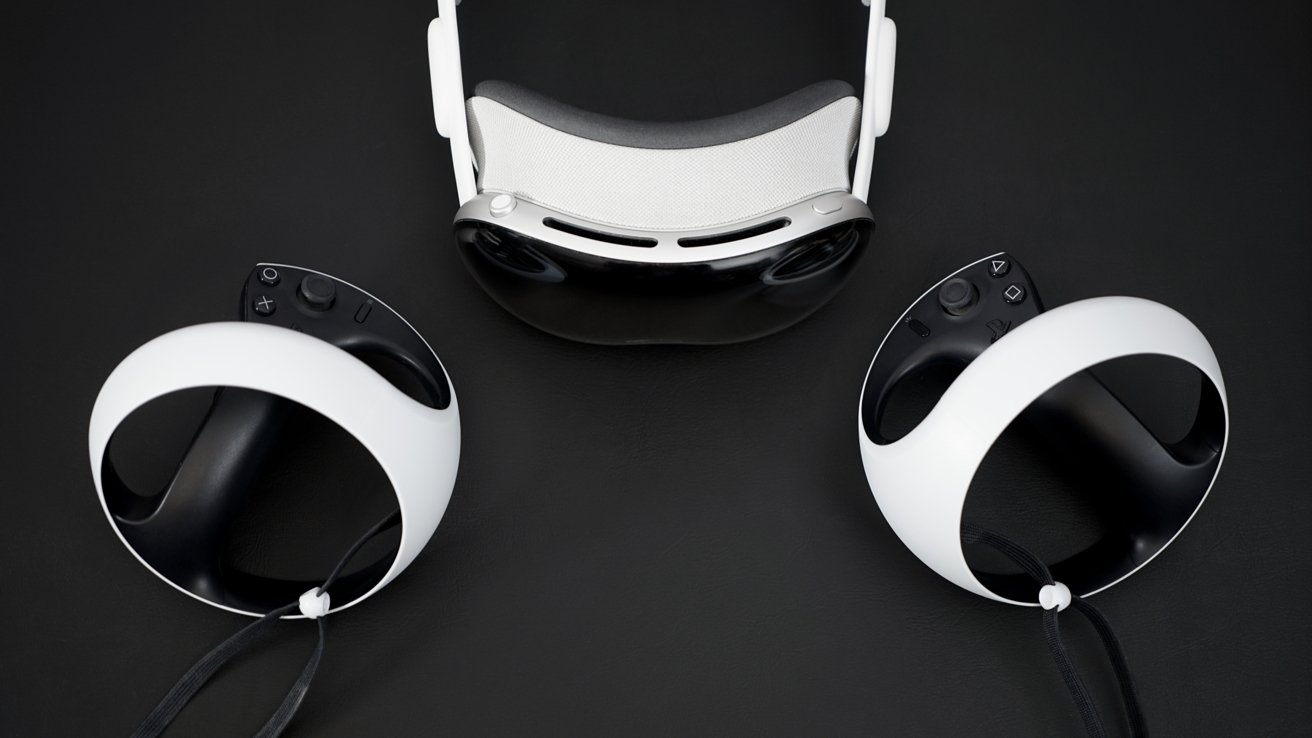
Apple Vision Pro review: PSVR2 controller support doesn't matter when no one makes games for the platform
I tried the PSVR2 controllers again, as I have a PSVR 2 system, so pairing the controllers was simple. The problem is, we're in basically the same place we were when visionOS 26 launched.
I tried a couple of the games that support them, but ran into issues with tracking. The headset would sometimes just lose the controllers, which seems to be more of an app issue than a controller issue though.
I'm still excited to see games take advantage of the controller support. There are too few that exist now for a proper assessment, so I can't say if it's buggy because of hardware issues, Apple's implementation, or the apps themselves.
Mac Virtual Display is the clearest winner thanks to the M5 update. It is sharper and looks like a true native resolution on Mac.
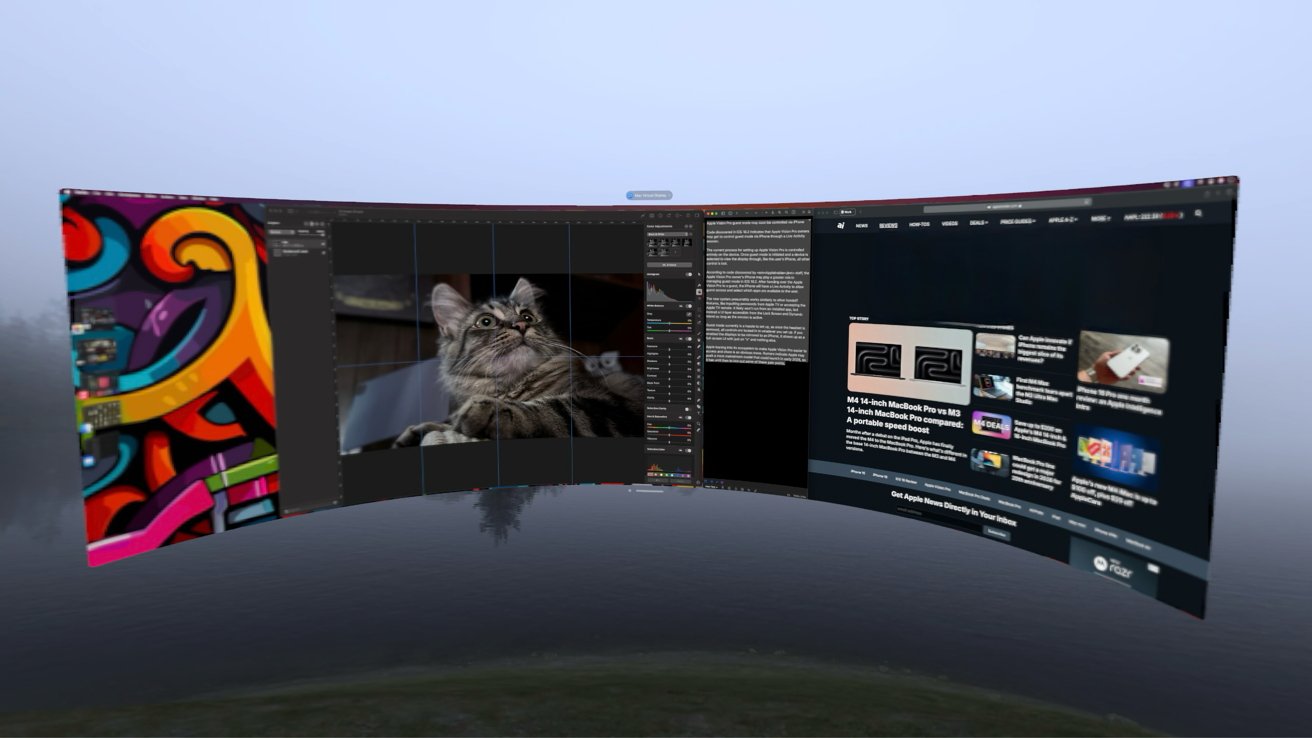
Apple Vision Pro review: Mac Virtual Display is much sharper with M5
I edited all of the new photos I took for this review in Pixelmator Pro within the Mac Virtual Display. It worked great, though it does make me wish the software could just run natively in Apple Vision Pro.
Sadly, there's just not enough for me to test or use to truly show off what the M5 brings to the table. Fundamentally, it's better in many ways, but apps, games, and more need to take advantage.
Without developer support, the M5's only purpose is sharper text and reduced motion sickness. Those are great quality-of-life improvements, but not enough for someone to upgrade (unless they've got money and motion sickness is a serious problem).
The future of Apple Vision Pro
If Apple didn't release the M5 Apple Vision Pro, there would be two compounding issues. First, analysts and developers would declare the platform dead in the water — at least more than they do now.
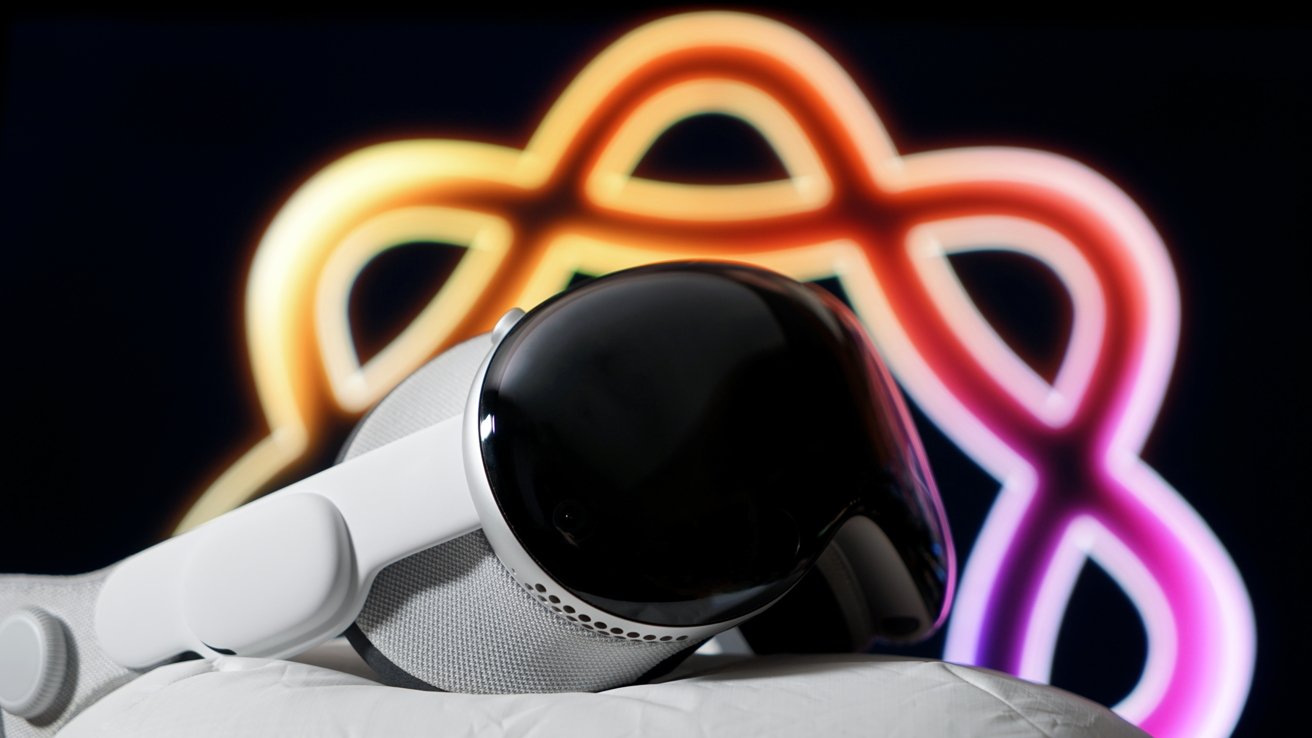
Apple Vision Pro review: visionOS and Apple Intelligence will see important growth by 2027
Second, the upper limit of what's possible will have been set by the M2 chip that's years old. Neither situation would be good for the future of visionOS.
The new platform is young, and there are going to be growing pains. Apple's commitment to pushing visionOS and Apple Vision Pro forward is clear though, as visionOS 26 and the new M5 model both show Apple has skin in the game.
I expect the M5 model will be the last with this form factor. It'll be 2027 or later before we see what's next, but at least we have a modern chipset to work with in the meantime.
So, since no one can blame platform support on the aging hardware, the blame all rests in one place — Apple.
Apple Vision Pro review: The ball is in Apple's court
Apple Vision Pro with M5 is an excellent upgrade to hardware that was already years ahead of what anyone expected. Competitors are only just releasing their response, but they are hobbled by weak chipsets and copycat interfaces.
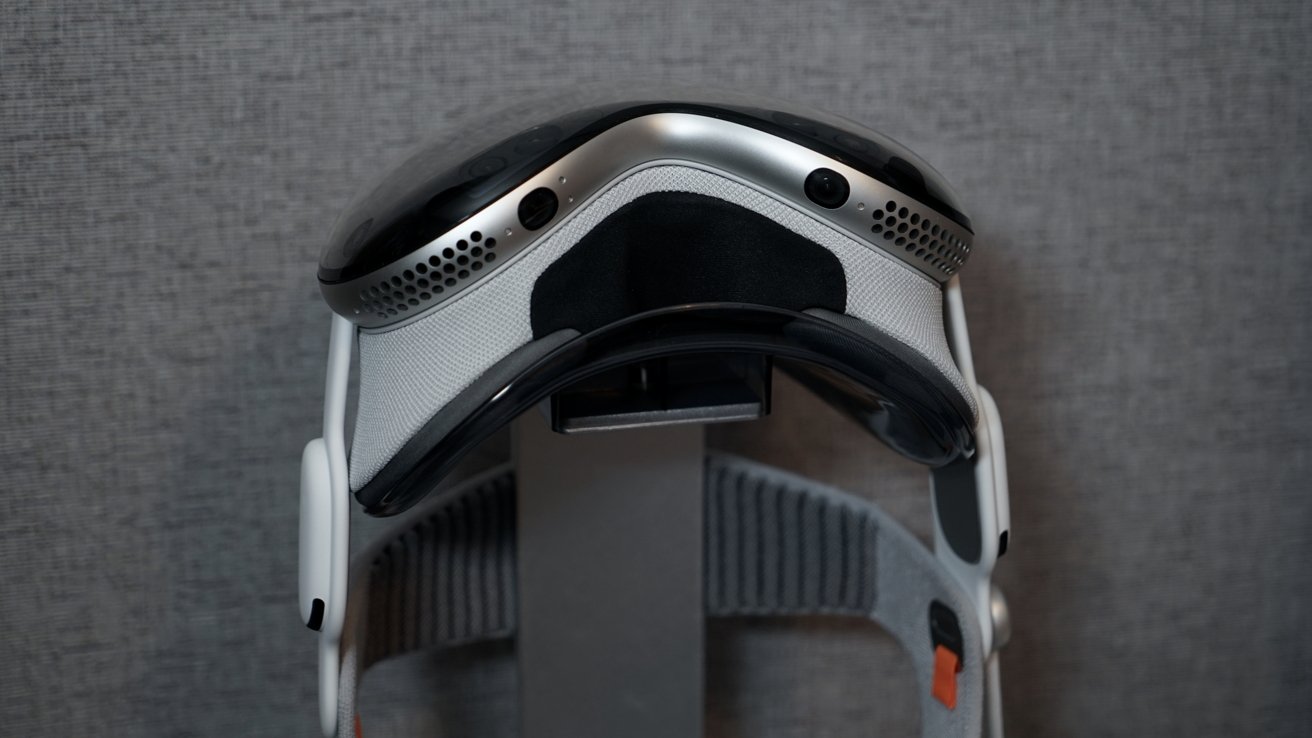
Apple Vision Pro review: better hardware waiting for support
If you're in the Apple ecosystem and you're interested in spatial computing, there's only one logical choice. Apple Vision Pro is built to be a part of the technology you already use, and no one else can offer the same experience.
If you just want a VR headset to play video games, Meta Quest has a model that's 1/10 the price. I don't believe Apple Vision Pro and Galaxy VR or the other recent options are in the same market. Like with smartphones, people will likely make their choice based on platform.
Those that already own the M2 Apple Vision Pro can hold onto their headset. Unless you've already got a buyer for the old headset lined up and you've got plenty of expendable cash, there's not a compelling reason to rush out and buy the M5 model, not yet at least.
That could change. If Apple is able to push Capcom to release its VR Resident Evil games to the platform, or perhaps something like Elder Scrolls: Skyrim from Bethesda, that M5 chip will likely be required.
If motion sickness was an issue, then you likely didn't buy the M2 model in the first place. Give the M5 a shot, and you might find it usable now.
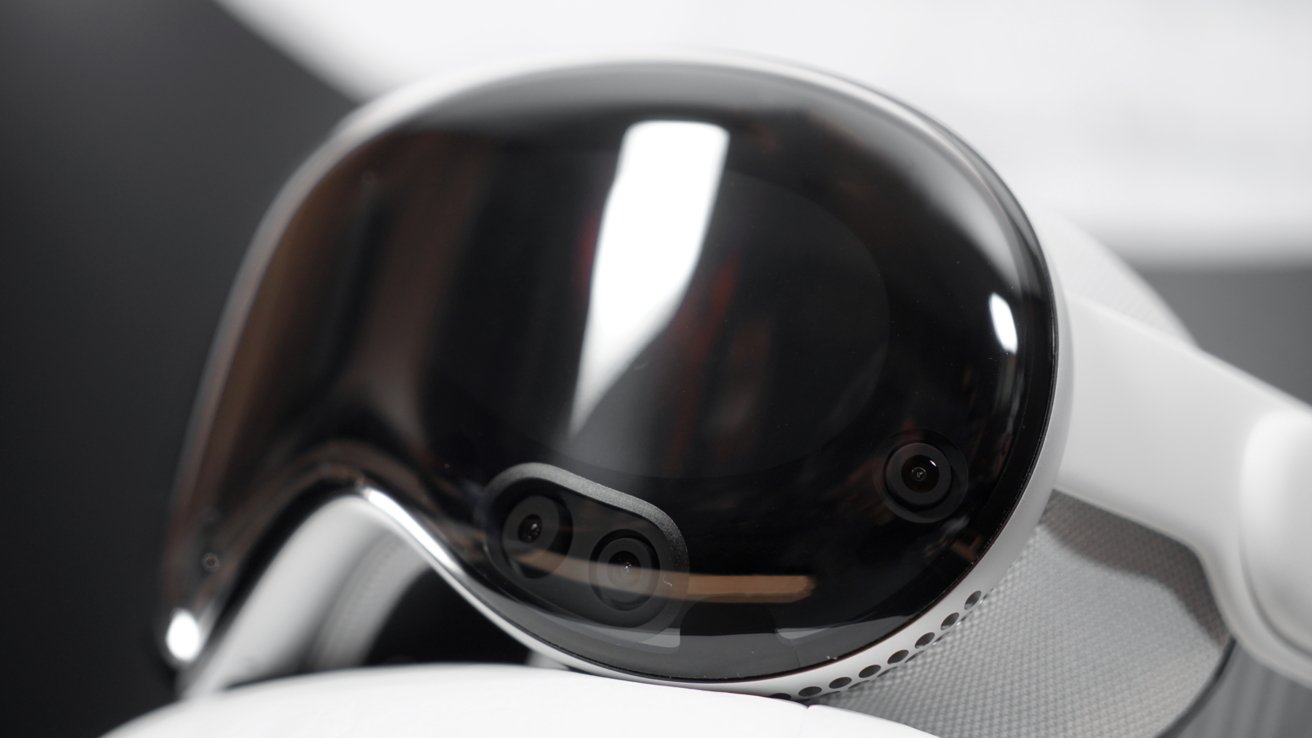
Apple Vision Pro review: nearly 3 years on and minimal attention from developers
The M5 is a significant performance boost, brings 10% more resolution and higher refresh rate, and makes AI perform better. However, almost nothing available on the visionOS platform can showcase these improvements.
If there was a "killer app" that was only possible because of this M5 chip, we'd likely raise the score and push our recommendation harder. Today, there's nothing like that, and it's Apple's job to fix it.
Apple has to build more native apps, it needs to convince developers to create apps and games for the platform, and it must take this task seriously. The future of spatial computing can only be salvaged by incentivizing developers to build for visionOS.
Otherwise, there won't be a future worth discussing for the platform. The hardware and the experience it creates is already amazing, and the M5 increases that potential, but now we need the apps.
Apple Vision Pro review - Pros
- M5 makes Apple Vision Pro a better platform
- Dual Knit band solves comfort and weight issues
- Still the best platform for viewing 3D movies, Immersive Video, personal media
- Apple ecosystem advantage with apps and OS capable of supporting complex workflows
Apple Vision Pro review - Cons
- Stagnating software platform thanks to lack of developer interest
- Apple's continued lack of native apps or interesting app updates makes developers less likely to target visionOS
- M2 owners have almost zero reason to upgrade thanks to lack of developer support, killer app, or new software that makes M5 a must
Rating: 4 out of 5
The main complaint about the iPhone at launch was the stunning lack of software. It took developer adoption and a robust App Store to solve that. We aren't there yet for Apple Vision Pro.
If you've been keeping track, the Google-mandated score on this review is an increase back to the original review score after a dip to 3.5, and I had to fight with Mike about it. The hardware is exceptional, and no other competitor comes close.
If Apple can't find a way to get more developer adoption, this score will slip again. A computer with no software is just smart sand.
I think that it would reach 5 out of 5 if it had as robust a native App Store as the iPad, and I don't think it will reach iPhone App Store levels in the next decade. If it hits that iPad level soon, I'll have to have another fight with Mike about it, as he thinks the price is the show-stopper, and he thinks the Apple Vision Pro as it stands is a 3 out of 5 at best, and on bad days, lower than that.
Media adoption and rollout are mostly solved, and I think it really does come down to developer support. And that price.
Where to buy Apple Vision Pro with M5
The M5 Apple Vision Pro is available for purchase at Apple.com, with a starting price of $3,499. You can also check out the secondhand market on eBay.com for deals on pre-owned M2 models.
For discounts on accessories, Amazon stocks bands, cases, battery holders, and more from brands like Annapro and Spigen.