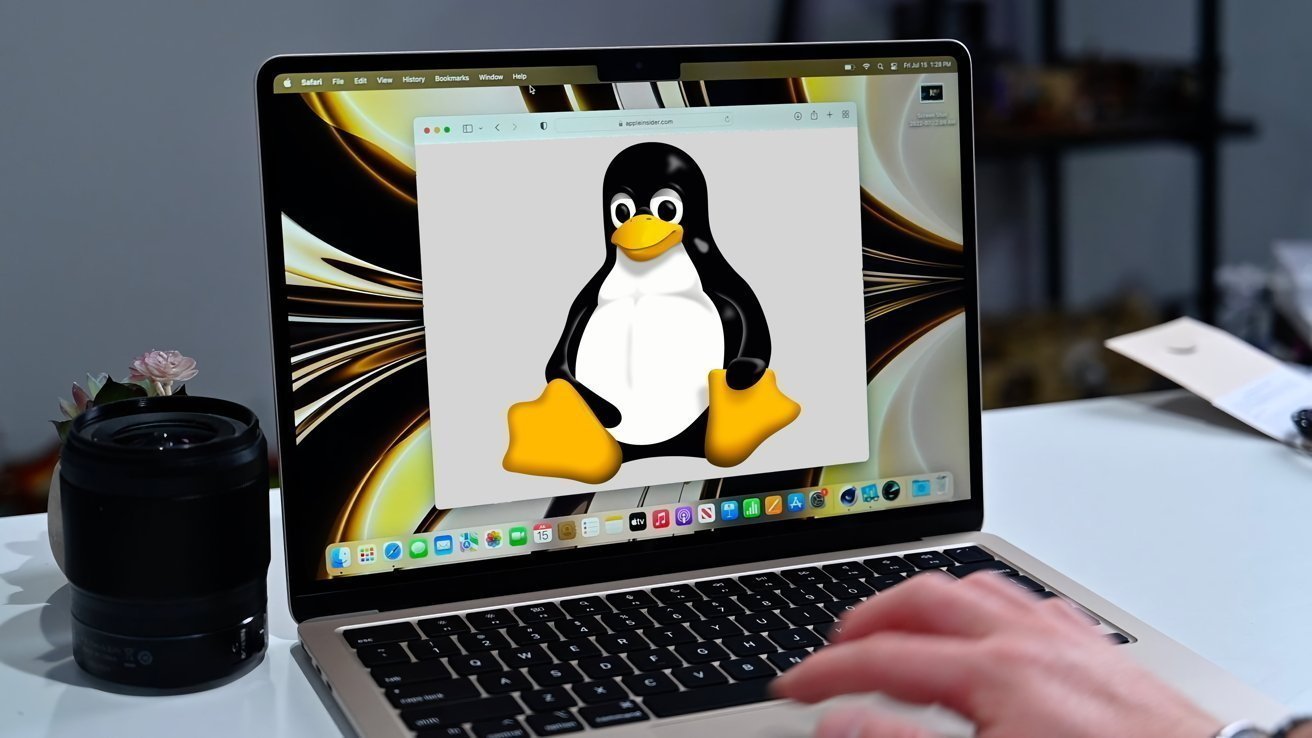
While Apple Silicon Macs natively only support macOS, that hasn't stopped enthusiasts from finding a way to install Linux on M3-based machines, with big caveats.
As far back as 2021, users have been trying to port Linux to Apple Silicon machines. Eventually, the operating system was made usable on Macs equipped with Apple's M1 and M2 chips. With some effort, you can even run it on the original Mac Studio.
The Asahi Linux project has the goal of making the Linux kernel compatible with Apple Silicon, making the operating system available to users and gamers with Macs featuring an M-series chip.
As Asahi Linux is already compatible with M1 and M2-based Macs, Linux users have made efforts to port the operating system to the M3 chip, and they seem to have succeeded.
On Monday, Asahi Linux contributor IntegralPilot posted a photo of Fedora 43 Asahi Remix running on a Mac with an M3 chip with KDE Plasma. They claim that other users have managed to get Linux working on computers with Apple's M3 Pro and M3 Max chips, but there's a catch.
While the operating system does technically run, it's far from ideal for end users in its current state.
"It's definitely still in a really early state," says one of the driver creators for the M3 Asahi Linux project. "Basically ONLY the internal SSD, display, keyboard, and trackpad work."

Fedora 43 Asahi Remix running on an M3-based Mac with KDE Plasma. Image Credit: IntegralPilot
IntegralPilot added that the operating system was using "LLVMpipe (software rendering)" as those affiliated with the project's development haven't tackled the GPU yet. This is likely to be a big project, and will take a significant amount of time.
The Asahi Linux project is a collaborative effort, with Reddit users noopwafel and Shiz working with IntegralPilot to get everything working on the M3 chip. There's even some good news about the M4 and M5 chips: there are allegedly "contributors already working on M4 and have basic Alpine Linux booting."
IntegralPilot was also mentioned in a December 2025 video by Asahi Linux developer Sven Peter, who outlined the difficulties with porting Linux to M3 and newer chips. Relative to the M2 and M1 chips, the M3 features minor changes related to the input controller and NVMe, with the PD controller also being moved from I2C to SPMI.
Regarding the M4 and M5 chips, Peter explains that the hardware features additional restrictions and changes that make development more difficult. Even on M3-based machines, the installation is by no means a simple process.
In short, it's not something the average user should attempt to do now, unless they want an operating system without proper support for the M3 GPU. And even after the full release, stability will be questionable for some time.
While it was evidently possible to get Linux booted on the M3, the chip's GPU presents a significant issue, as there's still no support for graphics acceleration at the time of writing. It's possible to play Doom with Linux on the M3 chip, though that's hardly a surprise, given that the game can even run on HDMI adapters.