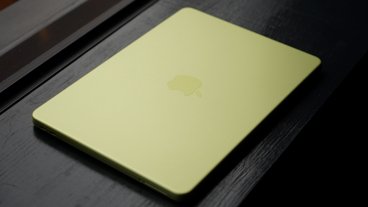

In this week's "Reboot" column, Apple's MacBook Neo is an impressive downgrade, the gaming push continues, and scribling on the Sydney Opera House.
Reboot is a weekly column covering some of the lighter stories within the Apple reality distortion field from the past seven days. All to get the next week underway with a good first step.
This week, Apple stepped in to fight Anthropoc's supply-chain risk designation in the United States, an apparent FBI or CIA hacking toolset has been spotted on the black market, and a retirement fund has sued Apple over a decade of apparent "monopolistic conduct." Luckily, there were some bright spots, too.
Upgrade launches and pointed downgrades
It's hard not to escape the half-week of Apple launches, given the massive build-up before the Apple Experience on Wednesday.
In three days, Apple brought out a ton of new products, and the vast majority were the traditional spec-bump update. The phenomenon where Apple retains the same design and general specification it had before, but bumps up a few of the core specs.
That consisted of the iPhone 17e with its new A19 chip and MagSafe, the iPad Air gaining M4, the M5 MacBook Air, and the MacBook Pro with M5 Pro and M5 Max chips. We can also add the Studio Display to the pile, thanks to its own chip update.
But there are still two products that are not what anyone would call a spec-bump. In some ways, they are a targeted downgrade.
The obvious discussion point is the MacBook Neo, which is Apple's attempt to take on Chromebooks and cheap Windows notebooks with its own value proposition. It's effectively a MacBook Air that has many different cost-cutting measures to get it down to $599.
Somehow, Apple managed to create something that still works as a MacBook. It may not have the performance of a MacBook Pro or a modern MacBook Air, but it's still better than a five-year-old M1 MacBook Air.
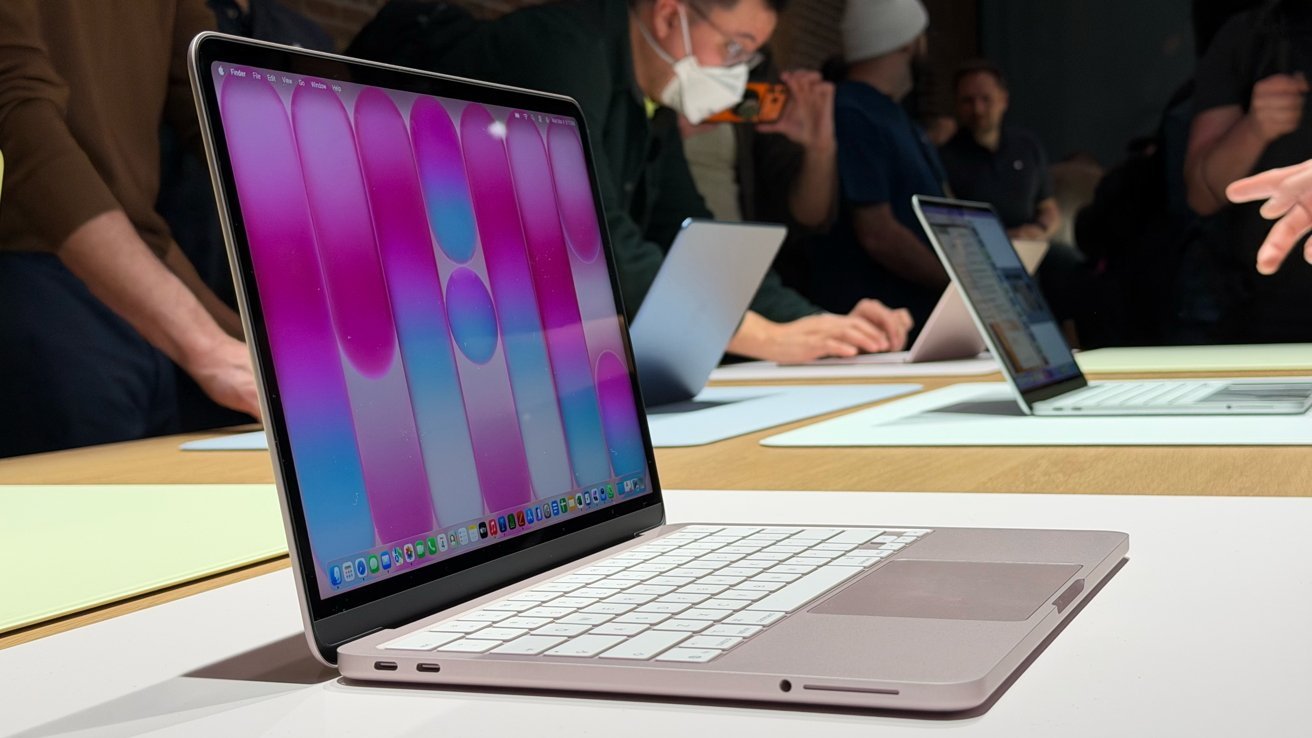
The MacBook Neo is a downgrade that works for its price point.
The big thing is its shift to use the A18 Pro instead of an M-series chip. The brains of an iPhone 16 Pro powering a notebook Mac, giving it enough performance to handle light workloads, such as lounging in a Starbucks watching YouTube videos.
You may be wondering why Apple went down this road in the first place instead of reusing older M-series chips. It's simple: Apple is still producing A18 Pro chips, while it's not made any M1 chips for years.
There's enough performance to make it go toe-to-toe with an M1 MacBook Air, so obviously Apple is on the right track here.
The other downgrade in the range is the Studio Display XDR. The successor to the Pro Display XDR, it provides many of the benefits, including high levels of brightness, support for P3 and Adobe RGB wide color gamuts, and ProMotion support.
The downgrade here is in size. The Pro Display XDR from 2019 had a 32-inch display that ran at a 6K resolution, while the new model matches the Studio Display with a 27-inch panel and a 5K resolution.
While the MacBook Neo is a downgrade that makes sense, the Studio Display XDR is less clear. Over the Studio Display, you're paying double the cost for double the brightness, more colors, up to 60Hz more, and that's about it.
The Pro Display XDR was a giant screen with many benefits that tempted buyers with massive budgets to pay for the upgrade. The display market has changed in that six years, and consumers will find quite a few suitable alternatives if they still want a big monitor for their Mac.
Last week's Reboot covered the Apple Experiences' potential to change Apple's shipment schedules, the continued sightings of miniature Macintoshes, and how that Godzilla drone show set an oddly-specific world record.
Apple's GDC field trip
Apple doesn't seem like a gaming powerhouse, but it is. The sheer size of the iPhone gaming marketplace makes it one by default.
It has also made strides to try and make gaming on a Mac more of a thing in recent years. Its courted big-name developers and introduced tools like the Game Porting Toolkit, all to try and make its desktops and notebooks a better place for gaming.
As part of that effort, Apple is heading off to the GDC Festival of Gaming, a mild rebranding of the Game Developers Conference. Taking place at the familiar Moscone Center in San Francisco from March 9, Apple will be leading a trio of sessions on Wednesday.
The first is "Built for Games: Explore Apple Hardware and Software for Game Developers," namely showing what tools are available and how games can be made across Apple's multiple platforms.
This is arguably the most instructive of the three sessions, as the other two are more about how specific games made it on Apple's hardware.
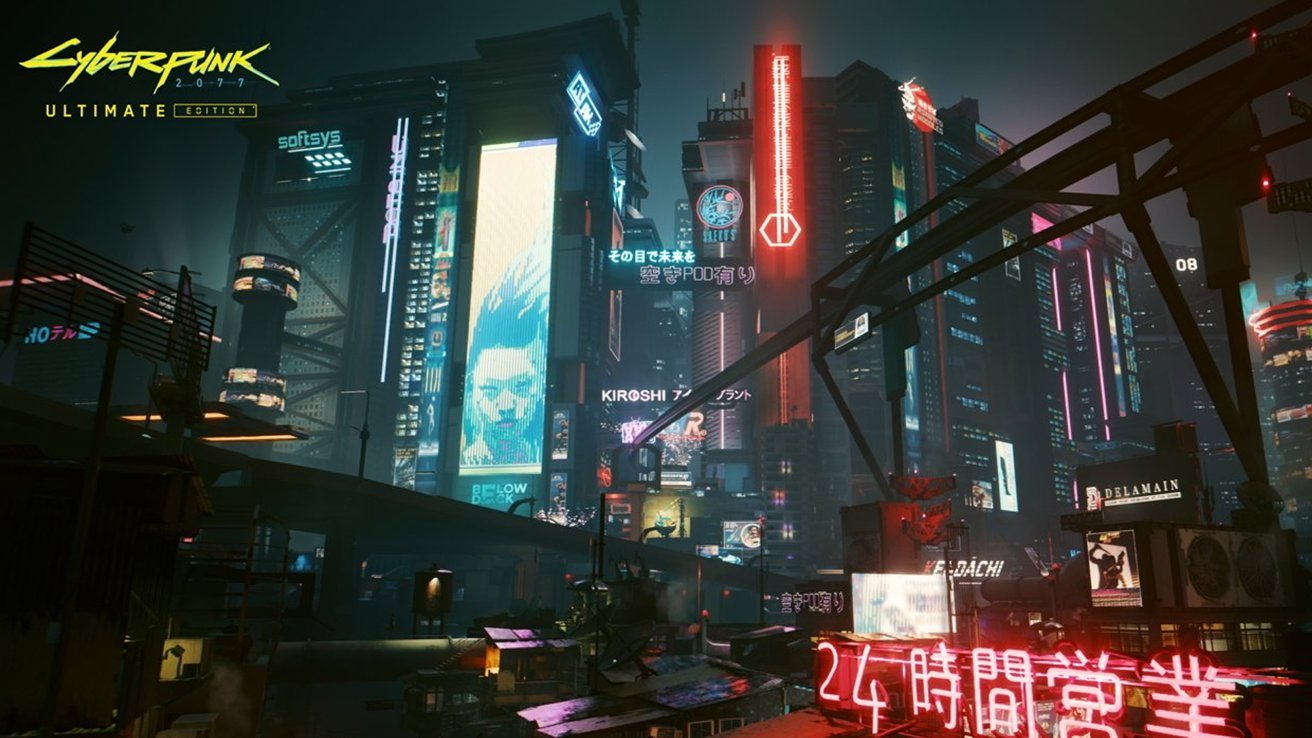
Cyberpunk 2077 is on Mac.
That includes the work that went into making Cyberpunk 2077 to Mac, with it covering the GDC Game Production Technology and Production tracks. The other, "Maximize your Game's Potential on the App Store" will feature Black Salt Games, the makers of the Lovecraftian fishing horror game Dredge.
Admittedly, I have a bit of an interest in these talks, as I'm in the midst of making a game, documenting the progress on this very site. But, as much as I would've loved a massively expensive trip to the United States to attend it in person, I will have to instead wait for the inevitable release of talks via YouTube in the future.
Apple has spent a few years trying to urge game developers to actually sell their wares on Mac already. Evidently, it still believes it can be a success here, and if it can convert more to make games that appear in the App Store, it'll consider the initiative to be a success.
Digital graffiti in Australia
Defacing a public monument will get the average person in trouble. Less so if you're Apple and do it in a completely non-destructive manner.
As part of its 12-month collaboration supporting arts programming, Apple is enabling anyone to scribble on the "sails" of the Sydney Opera House. Legally, of course.
The effort, from March 25 to March 27, is titled "Illuminating Creativity" and will project various static and moving artworks onto the roof of the building.
There will be some professional artwork commissions from emerging Australian artists, all produced using Procreate on an iPad. But if you're a dab hand with an Apple Pencil, you can join in too.
Apple is accepting submissions from the public from March 9 to 15, with selected pieces incorporated into the display. Apple's even hosting free Today at Apple sessions for the initiative.
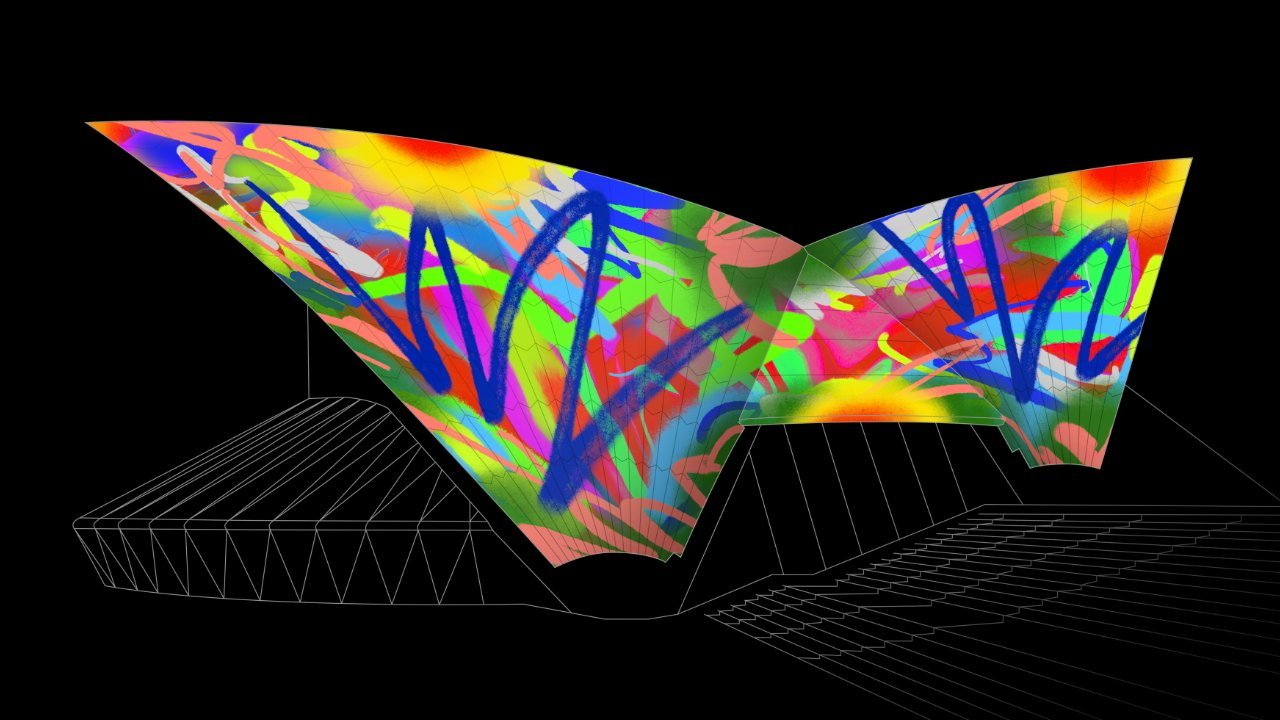
Apple's example image for the Sydney Opera House iPad art initiative — image credit: Apple
This isn't the first time that Apple has put artistic power into people's hands using a projector and a dream. Over Christmas 2025, Apple projected images of Christmas trees designed by iPad owners onto the towers of its Battersea headquarters in London.
It's a nice idea, and certainly one that will see many different designs submitted by the public. For those who take part, there's a slim possibility of being picked for the display, but there's still a chance.
Your humble writer certainly wouldn't get picked. Partly because they're on the opposite side of the world, partly because they lack the drawing ability beyond creating a stick man.
Then again, if the example image supplied by Apple is anything to go by, even that might get picked.