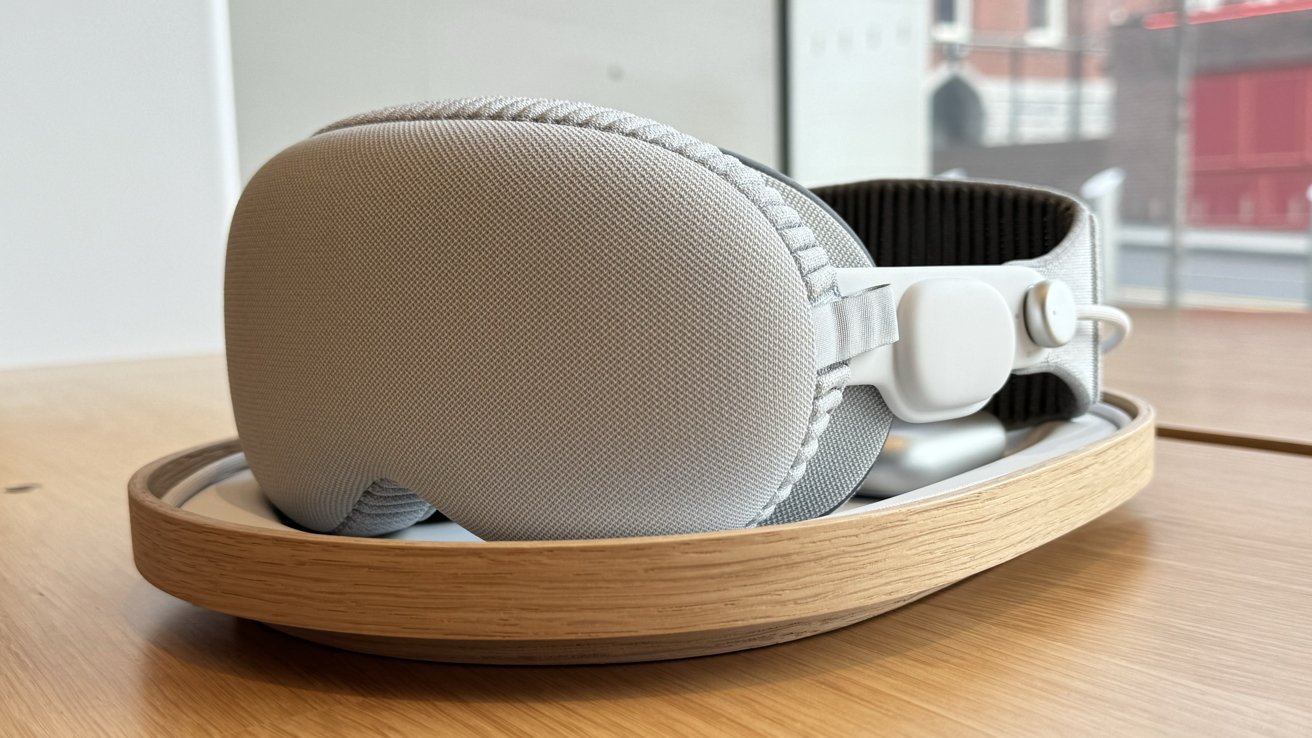
Demos of the Apple Vision Pro were reportedly routinely given by poorly-trained staff ordered to focus on sales targets, in a reverse of what Steve Jobs intended for Apple Stores.
Back in the day, if you asked an Apple Store employee what they recommended, they would often suggest a different store if that was the best option. They were driven by what the customer needed and had no need to care how many AppleCare+ subscriptions they sold that day.
Flash forward to today and Apple Stores are trying to unionize in order to protect their staff from the working conditions. And the Apple that claims to be for the rest of us, is backing illegal union-busting practices.
Now a new book claims that this deterioration in the Apple Stores has finally bitten the company in the ass. As spotted by Wired, author Noam Scheiber claims in "Mutiny: The Rise and Revolt of the College-Educated Working Class" that the Apple Vision Pro flopped because of how badly run Apple retail is.
Unlike the iPhone or iPad, Apple Vision Pro really had to be demonstrated in stores because the device had to be fitted correctly. Initially, hundreds of retail staff were trained at Apple Park, and they were excited.
"Coming back from Cupertino, it was genuinely the coolest f***ing thing I've ever seen," said employee Megan Leigh. "I cannot express enough how insanely brilliant this device is."
But where Leigh is reportedly a long-time employee, Apple Stores have steadily moved toward hiring temporary staff. So employees who had never worked during an Apple launch were now faced with a complex one.
Apple reportedly gave staff a script to follow that ran for over a dozen iPad screens. Before they could even follow that, the staff had to correctly scan faces, and choose the right light seal — at least once even when demoing to a child whose face was too small for any of the seals.
"I got a 20-minute demo," Sam Hernandez, another long-term Apple sales person said. "I got maybe 30 minutes to review the script, did a demo on one person who had went to Cupertino, and was thrown from the nest."
Apple Stores under Tim Cook
Steve Jobs's plans for the Apple Store were at least idealistic, and perhaps impractical. Having none of the regular retail pressure on workers to sell more certainly meant that the stores would underperform financially.
But then when Tim Cook took over, he brought in John Browett to run the stores.
Every British person who read this news in AppleInsider winced because Browett previously ran the UK's Dixons store. Its closest equivalent in the US is Best Buy, but Dixons had a reputation for shockingly poor service and pile 'em high cheap products.
For example, one AppleInsider staffer who had to buy a PC, asked a Dixons retail expert what the difference was between two models. She turned to the shelf and read the label aloud, before claiming with no apparent justification that of course the more expensive one was the better.
Browett was the antithesis of what Apple Stores had been, but he must've talked the talk because Tim Cook praised him for everything Dixons wasn't. "Our retail stores are all about customer service," Cook said on hiring him in 2012, "and John shares that commitment like no one else we've met."
Tim Cook should get out more. For ten months, Browett worked to change Apple Stores into regular retail operations, before even Cook realised what was happening and got rid of him.
Browett was replaced by Angela Ahrendts, who seemed to be a better fit with her background in high-end retail fashion. She appeared to concentrate more on redesigning stores than on specific retail issues, but whatever she accomplished, she left at the end of her initial contract.
Deirdre O'Brien took over in 2019 and remains in charge of the Apple Stores to this day. She hasn't undone the changes brought by Browett or Ahrendts, and instead has implemented the illegal union-busting practices Apple now employs.
O'Brien's argument against unions is that Apple has an "open and collaborative direct engagement" with staff that is "fundamentally changed" when stores unionize.
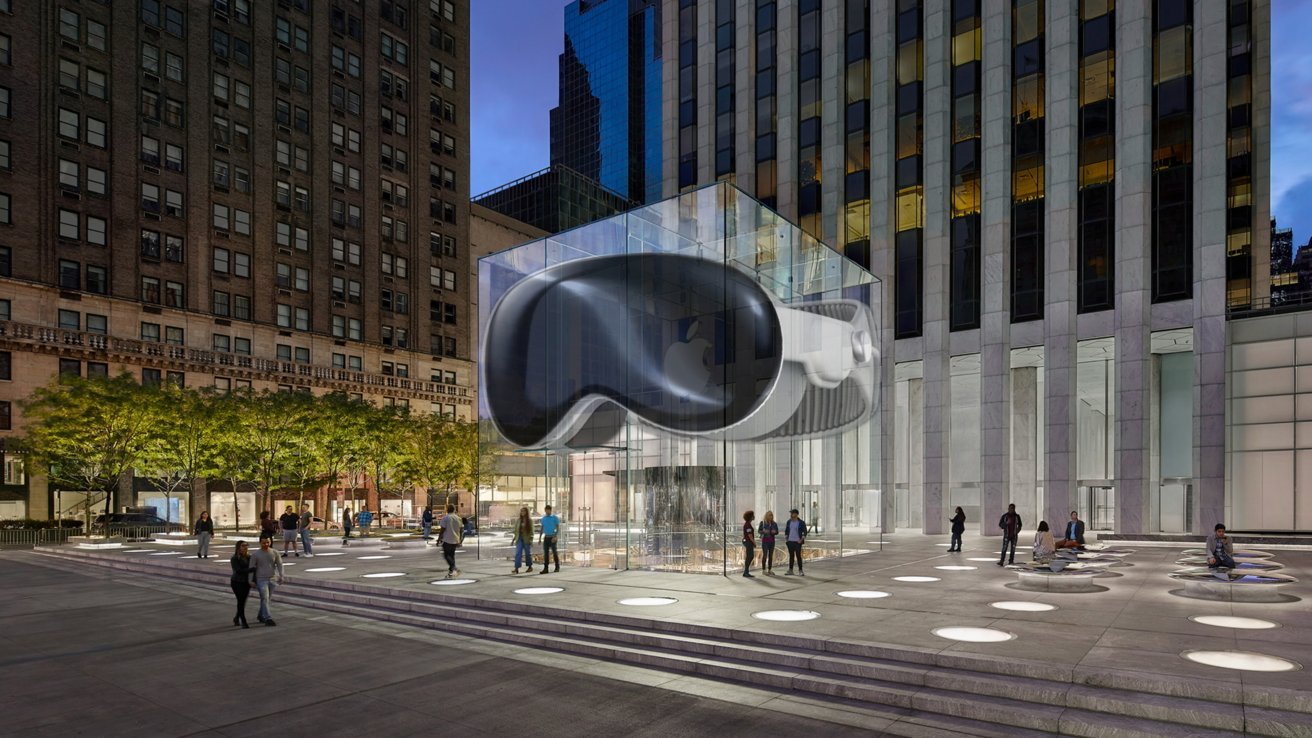
Apple spent a lot on the outside of stores — this is Apple Fifth Avenue at the Apple Vision Pro launch — but should have spent more on the staff inside — image credit: Apple
"And I worry about what it would mean to put another organization in the middle of our relationship," she said to staff. "An organization that doesn't have a deep understanding of Apple or our business, and most importantly, one that I do not believe shares our commitment to you."
Everything O'Brien says there would have been true when Apple Stores first opened. They are not true now. Among the many complaints Apple Store staff have, one said in 2022 that complaining about anything was like "writing to Santa."
Noam Scheiber's book is about young college graduates at many companies as well as Apple. It's about why they are turning to unions for help, and it's about the impact on all of corporate America.
But for Apple and in particular the Apple Vision Pro, the book argues that elaborate plans for demonstrating the device kept failing at the store level.
Then reportedly Apple Store managers believed that the Apple Vision Pro would really sell itself. One manager is said to have claimed that, "We know that if we put the thing on someone's face, they're going to have a good experience."
This manager said that to Megan Leigh, who had come back from Cupertino so enthused. Yet she had to tell the manager that "I was like, 'We're not going to agree on that. You're entirely wrong.'"
The book is not the first to claim that the Apple Vision Pro is a flop, even if it is the first to put the blame on Apple's long-term degradation of its previously famous store experiences. In January 2026, analysts described the headset as a rare failure for Apple, although at the same time it has reportedly earned the company more than $157 million.