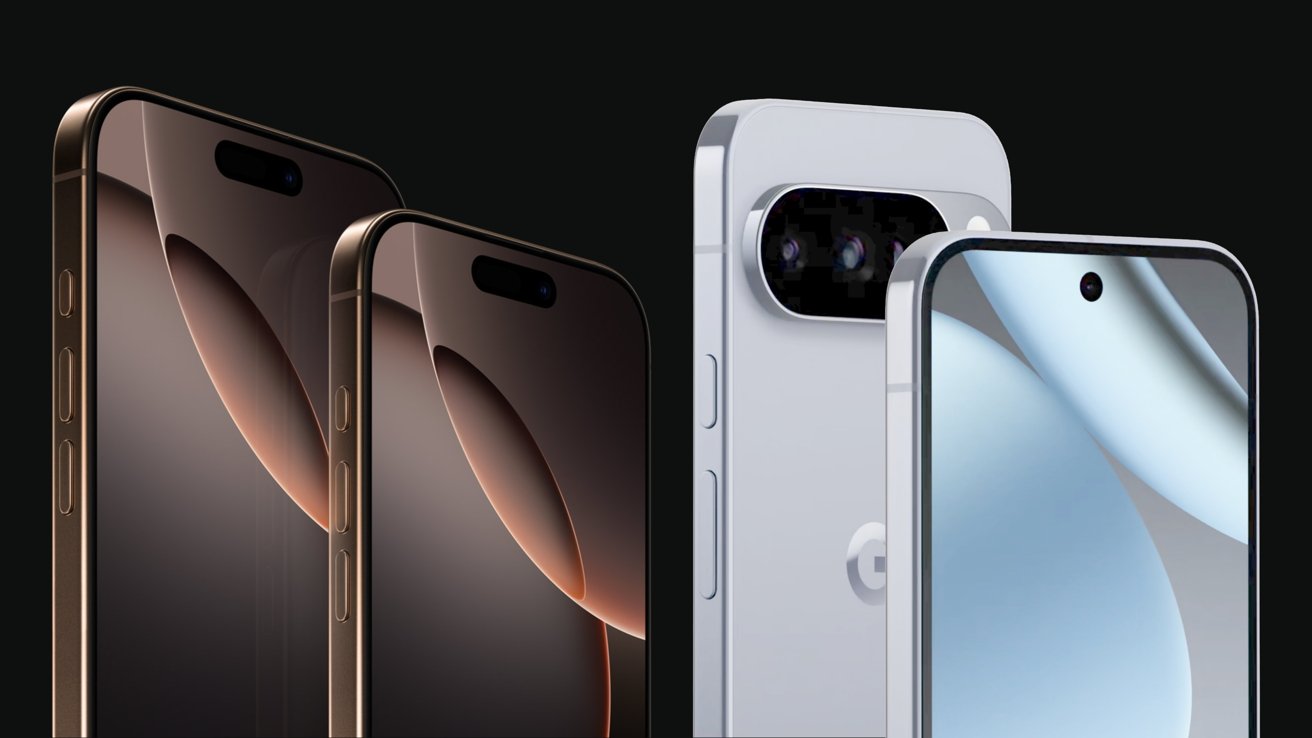
Google's Pixel 10 Pro is here, mere weeks before Apple's iPhone 17 Pro is expected to debut in September. Here's how it compares against Apple's current top-of-the-line model, the iPhone 16 Pro.
The timing of the Pixel 10 Pro release indicates it's another attempt by Google to disrupt the usual cycle of iPhone upgrades. The company similarly launched its Pixel 9 lineup in August 2024, less than a month before the iPhone 16 was announced.
The Google Pixel 10 lineup consists of the standard Pixel 10, the Pixel 10 Pro, Pixel 10 Pro XL, and Pixel 10 Pro Fold.
Google, much like Samsung, beat Apple to the foldable smartphone market when it launched the original Pixel Fold in 2023. The company continues to roll out new foldables, like the latest Pixel 10 Fold, while Apple is still said to be working on its iPhone Fold.
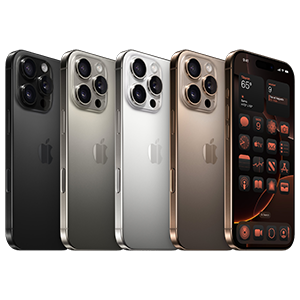
iPhone 16 Pro
The Pixel 10 Pro, meanwhile, is aimed directly at the iPhone 16 Pro and the upcoming iPhone 17 Pro. As a high-end smartphone, the Pixel 10 Pro offers more RAM and features better cameras compared to the standard Pixel 10.
iPhone 16 Pro vs Google Pixel 10 Pro — Specifications
| Specifications | iPhone 16 Pro |
Google Pixel 10 Pro |
|---|---|---|
| Price (starting) | $999 |
$999 |
| Dimensions (inches) | 5.89 x 2.81 x 0.32 |
6 x 2.8 x 0.3 |
| Weight (ounces) | 7.03 | 7.3 |
| Processor | A18 Pro | Google Tensor G5, Titan M2 security coprocessor |
| Storage | 128GB 256GB 512GB 1TB |
128GB 256GB 512GB 1TB |
| Display type | 6.3-inch Super Retina XDR ProMotion Always-on display TrueTone |
6.3-inch Super Actua display Smooth Display (1-120 Hz) |
| Resolution | 2622 x 1206 at 460 ppi |
2856 x 1280 at 495 ppi |
| Biometrics | Face ID | Fingerprint Unlock, Face Unlock |
| Connectivity | 5G (Sub-6GHz and mmWave) Gigabit-class LTE Wi-Fi 7 Bluetooth 5.3 Ultra Wideband USB-C Satellite SOS |
5G (Sub-6GHz and mmWave) Gigabit-class LTE Wi-Fi 7 Bluetooth 6 Ultra Wideband USB-C Satellite SOS |
| Rear cameras | 48MP Wide 48MP Ultra Wide 12MP Telephoto with 5x optical zoom |
50MP Octa PD Wide 48MP Quad PD Ultra Wide 48MP Telephoto with 5x optical zoom |
| Video | 4K Dolby Vision at 24/25/30/60/100/120 FPS 1080p Dolby Vision at 25/30/60/120 FPS 720p Dolby Vision at 30 FPS Spatial Video at 1080p at 30 FPS Cinematic Mode Action Mode |
8K at 24/30 FPS 4K at 24/30/60 FPS 1080p at 24/30/60 FPS Slo-mo up to 240 FPS Optical image stabilization Fused video stabilization |
| Front camera | 12MP TrueDepth with Autofocus | 42 MP Dual PD with Autofocus |
| Audio | Stereo speakers 4 studio-quality microphones Spatial Audio Wind noise reduction Audio Mix |
Stereo speakers 3 microphones Noise suppression Spatial Audio |
| Battery size | Up to 27 hours video playback | 24+ hours |
iPhone 16 Pro vs Google Pixel 10 Pro — Design and dimensions
The iPhone 16 Pro echoes the design of its predecessor, with a frame made of grade 5 titanium (Ti-6Al-4V) and a matte glass backplate. It also maintains the Action button and has the tried-and-true triple-camera design on the rear.
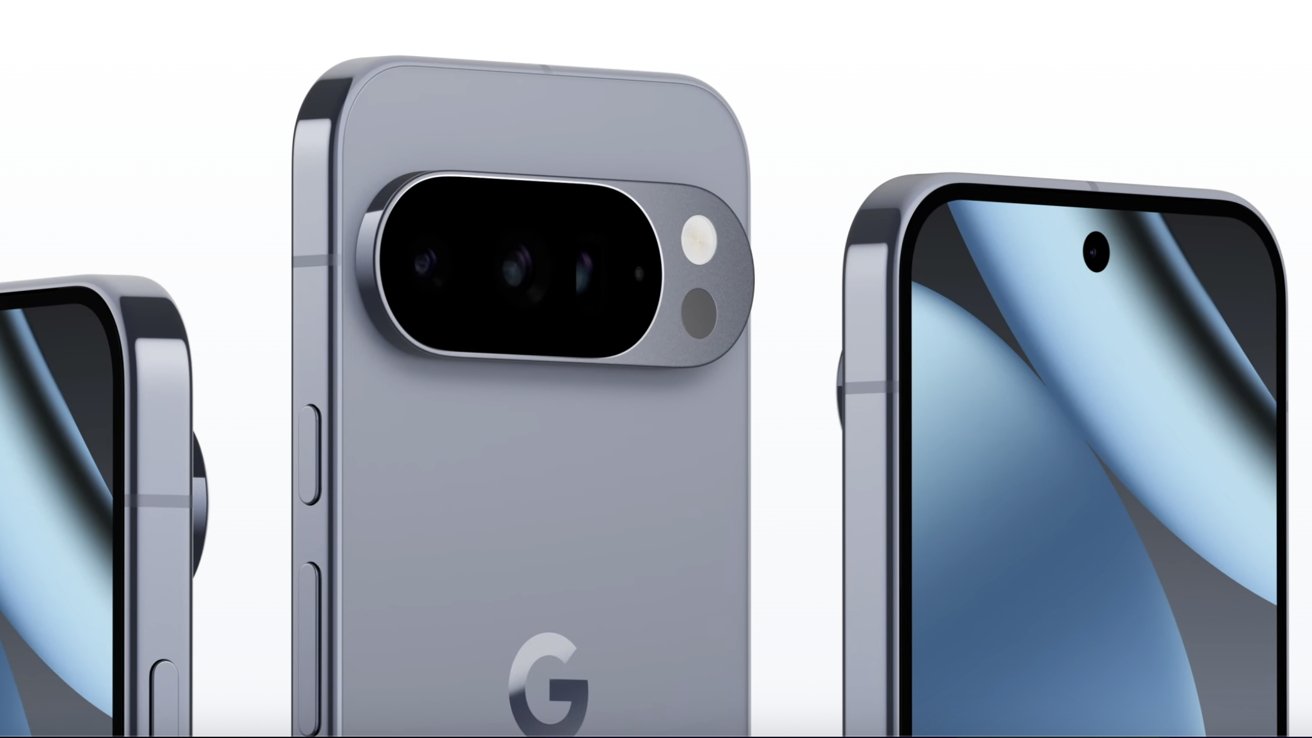
The iPhone 16 Pro and Google Pixel 10 Pro are both available with a 6.3-inch display. Image Credit: Google
Apple introduced Camera Control, a capacitive button with pressure-sensing technology, with the iPhone 16. It's located on the same side as the Power button and can be used to open the Camera app, control camera functions, and launch Visual Intelligence.
Google's Pixel 10 Pro doesn't have a dedicated camera button, which might be a good thing, given that Apple may discontinue their's after the iPhone 17 range. Google, however, did follow what Apple did with the iPhone 14, as all Pixel 10 Pro models sold in the United States are now e-SIM only.
The iPhone 16 Pro is slightly larger than its predecessor, with a display measuring 6.3 inches rather than 6.1 inches. Compared to the Google Pixel 10 Pro, the iPhone 16 Pro is relatively similar in terms of dimensions. Both devices feature a 6.3-inch display, though the iPhone 16 Pro is imperceptibly thicker and smaller.
Pixel 10 Pro
Apple made the iPhone 16 Pro weigh in at 7.03 ounces. The Pixel 10 Pro is heavier than its Apple counterparts by around a fifth of an ounce, coming in at 7.3 ounces.
iPhone 16 Pro vs Google Pixel 10 Pro — Display
The iPhone 16 Pro has a 6.3-inch Super Retina XDR display with an OLED panel, which is also an always-on screen with HDR and TrueTone support.
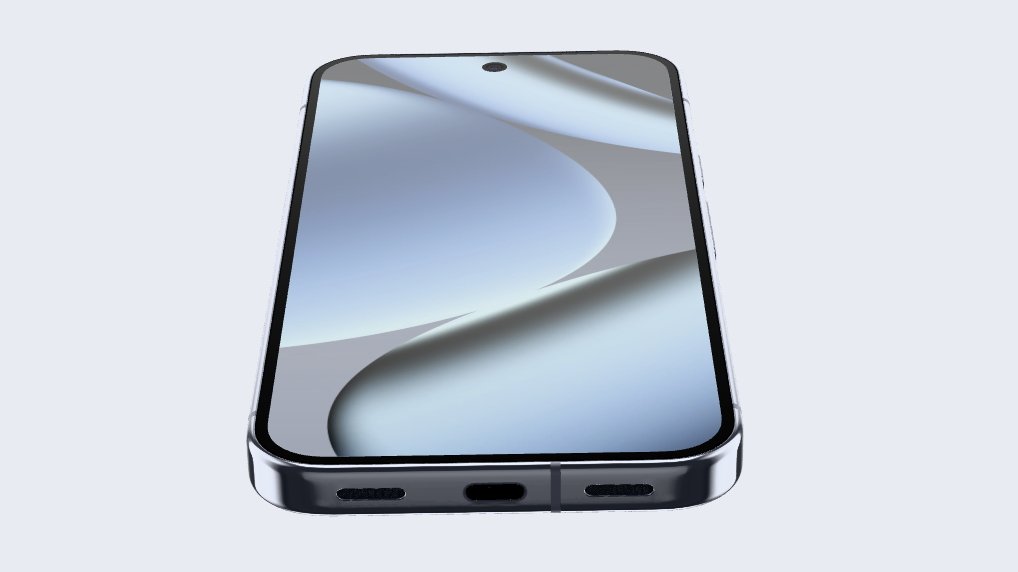
Both the iPhone 16 Pro and Pixel 10 Pro display support a variable refresh rate of up to 120Hz. Image Credit: Google
ProMotion is available as well, offering a dynamic refresh rate of up to 120Hz depending on the content being viewed. The Pixel 10 Pro also supports refresh rates of up to 120Hz, though Google calls it "Smooth Display" rather than ProMotion. Overall, Google has opted for a similar approach with its smartphone displays.
The iPhone 16 Pro features a resolution of 2622 by 1206 pixels. Google's Pixel 10 Pro, meanwhile, has a display resolution of 2880 x 1200 pixels.
On a pixel-density level, Apple's 460 pixels is beaten by the Google Pixel 10 Pro. Google manages 495ppi for the Pixel 10 Pro, allowing for 35 additional pixels per inch.
For brightness, Apple claims the iPhone 16 Pro can manage 1,000 nits for typical content, 1,600 nits of peak brightness for HDR, and 2,000 nits peak brightness for outdoor usage. Its display has a minimum brightness of 1 nit.
Google, meanwhile, says the Pixel 10 Pro can handle up to 2,200 nits for HDR content and 3,300 nits at peak. The Pixel display is better than its iPhone counterpart in this regard.
All of the phones have a similar contrast ratio — 2 million to 1.
iPhone 16 Pro vs Google Pixel 10 Pro — Cameras
On the back of the iPhone 16 Pro are a trio of cameras, which has been the case for every "Pro" iPhone model since 2019.
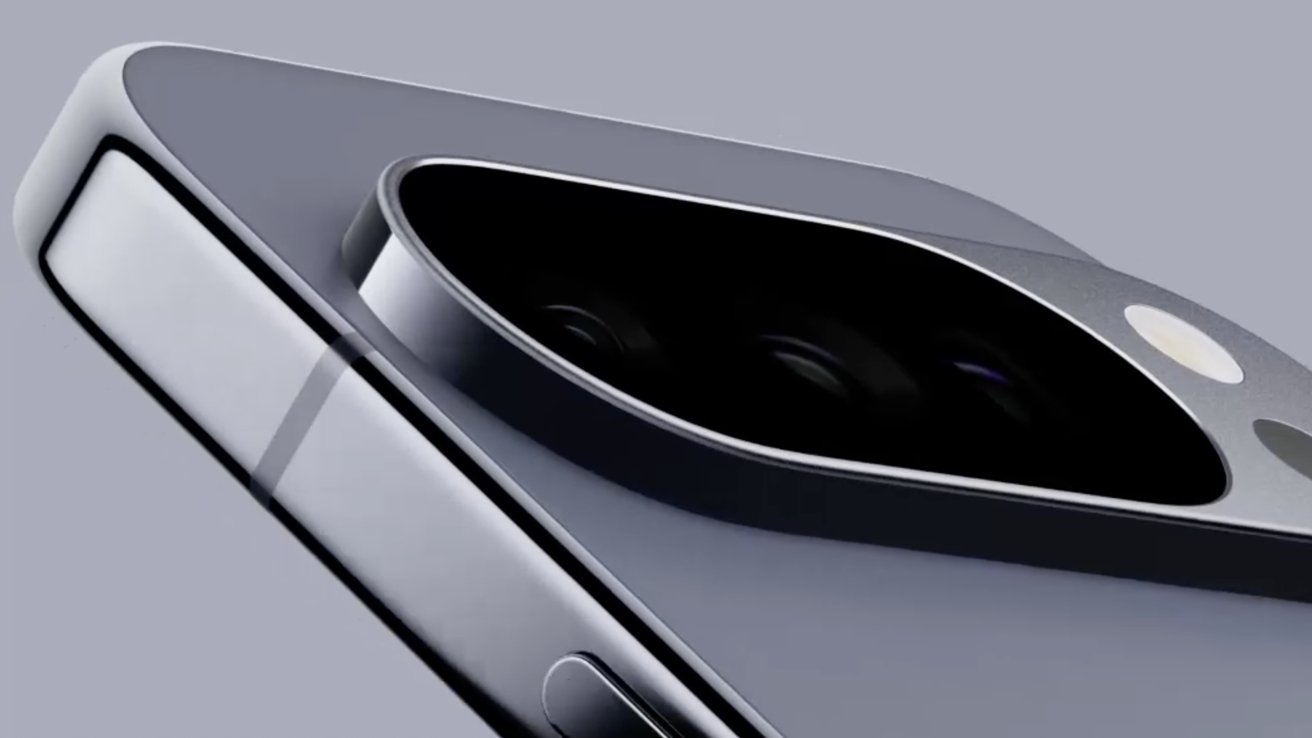
The Pixel 10 Pro features cameras comparable to the iPhone 16 Pro. Image Credit: Google
The main Fusion camera is equipped with a 48-megapixel sensor that features second-generation sensor shift optical image stabilization. It also offers support for superhigh-resolution photos — both 24MP and 48MP.
There's also the 48-megapixel Ultra Wide camera with a 120-degree field of view and support for Hyper Focus Pixels. It's a considerable improvement from the 12MP sensor of the iPhone 15 Pro Max.
The telephoto camera, meanwhile, features a seven-element lens with support for 3D sensor-shift optical image stabilization and autofocus. It uses a tetraprism lens arrangement for 5x optical zoom. This is a fixed 120mm focal length that's 5x the main camera. The tetraprism design is effectively a carryover from the iPhone 15 Pro Max, though it's now available on the smaller iPhone 16 Pro.
Video-wise, the iPhone 16 Pro can capture video in 4K Dolby Vision at up to 120fps, 1080p at up to 120fps, and 720p at 30fps. There's a 4K HDR Cinematic mode at up to 30fps, an Action mode at 2.8K up to 60fps, and Spatial Video at 1080p 30fps.
More professional-quality video features include support for Log video recording and the Academy Color Encoding System, and macro photo and video capabilities. Even more useful, the iPhone 16 Pro can record ProRes video at 4K 60fps directly to an external hard drive.
The iPhone 16 Pro camera system can also record slow-mo videos at 1080p up to 240 fps, and 4K up to 120fps. 8MP still photos can be taken while recording 4K video.
Additionally, the iPhone 16 Pro features a LiDAR sensor, which is useful for focusing in low-light situations, capturing additional depth data, and scanning spaces.
Google's camera choices start with a 50MP Octa PD Wide camera, accompanied by a 48MP Quad PD Ultra Wide camera with a 123-degree field of view.
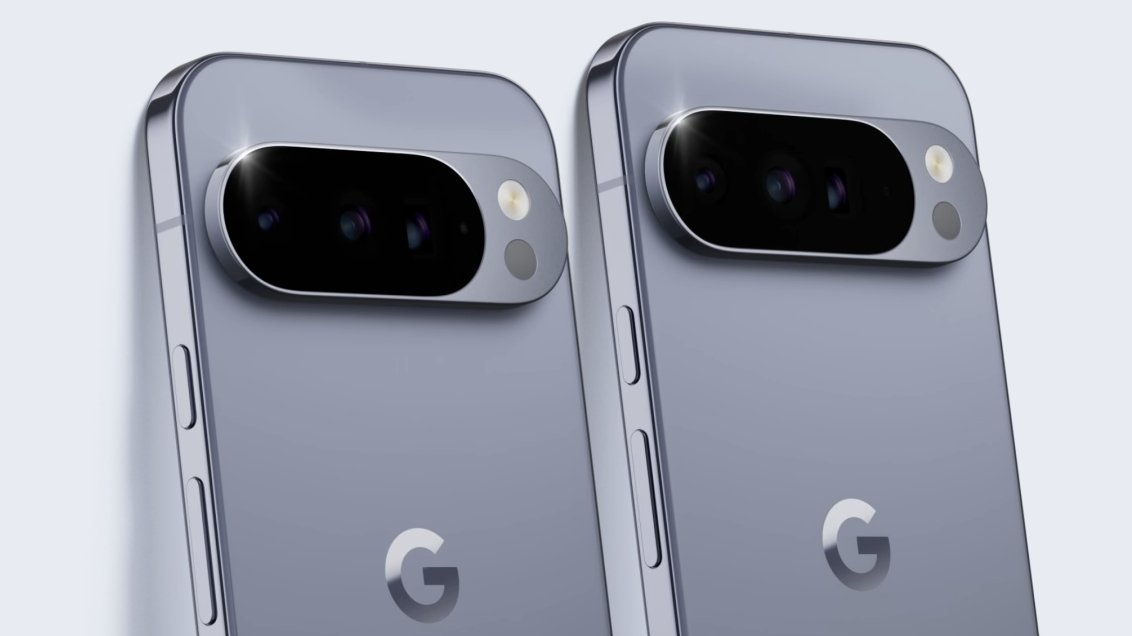
The Pixel 10 Pro features three rear cameras, as does the iPhone 16 Pro. Image Credit: Google
Along with the Wide and Ultra Wide cameras, the Pixel 10 Pro features a 48MP Quad PD Telephoto camera. It offers a 5x optical zoom, though Google says all of the rear cameras on the Pixel 10 Pro support "Pro Res Zoom" up to 100x, enabled by artificial intelligence.
The rear cameras also have optical and electronic image stabilization for the Wide and Telephoto sensors. A Multi-zone laser detect autofocus (LDAF) is also on the back, along with a spectral and flicker sensor.
The Pixel 10 Pro video features include 8K video at up to 30fps, 4K 60fps HDR support, cinematic blur and panning, 240fps slo-mo, and even Super Rez Zoom video. On the front of Google's devices is an impressive 42MP Dual PD selfie-camera, capable of recording 4K video at 30 or 60fps.
The TrueDepth camera array in the top of the iPhone 16 Pro, meanwhile, houses a 12-megapixel camera with autofocus. Capable of 4K 60fps video, HDR, ProRes, and other pro-level features, it also has depth mapping capabilities which are used for Face ID and other applications.
Overall, the Pixel 10 Pro offers cameras similar to its 2024 predecessor. The iPhone 16 Pro features an improved Ultra Wide and Telephoto camera relative to the iPhone 15 Pro.
While we know the iPhone 16 Pro's 24MP and 48MP photo output options, Google has only provided the megapixels of the camera sensors in the Pixel 10 Pro. "Camera image resolution output may be less when using default settings," says the company's website.
The higher 50 megapixel count of the Pixel 10 Pro's main rear camera will be useful for image cropping, though the images themselves may not be more detailed than those taken with an iPhone 16 Pro.
iPhone 16 Pro vs Google Pixel 10 Pro — processors
The iPhone 16 Pro is equipped with Apple's A18 Pro chip, built using TSMC's N3E 3nm process. It features a six-core CPU with 2 performance and 4 efficiency cores. The CPU is joined by a 6-core GPU and a 16-core Neural Engine, which handles on-device processing for Apple Intelligence features.
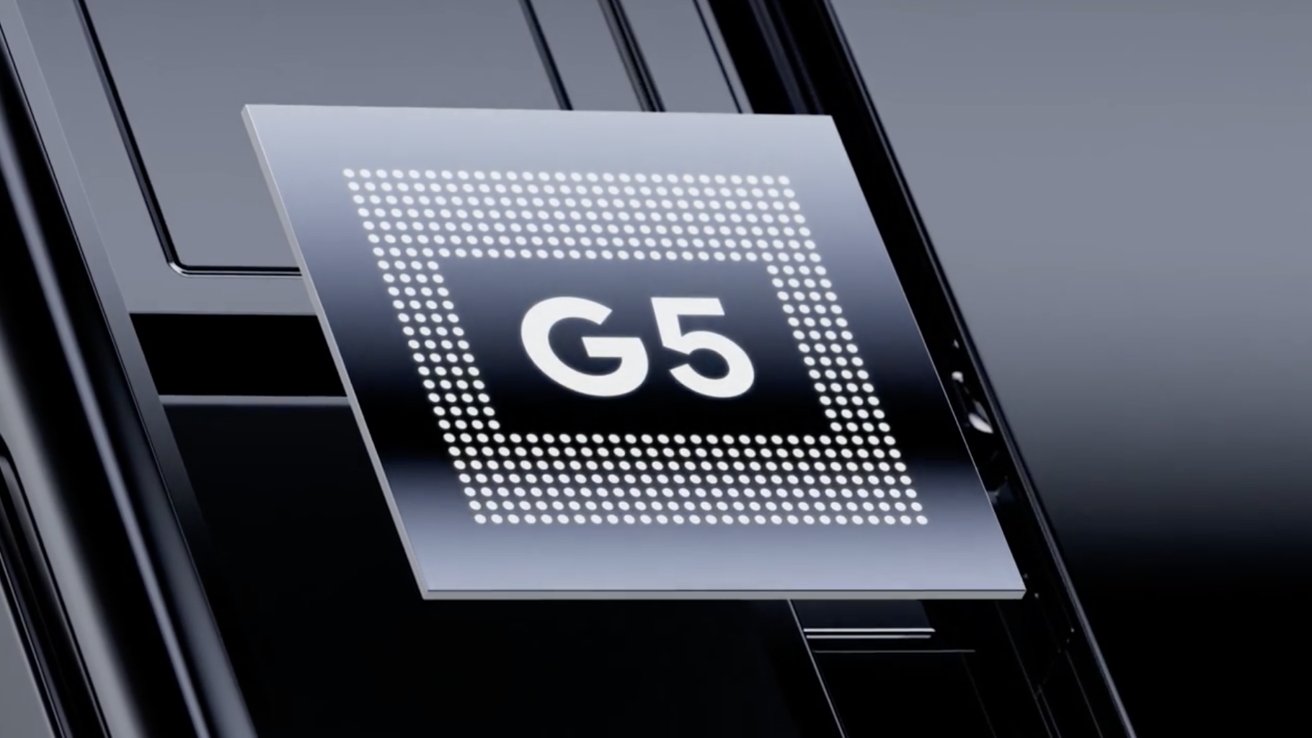
The Pixel 10 Pro features Google's Tensor G5 chip. Image Credit: Google
The A18 Pro chip, much like its predecessor, has 8GB of RAM. Google's Pixel 10 Pro, meanwhile, ships with 16GB, meaning it has twice as much RAM as the top-of-the-line iPhone 16 Pro.
While the processing hardware of Google's Pixel phones has so far only been produced by Samsung, the Pixel 10 Pro now features a TSMC-made chip, much like the iPhone. The Google Tensor G5 features one big performance core, five mid-performance cores, and two efficiency cores.
For reference, the Google Tensor G4 chip featured a 1-3-4, with one powerful core flanked by three mid-size cores and four low-powered cores. This means the G5 has two more mid-performance cores, but fewer efficiency cores than its predecessor.
According to Google, the CPU of the Tensor G5 is 34% faster on average than the G4. There's also a 60% performance increase for on-device AI processing, which will undoubtedly prove useful for the features Google previewed with the launch of the Pixel 10 Pro.
The 2024 Google Pixel 9 Pro achieved Geekbench single-core and multi-core CPU performance scores of 1876 and 4336 points, respectively. Assuming that Google is being truthful, and the Tensor G5 in the Pixel 10 Pro is 34% faster, it would score around 2400 points in single-core CPU performance, and approximately 6000 points in multi-core CPU performance.
The iPhone 16 Pro, meanwhile, has a Geekbench score of 3448 points for single-core CPU performance, with a multi-core score of 8574.
Realistically, this means that the Pixel 10 Pro, even with all of its improvements, won't be as fast as the iPhone 16 Pro.
We'll have a better idea of the difference once real-world testing data becomes available.
iPhone 16 Pro vs Google Pixel 10 Pro — artificial intelligence
The iPhone 16 Pro, thanks to precisely to its A18 Pro chip with 8GB of RAM, supports Apple's on-device and cloud-based generative AI features. Known as Apple Intelligence, the software makes it possible to edit and generate images.
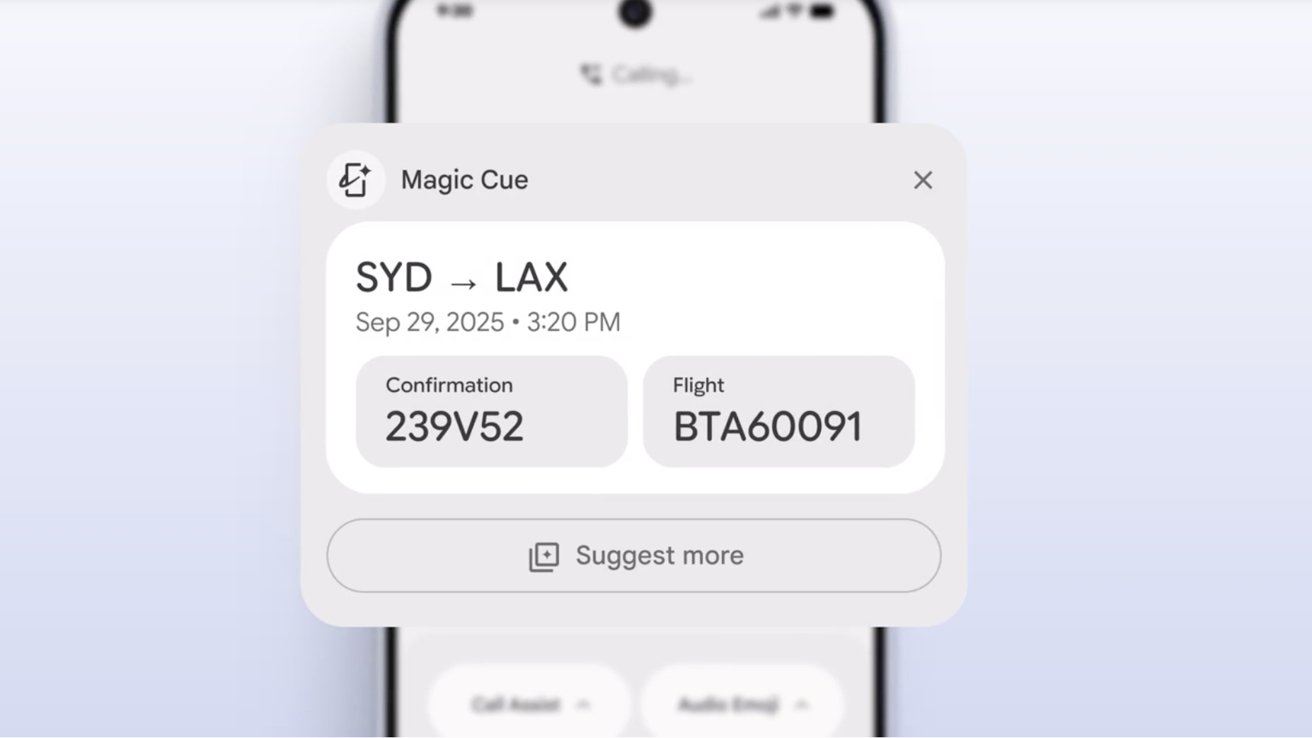
The Pixel 10 Pro offers AI features comparable to Apple Intelligence. Image Credit: Google
Apple's Writing Tools feature, powered by Apple Intelligence, gives users the option to edit, generate, proofread, and summarize text. It can make a text sound more professional, friendly, or concise. Google offer a similar feature with effectively the exact same name — Writing Tools in Gboard.
On iOS 18 and iOS 26, summaries of notifications and emails are also available, as is an AI-based Smart Replies feature in Messages and Mail.
With the release of iOS 18.2, Apple introduced support for ChatGPT integration, letting users forward questions from Siri over to ChatGPT when needed. There are indications Apple is looking to collaborate with companies beyond OpenAI, potentially Anthropic.
Google has its own take on artificial intelligence in the form of Google Gemini, which is available on the Pixel 10 Pro. Among other things, the Pixel 10 Pro supports an auto-fill-type feature known as "Magic Cue," which lets you automatically paste text into a conversation based on the surrounding context.
This would, for example, let you paste confirmation numbers, phone numbers, addresses, and related information pulled from other applications. iOS already has a similar feature for pasting confirmation numbers from the Messages app. Apple also touted a personal-context upgrade for Siri, though that has been delayed.
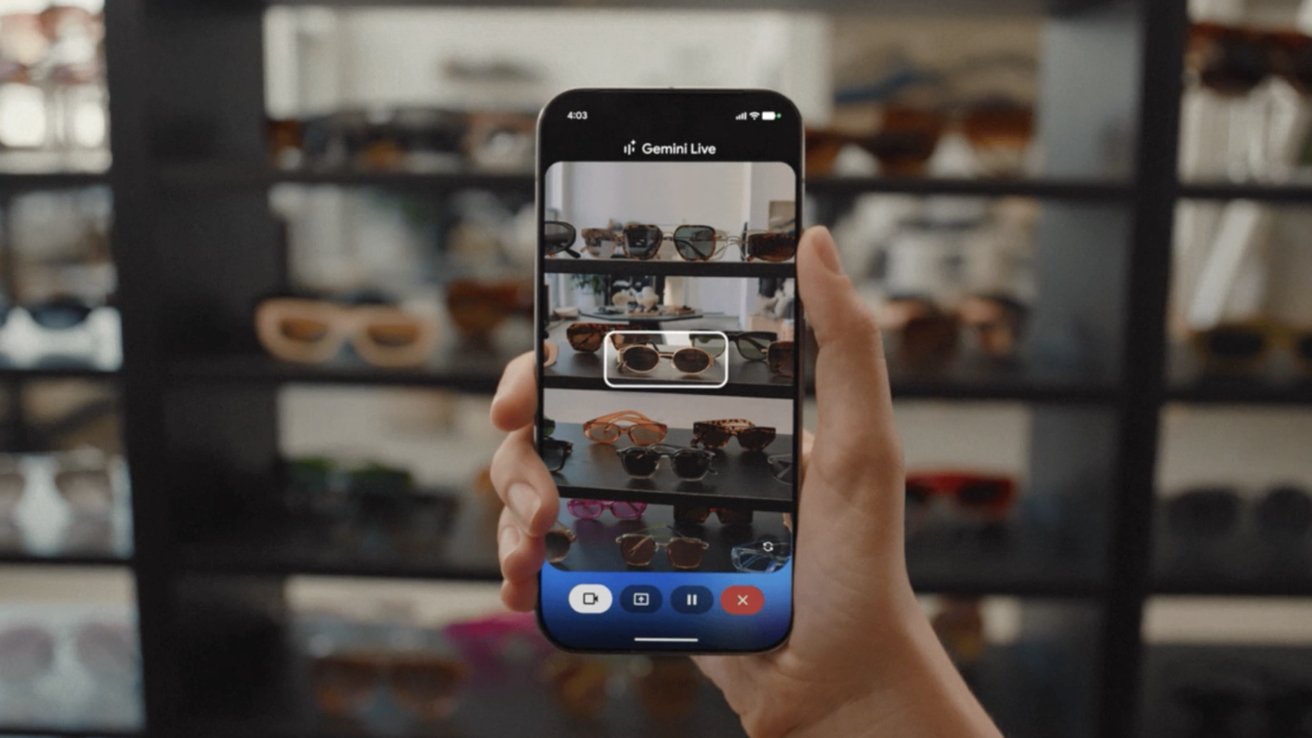
Google's Gemini Live provides real-time suggestions when users share their camera. Image Credit: Google
At its 2025 i/o conference, Google unveiled some remarkable AI products, like Veo 3, which generates videos with audio. There's also an image-creation tool known as Imagen 4.
While Apple's Image Playground is available free of charge indefinitely, Google offers one-year access to its photo and video generation features, which are otherwise available with a "Google AI Pro" subscription.
Building on features previewed in 2024, Google's Gemini Live provides users with real-time suggestions when the users shares their camera feed. Users can, for example receive information about objects in front of them, or ideas on how to repair a broken appliance.
The iPhone 16 Pro doesn't have anything nearly as impressive at the time of writing, though it is able to identify dog and cat breeds through a feature called Visual Intelligence. The same capability also lets users make Calendar events just by scanning a poster or flyer.
Both phones also feature AI capabilities in their respective note-taking apps, though Google's NotebookLM assisant offers additional functionality. It can automatically suggest photos for your notes, based on their content. Google's Recorder app and Apple's Voice Memos both offer audio transcription.
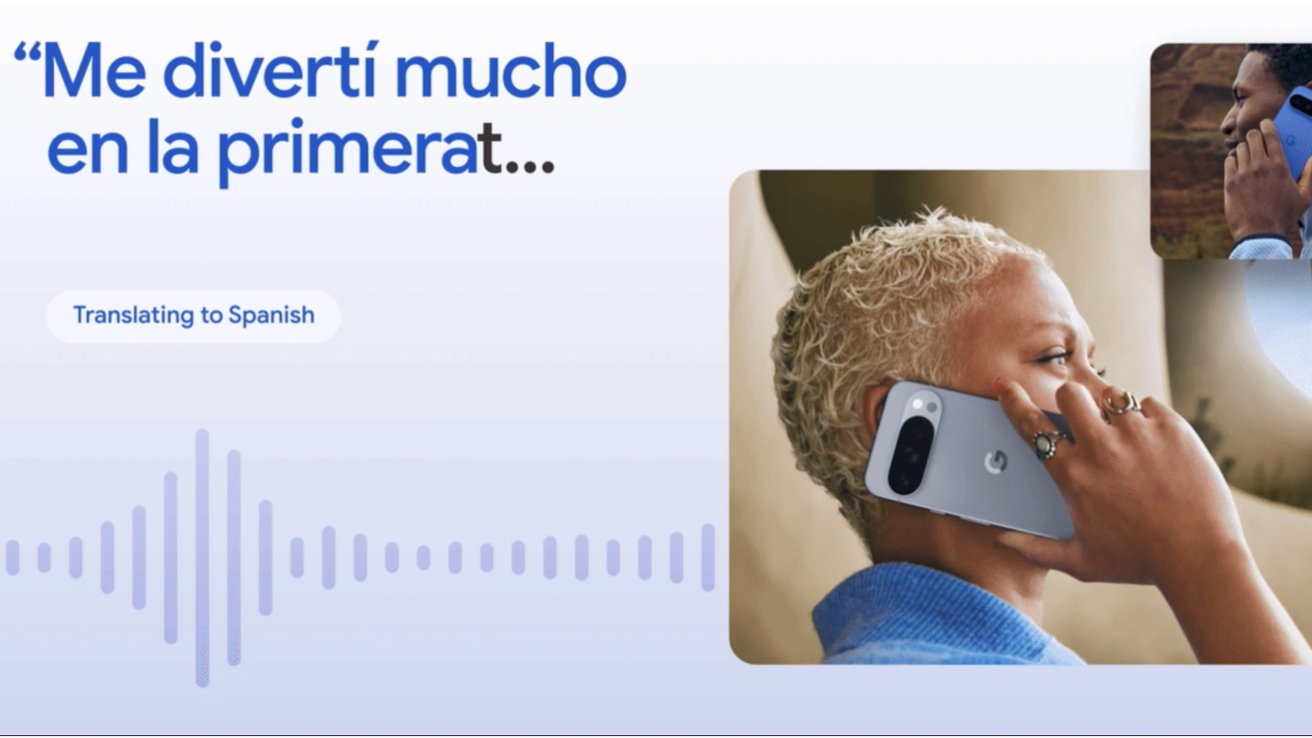
Both the iPhone 16 Pro and the Google Pixel 10 Pro support real-time translation. Image Credit: Google
The iPhone 16 Pro and Google Pixel 10 Pro both support real-time translation, though the two features are branded differently. Apple's Live Translation is available within iMessage, FaceTime, and the Phone app. Google's Pixel 10 Pro has a Voice Translate feature that can be used for phone calls.
Google's Voice Translate is compatible with English, Spanish, German, Japanese, French, Hindi, Italian, Portuguese, Swedish, Russian and Indonesian.
In Messages, Apple's live translation feature works with English (U.S., UK), French, German, Italian, Japanese, Korean, Portuguese, Spanish, and Chinese Simplified. For Phone and FaceTime, support is narrower at launch. It's limited to English (U.S., UK), French, German, Portuguese, and Spanish.
Both the iPhone 16 Pro and Google Pixel 10 feature a call-screening feature as well, with effectively the same features. Overall, Google has the edge when it comes to AI features, but it's image and video-generation tools are only available for a year if you get the Pixel 10 Pro.
Apple's offerings could also improve in the near future, as the company promised to unveil its context-aware Siri "in the coming year." Apple is reportedly also exploring third-party AI solutions for Siri, through its Glenwood project, suggesting a lack of confidence in the company's in-house AI models and LLMs.
iPhone 16 Pro vs Google Pixel 10 Pro — MagSafe vs Pixelsnap, connectivity, and more
While the iPhone has had MagSafe wireless charging since the iPhone 12, Google has introduced its own answer to the technology, dubbed "Pixelsnap."
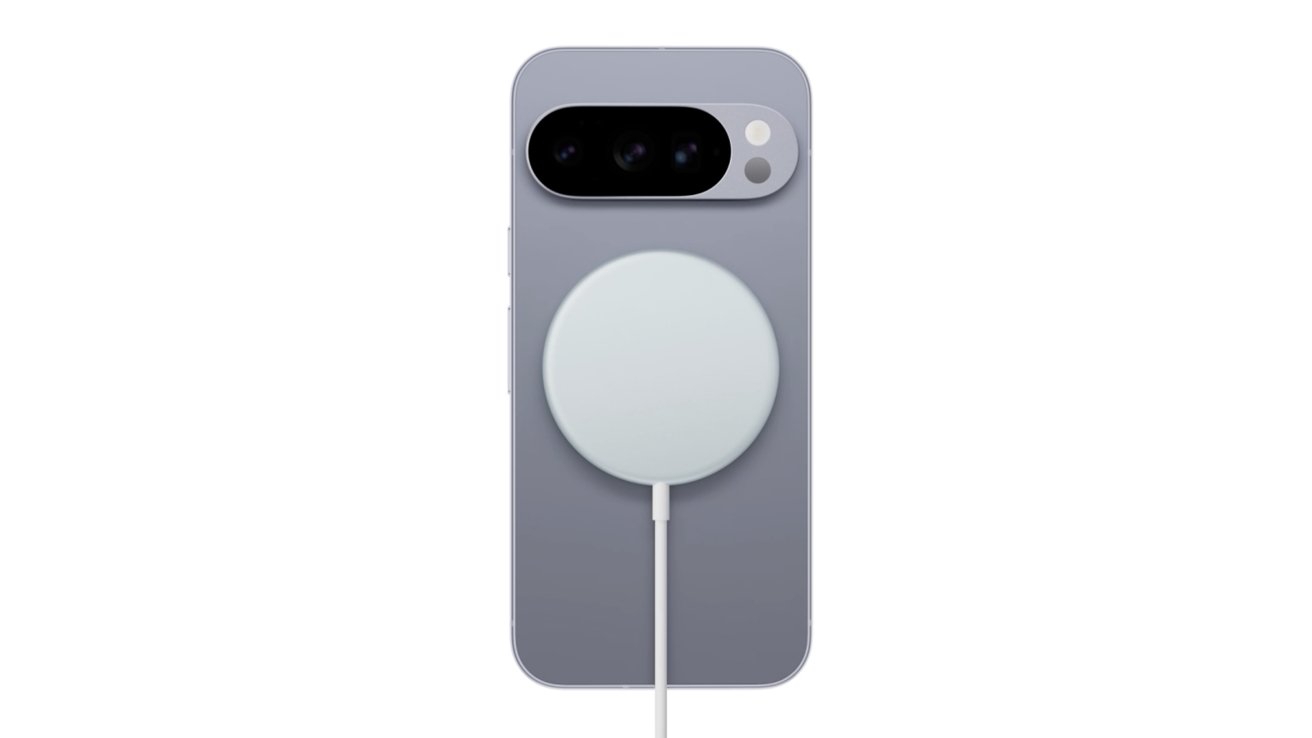
The Pixel 10 Pro supports Qi2 wireless charging via "Pixelsnap." Image Credit: Google
Much like MagSafe, Google's Pixel 10 Pro features a ring of magnets on the rear of the device. This allows the phone to be fixed to a stand, while also charging wirelessly via the Qi2 standard. The Pixel 10 Pro supports up to 15W charging with a Qi2-compatible charger.
Pixelsnap is effectively MagSafe by a different brand name. iPhone 16 Pro and Pixel 10 Pro owners can now use either thanks to the Qi2 standard.
Both the Pixel 10 Pro and the iPhone 16 Pro can be charged via USB-C as well. In our review of the iPhone 16 Pro, we hit 34W of power with suitable wired charging gear, and we've seen reports of some users getting 39W while charging.
For power, Apple claims the iPhone 16 Pro Pro can handle up to 27 hours for video playback. Google says the Pixel 10 Pro has over 24 hours of battery life, based on a mix of features being used over time.
In terms of connectivity, both smartphones offer 5G support, covering mmWave and Sub-6GHz bands, as well as LTE. The Pro iPhone also connects with satellites, via its Emergency SOS via Satellite and Roadside Assistance via Satellite features. Google has its own Satellite SOS feature.
Bluetooth 6 support is available on the Pixel 10 Pro, while the iPhone 16 Pro uses Bluetooth 5.3, along with Wi-Fi 7 and Ultra Wideband support across both product families. NFC is supported on both, but Apple locks its implementation down, so it's mainly just used by users for payments.
iPhone 16 Pro vs Google Pixel 10 Pro — Colors and storage options
The iPhone 16 Pro is available in four color options: Black Titanium, White Titanium, Natural Titanium, and Desert Titanium. The Pixel 10 Pro, meanwhile, is offered in Moonstone, Jade, Porcelain, and Obsidian.
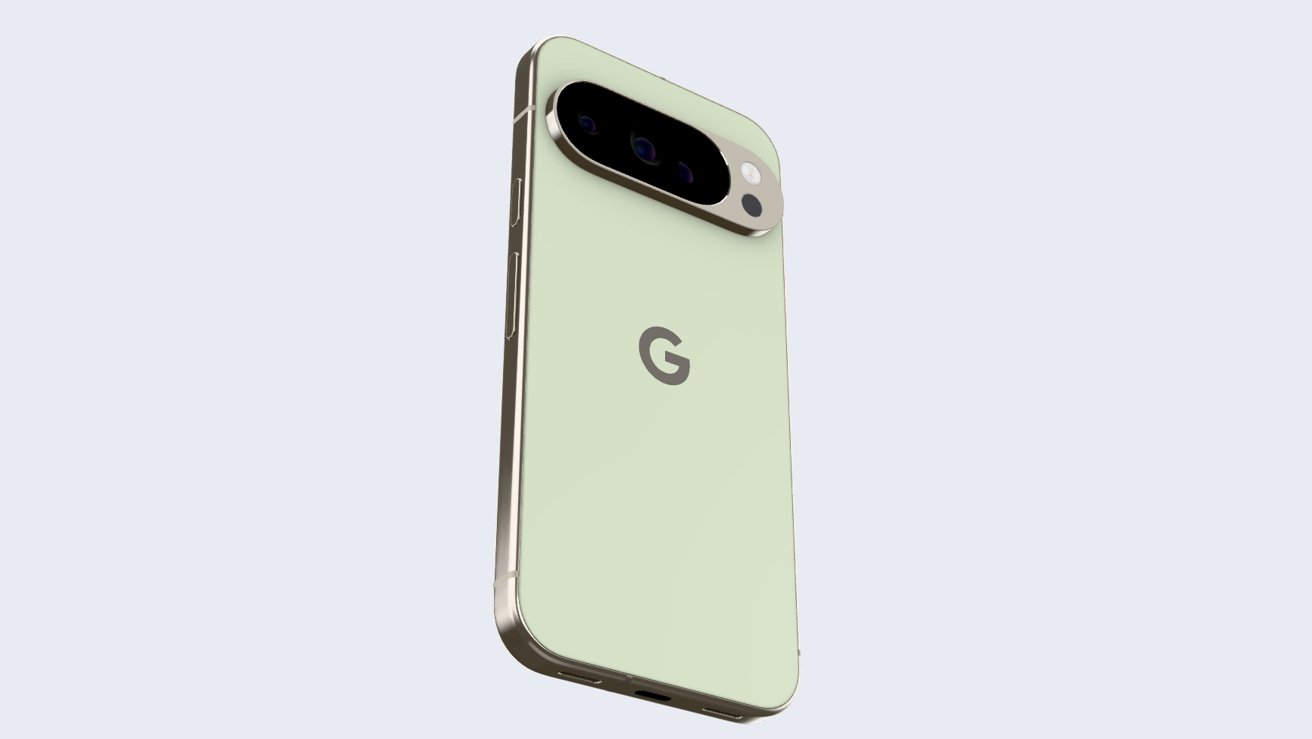
The Pixel 10 Pro is available in four different color options. Image Credit: Google
The iPhone 16 Pro and Pixel 10 Pro are available in four capacities: 128GB, 256GB, 512GB, and 1TB.
The iPhone 16 Pro with 128GB of storage starts at $999, and the Google Pixel 10 Pro is also $999 at its lowest capacity. Both companies effectively offer the same storage options at the same prices.
iPhone 16 Pro vs Google Pixel 10 Pro — Which to buy
Based on technical specifications alone, the Pixel 10 Pro features a brighter display, more RAM, and a powerful 42MP front-facing camera. You also get the Magic Cue feature that Google previewed, along with Google Gemini Live, while Siri's planned and promised Apple Intelligence upgrade has yet to arrive.
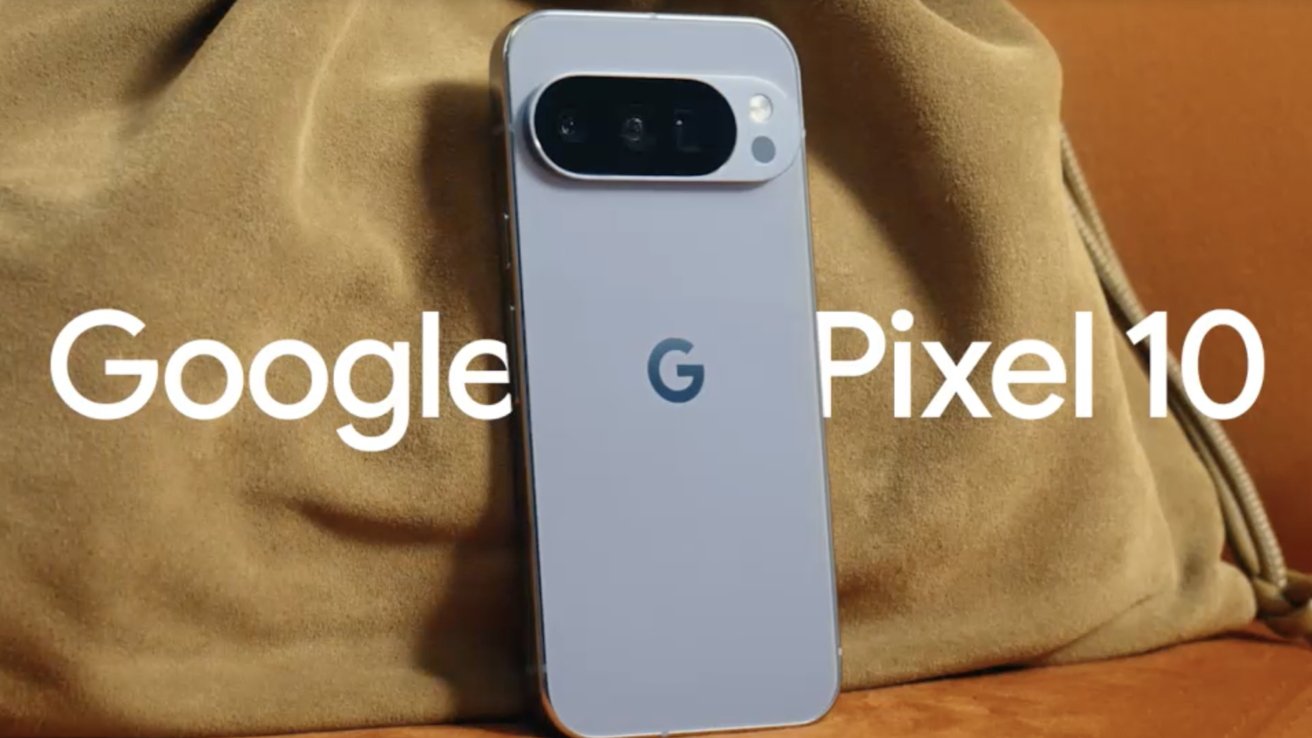
Google's Pixel 10 Pro delivers better specs, but it remains to be seen how the device will perform in real-world testing. Image Credit: Google
Currently, the Pixel 10 Pro is practically one of the best choices if you want an Android device. Especially one that benefits significantly from being at the forefront of Google's AI work. The operating system will ultimately be the deciding factor for most users, though.
Hardware specs on paper alone don't translate to real-world results, though. And, folks wanting one operating system or another will stick with the operating system that they want to use.
We'll have a better idea of how the two compare with real-life testing. Overall, Google's high-end smartphones are quite similar to Apple's flagship offerings of 2024.
Things will change once the iPhone 17 launches, as it's expected to feature a different design. The Pixel 10 Pro, meanwhile, looks practically the same as its predecessor, and it might even appear dated once iPhone 17 Pro reaches customers.
Where to buy the iPhone 16 Pro and Pixel 10 Pro at a discount
The Google Pixel 10 Pro is on sale now at Amazon, with a free $200 gift card offer in place during the preorder period until the device's official release on August 28, 2025.
On the iPhone 16 Pro side, wireless retailers are offering incentives on the device, with bill credits bringing the device down to as low as $0 per month*. You can check out a roundup of the best iPhone deals below.
Google Pixel 10 Pro sale
- Get a $200 Amazon gift card with preorders
iPhone 16 Pro deals
- AT&T Wireless: Get an iPhone 16 Pro on AT&T with qualifying trade and plan*
- Verizon Wireless: Get an iPhone 16 Pro at Verizon for as low as $0 per month with qualifying trade and plan.
- T-Mobile: Get an iPhone 16 Pro on T-Mobile with qualifying trade and plan. *Terms and conditions apply. Please see the wireless provider for details.