

With the MacBook Neo, Apple has created a brand new MacBook not aimed at its usual fanbase, and is instead gunning for iPhone owners who haven't yet made the leap to Mac.
On Wednesday, Apple announced the MacBook Neo, a budget-friendly, entry-level macOS machine. It's cute, has lower-end Mac specs, and, perhaps most importantly, it's priced to move.
But I'd like to make it very, very clear to 75% of people reading this piece, and probably 90% of the AppleInsider reading cohort — the MacBook Neo is probably not for you.
But that doesn't mean that it's going to flop. Apple knows what it's doing here.
What's for dinner? Bean soup.
If you haven't already heard of Bean Soup Theory, allow me to break it down for you.
Bean Soup Theory basically says it's almost impossible to get people to acknowledge that something could be good, even if they're not in the target audience. For example, if a food blog gave out a bean soup recipe, a large portion of said audience may respond by saying "but I don't like beans."
It wouldn't matter what other recipes the author had, the quality of the soup recipe, or their track record. The only thing that would matter is that they created something that not everyone immediately liked.
The MacBook Neo is prime territory for "bean soupification." It's a budget-level MacBook geared towards light users — generally an audience that the tech enthusiast community forgets exists.
I anticipate that over the next few weeks, we'll see a fair amount of the Nerd Coalition writing screeds about how this new machine is already a failure, and we are expecting so many shocked faces on YouTube thumbnails decrying its existence. It's not for them, so how could it be good, right? Surely it will fail, they will say.
Oh, ye of little faith.
Not great, but more than good enough
I'm not going to delve deeply into all the specs of the MacBook Neo — we already have plenty of posts dedicated to that. What I will do, however, is talk about some of the compromises that come with entry-level hardware.
This is not an M-series Mac. I will admit, this is the one sticking point for me. The M1 processor hasn't been produced in years, and the A18 Pro still is. Economy of scale.
Think of it as a M1.5, I guess. Better single-core speed, by a lot. About the same multi-core and GPU power.
It's got a small screen and a comparatively thick body, a maximum of 8 gigs of RAM, and a veritably tiny 256GB worth of storage at the entry price. I would call the machine an almost alarmingly underwhelming showing from Apple.
This isn't a machine geared towards industry professionals, college 3D animation students, or aspiring developers. If you buy it, you're probably not going to cut the next Oscar-winning film on it, mix next year's Album of the Year, or design the next big social media app.

But you might write a really good term paper — or even your PhD dissertation. Maybe you'll file for your first time mortgage or use it to FaceTime with your brand new grandbaby who lives across the country.
The MacBook Neo is not trying to be a MacBook Pro. It's not even trying to compete with the MacBook Air.
It's not trying to compete with anything. And all of Apple's press surrounding it solidifies the fact.
It's trying to supplement another product.
And, of course, that product is iPhone.
Hello, Neo; Hello, iPhone
Once upon a time, there was the iPod. At first, you had to have a Mac to use it. The iPhone at launch was geared towards folks that already had an iPod, but mostly for Mac users.
Flash forward to 2025, and Apple's iPhone accounts for more than 60% of smartphones sold in the United States. And while I think that the iPhone is a solid device, the base model certainly isn't blowing every other smartphone out of the water when it comes to stats.
What it has going for it, is everything around it. AirPods, iOS exclusive apps, Apple Watch, iMessage, FaceTime, and even macOS — these are the things that put iPhones in people's pockets.
I've said it before, and I've said it again: I'm locked into the Apple ecosystem because of how well it all works together. It's a relatively frictionless experience, and the idea of going back to Android or Windows genuinely stresses me out.
And I'm hardly alone in that camp.
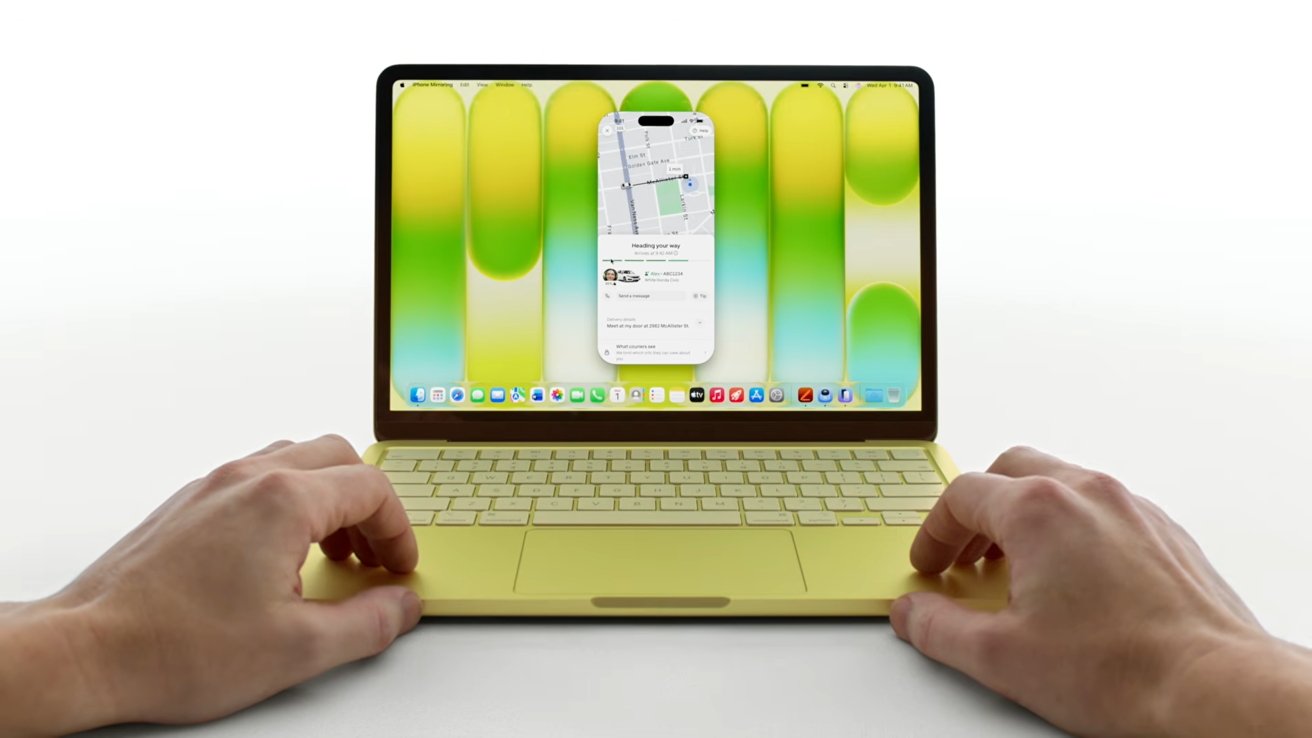
iPhone mirroring, available on the MacBook Neo
More and more, people are drawn to the Apple ecosystem, not just the iPhone. Unfortunately, it hasn't always been easy to just randomly switch from your standard budget-friendly, off-the-shelf PC to a Mac.
The MacBook Air starts at over a grand currently.
There was always going to be space for Apple to design down. But for years, the company didn't feel like it needed to — that's why we saw the death of the base-model MacBook in 2019.
For nearly seven years, Apple's "budget friendliest" model was the MacBook Air, which has slowly morphed into being the fully capable little brother of the MacBook Pro. And, it's now got a price tag to match it.
But it looks like Apple has realized that maybe it's time to bring back a computer geared specifically for John and Jane Everyman. Maybe that entry-level market is worth catering to.
But why now?
Like everything else, it all comes back to SaaS
And this is where this piece gets a little less cute and a little more realistic.
In 2026, many corporations do not see you as a customer, so much as they see you as an infinite money cheat. And for technology companies, they achieve this with SaaS.
SaaS stands for software as a service, or in layman's terms: subscriptions. SaaS asks a customer to enter an ongoing payment agreement to access a piece of software that does, well, something.
Apple has a lot of subscriptions you can take advantage of. And I mean a lot. In fact, just check out this list.
- Apple Music
- Apple TV
- Apple Creator Studio
- Apple Fitness+
- Apple Arcade
- Apple News+
- iCloud+
You can subscribe to just one, or you could bundle them together in an Apple One plan — for anywhere from $20 to $38 per month.

Apple subtly suggests checking out 'Pluribus' on a new MacBook Neo
That means that if Apple can pull people into the Apple ecosystem, even by doing so with a $599, budget-friendly computer, odds are, they might be able to double or triple their revenue off a single person in just a couple of years. Plus, once you're in the ecosystem, odds are, you'll probably want to stick around for a while.
Here's to John and Jane Everyman
I believe the MacBook Neo, terrible name and all, is a smart move on Apple's behalf. While a lot of people have transitioned to phone or tablet-centric workflows, there's still a lot that needs to be done on a proper computer.
While $599 isn't decidedly cheap, and you'll absolutely be able to find a name-brand PC laptop for less, it's still better than nearly $1100. And, if you've already got an iPhone, it's a great way to take advantage of everything the Apple ecosystem has to offer.
It's Apple's game to lose.