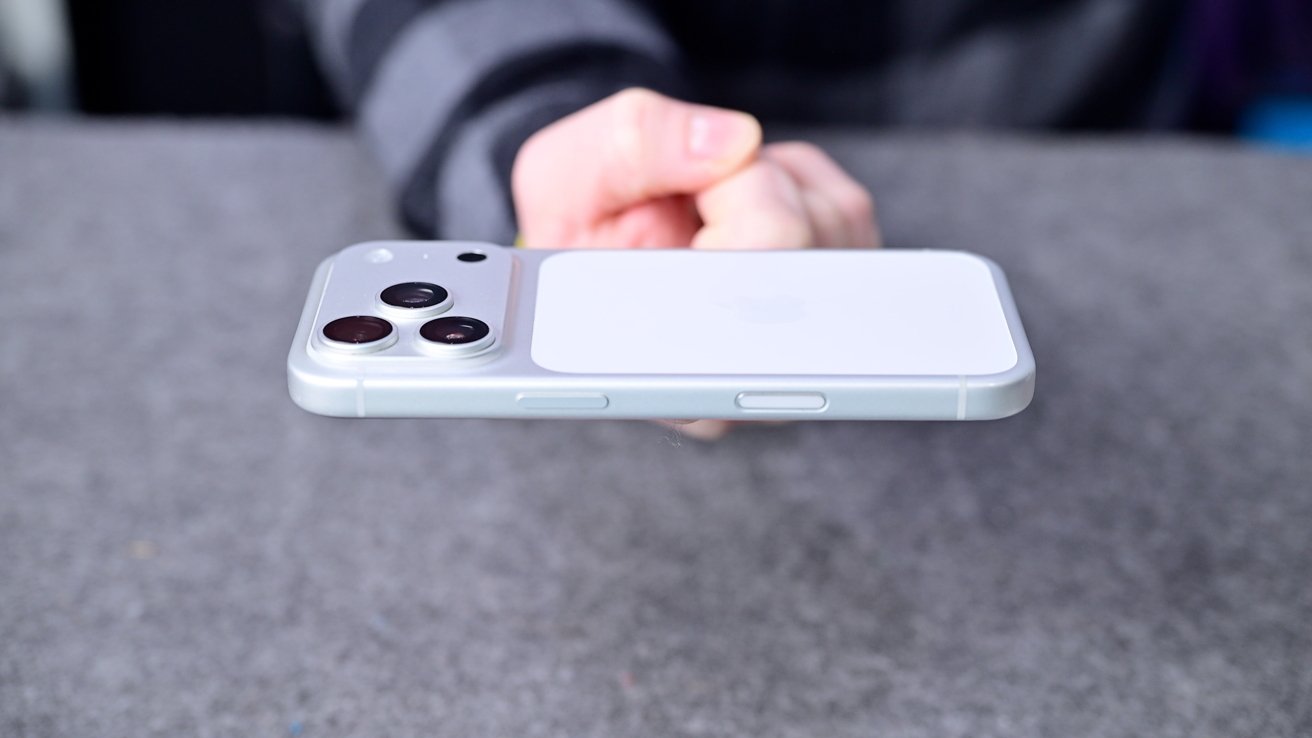
Another analyst has jumped on the bandwagon believing Apple won't be increasing the cost of the iPhone 18 Pro and Pro Max, with pricing expected to be the same despite intense memory pressures.
The tech industry's current memory problem of rising prices, caused in part by the increase in AI infrastructure, is creating a problem for manufacturers of consumer devices. However, Apple seems to be insulated from the industry's woes of memory costs for the moment, and it may not be a big problem for the 2026 iPhone releases.
In a note to investors, analyst Jeff Pu of GF Securities says Apple is working on managing the cost of production to avoid price rises. His supply chain sources say this includes negotiations with memory providers such as Samsung and SK Hynix to secure favorable terms, despite DRAM and NAND chip prices soaring.
Apple will also apparently seek other areas of manufacturing to trim costs from, with the cameras and display fair game for changes.
To Pu, Apple intends for the prices of its iPhone 18 Pro and Pro Max models to be the same as the current generation.
For reference, the iPhone 17 Pro starts from $1,099 for 256GB of storage, rising to $1,499 for 1TB. The Pro Max starts from $1,199 for 256GB, rising to $1,999 for 2TB of capacity.
Among analysts, Pu's accuracy isn't the best, with generally mixed results from his proclamations. He also has a tendency to be a little too aggressive when it comes to timelines and specification changes.
Joining the chorus
Despite his track record, Pu's claims do follow along with the general tone of other analysts watching Apple.
For example, on January 27, generally accurate analyst Ming-Chi Kuo chimed into the conversation, explaining that memory won't be an issue in the near term due to Apple's contracts with suppliers. Apple's supply chain work leads him to suspect that it will try to keep iPhone 18 prices as static as possible.
Other analysts said similar things ahead of the Q1 2026 financial results. Namely Apple's near-term memory supplies will keep it safe from rises temporarily, and that it will work to minimize the impact of later rises once that memory supply cushion runs out.
Speaking to analysts on January 29, Tim Cook confirmed that RAM and flash memory pricing hasn't yet affected Apple, but that it will become a problem later in the year.
Indeed, Apple has already started to mitigate the pricing problem. In late December, it was reported that Apple had agreed to increase the amount of memory it sources from Samsung.
It is presumed that increasing the order from Samsung cuts the per-module cost of production, thanks to economies of scale. However, doing so could potentially reduce orders from other suppliers, including Micron and SK Hynix.