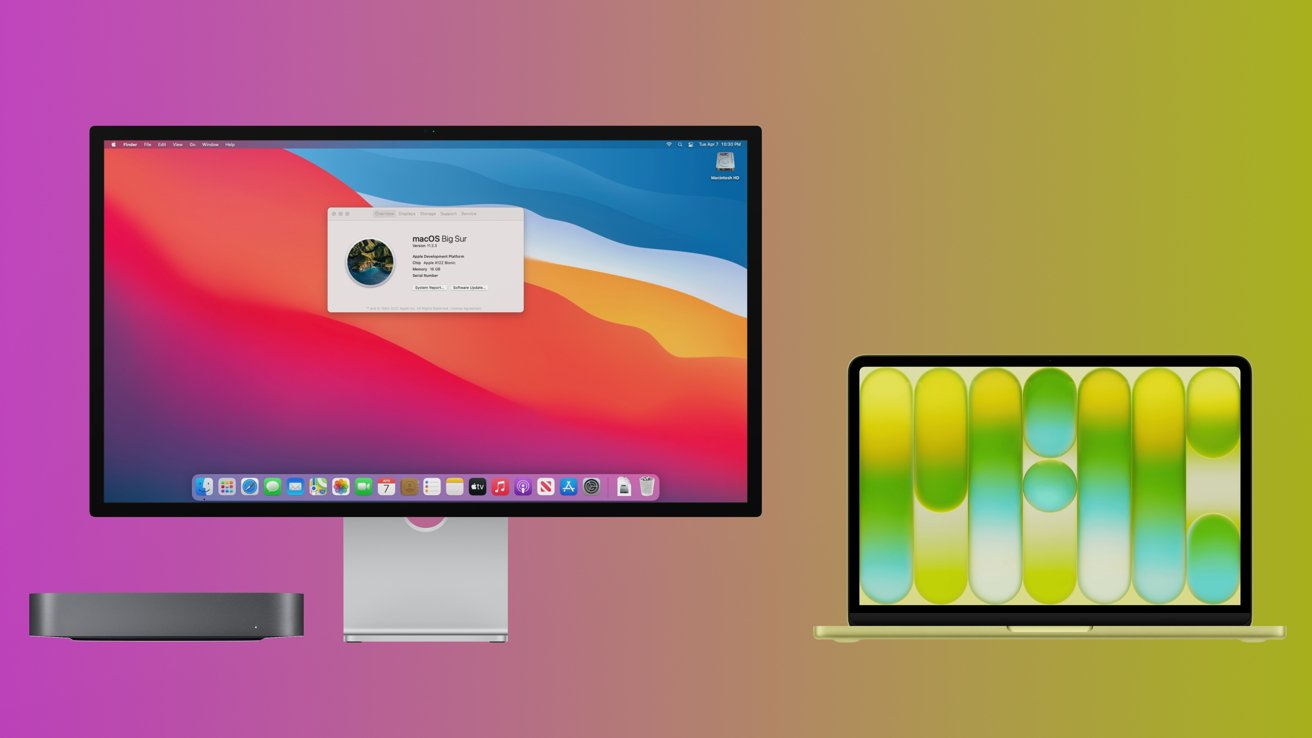
With the MacBook Neo, Apple's A-series chips came back to the Mac, completing a lengthy journey from experiment to fully finished product.
Apple Silicon on the Mac began with an iPad chip, and now the MacBook Neo has taken things to the next level with a chip originally designed for an iPhone.
Since 2020, every Mac, from the entry-level Mac mini to the powerful Mac Studio, has been powered by an M-series chip. The M1 was the first Apple-designed ARM chip made with the Mac in mind. It spearheaded the company's move from Intel, but it didn't start the transition to Apple Silicon.
The roots of Apple Silicon go back more than 35 years, to the debut of the ARM architecture itself. Apple played a key role in the creation, financing, and engineering of ARM, as part of a joint venture with Acorn Computers and VLSI Technology. In November 1990, Advanced RISC Machines was born.
Acorn Computers pioneered the architecture, VLSI produced ARM chips, and Apple ended up using them for a new device. That was the 1993 Newton MessagePad, which was equipped with a 20MHz ARM610 RISC processor.
That story didn't end well for Apple. But, the company never fully abandoned the technology.
Though ARM chips saw continued use with the arrival of the iPod, iPod Touch, and iPhone lines, it would be another tablet that introduced the next major change for Apple's processing hardware.
2010 saw the debut of the original iPad, sporting the first mobile chip designed by Apple. That was the single-core A4 chip, with 256 MB of RAM. Good for the day in a tablet, but clearly not up to today's tasking.
The iPhone and iPad both relied on A-series chips throughout the years that followed, but the Mac clung to its Intel processors.
A decade later, it would again be an iPad chip that marked a milestone for Apple Silicon. 2020 saw the arrival of the A12Z chip in the iPad Pro. It was effectively a beefier version of the A12X chip, with an extra GPU core enabled.
The chip in and of itself wasn't anything groundbreaking, but it's significant for where it ended up being used.
The A12Z, equipped with an 8-core CPU and an 8-core GPU, was the first Apple Silicon chip to run macOS, at least outside of Apple's labs.
Before the ubiquitous and iconic M1 MacBook Air rolled off the assembly line, the A12Z gave developers their first taste of how Apple Silicon could handle macOS.
The first Apple Silicon Mac used an iPad chip — the A12Z
Originally meant for the iPad Pro, the A12Z was put onto a custom Mac mini logic board, delivering the first Apple Silicon Mac. It was an experimental and somewhat crude unit, made available only to developers participating in the 2020 Universal App Quick Start Program.
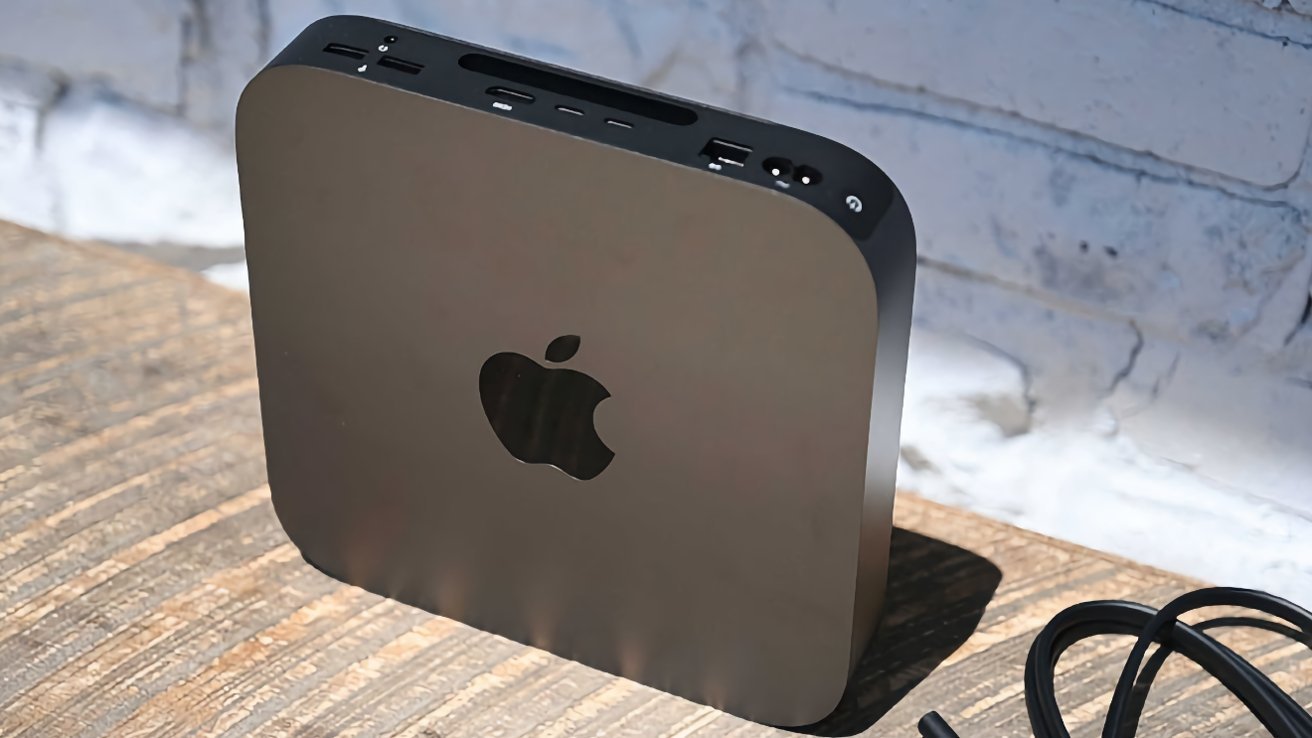
Apple's 2020 Developer Transition Kit looked like a 2018 Mac mini.
The 2020 Developer Transition Kit, commonly known as the DTK, could be leased by developers for a $500 fee. Developers were supposed to use it for a year to develop Apple Silicon apps, and then return it to Apple for $200 (later increased to $500) towards the purchase of a new Mac.
In reality, however, participating developers only got to use the machine for six months before Apple asked for it back. And, they were pretty militant about it.
Most of the computers were destroyed by authorized recyclers once they made their way back to Apple. The logic boards were intentionally damaged, with either a hole drilled through the system-on-chip or a cut on the side of the board.
This effectively makes a surviving DTK one of the rarest Apple Silicon Macs, and a true curiosity. Simply put, you could never buy one from Apple, and they're not supposed to exist anymore.
Where there's a will, there's a way.
Though exceedingly rare, it's still possible to see and use a Developer Transition Kit, thanks in part to highly skilled enthusiasts and developers like dosdude1. He was able to bring damaged DTK boards back to life with a lot of effort.
A few prototype collectors we spoke with still have DTKs to this day, though it's anyone's guess where the units in question came from.
The curiosities of the A12Z Mac mini
We were lucky enough to spend some time using an A12Z-based Developer Transition Kit initially. We did it again in 2026, offering a rare opportunity to revisit the original Apple Silicon Mac.
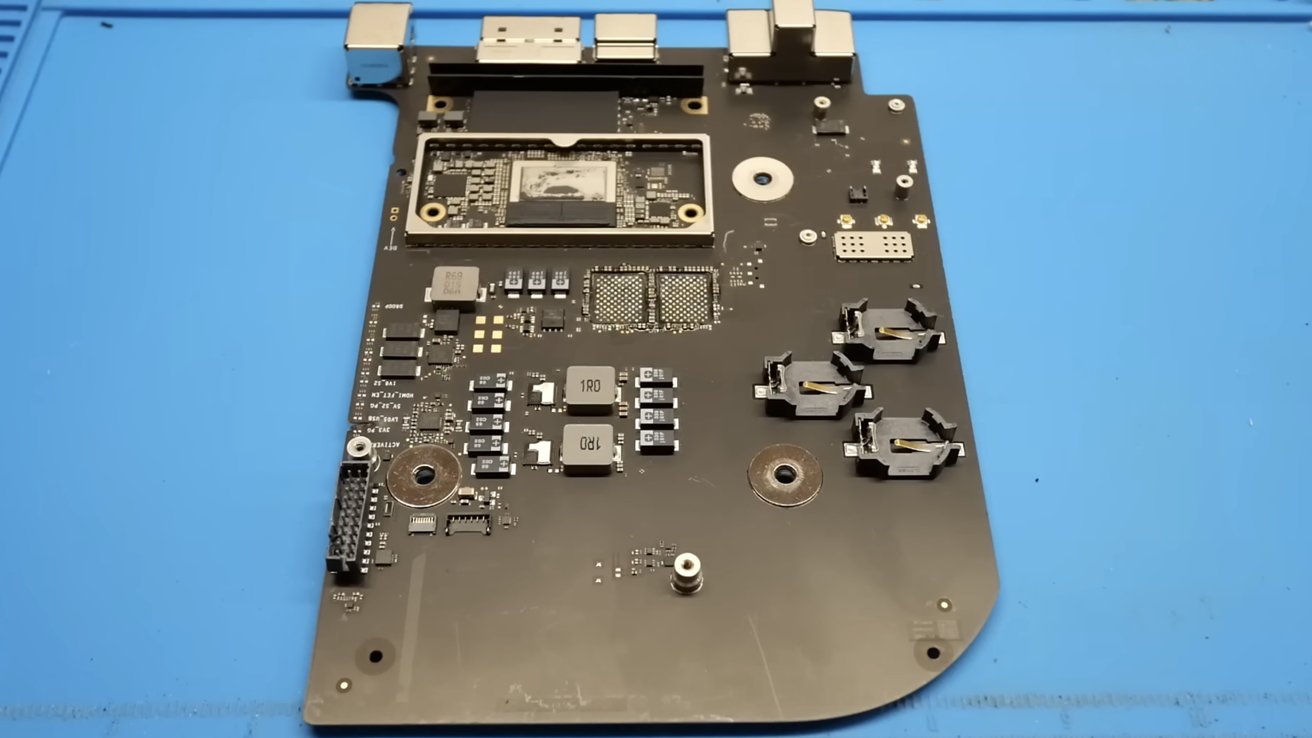
The DTK features an unusual logic board, with spots for coin cell batteries that keep the system date and time accurate. Image Credit: dosdude1 via YouTube.
Design-wise, the DTK looks identical to a 2018 Mac mini in Space Gray, albeit with the input-output backplate more closely resembling that of the M1 Mac mini.
There are a few oddities with the DTK, including the lack of Thunderbolt support and the fact that it won't sleep if there's anything plugged into the USB-C port. The fan also blows at a constant speed, but other than that, it's just a Mac mini.
Booting it up, assuming the DTK is a production-fused unit, you're greeted with macOS Big Sur. It introduced the last major redesign of macOS, up until macOS Tahoe came along with Liquid Glass.
Officially, and in practice, the DTK is capable of running versions up to macOS 11.2.3. Internally, however, Apple also developed builds of macOS Monterey with DTK support, though it's unclear if there are any surviving examples running the software.
AppleInsider was told some of the macOS Monterey distributions compatible with the DTK were used for artificial intelligence and machine learning projects, including CreateML.
This framework lets developers train custom, on-device machine learning models, making it possible for apps to learn and adapt to user data while preserving privacy.
Still, nearly every DTK still in existence runs a version of macOS Big Sur, rather than macOS Monterey.
What can the first Apple Silicon Mac do, all these years later?
The software experience is as smooth as ever, until you try to download third-party apps. Unlike the M1 chip, which supports the ARM v8.5 instruction set, the A12Z only supports ARM V8.3.
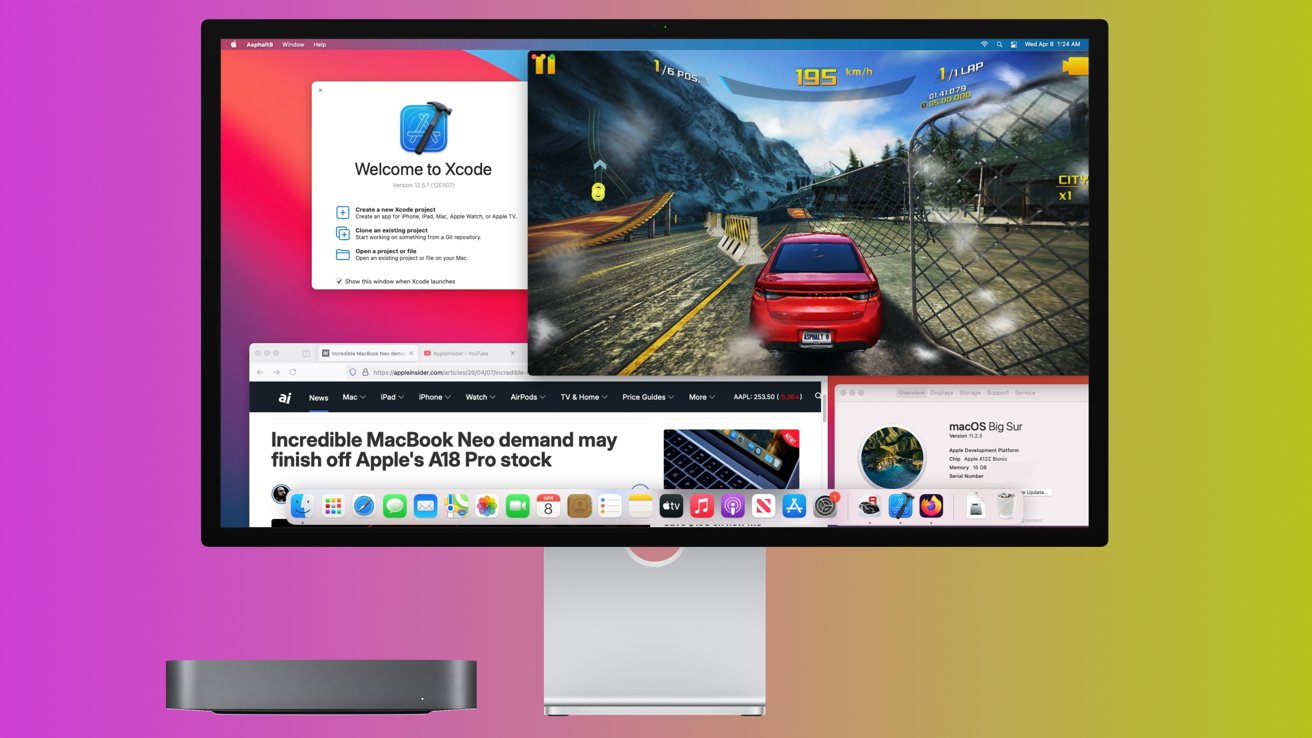
The A12Z-based Developer Transition Kit runs macOS quite well, even if third-party app support is basically nonexistent.
This ultimately means that many apps designed for Apple Silicon just won't work properly, or at all, on the DTK. Even after installing Rosetta, to use apps made for Intel Macs, we encountered issues in our 2026 retest now and again.
Aside from an old version of Microsoft Edge, we were able to install custom-compiled versions of Mozilla Firefox and Chromium, giving the DTK a modern web browser. Microsoft Visual Studio Code also runs on the DTK, as does Xcode.
For image editing, Pixelmator Pro works just fine on the 2020 Developer Transition Kit, with its A12Z chip. Considering how this runs without issue on an A-series chip, it's quite astonishing that it took six years for Pixelmator Pro to make it to the iPad, albeit only via the Apple Creator Studio subscription.
We also tried running a few macOS Big Sur-compatible games on it, including Minecraft, Valheim, but none of them actually worked on the Developer Transition Kit. Asphalt 8 is playable, although the game crashes at the end of every race.
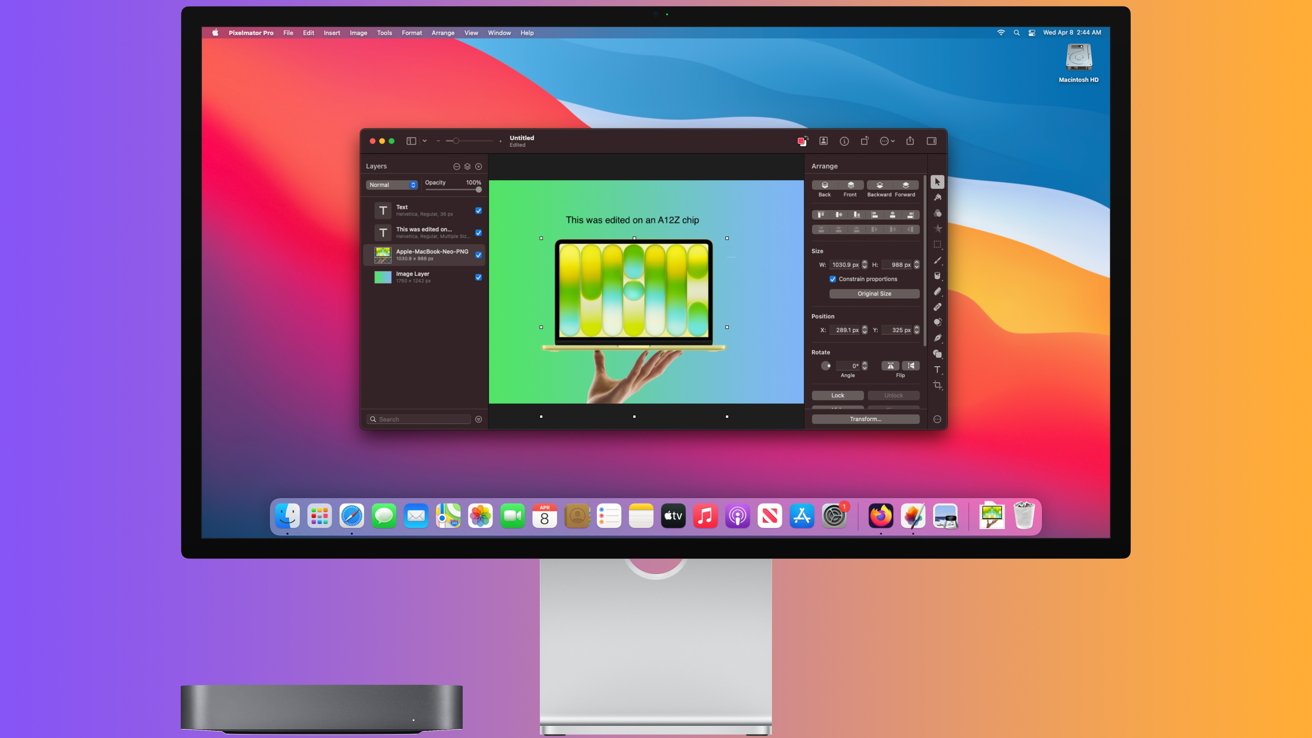
Pixelmator Pro runs just fine on the A12Z chip.
Most triple-A Mac games, including the Resident Evil franchise, require macOS Ventura or even macOS Sonoma to run, meaning you're out of luck, even if you want to test them on a DTK.
Time has taken its toll on Apple's Developer Transition Kit, so aside from custom-made apps or versions that were around in the summer of 2020, you won't be able to do much with it — unless you only need something for web browsing.
Still, the impressive part about the A12Z-based DTK is that macOS itself runs without issues. A full desktop experience with windowed multitasking and Xcode on an iPad chip, six years before the arrival of iPadOS 26. Xcode itself still can't be installed on iPadOS, even with the M5 iPad Pro.
App support aside, it's clear that Apple's mobile chips can handle macOS and everything it has to offer. The MacBook Neo, with its A18 Pro chip, serves as further, albeit long-overdue, proof of the capabilities of A-series chips.
The DTK brought macOS to A-series chips, but the MacBook Neo perfected it
The MacBook Neo is understandably leagues ahead of the Developer Transition Kit and the A12Z chip inside of it.

The MacBook Neo perfected macOS on an A-series chip, even supporting triple-A games with hardware-accelerated ray tracing.
With support for hardware-accelerated ray-tracing and improved performance, Apple's budget-oriented laptop can even run Cyberpunk 2077. As we explained in our MacBook Neo review, the laptop handles titles like Resident Evil 4 quite well.
Despite having only half the RAM of the DTK, that being 8GB compared to 16GB, the MacBook Neo delivers a worthwhile user experience. It also looks to be a huge hit, with Apple CEO Tim Cook even saying the laptop debuted during the best launch week for first-time Mac users.
Though the 2020 Developer Transition Kit can't even run Geekbench 6, a comparison between the MacBook Neo and the A12Z-based iPad Pro serves to illustrate the improvements Apple has achieved over the years.
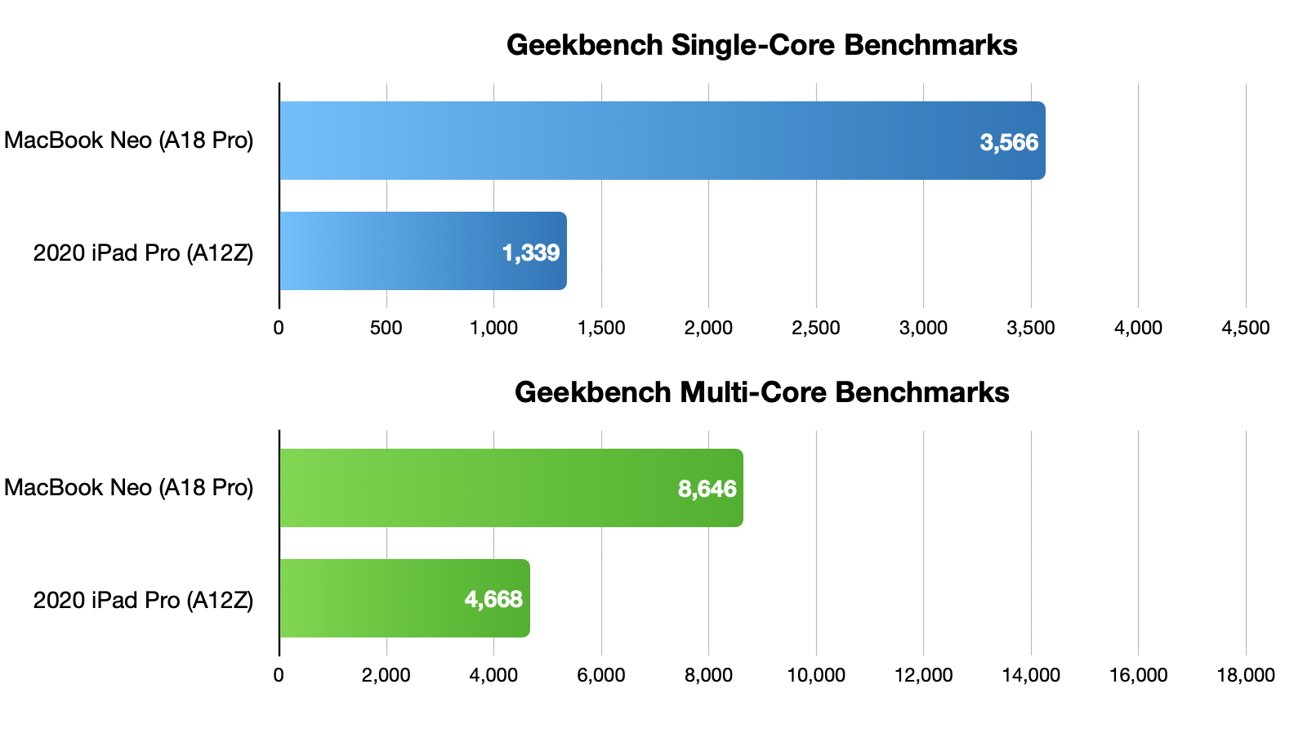
The MacBook Neo's A18 Pro chip obviously outperforms the A12Z chip found in the 2020 iPad Pro and in the Developer Transition
At 3,566 points, the MacBook Neo's single-core performance is more than double the 1,339 points the A12Z-powered iPad Pro received. The multi-core CPU performance scores tell a similar story, with the MacBook Neo scoring 8,646 points, and the A12Z iPad Pro chip scoring 4,668 points.
The added processing power is clearly there, and MacBook Neo users can rest assured that their entry-level laptop will get through a day of work, leisure, or entertainment. Ultimately, it looks as though Apple wanted to be sure its mobile-focused chips could actually handle macOS without issues.
Planned performance vs. artificial limitations
On the other hand, though, this cautious approach with macOS and Mac-like features on A-series chips has left Apple's mobile platforms artificially limited.
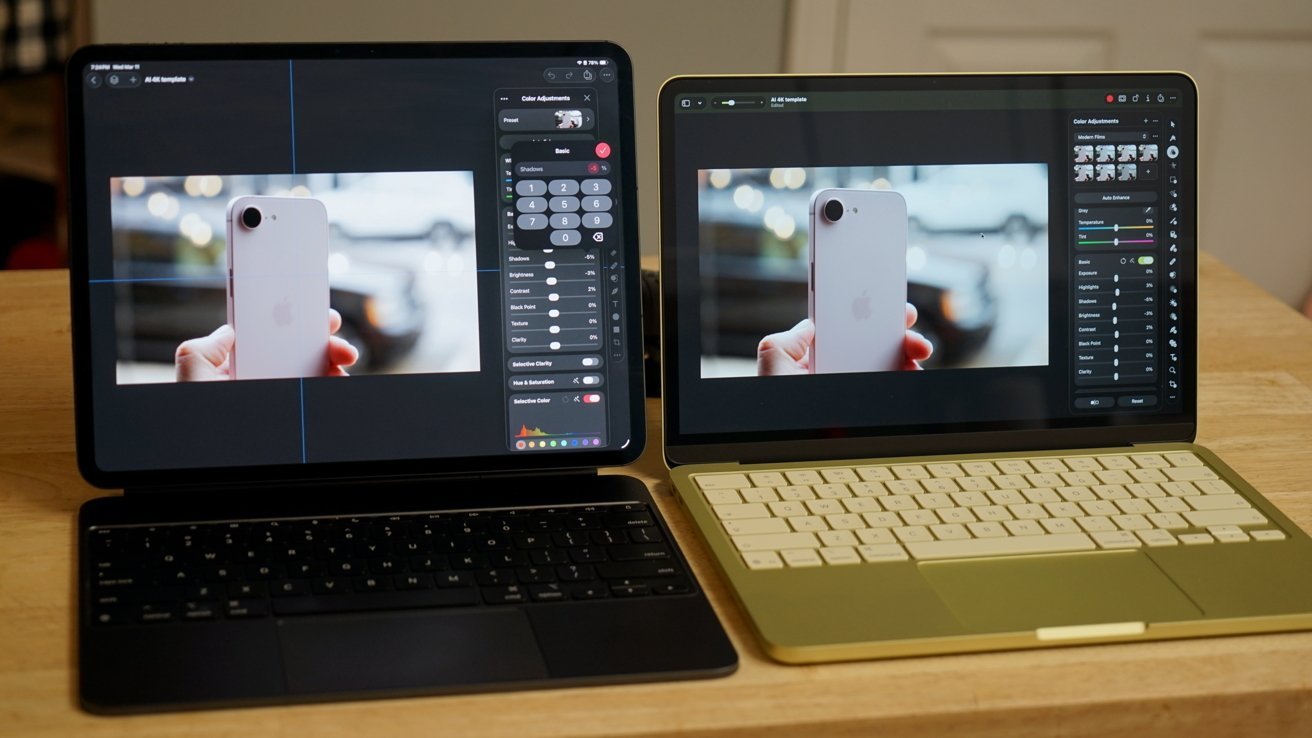
Relative to the MacBook Neo, Apple's iPad Pro is limited by its software.
The iPad, though it gained windowed multitasking with iPadOS 26, still can't run macOS, even with capable M-series chips in the iPad Air and iPad Pro. The tablet line didn't even have a default calculator app until iPadOS 18 rolled around in 2024.
The iPhone, meanwhile, lacks support for windowed multitasking outright, even though the platform can handle it. Misaka26, which uses a mobilegestalt exploit, enables windowed multitasking on iPhones running iOS 26.0 through 26.1.
Even the original iPad, with its A4 chip, could have been more versatile early on. Early iOS releases never offered a windowed multitasking system, even though jailbreak tweaks like Quasar showed the idea was possible. Software support was also short-lived.
In essence, these are all artificially imposed limitations that prevent Apple's hardware from realizing its full potential. The modern-day iPad could easily run macOS, and maybe it shouldn't have taken six years for an A-series chip to run macOS again.
Still, the MacBook Neo is a sign of progress, and the future of the Mac looks promising.
How the Mac might evolve after the MacBook Neo
With M6 Pro and M6 Max MacBook Pro models, which are set to debut in late 2026, Apple is expected to bring touchscreen support to macOS, arguably bridging the gap between the iPad and Mac.
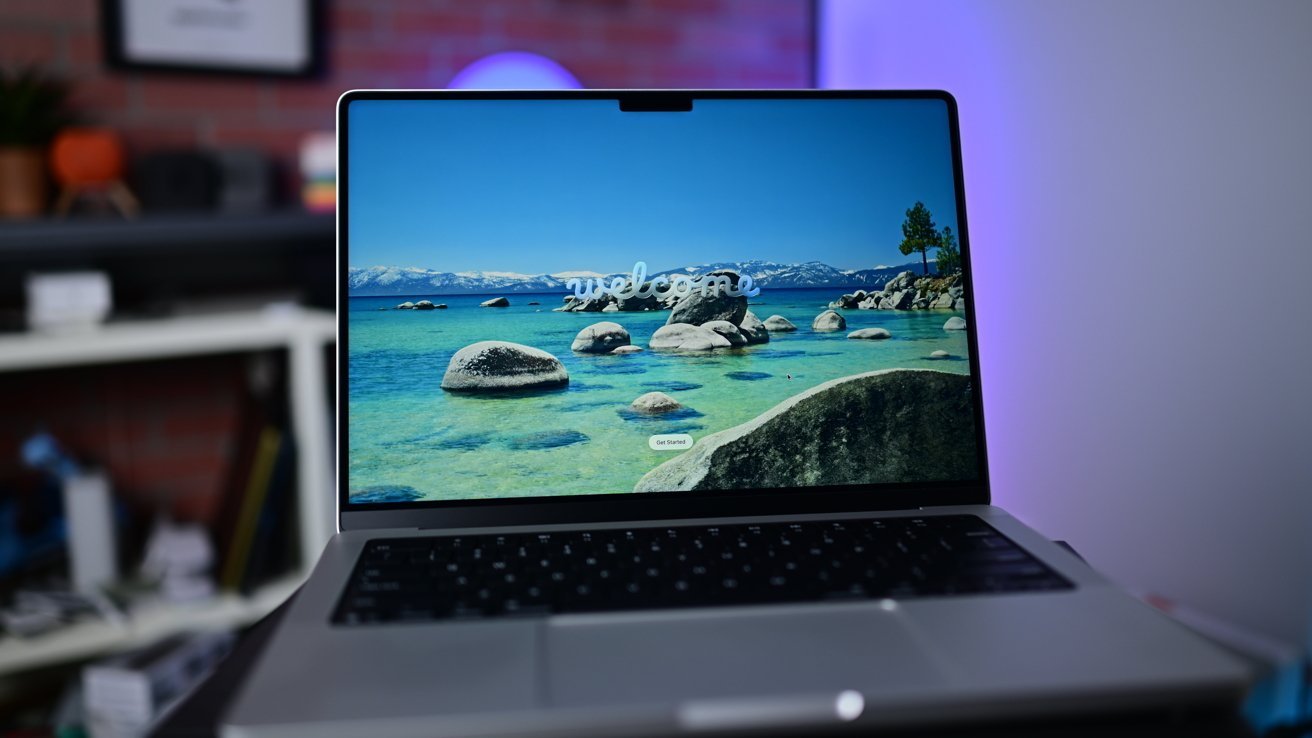
While the M5 MacBook Pro is a derivative upgrade from its predecessor, the M6-based models could sport a touchscreen.
Though this capability is expected to be exclusive to the high-end MacBook Pro for the time being, hardware features tend to trickle down to lower-tier Macs over time.
Over the years, for instance, the MacBook Air has gained a Retina display, Spatial Audio speakers, MagSafe 3, and other components previously exclusive to the MacBook Pro.
For the MacBook Neo, the line may receive touchscreen support at some point in the future. Analyst Ming-Chi Kuo suggested, in late 2025, that the second-generation MacBook Neo would feature a touchscreen.
Though Kuo ultimately backpedaled in March 2026, his claim implies that Apple was at least considering bringing the technology to the MacBook Neo, eventually.
We'll ultimately have to wait and see what happens with the MacBook Neo, but the laptop still owes its success to the first Mac with an A-series chip.
The A12Z-based DTK is the Apple Silicon Mac that started it all, and it's hardly surprising that Apple opted once again to repurpose mobile-intent chips for a Mac.