Apple has just announced that WWDC 2026 will take place on June 8 through June 12, and we can expect to see several exciting software updates. Here's what's rumored to debut.
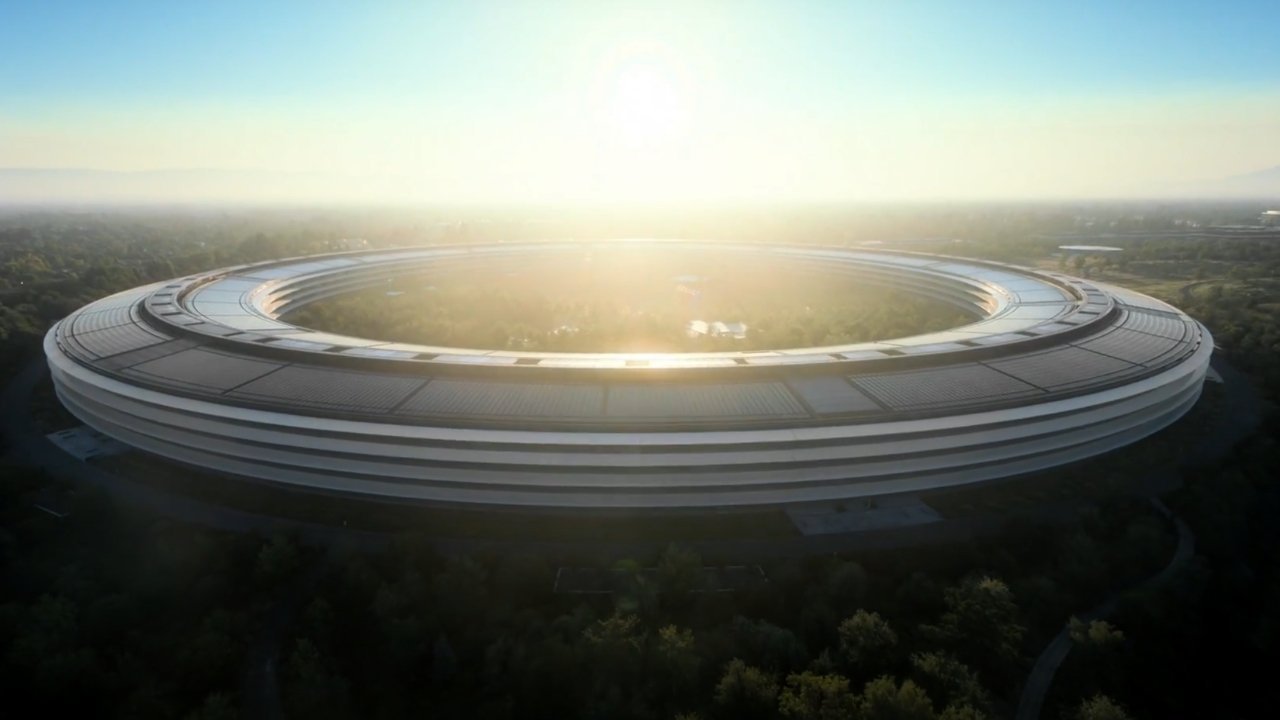
Apple's Worldwide Developers Conference is held in June each year, at Apple Park in California. The iPhone maker uses its annual event to preview new versions of its major operating systems, such as iOS, iPadOS, and macOS.
Occasionally, new hardware is introduced at WWDC as well, such as in June 2023, when the Apple Vision Pro was revealed to the public.
At WWDC 2026, which will take place from June 8 through June 12, we can expect to see the next generation of software updates — iOS 27, macOS 27, and so on. Leakers and analysts have already made specific claims about the upcoming releases.
iOS 27 to be a performance-focused release, like macOS Snow Leopard
Given that the preceding iOS 26 and macOS Tahoe updates introduced Apple's Liquid Glass design language, iOS 27 and macOS 27 should offer features and performance improvements rather than significant visual alterations.
That's exactly what the rumor mill suggests is on the way. A November 2025 report likened the upcoming iOS 27 to macOS Snow Leopard, an older macOS release that primarily focused on stability enhancements and bug fixes.
Apple's software engineers are allegedly working to eradicate bugs and replace old code. They're also seeking to improve existing features where applicable, per the report.
Apple is said to be rewriting parts of the operating system, and the effort could lead to improved battery life even on older iPhone models, according to the same source.
Additionally, iOS 27 is expected to include side-by-side app multitasking, albeit only on the iPhone Fold, which is set to debut in late 2026. This means we likely won't see this new feature during WWDC 2026.
Siri chatbot could debut at WWDC 2026
Though iOS 27 is not expected to be a feature-packed upgrade, the software could mark the introduction of a revamped Siri.
-xl.jpg)
Apple could introduce a chatbot version of Siri at WWDC 2026.
To be more specific, a January 2026 rumor suggested that Apple wants to turn Siri into a full-blown chatbot, with an app-type interface that will compete with OpenAI's ChatGPT.
Allegedly, Apple is testing the new-and-improved Siri in the form of an internal-use application, known under the codename "Campos." End-users, meanwhile, will trigger Siri the same way they currently do on iPhone, iPad, and Mac.
Apple has already reached an arrangement that sees Google Gemini serving as "the foundation" for the next generation of Apple Foundation models. The company is clearly working to improve existing Apple Intelligence features, though it remains to be seen if a Siri chatbot will debut with iOS 27.
Supposedly, the updated Siri is said to be the main feature of the iOS 27, iPadOS 27, and macOS 27 updates, meaning that users can expect little else in terms of actual features. Apple also reportedly plans to replace its CoreML framework with a new one, dubbed CoreAI.
According to February 2026 rumor, Apple, at one point, wanted to introduce an Apple Intelligence feature called "Apple Health Plus."
Under the guidance of Eddy Cue, however, the iPhone maker has allegedly scaled back development, with plans to split the feature set into multiple smaller releases. Some of these Health-related features may debut with iOS 27, though no clear timeframe has been rumored so far.
macOS 27 — No support for Intel Macs, or Time Capsule
While the specifics of the macOS 27 update have yet to be revealed, Apple has already disclosed a few tidbits about the software. To be more specific, the iPhone maker has outlined the features that will lose support with macOS 27.
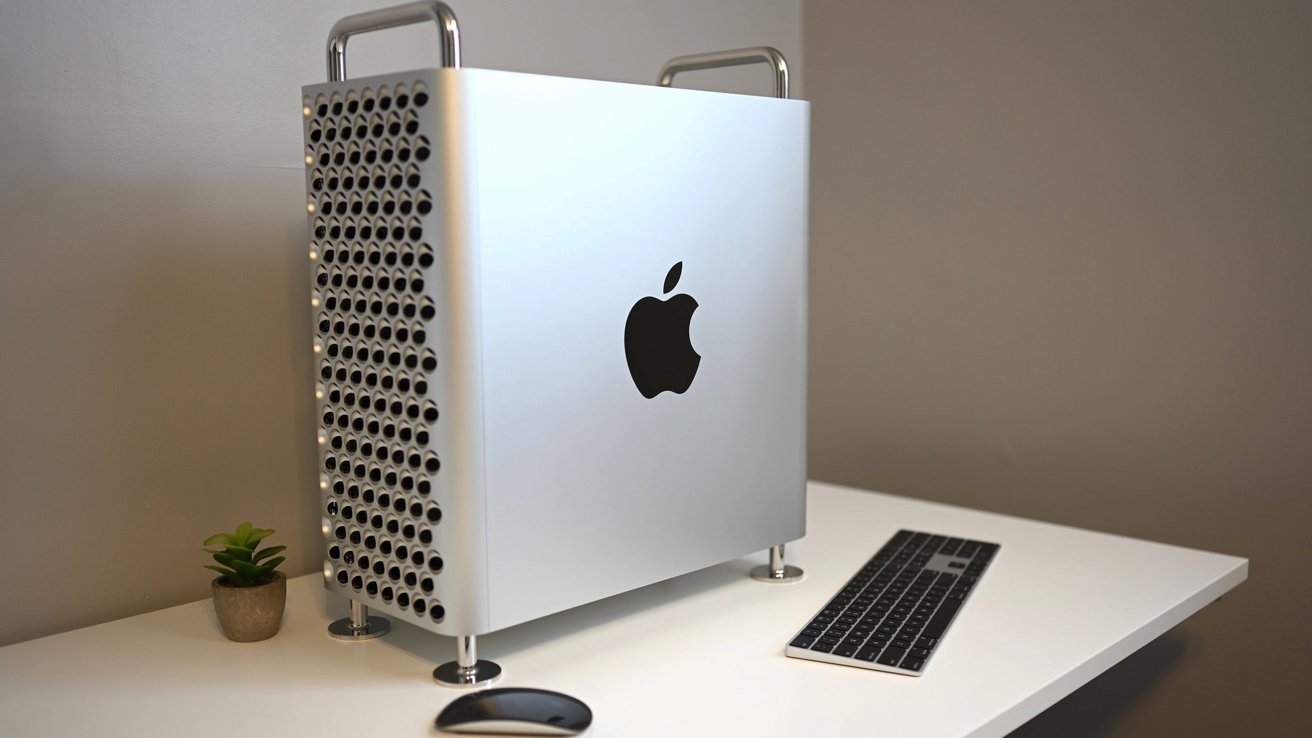
The 2019 Mac Pro was one of the last Macs sold with an Intel chip.
For instance, macOS Tahoe is set to be the last major macOS release compatible with Intel-based Macs. This means that macOS 27 will only support Apple Silicon Macs, meaning computers with an M1 or newer chip.
All Intel Macs are over five years old at the time of writing, so the discontinuation of Intel support wasn't much of a surprise. Rosetta 2 support, meanwhile, will be maintained with macOS 27, allowing apps made for Intel Macs to run on Apple Silicon hardware.
Another piece of hardware set to lose support with macOS 27 is Apple's Time Capsule. In June 2025, a macOS system message was spotted, advising that the next major version of macOS "will no longer support AirPort Disk, or other Time Capsule disks, for Time Machine backups."
In short, macOS 27 will not support Intel Macs or Time Capsule hardware, but it will be the last version of macOS to retain Rosetta 2 support.
Hardware we might see at WWDC 2026
While WWDC is generally a software-focused event, Apple might debut new Mac hardware at its conference. In October 2025, we outlined that Apple was working on new Mac mini and Mac Studio configurations, powered by variants of the M5 chip.
-xl-xl.jpg)
The Mac mini is set to receive Apple's M5 and M5 Pro chips.
Both models are expected to be spec bump upgrades, offering only performance upgrades, relative to their M4 counterparts. In that regard, the updated Mac mini configurations will likely be similar to the M5 MacBook Air and the MacBook Pro models with Apple's M5 Pro and M5 Max chips.
Apple has already explained that the M5 chip features Neural Accelerators in each GPU core, with 3.5 times faster AI performance, 30% faster graphics (45% for gaming), and 30% higher memory bandwidth.
The M5 Pro and M5 Max chips, meanwhile, utilize the Apple-designed Fusion Architecture, where two dies are combined into a single system-on-chip.
This approach, coupled with the replacement of efficiency cores for so-called super cores, allows for better performance over prior Apple Silicon chips, with the M5 Max even surpassing the M3 Ultra in real-world benchmarks.
Apple says the CPU of the M5 Pro and M5 Max chips delivering up to 30 percent faster performance, relative to their respective M4-based counterparts. Additionally, the iPhone maker claims its M5 Pro and M5 Max offer a 50 percent increase in graphics performance compared to the preceding M4 Pro and M4 Max.
Memory bandwidth sits at at 307GB/s for the M5 Pro, while it goes up to 460GB/s or 614GB/s in the M5 Max, depending on the number of GPU cores. This is up from 274GB/s on the M4 Pro, and 410 GB/s or 546 GB/s on the M4 Max chips.
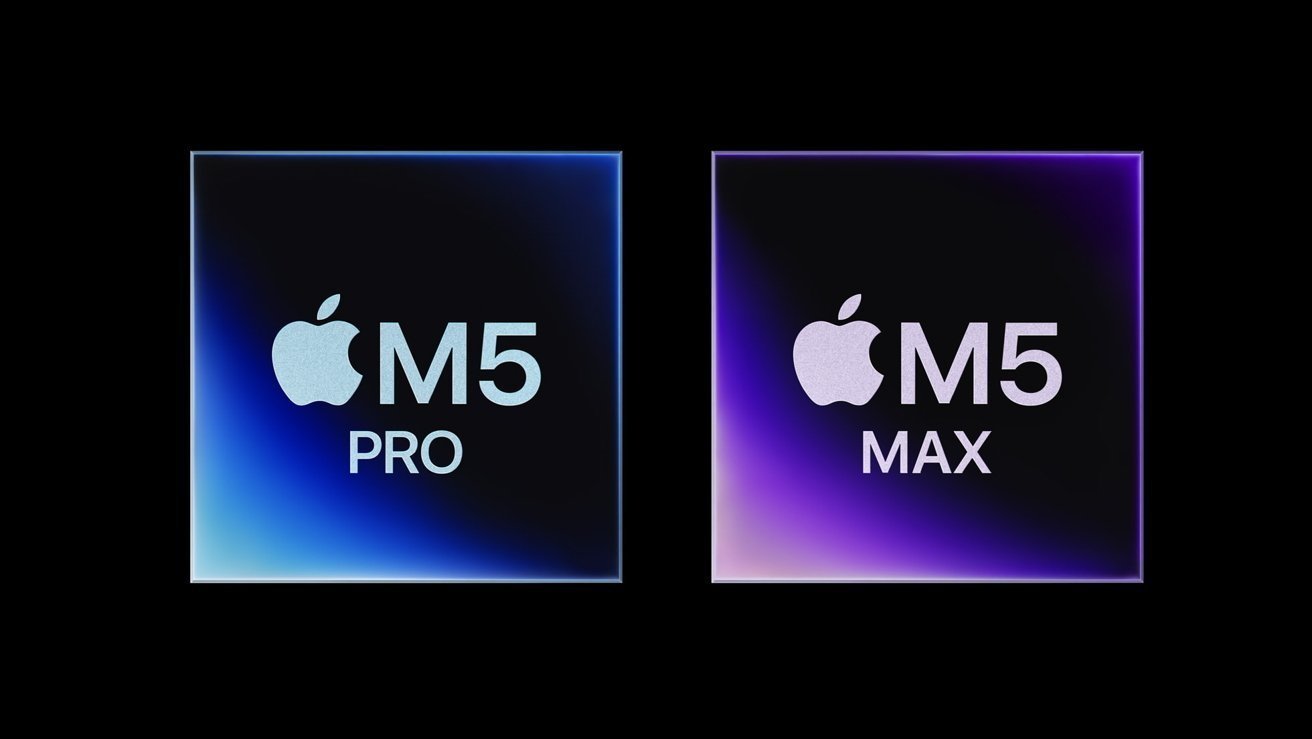
The M5 Pro chip is expected to make its way to the Mac mini, while the Mac Studio will likely offer the M5 Max chip.
The M5 Pro and M5 Max chips debuted in the 14-inch MacBook Pro and 16-inch MacBook Pro. The Mac mini and Mac Studio are likely next in line for the chip upgrade.
Along with the improved processing hardware, Apple will also likely increase the SSD speeds of its new desktop Macs to 14.5GB/s. The iPhone maker might also elect to include the N1 wireless networking chip, bringing Wi-Fi 7 and Bluetooth 6 to the Mac Studio and Mac mini.
The two desktop Macs might ship with macOS 26.4, so if they don't debut in the spring of 2026, they might be unveiled at WWDC 2026. The iPhone maker has unveiled Macs at WWDC, as it did with the 13-inch M2 MacBook Air in June 2022 and the 15-inch model in June 2023.
The first-generation HomePod was similarly unveiled at WWDC 2017. Though highly unlikely, it's possible that the HomePod 3 and HomePod mini 2 will be announced at WWDC 2026.
Another hardware line that's effectively been neglected since 2022 is the Apple TV 4K streaming device. It's also among the things we could see at WWDC 2026, albeit no rumors have suggested this.
Overall, WWDC 2026 is expected to be a subdued event, with the Siri chatbot being the main attraction. In terms of hardware, we might see upgdrades to the Mac mini and Mac Studio, but most likely not much else.