

The long-rumored iPhone Fold, or maybe the iPhone Ultra, should arrive in fall 2026. Here's what the rumor mill says about Apple's first foldable iPhone.
While the rest of the smartphone industry has embraced foldable smartphones, Apple has so far held back from launching its own. However, the rumor mill certainly believes that one model will eventually come out of Cupertino, and that 2026 could be the year it finally does.
With high expectations, the model referred to as the iPhone Fold is anticipated to be a big launch for the company. That launch could be just half a year away.
Here's what the rumors say about the iPhone Fold, what it will do, and new renders showing what it will look like.
iPhone Fold: When it will launch
Rumors for the iPhone Fold have been doing the rounds since 2017. In those early years, the release period repeatedly got pushed back so it would be perpetually a few years away from becoming a reality.
This stopped in 2024, with the rumor mill settling on a 2026 or 2027 launch for the model.
Generally speaking, the belief is for a fall 2026 release as part of the iPhone 18 lineup, but there are some saying a 2027 launch is more probable.
There is also the possibility of an announcement as part of its usual September event schedule, but then for it to actually ship at a later time. This could even be as late as December 2026.
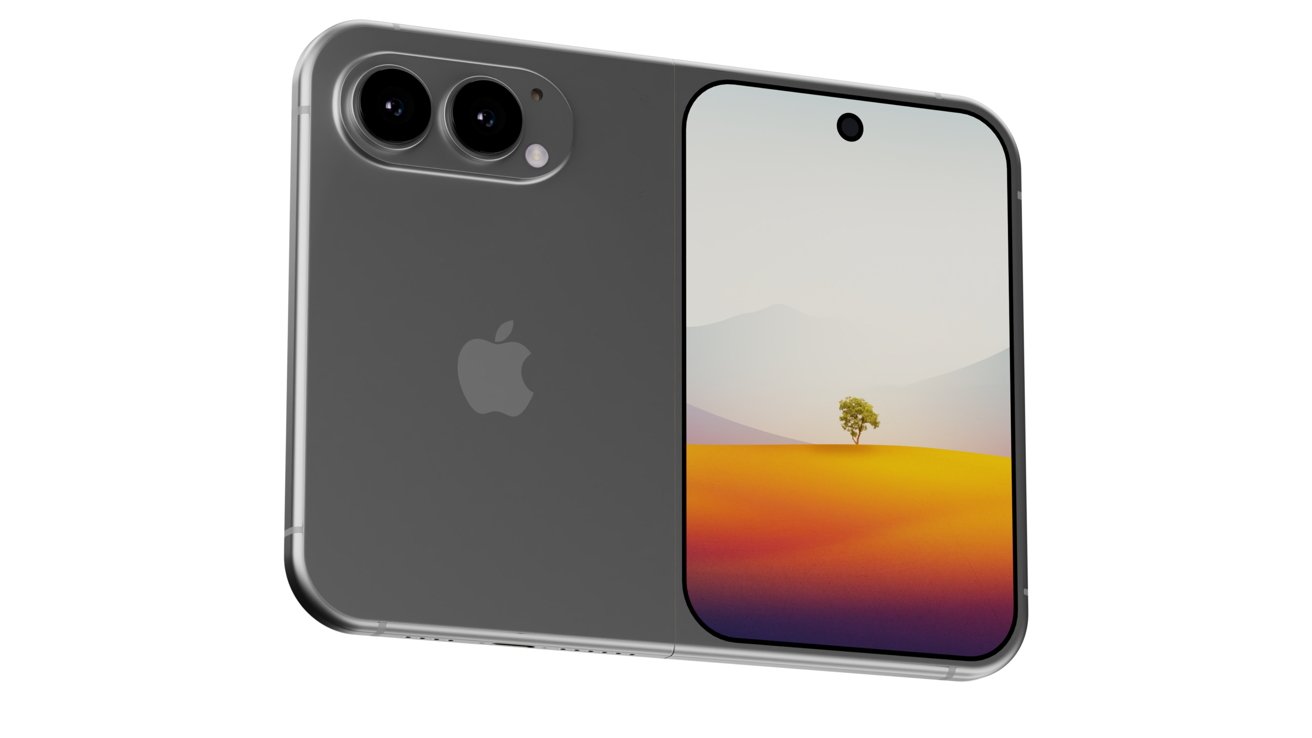
The external sides of the iPhone Fold, when laid flat
One thing that may dictate which timeline is correct is the supply chain, since it takes a very long time for products to pass through it and into consumer hands. One leaker in April insisted that the display for the iPhone Fold will be sold to Apple from producer Samsung Displayin July, at about the same time as the iPhone 18 Pro
Earlier, in March, another leaker insisted that the Samsung Display production ramp-up would happen in the middle of 2026, again matching Apple's usual scheduling.
This hints at a fall or late 2026 launch for the iPhone Fold.
Of course, nothing is ever smooth in the rumor mill, as one April 13 report said that mass production was delayed by up to two months. However, that allegedly won't affect the launch by much.
iPhone Fold: Size specs and internal screens
The iPhone Fold will be an unusual design for Apple, especially because it can double in screen estate by being unfolded by the user. This means it can also be a potentially thick device too, when it is stowed away.
In December, CAD drawings demonstrated how the iPhone could have an internal screen size of 7.76 inches, making it squarer and wider than usual when folded up. With an unfolded display closer to an iPad in aspect ratio, that would mean an iPhone measuring 3.3 inches wide and 4.75 inches tall when folded.
The resolution was also claimed to be 2,713 by 1,920, higher than an iPad mini.
As for the thickness, the rumors at the time said the iPhone could be 5.64mm thick when unfolded. This would be slightly thicker than an M5 iPad Pro, and bring the folded thickness to be a little higher than 11mm.
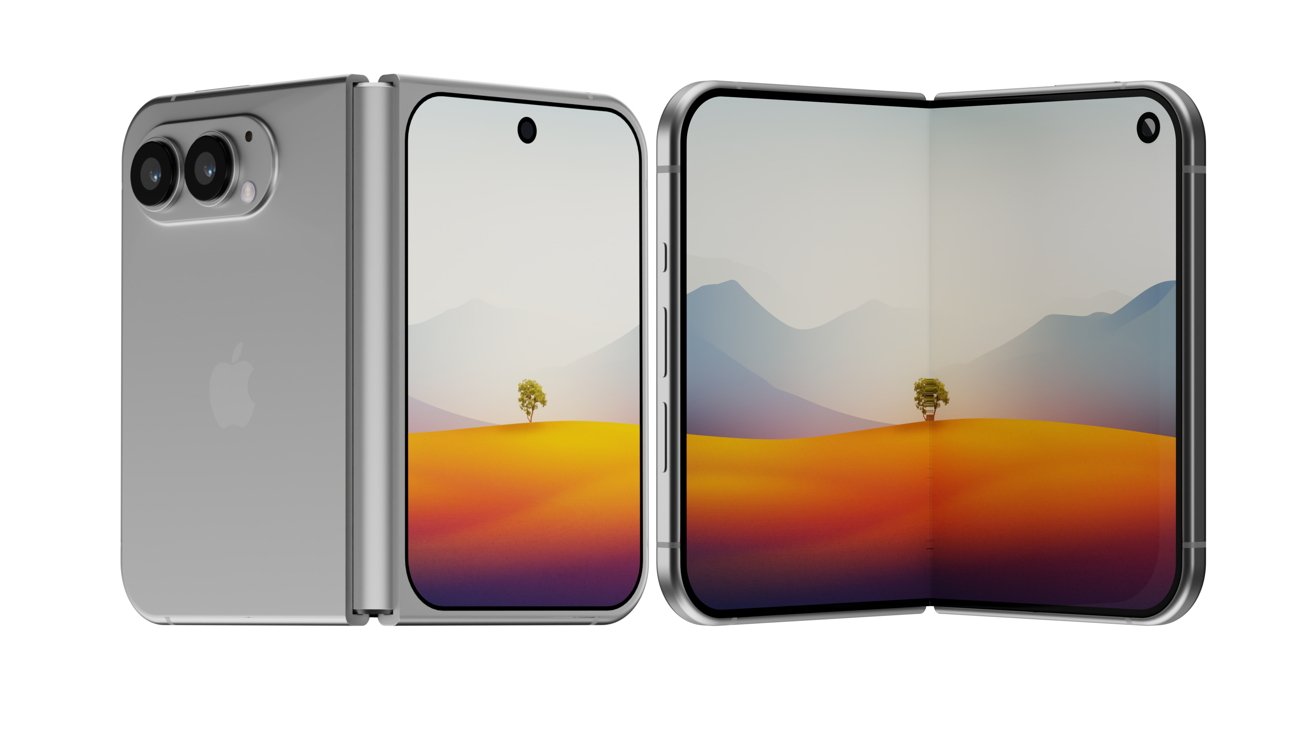
The iPhone Fold will have a large folding internal display and one external screen
One month later, in January, an analyst claimed to know the specifications of Apple's fall lineup, including the iPhone Fold. This included a 7.8-inch display inside, as well as a 5.3-inch outer screen, though no resolution was provided.
In February 2026, there was a claim that Apple was considering two different film materials for the top of the iPhone's foldable glass. While Samsung and others would use PET, Apple thought about PI, or transparent polyimide.
The change could result in fewer display scratches over time, due to having a higher surface hardness.
Another change touted by analysts at Trendforce in April is the adhesive Apple uses. The use of optically clear adhesive (OCA) is typical in display production, but the version in use for the Fold will act more like a flexible cushion, staying soft to spread the stress across the display.
That same material will have some shock-absorbing properties too, with a sudden pressure change causing it to temporarily stiffen and provide more support.
A March rumor also claims that other changes are being made to the panel, including the use of a new glass sandwich. This apparently includes a dual-layer UTG/UFG (Ultra-Thin Glass/Ultra-Thin Flexible Glass) structure that puts the display layer between the two glass layers.
While Apple has worked with both Samsung Display and LG Display on the project, it was said in April that it would be working exclusively with Samsung. All thanks to a three-year deal for foldable OLED panels for the model that will run until 2029 or 2030.
iPhone Fold: External screen details
This second display mention follows along with other rumors about the iPhone Fold, in that it will be a dual-display device. While there's the larger internal display, there's also a second one on the outside, providing a fairly typical candybar-style iPhone experience.
The idea is to still be able to use the iPhone Fold, even when it's folded up.
Previous rumors in 2025 put the display at 5.49 inches, with a resolution of 2,088 by 1,422. This would be a typical-for-Apple pixel density of 460 pixels per inch.
iPhone Fold: Hinge
An important part of the design is the hinge, which attaches the two sections of the iPhone Fold together. It's a component that also has to be supportive of the display itself during use, or else the screen could be damaged.
This has repeatedly been raised in rumors in the past as being a design headache for Apple, and has also resulted in mechanisms surfacing in patents.

The hinge mechanism will be an important part of the iPhone Fold
The rumors have repeatedly discussed the use of Liquidmetal for the hinge mechanism, due to its resistance to bending and depression. It's also 2.5 times stronger and harder than a titanium alloy, while still staying relatively lightweight.
In January, a leaker said the main casing will be a combination of titanium and liquidmetal, with the latter used for the hinge. Apparently the liquidmetal in use is an improved version of what was used for the SIM ejection tool Apple released a decade prior.
The hinge is crucial in defining how flat the display will be when unfolded, too. In February, a leaker said that Apple's design of the hinge is so good that the crease will be a quarter of the depth of the Galaxy Fold 7.
As for how Apple will make it, an April rumor said that Apple will be using "chip-level high-molecular 3D printing technology."
Even though Apple has previous form for using 3D printing in its products, your mileage may vary on believing this point.
iPhone Fold: Cameras and bumps
Like other iPhone models, the iPhone Fold will have a bunch of cameras in various places. It's an essential part of the modern smartphone experience, but the iPhone Fold should shake things up compared to your typical iPhone launch.
The general belief is that Apple will use the new Camera Plateau design on the iPhone Fold, with a large bar-style bump across one of the enclosure halves. This can allow Apple to place important components unrelated to photography in there, to save space elsewhere.
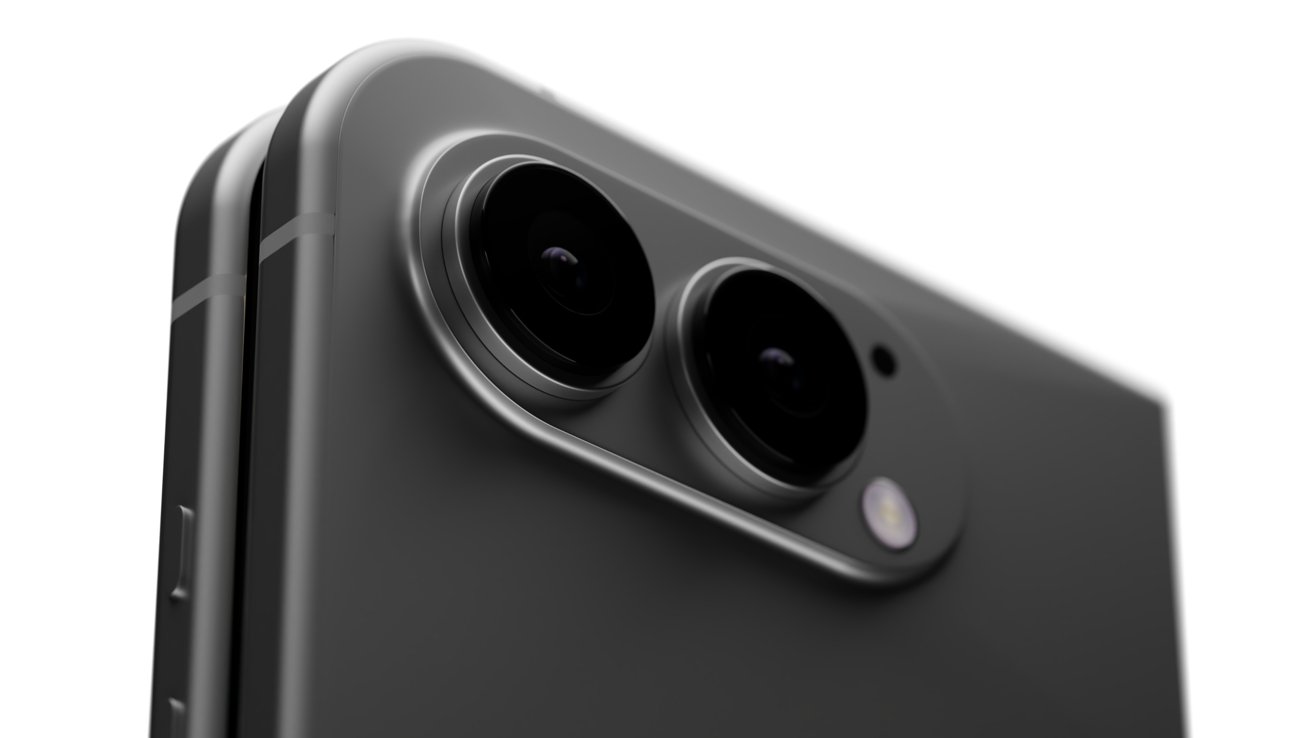
It isn't an iPhone without a camera bump
If a Weibo leaker is to be believed, that will be two rear cameras arranged horizontally, and possibly with a black plateau, instead of color-matching it to the rest of the body.
There was also the thought that the cameras on the back will be similar to others Apple uses, in that they will be 48MP in resolution, but two different focal lengths. The Jeff Pu spec release in January added that Apple would use a 7-piece and 6-piece lens arrangement on the back.
There's also a second camera to consider, and that would be the front-facing one. There has been some talk about Apple using a small punch-hole style camera on the smaller external display.
The internal display would also have one, but there has been talk of it being an under-display version. The idea being to remove any possibility of a display hole or an unsightly notch spoiling the key display of the new model.
Those two cameras are said by Pu to be 18MP versions, but without Face ID. Instead, Apple is thought to be using Touch ID, and is expected to use an under-display version at that.
iPhone Fold: Other specifications
The other specifications for the iPhone Fold are relatively predictable, if Apple's release habits are anything to go by. The core specifications are probably going to be close to what that generation's Pro models will use.
In Jeff Pu's January note, that means an A20 chip with 12GB of memory. A C12 modem is also expected, referring to Apple's self-designed modem chips. Another leaker said it will have the biggest battery in an iPhone to date, thanks to its size.

Since it's a folding device, the iPhone Fold should stand up on its own
When it comes to the operating system, it should still use iOS 27, like other iPhones. The operating system is anticipated to have some work done to reduce battery consumption, which should make that massive battery last even longer.
The updates to iOS 27 should also take into account the expansive display, by borrowing some ideas from iPadOS. This includes a March claim that there will be side-by-side multitasking in iOS, complete with in-app sidebar support.
While this does encroach on tablet territory, it would be a good selling point for the iPhone Fold among the others in the range.
There has also been some discussion about the name "iPhone Fold" too, since it's something that the rumor mill uses as shorthand for the model, not an Apple-approved name.
Weirdly, the name talk has been about using the "Ultra" suffix.
In March, Mark Gurman proposed that it would be a worthy device to use the term, and would easily follow after the "Air" use in the iPhone Air. A Weibo leaker seized on the concept later the same month, and another did in early April.
There's plenty of time until the expected launch for Apple to decide on the name. Ultra or not.
iPhone Fold: Pricing
Regardless of the name, such a high-specification and highly engineered device will have an equally high price when it eventually ships.
Back in March 2025, Ming-Chi Kuo forecast a price between $2,000 and $2,500. A leaker in April 2025 refined the range to between $2,100 and $2,300, while another September 2025 report said it will be at least $2,000.

Whenever it arrives, the iPhone Fold will be expensive to buy
In March 2026, a Bloomberg report continued to expect a price north of $2,000.
Another leaker in the same month expected the starting price to be over 10,000 yuan (about $1,500) with a top specification exceeding 20,000 yuan (about $3,000).
A third leaker on Weibo offered more concrete per-capacity pricing in March, starting at about $2,325 for 256GB. A 512GB capacity would cost around $2,645, while 1TB could be as high as $2,905.
These prices are certainly within the bounds of expectation. Especially when you consider the ongoing RAM and SSD crisis affecting the tech industry as a whole.
Crisis or not, you can expect to pay a pretty penny to get your hands on the iPhone Fold, whenever it actually ships.